



By: Ralf Ellspermann
25-Year, Multi-Awarded BPO Veteran
Published: 24 September 2026

Reviewed By: John Maczynski
Former EVP, World's Largest Contact Center
Updated: 24 September 2026
By deciding first where the training corpus physically sits, because that single choice determines the security posture, the regulatory obligation and the achievable latency. Endpoint lockdown, biometric access and monitoring are then built on top of that decision rather than in place of it.
Key Takeaways
- The architecture decision comes before the control list. Streaming from the client’s region means nothing is transferred. Hosting an enclave in the Philippines means the transfer has already happened and needs a lawful basis.
- Keeping the data in your own region costs about 200 milliseconds. Round-trip latency from Manila to a United States region is roughly 200 to 234 milliseconds. That is a distance constraint, and no amount of bandwidth changes it.
- An air-gapped remote desktop does not exist. An air gap means no network path. A remote desktop is a network path. The phrase is used to mean very secure, and it describes two architectures that cannot both be present.
- The Philippines has no EU adequacy decision. Personal data of people in the EU or EEA reaching a Philippine processor needs Article 46 safeguards — standard contractual clauses plus a transfer impact assessment. ISO 27001 certification does not satisfy that test.
- Access control bounds concentration, not total exposure. A 30-person pod working a 50,000-item corpus reads all of it collectively, whatever the batch size. Reducing what each item contains is the control that addresses this.
- Behavioural monitoring of annotators is itself regulated processing. Under the Data Privacy Act the workforce are data subjects, and keystroke and screen monitoring needs a lawful basis, notice and proportionality.
What Infrastructure Safeguards Protect Proprietary Enterprise Datasets?
Stripped workstation ports, disabled clipboard export and locked remote desktops at the endpoint; encrypted transport, segregated network segments and egress monitoring on the network; biometric entry, surveillance and device-locker policies physically. Top-tier Philippine providers in Manila, Cebu and Davao operate all three layers as standard.
The control set itself is not in dispute and is not where buyers get into difficulty. Workstations in a properly configured facility have no local storage, no optical drives and no usable peripheral ports; annotation and preference ranking happen inside a remote session; network traffic is scanned for exfiltration patterns. This is competently done and it is verifiable.
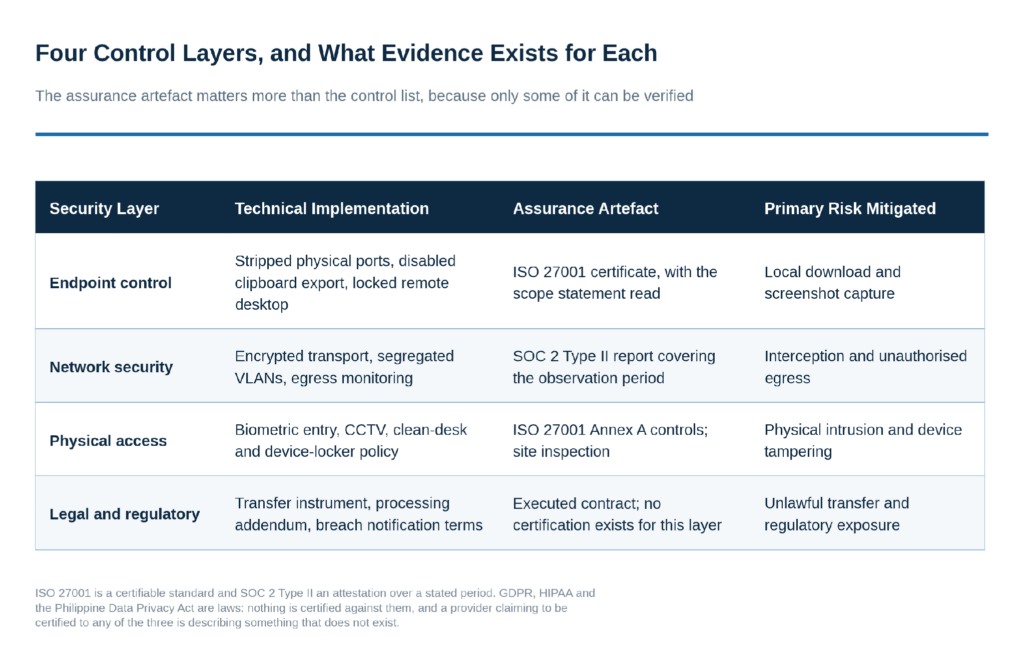
Figure 1. Four control layers, and what evidence exists for each.
What varies between providers is not the list of controls but the assurance artefact behind each one, and the fourth row is where most buyers are exposed. ISO 27001 is a certifiable standard, and the certificate carries a scope statement that is worth reading: certification covering a corporate head office says nothing about the delivery floor your pod will sit on. SOC 2 Type II is an attestation over a stated observation period rather than a certificate, so the period matters and so does the list of exceptions.
GDPR, HIPAA and the Philippine Data Privacy Act are laws. Nothing is certified against any of them. A provider describing itself as GDPR-certified or HIPAA-certified is describing an artefact that does not exist, and the obligations those regimes create fall on the buyer as controller regardless of what the provider holds.
Where Should the Training Corpus Physically Sit?
In one of three places, each with a different regulatory consequence: inside the client’s own environment with annotators streaming a remote session into it, inside an isolated enclave hosted in or near the Philippines, or inside such an enclave after identifying detail has been stripped out. The choice is usually made by whoever configures the environment rather than by whoever owns the risk.
This is the decision that determines everything downstream, and it is the one most commonly left implicit. Every control in Figure 1 is conditional on it.
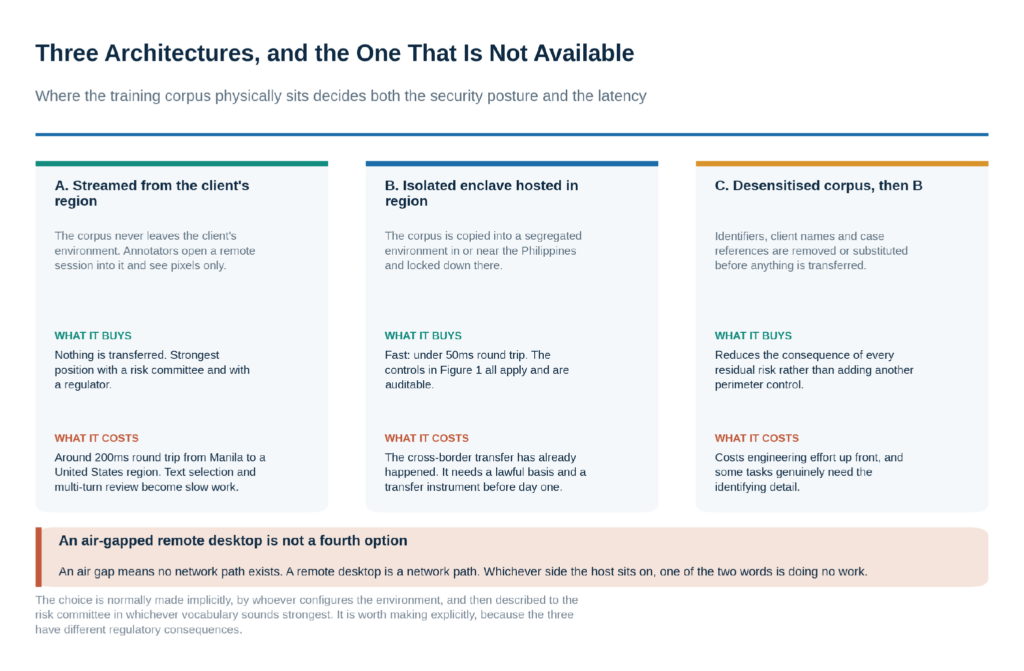
Figure 2. Three architectures and what each one trades.
Option A is the position a risk committee asks for: the corpus never leaves the client’s environment, and annotators see rendered pixels rather than files. Legally it is the strongest available answer, because no transfer has occurred. Option B copies the corpus into a segregated environment in region, where it is fast to work with and where every physical and endpoint control applies and can be audited — but the cross-border transfer has already happened and needs a lawful basis in place before the first item is processed. Option C reduces the sensitivity of the material before it moves at all.
The fourth option, an air-gapped facility running remote desktops, is not available. An air gap means no network path exists between the protected system and any external network; a remote desktop is a network path by construction. If the session host sits outside the facility there is a live link, so there is no air gap. If it sits inside, the corpus was copied in, which is Option B with a stronger-sounding label. The phrase is used as a synonym for highly secure, and it obscures precisely the distinction a risk committee needs to make.
What Does It Cost to Keep the Data in Your Own Region?
Roughly 200 milliseconds of round-trip latency on every interaction. Manila to a United States East Coast region is about 234 milliseconds, to the West Coast about 200, and to Western Europe about 175 to 182. Interactive remote desktop work is comfortable below about 50 milliseconds and noticeably degraded beyond about 150.
Option A is the right answer for a great many programmes, and it should be chosen knowing what it costs rather than discovered three weeks into production when throughput comes in below forecast.
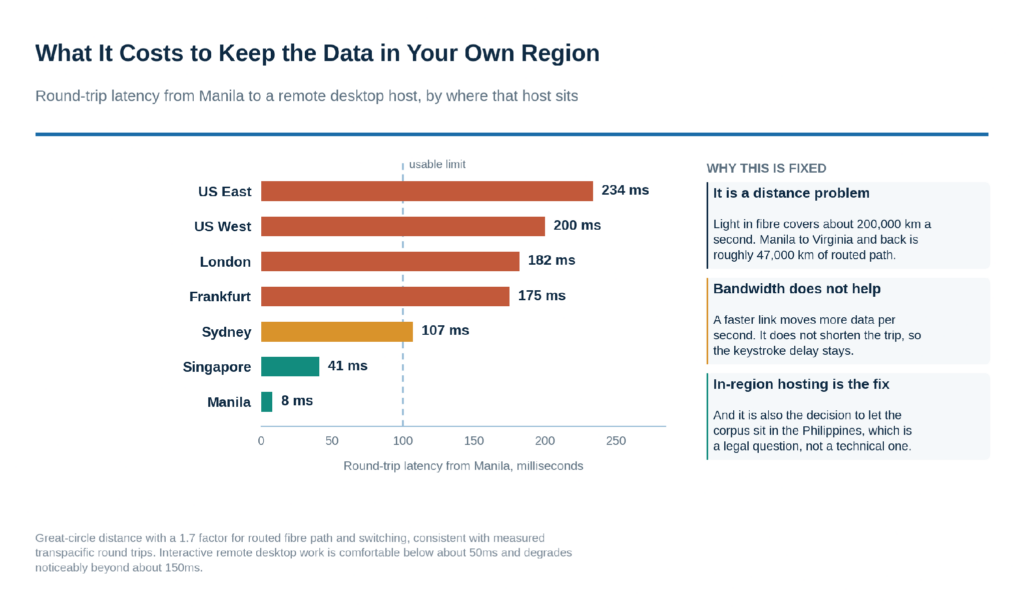
Figure 3. Round-trip latency from Manila by remote desktop host region.
The constraint is distance. Light in fibre travels about 200,000 kilometres a second, and a routed path from Manila to Virginia and back is roughly 47,000 kilometres once real cable routes and switching are accounted for. That produces a floor of just over 200 milliseconds that no provisioning decision moves. Buying a faster link raises throughput and does not shorten the journey, so the delay between a keystroke and its appearance on screen is unchanged.
For work that is mostly reading and clicking a preference button, 200 milliseconds is tolerable. For work involving precise text selection, scrolling through long documents, or multi-turn dialogue review where an evaluator moves back and forth through a conversation, it is a material productivity cost that should be modelled into the rate. A regional host in Singapore brings the round trip to about 41 milliseconds, and in-country hosting to single digits — at which point the data is resident in the region and the question has become a legal one.
How to decide between them
Where the corpus contains regulated personal data and the transfer analysis is difficult, the latency cost of Option A is usually worth paying, and the task mix should be chosen accordingly — assign the latency-tolerant work to the streamed environment. Where the material is commercially sensitive but not personal data, Option B is generally the better trade and the controls in Figure 1 carry the weight. Option C should be evaluated first in both cases, because it changes the size of the problem rather than adding another layer to it.
How Do Data Privacy Laws Govern Cross-Border AI Training?
Three regimes typically apply at once: the Philippine Data Privacy Act of 2012 to any processing in country, GDPR where personal data of people in the EU or EEA appears, and HIPAA where protected health information is handled for a covered entity. Only the contractual layer is fully within the buyer’s control.
The operative fact about the Philippines is one the draft security literature in this market rarely states plainly.
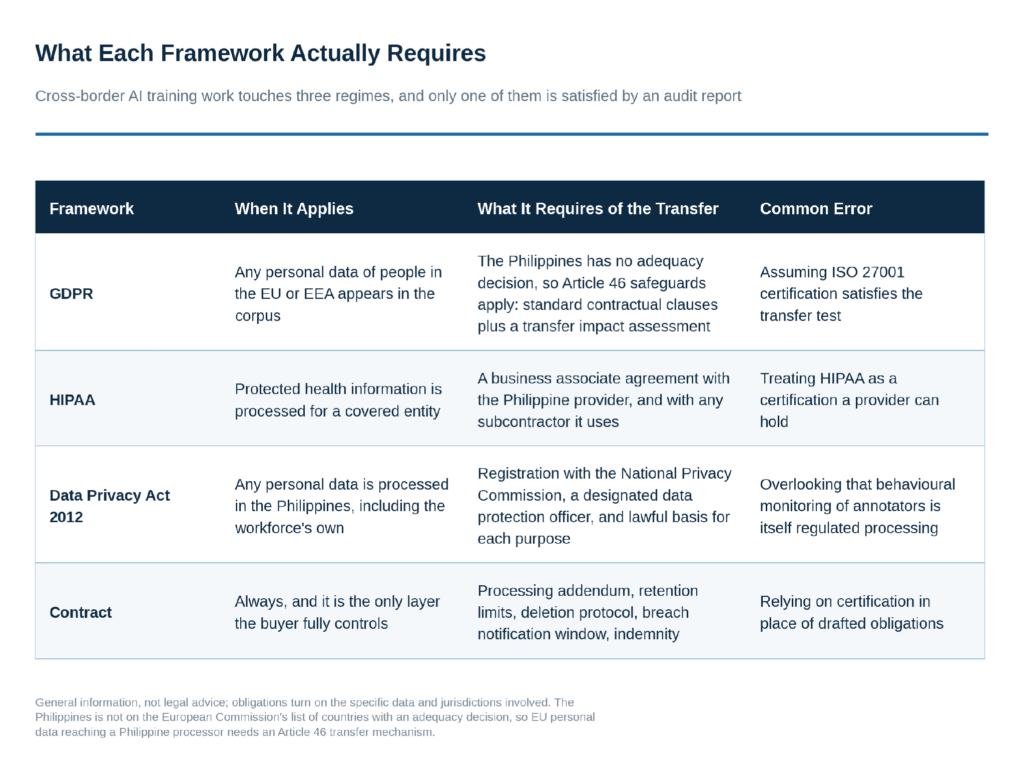
Figure 4. What each framework requires of the transfer.
The Philippines does not hold an adequacy decision from the European Commission. Its Data Privacy Act is a well-constructed statute modelled closely on European principles, and the alignment is real, but alignment is not adequacy — adequacy is a formal finding, and the Commission has made it for a short list of jurisdictions that does not include the Philippines. Personal data of EU or EEA individuals reaching a Philippine processor therefore requires an Article 46 transfer mechanism, in practice standard contractual clauses supported by a transfer impact assessment. No security certification substitutes for that instrument.
For health data, a Philippine provider processing protected health information on behalf of a covered entity is a business associate, and a business associate agreement is required — flowing down to any subcontractor the provider uses. For Philippine processing generally, providers must register with the National Privacy Commission, appoint a data protection officer and establish a lawful basis for each purpose of processing. Contractually, the addendum is where retention limits, secure deletion protocols and breach notification windows actually live; they are not implied by any certification.
This section is general information rather than legal advice, and the obligations turn on the specific data and jurisdictions involved. The point for procurement is narrower: the legal layer is the one with no audit report behind it, so it has to be drafted rather than verified.
What Supervisory Protocols Mitigate Insider Risk?
Role-based access control restricting annotators to assigned micro-batches, behavioural analytics covering keystroke patterns and active window duration, and clean-desk policies excluding personal devices from the production floor. These are effective against bulk extraction and are standard at top-tier Philippine facilities.
Insider risk deserves the attention it gets, and the control set addresses the scenario it is designed for. It is worth being precise about what that scenario is, because the arithmetic of the work sets a limit these controls cannot cross.
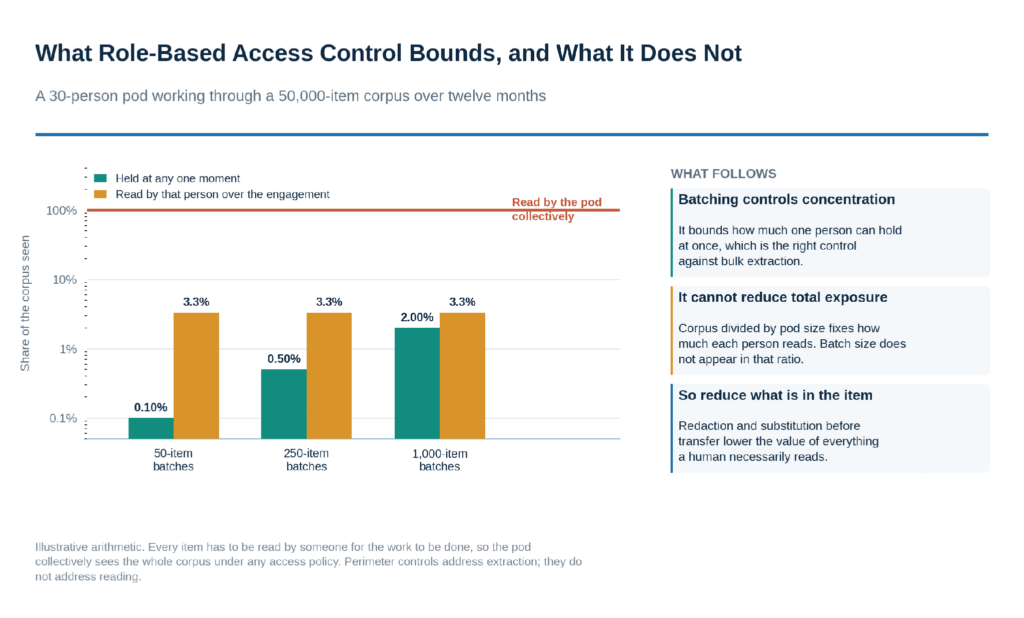
Figure 5. What access control bounds, and what it does not.
Micro-batching bounds how much material any one person holds at a single moment, which is the correct control against a member of staff attempting to remove the corpus in bulk. It does not bound cumulative exposure. A 30-person pod working through a 50,000-item corpus will, by the end of the engagement, have read every item — that is what the engagement is. Each annotator will have read roughly a thirtieth of it, and that fraction is set by corpus size divided by pod size. Batch size does not appear anywhere in that ratio.
The control that does address it is reducing what each item contains. Identifier removal, client-name substitution and case-reference pseudonymisation before transfer lower the value of everything a human necessarily reads, and unlike another perimeter layer they reduce the consequence of every residual failure at once — a lost session, a photographed screen, a departing employee’s memory. For many annotation tasks the identifying detail is irrelevant to the judgement being made, which makes this cheap. Where the detail genuinely matters, that is worth establishing deliberately rather than assuming.
Monitoring the workforce is itself regulated
Keystroke logging, screen capture and active-window tracking are processing of personal data belonging to the annotators, who are data subjects under the Data Privacy Act exactly as the client’s customers are. Two lawful bases are ordinarily available: a specific stipulation in the employment contract, or the employer’s legitimate interest in security and compliance. Both carry conditions. Staff must be told the nature, purpose and extent of the monitoring, which tracking features are enabled, what is collected, how long it is retained and what rights they hold. And the monitoring must be proportionate — adequate, relevant and not excessive relative to the stated purpose.
This matters commercially as well as ethically. Monitoring records are frequently the evidence a buyer relies on when demonstrating to its own auditors that nothing left the environment. Records generated without a documented basis and without notice are weaker evidence, not stronger, and a provider that can show a documented monitoring policy is offering something more useful than one that simply monitors more.
How Can Procurement Teams Validate Provider Security Maturity?
By reading the scope of what is certified rather than the fact of certification, requiring current third-party penetration testing and SOC 2 Type II attestation before signing, verifying the desktop and endpoint configuration directly, and drafting the legal layer rather than expecting an audit report to cover it.
- Read the ISO 27001 scope statement, not just the certificate. Certification covering a head office says nothing about the delivery floor where your pod will sit. Ask which sites and which services are in scope.
- Check the SOC 2 observation period and the exceptions list. A Type II report covers a stated window. An expired period or a list of noted exceptions changes what the report is evidence of.
- Ask where the session host physically sits. This single question resolves which architecture in Figure 2 is being proposed, and therefore which transfer obligations apply.
- Require the transfer instrument as a condition precedent. Standard contractual clauses and a transfer impact assessment where EU personal data is involved; a business associate agreement where protected health information is.
- Evaluate the incident response playbook, including detection. Containment speed and notification service levels matter, and so does what the provider is capable of detecting in the first place.
- Put deletion and return of data in the contract with a deadline. Retention limits and secure deletion protocols are contractual obligations. No certification creates them.
What Do Industry Leaders Say About Offshore Security Risk?
That treating the Philippines as a high-risk jurisdiction is a costly miscalculation, because top-tier operators run controls exceeding what most mid-market enterprises implement internally. The differentiator is the partner’s architecture rather than the geography.
The geographic framing is the wrong axis, and it leads buyers to spend their diligence effort on the question that matters least.
The board-level anxiety surrounding data security in AI outsourcing is entirely justified, but treating the Philippines like a high-risk jurisdiction is a costly miscalculation. Top-tier Philippine BPO operators maintain physical and digital security protocols that far exceed what most mid-market enterprises implement internally. The differentiator is not geography; it is choosing a partner whose infrastructure is architected from the ground up for zero-trust data governance.
— John Maczynski, CEO, Cynergy BPO
The observation holds, with one refinement. Architecture is the differentiator, and architecture in this context means the answer to a specific question — where does the corpus sit — rather than a general posture. Two providers can both be certified, both run biometric floors and locked desktops, and be offering materially different propositions because one streams from the client’s environment and the other hosts an enclave. Diligence that compares control lists will not separate them.
How Did One Legal Technology Firm Secure Its Training Pipeline?
A multinational legal technology corporation needed to fine-tune a model on confidential case briefs and proprietary contract templates, with an internal risk committee prohibiting offshore processing without proven isolation. A 30-person Manila legal pod delivered a 12-month training lifecycle with no recorded breaches or compliance flags, passed internal audit at first review, and accelerated delivery by 40%.
The binding constraint was authorisation rather than capability. The work was straightforward; convincing the risk committee that it could be done offshore was the project.
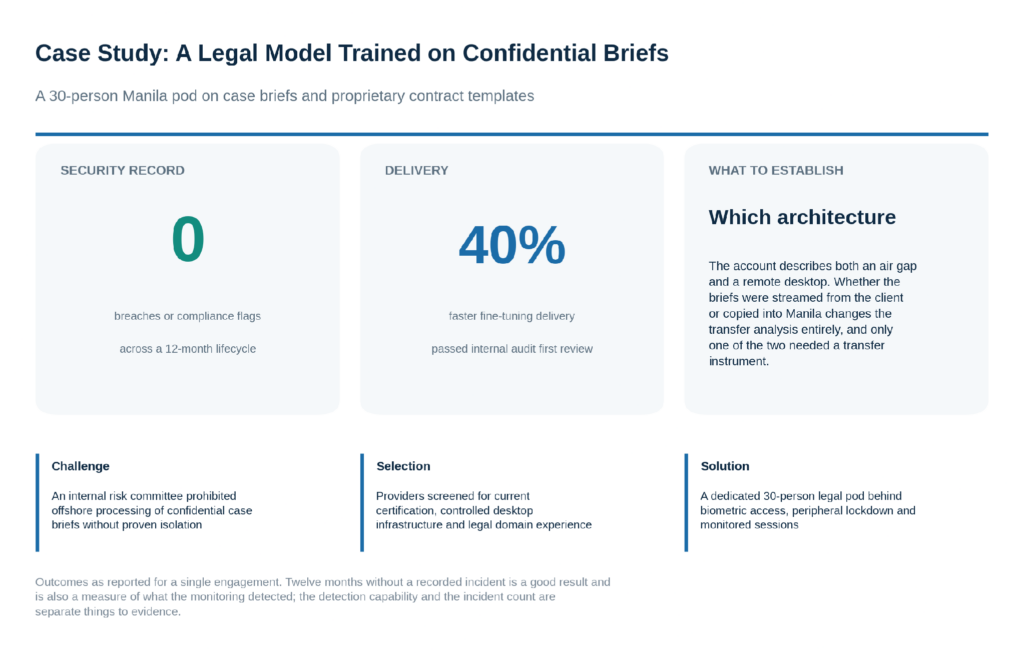
Figure 6. Reported outcomes from a 30-person legal pod in Manila.
The reported outcomes are good ones. Passing an enterprise risk and compliance inspection at first review is a meaningful result, particularly for legal material, and it indicates the provider’s documentation was in order as well as its controls. The 40% delivery acceleration came from dedicated capacity against a backlog the internal team could not absorb.
The account describes the facility as air-gapped and the workflows as running inside encrypted virtual desktops, and as Figure 2 sets out those cannot both be true of the same link. The distinction is not pedantic here. If the briefs were streamed from the client’s environment, no transfer occurred and the risk committee’s condition was met in the strongest available sense. If they were copied into Manila, the committee authorised a cross-border transfer of privileged legal material, which needed a transfer instrument and a lawful basis before day one. Both are defensible positions; they are different positions, and a risk committee is entitled to know which one it approved.
Twelve months without a recorded incident is also worth reading precisely. It reports what the monitoring detected, which is a function of both the incident rate and the detection capability. Evidencing the second — what the monitoring is configured to catch, and what a test exercise showed it catching — converts a clean record into a demonstrated control.
Why Do Organizations Work with Cynergy BPO on Secure AI Sourcing?
Cynergy BPO is an independent, vendor-neutral outsourcing advisory firm headquartered in Manila, representing a vetted network of more than 100 Philippine providers. It maps security and operational requirements against performance data to produce a shortlist within days and manages competitive negotiation on the buyer’s behalf.
Who Is Cynergy BPO?
Cynergy BPO is an independent outsourcing advisory and consultancy firm headquartered in Manila, founded by industry veterans with more than 65 years of combined operational experience governing major international accounts. It specialises in connecting mid-market and enterprise organisations with vetted Philippine BPO providers across voice, back-office and AI data operations.
How Does Cynergy BPO Differ from Traditional Outsourcing Brokers?
Traditional brokers are transactional and are compensated by the providers they place, which shapes which provider is recommended. Cynergy BPO applies an advisory-led methodology, mapping exact technical, security and commercial requirements against performance data rather than against availability. Where every provider presents a similar control list, an advisory layer that examines the architecture behind it is what makes a shortlist decidable.
How Does Cynergy BPO’s Network of 100+ Vetted Philippine BPO Providers Benefit Organizations?
The network makes it possible to shortlist on criteria a buyer cannot establish from outside: the scope of a provider’s certification rather than its existence, whether it can support a streamed architecture at acceptable throughput, whether it has handled regulated material in the relevant domain, and what its monitoring is actually configured to detect.
How Does Cynergy BPO’s Advisory-Led Vendor Matching Process Work?
Requirements are mapped against operational, security and commercial criteria, a tailored shortlist of vetted providers is delivered within a few working days, and the firm then manages competitive proposal and negotiation processes on the buyer’s behalf. Governance frameworks, transfer instruments and data-handling obligations are settled as part of that process rather than after selection.
Why Do Organizations Use Cynergy BPO?
Because security diligence in this category is difficult to run from a distance and easy to run badly. Comparing control lists separates almost nothing, since every serious provider has the same list. Establishing what each certificate covers, which architecture is on offer and what the contract will actually oblige takes market knowledge that a buyer approaching cold does not have.
Frequently Asked Questions
What certifications should buyers look for in a Philippine AI training provider?
A current ISO 27001 certificate, read together with its scope statement, and a SOC 2 Type II report covering a recent observation period with its exceptions list. GDPR, HIPAA and the Data Privacy Act are laws rather than certifications, so no provider holds a certificate against them and the obligations they create fall on the buyer as controller.
How do providers prevent annotators from copying prompt data?
Through remote desktop environments with local storage, peripheral ports, clipboard export and print-screen disabled, combined with egress monitoring. These controls address extraction. They do not address what a person reads on screen, which is why reducing identifying detail before transfer is the complementary control.
Is an air-gapped annotation facility possible?
Not in combination with remote desktop access, which requires a network path by definition. A facility can be strongly isolated, with controlled egress and no general internet access from the production floor, which is what the term is usually intended to convey. The precise question to ask is where the session host physically sits.
Does the Philippines have an EU adequacy decision?
No. The Data Privacy Act of 2012 is closely aligned with European principles, but alignment is not adequacy, and the Philippines is not on the European Commission’s adequacy list. EU or EEA personal data reaching a Philippine processor needs Article 46 safeguards, typically standard contractual clauses with a transfer impact assessment.
Are mobile devices permitted on secure AI training floors?
No. Top-tier facilities enforce clean-desk policies requiring phones, smartwatches, cameras and writing materials to be stored in lockers outside the production floor. This is one of the more effective controls available, because it addresses the capture route that endpoint lockdown cannot reach.
How is insider threat monitored during large annotation projects?
Through behavioural analytics covering keystroke patterns, active window duration and screen activity, alongside biometric entry logging. Note that this monitoring is itself regulated processing of the workforce’s personal data under the Data Privacy Act, requiring a lawful basis, notice of what is collected and retained, and proportionality to the stated purpose.
How much latency does a streamed environment add?
From Manila, roughly 200 milliseconds round trip to a United States region and 175 to 182 to Western Europe, against about 41 to a Singapore region. It is a distance constraint rather than a bandwidth one. Model it into throughput expectations, and consider assigning latency-tolerant tasks to the streamed environment.
What belongs in the contract that no certification covers?
The transfer instrument, the data processing addendum, retention limits, secure deletion protocols with a deadline, breach notification windows, subcontractor flow-down obligations, and indemnity for breach, intellectual property infringement and regulatory non-compliance. This layer is drafted rather than verified, and it is the only one the buyer fully controls.
Share This
Unlock cost-efficient growth with expert BPO guidance!
Partner with Cynergy BPO to connect with top outsourcing providers.
Streamline operations, cut costs, and scale your business with confidence.
Book a Free Call
Ralf Ellspermann - CSO
Author
Ralf Ellspermann is the Chief Strategy Officer (CSO) of Cynergy BPO and a globally recognized authority in business process and contact center outsourcing. With more than 25 years of experience advising enterprises and SMEs, he provides strategic guidance on vendor selection, CX optimization, and scalable outsourcing strategies across global markets. His expertise spans fintech, ecommerce and retail, healthcare, insurance, travel and hospitality, and technology (AI & SaaS) outsourcing.
A frequent speaker at leading industry conferences, Ralf is also a published contributor to The Times of India and CustomerThink, where he shares insights on outsourcing strategy, customer experience, and digital transformation.