



By: Ralf Ellspermann
25-Year, Multi-Awarded BPO Veteran
Published: 24 September 2026

Reviewed By: John Maczynski
Former EVP, World's Largest Contact Center
Updated: 24 September 2026
Through multi-tier review hierarchies, inter-annotator agreement thresholds and continuous calibration led by senior domain leads. Every one of those controls measures whether annotators are consistent with each other. None of them measures whether the rubric they are consistent with is right, which needs a separate control.
Key Takeaways
- Multi-tier review, agreement metrics and calibration are the correct controls for individual error. They detect ambiguous wording, untrained raters and evaluator drift, and Philippine providers run them to a high standard.
- All of them measure consistency rather than correctness. A mistake the whole pod makes the same way registers as agreement, and passes every gate in the chain.
- Agreement can rise while the dataset gets worse. Modelled on a fixed individual slip rate, kappa climbs from 0.58 to 0.66 as the share of items the rubric decides wrongly grows from zero to twenty per cent — while accuracy against ground truth falls from 96% to 77%.
- Cohen’s kappa is defined for two raters only. Three or more independent reviewers require Fleiss’ kappa or mean pairwise Cohen’s. Reporting Cohen’s kappa per annotator is undefined unless the comparison rater is named.
- Majority voting and calibration are substitutes, not complements. The third annotator earns most at moderate slip rates. Once calibration drives individual error to 6%, it removes under five points for three times the labour.
- The missing control is a blind gold set adjudicated independently of the rubric author. A few hundred items a month is enough to bound the shared error that no agreement statistic can see.
What Do Structured Calibration Frameworks Actually Establish?
That annotators have understood the rubric and apply it the same way. Baseline testing against an anchor set establishes comprehension, pilot consensus establishes agreement before production, and continuous audit detects drift. All three measure alignment to the written rule.
Calibration before production is the right sequence, and Philippine providers run it well. Annotators evaluate standardised anchor datasets against a master rubric defined by the client’s data science team, discrepancies are analysed in daily loops, and edge cases around tone, helpfulness and safety are resolved into documented guidance before live items enter the pipeline.
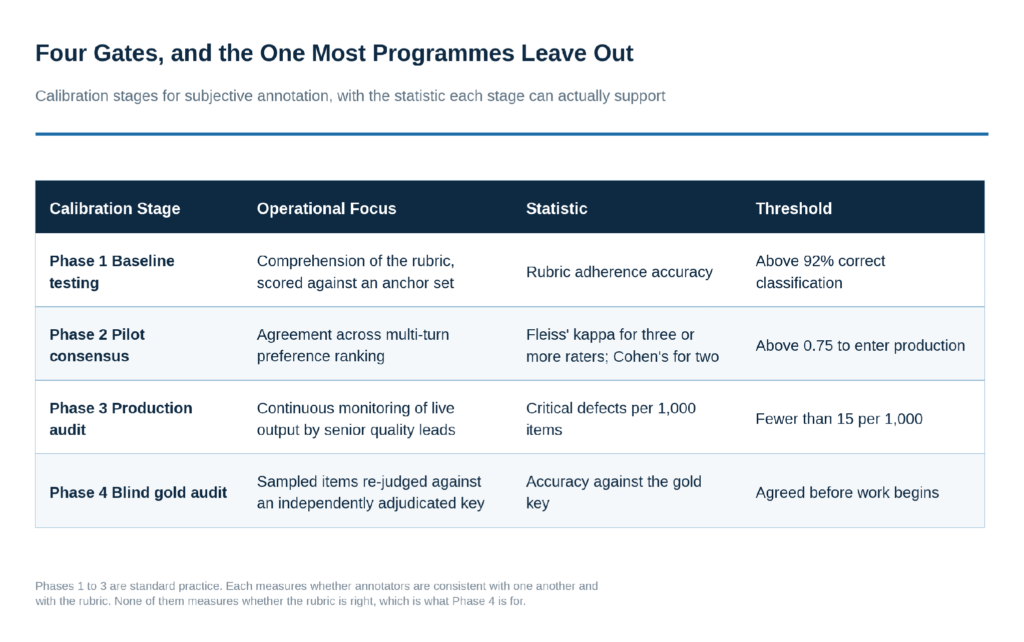
Figure 1. Calibration stages, with the statistic each stage can actually support.
Two technical points in the standard framework are worth stating precisely. Cohen’s kappa is defined for exactly two raters; a pilot that assigns items to three or more independent specialists requires Fleiss’ kappa, or the mean of pairwise Cohen’s coefficients. And a threshold is either an entry gate or a steady-state target — it cannot be both. A pod that begins at 0.61 and reaches 0.84 through calibration has done well, but it could not have passed a 0.80 pre-production gate on day one. Agreeing which number is the gate and which is the target avoids a contract that reads as satisfied and unsatisfied at the same time.
Phase 4 in Figure 1 is the one most programmes leave out, and the rest of this article is about why it matters.
Why Can Agreement Scores Rise While the Dataset Gets Worse?
Because agreement measures whether raters match each other, not whether they are right. When the rubric decides an item wrongly, every calibrated rater follows it and they agree perfectly. The error registers as consensus, and the statistic moves in the reassuring direction.
This is the central blind spot in subjective annotation quality control, and it is not a hypothetical. It follows directly from what the statistic is constructed to measure.
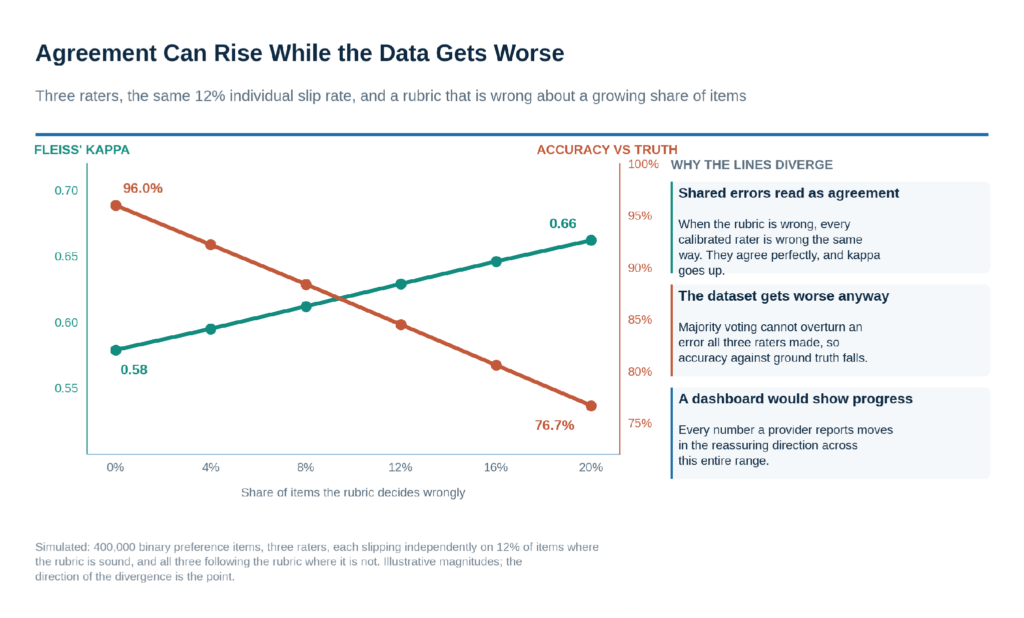
Figure 2. Agreement and accuracy moving in opposite directions as shared error grows.
The simulation holds everything constant except one variable. Three raters each slip independently on 12% of items where the rubric gives sound guidance. As the share of items the rubric decides wrongly grows from zero to twenty per cent, Fleiss’ kappa rises from 0.58 to 0.66 — because on those items all three raters agree completely — while accuracy against ground truth falls from 96.0% to 76.7%. Every number on a provider dashboard improves across that entire range.
The mechanism generalises beyond preference ranking. Anywhere raters are trained to a common standard, the training itself correlates their errors. That is the point of training, and it is also why the residual error becomes invisible to consistency-based measurement. The better the calibration, the more perfectly the pod agrees on whatever the rubric gets wrong.
What this does not mean
It does not mean agreement metrics are useless. High agreement is real evidence that the rubric is unambiguous, that raters understood it, and that nobody is drifting. That is worth knowing and worth paying for. The claim is narrower and more specific: agreement is necessary and not sufficient, and a programme that reports only agreement has no measurement of correctness at all.
What Does the Multi-Tier Review Hierarchy Protect Against?
Isolated misinterpretations by individual evaluators, before they propagate into a training corpus. Primary pods draft or rank, peers cross-validate, and senior quality leads inspect a randomised sample. It is an effective control against individual error and evaluator drift.
The topology is sound and the escalation protocols that accompany it — routing ambiguous prompts to senior domain leads and back to the client’s machine learning architects — are the correct handling for genuine edge cases. Tracking individual evaluator metrics dynamically, and moving raters who exhibit scoring drift into retraining, addresses the failure mode these hierarchies exist for.
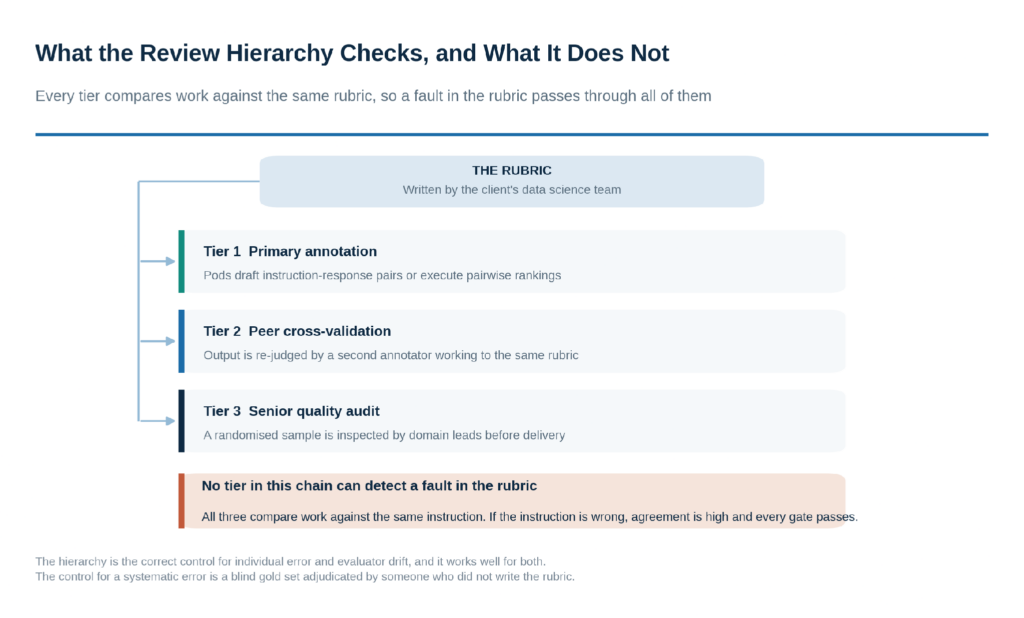
Figure 3. Every tier compares work against the same rubric.
What the diagram makes visible is the structural limit. Each tier answers the same question: does this output conform to the rubric? A reviewer who reads the rubric the same way as the annotator will confirm the annotator’s reading, and a senior lead sampling that batch will confirm it again. Adding tiers multiplies the confirmations without adding an independent source of judgement.
This is why a rubric fault is the most expensive defect class in an annotation programme. It is systematic rather than random, so it affects a predictable share of every batch; it is invisible to the controls designed to catch defects; and it compounds, because each round of calibration makes the pod’s adherence to the faulty rule tighter.
How Much Does a Third Independent Annotator Actually Buy?
It depends entirely on the individual slip rate, and the return is not monotonic. Majority voting on three raters removes most error at moderate slip rates. Once calibration has driven individual error down to around 6%, a third annotator removes under five percentage points for three times the annotation cost.
Assigning critical samples to three or more independent specialists and resolving by majority vote is standard advice, and it is good advice under the right conditions. Those conditions are worth stating, because the same programme usually prescribes aggressive calibration alongside it, and the two work against each other.
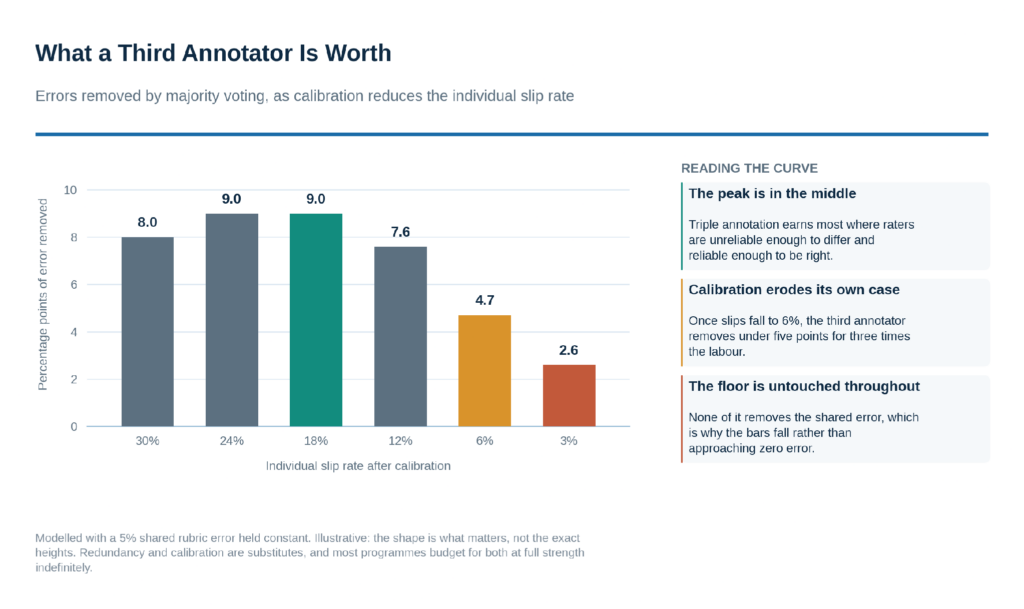
Figure 4. What majority voting removes, as calibration reduces individual error.
The shape is the finding. Majority voting corrects errors that are independent: if two raters get an item right and one gets it wrong, the vote recovers the right answer. As calibration succeeds, independent slips become rarer, and the situations in which the vote can rescue anything become rarer with them. Meanwhile the cost of triple annotation stays flat at three times single-pass. Redundancy and calibration are substitutes, and a programme that budgets both at full strength indefinitely is paying twice for the same protection.
The bars also never approach zero, which is the shared-error floor from Figure 2 showing up again. No amount of redundancy removes an error all three raters make together, because the majority is wrong together. That residue is untouched by every control in the chain.
A practical allocation
Triple-annotate during the pilot and the first weeks of production, where slip rates are genuinely high and the marginal return is largest. As agreement stabilises, reduce redundancy on routine items and reallocate the freed capacity to the control that is actually missing: an independently adjudicated sample. The total cost need not rise, and the coverage improves in the dimension nothing else is measuring.
What Control Detects a Fault in the Rubric Itself?
A blind gold set: a sample of items re-judged against a key adjudicated by someone who did not write the rubric and is not working to it. It is the only control whose answer does not come from the same source as the pod’s, which is what makes it capable of detecting a shared error.
The requirement is independence, not scale. A few hundred items a month, adjudicated by a second domain expert working from first principles rather than from the annotation guidelines, is enough to bound the shared error and to detect it drifting.
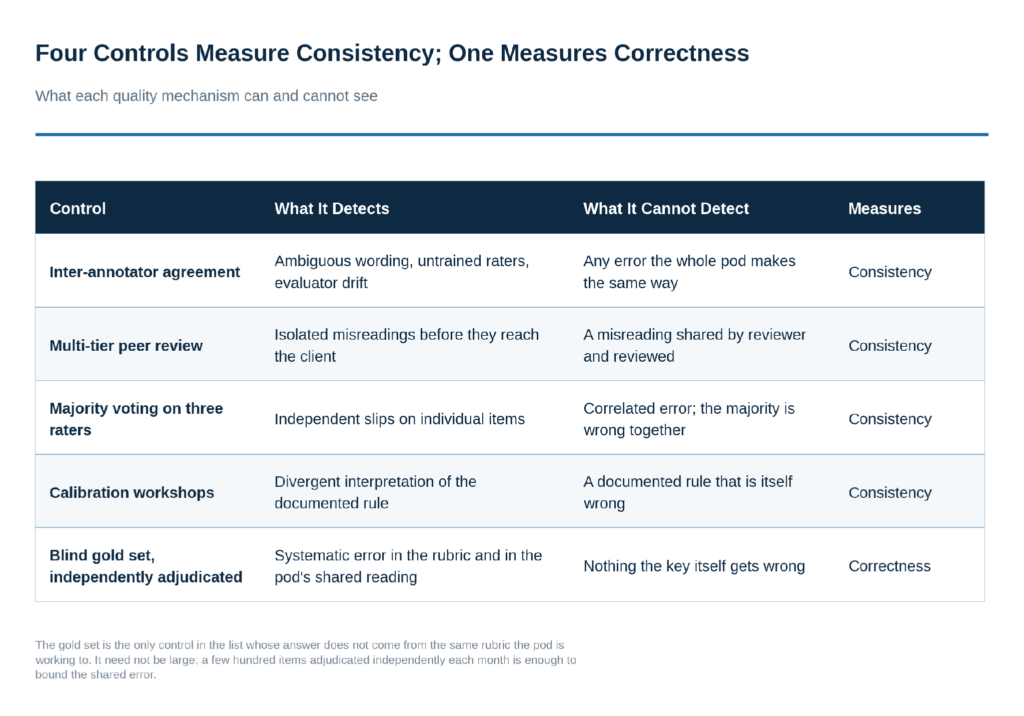
Figure 5. What each quality mechanism can and cannot see.
Where the pod’s majority answer and the independently adjudicated key disagree systematically, the rubric is the first thing to examine rather than the annotators. That inverts the usual escalation, which treats a disagreement as an annotator problem and routes it to retraining. Retraining a pod to follow a faulty rule more closely raises agreement and degrades the dataset — exactly the divergence Figure 2 describes.
For commercial purposes the distinction matters because managed-outcome contracts are typically written against agreement thresholds alone. A provider can meet such a threshold perfectly while delivering data with a systematic error, and will have satisfied every obligation in the agreement. Adding a gold-set accuracy obligation, with the key adjudicated on the client’s side or by an independent third party, closes that gap at modest cost.
How Do Domain-Specific Talent Pools Improve Evaluative Accuracy?
By supplying evaluators who can judge the substance rather than the surface. Legal compliance prompts need evaluators who understand jurisdictional nuance; financial reasoning models need professionals who can audit a balance sheet. Philippine providers staff verticalized pods with certified accountants, registered nurses, legal associates and software engineers.
Matching professional background to model domain reduces interpretive error at source, which is the cheapest place to remove it. A generalist evaluator working from a written rule can only check the rule; a qualified professional can notice when the rule produces an answer their training tells them is wrong.
That second capability is the one worth specifying, and it is rarely asked for. A domain expert who is instructed to apply the rubric mechanically is being used as a generalist at a specialist rate. A domain expert who is invited to flag items where the rubric appears to give the wrong answer becomes a partial substitute for the gold set — an early-warning channel that no purely statistical control provides.
Operationally this means a rubric-challenge path alongside the ambiguity-escalation path. Ambiguity escalation asks what the rule means; rubric challenge asks whether the rule is right. The two need different destinations: ambiguity goes to whoever owns the guidelines, while a challenge needs to reach someone able to change them.
How Can Enterprise Buyers Structure Subjective Annotation Contracts?
Write explicit decision rubrics with boundary conditions, specify the correct statistic for the number of raters used, commission an independently adjudicated gold set, and tie service levels to accuracy against that key rather than to agreement alone.
- Specify the statistic, not just the threshold. Name Fleiss’ kappa for three or more raters and Cohen’s for two, and state whether the number is an entry gate or a steady-state target.
- State how the agreement sample is drawn. Agreement rises when the sampled items are easy, so a threshold without a sampling protocol can be satisfied by the choice of sample.
- Commission the gold set before production, not after a problem. A key adjudicated independently of the rubric is the only measurement of correctness in the programme.
- Give domain experts a route to challenge the rubric. Separate from the ambiguity escalation path, and directed to someone with authority to revise the guidelines.
- Scale redundancy down as calibration succeeds. Triple annotation earns its cost early and loses it later; reallocate to independent adjudication rather than holding both at full strength.
What Do Industry Leaders Say About Scaling Subjective Judgement?
That human feedback cannot be commoditised. When an annotator judges nuance, safety and cultural tone, their professional background and calibration framework shape the model’s worldview, and scaling that judgement without losing integrity is an operational discipline rather than a staffing exercise.
The framing matters because it determines what a buyer thinks they are purchasing: annotation capacity, or a judgement process with measurable properties.
The biggest myth in enterprise AI development is that subjective human feedback can be commoditized. When you ask an annotator to judge nuance, safety, and cultural tone, their professional background and calibration framework dictate the model’s entire worldview. The operational maturity of Philippine BPO providers lies in their ability to scale disciplined, cognitive consensus across hundreds of specialized professionals without losing data integrity.
— John Maczynski, CEO, Cynergy BPO
The phrase worth holding onto is that the calibration framework dictates the model’s worldview. That is precisely why the framework itself needs a control. Everything downstream of the rubric inherits whatever the rubric encodes, including its errors, and consensus across hundreds of professionals transmits a systematic error faithfully at scale.
How Did One Provider Stabilise a Conversational Safety Programme?
A conversational AI enterprise was receiving volatile preference rankings from a prior vendor, producing tone regression and model instability. A 50-person Manila pod running three-tier review, per-annotator agreement tracking and twice-weekly calibration moved agreement from 0.61 to a stable 0.84 and accelerated training iteration by 35%.
The baseline of 0.61 is the diagnostic detail. On the standard interpretive bands that sits in the substantial range but well short of research-grade, and on genuinely subjective material — cultural nuance, multi-turn dialogue safety — it is consistent with a rubric that had not resolved its boundary cases rather than with unqualified raters.
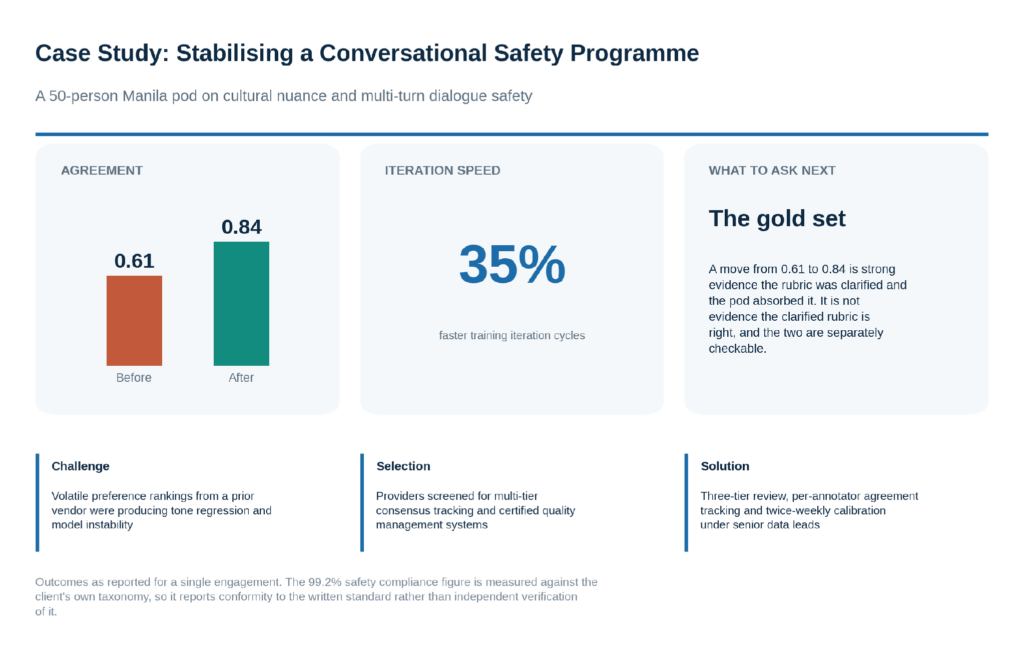
Figure 6. Reported outcomes from a 50-person Manila pod on cultural nuance and dialogue safety.
The move to 0.84 is strong evidence that the guidelines were clarified and the pod absorbed the clarification, and the 35% iteration gain is the business outcome that followed: stable preference data means fewer wasted training runs. Both are real achievements and neither is in question.
What the figures do not establish is that the clarified rubric is right. The reported 99.2% safety compliance is measured against the client’s own taxonomy, so it reports conformity to the written standard rather than independent verification of the standard. For a safety programme in particular, where the cost of a systematic error is higher than in most annotation work, the natural next step is a blind sample adjudicated outside the rubric — which would convert a strong consistency result into a correctness result.
Why Do Organizations Work with Cynergy BPO on Annotation Quality?
Cynergy BPO is an independent, vendor-neutral outsourcing advisory firm headquartered in Manila, representing a vetted network of more than 100 Philippine providers. It maps requirements against performance data to produce a shortlist within days and manages competitive negotiation on the buyer’s behalf.
Who Is Cynergy BPO?
Cynergy BPO is an independent outsourcing advisory and consultancy firm headquartered in Manila, founded by industry veterans with more than 65 years of combined operational experience governing major international accounts. It specialises in connecting mid-market and enterprise organisations with vetted Philippine BPO providers across voice, back-office and AI data operations.
How Does Cynergy BPO Differ from Traditional Outsourcing Brokers?
Traditional brokers are transactional and are compensated by the providers they place, which shapes which provider is recommended. Cynergy BPO applies an advisory-led methodology, mapping exact operational requirements against performance data rather than against availability. For subjective annotation work, where the meaningful difference between providers is the sophistication of their quality measurement, that distinction determines whether a shortlist can be evaluated at all.
How Does Cynergy BPO’s Network of 100+ Vetted Philippine BPO Providers Benefit Organizations?
The network makes it possible to shortlist on the criteria that govern data quality: whether a provider uses the right statistic for the number of raters it deploys, whether it can distinguish a consistency result from a correctness one, and whether it has staffed the relevant professional vertical before. Approaching the market cold, a buyer cannot establish any of these before contracting.
How Does Cynergy BPO’s Advisory-Led Vendor Matching Process Work?
Requirements are mapped against operational and commercial criteria, a tailored shortlist of vetted providers is delivered within a few working days, and the firm then manages competitive proposal and negotiation processes on the buyer’s behalf. Quality obligations, sampling protocols and the statistics behind them are settled as part of that process rather than discovered afterwards.
Why Do Organizations Use Cynergy BPO?
Because two providers can report identical agreement figures and be running quality programmes of entirely different sophistication. One may be measuring consistency and calling it accuracy; the other may hold an independently adjudicated key and know the difference. Organisations use Cynergy BPO to establish which is which before committing.
Frequently Asked Questions
How do Philippine providers measure annotation quality on subjective tasks?
Primarily through inter-annotator agreement — Cohen’s kappa for two raters, Fleiss’ kappa for three or more — alongside multi-tier supervisory audits and blind sample re-testing. These measure consistency. Measuring correctness additionally requires a key adjudicated independently of the rubric.
What agreement threshold should be required for subjective work?
Above 0.75 is a reasonable production gate and 0.80 or better a sound steady-state target, but state which is which in the contract. Also state how the sample is drawn, since agreement rises when the sampled items are easy, and require the statistic to match the number of raters.
Can a high agreement score coexist with a poor dataset?
Yes. If the rubric decides a class of items wrongly, every calibrated rater follows it, agreement on those items is perfect, and the aggregate statistic rises while accuracy against ground truth falls. This is the reason an independently adjudicated gold set belongs in the quality programme.
How do providers handle ambiguous edge cases during subjective evaluation?
Through escalation protocols routing ambiguous prompts to senior domain leads and, where necessary, to the client’s machine learning architects for definitive clarification. A separate path should exist for challenging the rubric itself, since that question needs to reach whoever can revise the guidelines.
Why are Philippine providers preferred for subjective RLHF workflows?
For the combination of strong English proficiency, Western cultural familiarity and a deep graduate talent pool across professional disciplines, including certified public accountants, registered nurses, legal professionals and software engineers. The depth of the professional pool is what makes verticalized pods practical at scale.
How long does it take to onboard a subjective annotation pod?
Two to four weeks after guideline alignment and pilot calibration for teams of 20 to 100 specialists. Allow additional time where the rubric has not yet resolved its boundary cases, since that resolution is the work the pilot is really doing.
Is triple annotation always worth the cost?
Not indefinitely. Majority voting earns most at moderate slip rates and considerably less once calibration has driven individual error low. Scale it down as agreement stabilises and redirect the capacity toward independently adjudicated sampling, which measures something nothing else in the programme measures.
What data security safeguards protect proprietary prompts during annotation?
ISO 27001 and SOC 2 aligned facilities with locked-down virtual desktop infrastructure, disabled peripheral ports and controlled network egress. Prompts and rubrics deserve source-code handling, since a rubric describes how a client understands its own model’s failure modes.
Share This
Unlock cost-efficient growth with expert BPO guidance!
Partner with Cynergy BPO to connect with top outsourcing providers.
Streamline operations, cut costs, and scale your business with confidence.
Book a Free Call
Ralf Ellspermann - CSO
Author
Ralf Ellspermann is the Chief Strategy Officer (CSO) of Cynergy BPO and a globally recognized authority in business process and contact center outsourcing. With more than 25 years of experience advising enterprises and SMEs, he provides strategic guidance on vendor selection, CX optimization, and scalable outsourcing strategies across global markets. His expertise spans fintech, ecommerce and retail, healthcare, insurance, travel and hospitality, and technology (AI & SaaS) outsourcing.
A frequent speaker at leading industry conferences, Ralf is also a published contributor to The Times of India and CustomerThink, where he shares insights on outsourcing strategy, customer experience, and digital transformation.