



By: Ralf Ellspermann
25-Year, Multi-Awarded BPO Veteran
Published: 15 September 2026

Reviewed By: John Maczynski
Former EVP, World's Largest Contact Center
Updated: 15 September 2026
Philippine AI training providers protect data privacy and meet GDPR requirements by operating under the Philippine Data Privacy Act of 2012, implementing ISO 27001 and SOC 2 Type II frameworks, and deploying secure clean-room environments with strict device and network restrictions.
Key Takeaways
- Legal alignment already exists. The Data Privacy Act of 2012 mirrors European mandates closely, giving buyers a statutory foundation rather than a contractual workaround.
- Physical controls are enforceable. Secure clean rooms, biometric access, disabled USB ports, and encrypted virtual desktop infrastructure.
- Certification provides the audit trail. ISO 27001 and SOC 2 Type II demonstrate information security management across operations rather than at a point in time.
- Minimization comes before annotation. Data minimization protocols and synthetic substitution keep identifiable information from crossing unauthorized boundaries.
- Vetting removes screening risk. An advisory network verifies compliance before a buyer commits, which is difficult to do from outside the market.
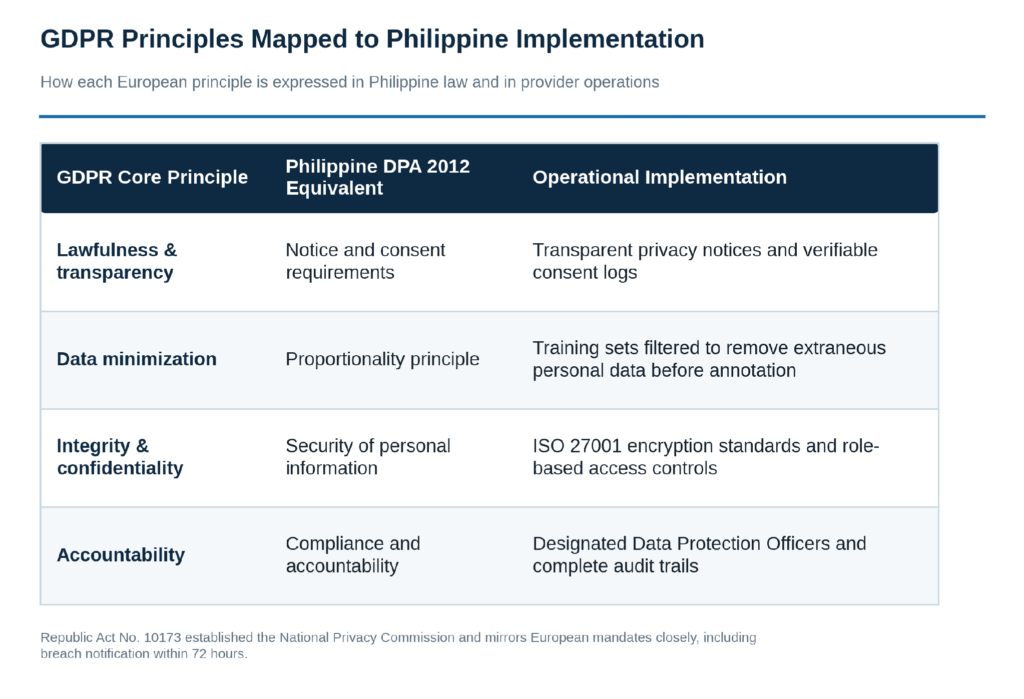
Figure 1. GDPR principles mapped to Philippine law and to provider operations.
How Do Philippine Legal Frameworks Align with GDPR?
Republic Act No. 10173, the Data Privacy Act of 2012, established the National Privacy Commission and aligns Philippine standards closely with GDPR — covering lawful processing, data subject rights, and mandatory breach notification within 72 hours. Providers handling European data implement standard contractual clauses and data processing agreements as routine practice.
The alignment matters because it changes what a buyer is relying on. Where the local framework is unrelated to European requirements, GDPR compliance rests entirely on contract terms that must be enforced across jurisdictions. Where the statutory framework already mirrors the principles, contractual terms reinforce a legal position rather than substituting for one.
Centralized Entities Are Accountable in a Way Crowd Platforms Are Not
This is the structural distinction most relevant to AI training data. A decentralized crowd-sourcing platform distributes work to individuals across jurisdictions, which makes enforcement diffuse and breach accountability difficult to locate. A Philippine business process provider operates as a centralized legal entity subject to direct regulatory enforcement by the National Privacy Commission, with identifiable officers, registered processing activities, and an auditable chain of responsibility.
What Technical and Physical Infrastructure Safeguards Protect Training Datasets?
Four layers: physical facilities with biometric access, CCTV, and clean-room policies prohibiting personal devices; isolated virtual desktop infrastructure with downloading, printing, and screenshots disabled; encrypted VPN transmission with no local copies; and governance covering DPOs, audit trails, and certification.
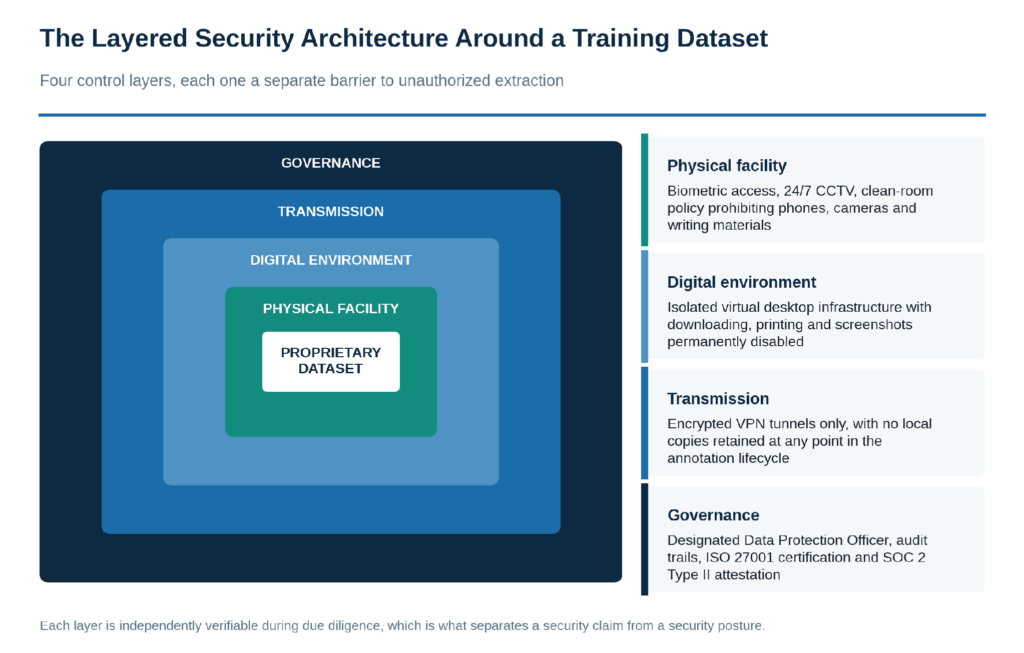
Figure 2. The layered security architecture around a training dataset.
Elite facilities run secure production floors where personal electronic devices, cameras, and even writing materials are prohibited, backed by 24/7 monitoring. The digital environment matters equally: annotators work inside isolated virtual desktops where the export paths simply do not exist, so data cannot leave by accident or intent. Each layer is independently verifiable during due diligence, which is what separates a security claim from a security posture.
Verify the Layers Separately
A provider can present strong controls at one layer and weak ones at another, and the composite rarely shows up in a summary. Physical clean-room enforcement without disabled export functions leaves an obvious route out; disabled exports without access logging leaves no way to reconstruct what happened. The relevant question during evaluation is not whether the provider is secure but which of the four layers has been independently examined and when.
How Do Providers Handle Personally Identifiable Information During Large-Scale Labeling?
Automated masking algorithms redact names, financial records, and medical identifiers before annotation teams see the data, with synthetic substitution preserving structure where context is needed. Where full context is genuinely required, annotators work under individual NDAs, role-based permissions, and continuous behavioral monitoring.
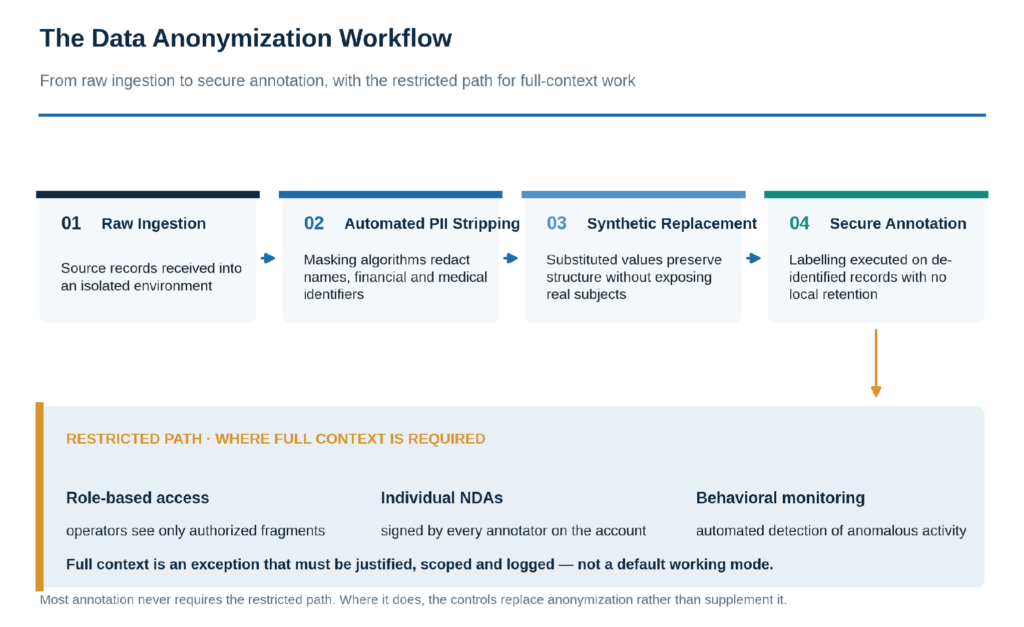
Figure 3. The data anonymization workflow, including the restricted path for full-context work.
Most annotation never requires the restricted path. Synthetic replacement preserves the structural properties a model needs to learn from — field positions, value distributions, document layouts — without exposing the individuals behind the original records. Treating full context as the default rather than the exception is the single most common source of unnecessary exposure in an annotation programme.
Where Full Context Is Unavoidable
Advanced large language model alignment sometimes requires the original record, because the judgement being trained depends on nuance that masking removes. In that case the controls change rather than disappear: operators interact only with authorized fragments, retain no local copies, and work under monitoring that flags anomalous access patterns. The requirement should be justified, scoped, and logged rather than assumed.
Data security is the bedrock of enterprise artificial intelligence deployment. Buyers must look beyond baseline certifications and demand end-to-end operational transparency, secure physical infrastructure, and unyielding adherence to international compliance frameworks.
— John Maczynski, CEO, PITON-Global
What Guidance Do Industry Leaders Offer for Evaluating Vendor Security Compliance?
Conduct on-site or virtual facility audits to verify clean-room enforcement in practice, review current SOC 2 Type II examination results and ISO 27001 certificates including their exceptions, and establish contractual SLAs defining financial liability and remediation before signature.
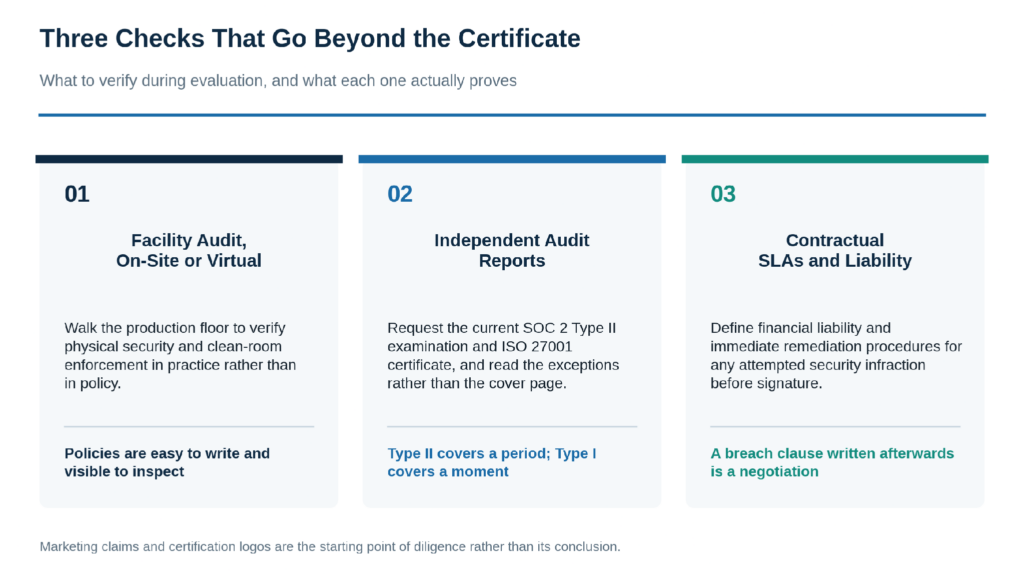
Figure 4. Three checks that go beyond the certificate.
Read the Exceptions, Not the Cover Page
A SOC 2 Type II report documents whether controls operated effectively across an observation window, and the exceptions section is where that assessment actually lives. An ISO 27001 certificate establishes that something was certified; the Statement of Applicability establishes whether it was the facility and service that will handle your data. Requesting both and reading the detail is the difference between verification and reassurance.
Examine Employee Vetting and Vulnerability History
Two areas sit outside standard certification and deserve direct enquiry: how the provider vets employees who will access sensitive data, and what its network vulnerability assessment history shows. Neither appears in a marketing claim, and both are strong predictors of whether the documented controls hold under ordinary operating conditions.
How Did One Enterprise Secure Compliant Document Processing Through Philippine Outsourcing?
A European financial institution needed 500,000 sensitive customer loan documents annotated for model training under strict GDPR mandates. A dedicated, isolated 60-seat facility with automated PII masking delivered zero leakage incidents, cut processing time 45%, and passed external EU audit review with top ratings.
Client Challenge
Stringent GDPR restrictions combined with internal resource bottlenecks were preventing the annotation of half a million sensitive financial records. The difficulty was not finding capacity but finding a jurisdiction that balanced high-end cognitive parsing with uncompromised legal safety — a combination that rules out both low-cost crowd platforms and most onshore alternatives on capacity grounds.
Vendor Selection Process
PITON-Global screened five Philippine providers on ISO 27001 verification, National Privacy Commission standing, and secure VDI infrastructure. NPC standing is the criterion an international buyer is least equipped to check independently, and it is the one that establishes whether the provider is accountable under the local framework rather than merely aware of it.
Solution Implemented
A secured, dedicated 60-seat facility physically isolated from other operations, with automated PII masking pipelines ahead of annotation and continuous biometric oversight with access logging.
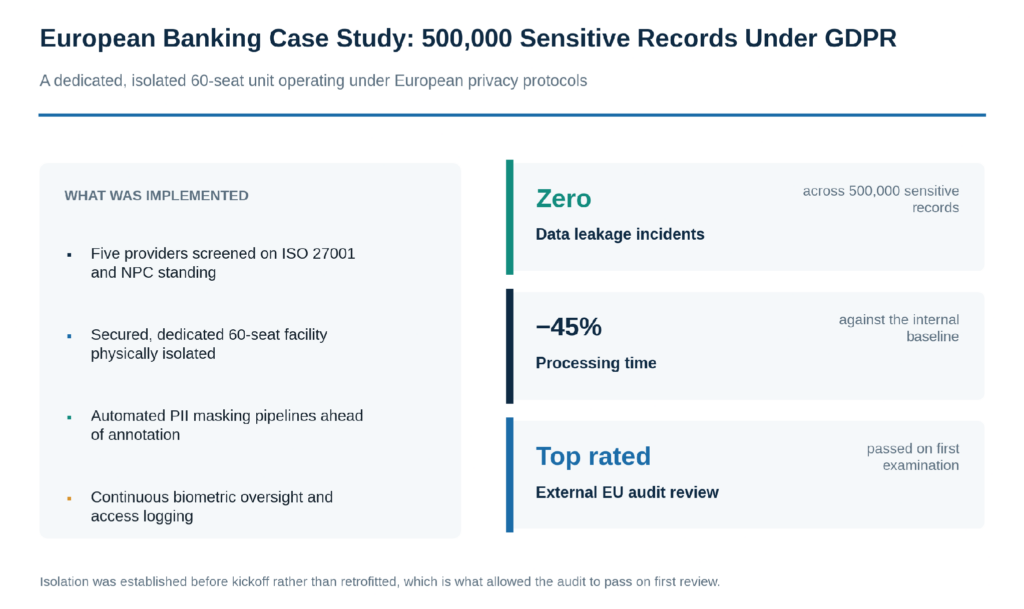
Figure 5. What was implemented, and the outcomes achieved.
Outcomes and Lessons
The programme achieved full regulatory compliance with zero data leakage incidents, reduced processing time by 45%, and passed external EU audit review with top ratings. The sequencing is the transferable lesson: physical and digital isolation was established before project kickoff rather than retrofitted around a running operation, which removed regulatory friction and allowed the audit to pass on first examination.
Why Do Leading Global Enterprises Partner with PITON-Global for Outsourcing Advisory?
PITON-Global is a BPO advisory and consultancy firm connecting global enterprises with more than 100 meticulously vetted providers across the Philippines, offering objective, data-driven guidance rather than commission-driven brokerage.
Who Is PITON-Global?
PITON-Global advises enterprise buyers on Philippine outsourcing across provider selection, commercial structuring, and governance. On data protection its relevance is practical: certification scope, NPC registration standing, and historical security performance are verifiable from inside the market and largely opaque from outside it, which is where international vendor selection carries the most risk.
How Does PITON-Global Differ from Traditional Outsourcing Brokers?
Traditional brokers are driven by vendor commission structures, which shapes the recommendation before the requirement is understood and ends the relationship at introduction. PITON-Global provides objective advisory tailored to specific corporate objectives, continuing through evaluation, security diligence, and commercial structuring.
How Does PITON-Global’s Network of 100+ Vetted Philippine Providers Benefit Organizations?
Providers are pre-screened on physical infrastructure, compliance credentials, and historical security performance before any client introduction. That does not replace the buyer’s own audit — it removes the providers that would fail it, which compresses procurement and avoids the cost of discovering a control gap late in evaluation.
Figure 6. How provider security is pre-screened before a buyer is introduced.
How Does PITON-Global’s Advisory-Led Vendor Matching Process Work?
Regulatory parameters are documented — applicable frameworks, data categories, residency requirements, and audit obligations; the vetted network is filtered against them; candidates are assessed on facility grade, certification scope, NPC standing, and incident history; and the buyer is supported through audit scheduling, contractual SLA design, and transition into a compliant operating state.
Why Do Organizations Use PITON-Global?
- Verified compliance before commitment. Certification scope and regulatory standing checked rather than accepted from a proposal.
- Eliminated selection risk. Providers that would fail a security audit are removed before a buyer spends time on them.
- Accelerated procurement. Completed diligence compresses vendor identification from months into weeks.
- Contractual protection. Liability and remediation terms structured before signature rather than after an incident.
- No direct cost to the buyer. Advisory delivered without a fee to the enterprise client.
Frequently Asked Questions
Are Philippine outsourcing providers legally bound to follow EU GDPR standards?
They operate under the Data Privacy Act of 2012 and bind themselves contractually to GDPR standards through standard contractual clauses and data processing agreements when handling European citizen data. The statutory alignment means those contractual commitments reinforce local obligations rather than standing alone.
What certifications should enterprise buyers look for when selecting an AI data annotation vendor?
Active ISO 27001 certification for information security management and SOC 2 Type II attestation confirming controls operated effectively over a period. Verify that the scope of each covers the specific facility and service handling your data.
How do Philippine providers prevent workers from stealing or leaking sensitive training data?
Through clean-room policies prohibiting mobile phones and external storage, restricted virtual desktop environments with export functions disabled, role-based access to authorized fragments only, and continuous monitoring for anomalous behavior.
What is the role of the National Privacy Commission in regulating Philippine BPO operations?
The Commission enforces the Data Privacy Act, investigates privacy complaints, and oversees mandatory breach notification for registered Philippine enterprises. A provider’s standing with the NPC is a meaningful diligence check and one an international buyer rarely verifies independently.
How does PITON-Global assist companies in vetting data security capabilities?
Through rigorous pre-screening of its partner network, evaluating physical infrastructure, compliance credentials, and historical security performance before client introductions, then supporting the buyer’s own audit and contractual protections.
Share This
Unlock cost-efficient growth with expert BPO guidance!
Partner with Cynergy BPO to connect with top outsourcing providers.
Streamline operations, cut costs, and scale your business with confidence.
Book a Free Call
Ralf Ellspermann - CSO
Author
Ralf Ellspermann is the Chief Strategy Officer (CSO) of Cynergy BPO and a globally recognized authority in business process and contact center outsourcing. With more than 25 years of experience advising enterprises and SMEs, he provides strategic guidance on vendor selection, CX optimization, and scalable outsourcing strategies across global markets. His expertise spans fintech, ecommerce and retail, healthcare, insurance, travel and hospitality, and technology (AI & SaaS) outsourcing.
A frequent speaker at leading industry conferences, Ralf is also a published contributor to The Times of India and CustomerThink, where he shares insights on outsourcing strategy, customer experience, and digital transformation.