



By: Ralf Ellspermann
25-Year, Multi-Awarded BPO Veteran
Published: 15 September 2026

Reviewed By: John Maczynski
Former EVP, World's Largest Contact Center
Updated: 15 September 2026
Philippine providers typically deliver annotated datasets within three to fourteen days depending on volume and complexity. Standard image classification of 100,000 records completes in three to five days, while complex semantic segmentation or specialized domain annotation requires ten to fourteen days with dedicated teams.
Key Takeaways
- Volume-based timelines. Datasets of 100,000 records complete within three to fourteen days depending on annotation complexity.
- Complexity determines throughput. Simple classification runs 800 to 1,200 records per annotator daily; semantic segmentation runs 80 to 150.
- Multi-shift acceleration. Round-the-clock operations compress delivery timelines by up to 60% for urgent requirements.
- Quality assurance is on the critical path. Verification adds one to three days and should be planned in rather than discovered.
- Fixed phases do not scale with team size. Adding annotators compresses production only, which is why timelines flatten as teams grow.
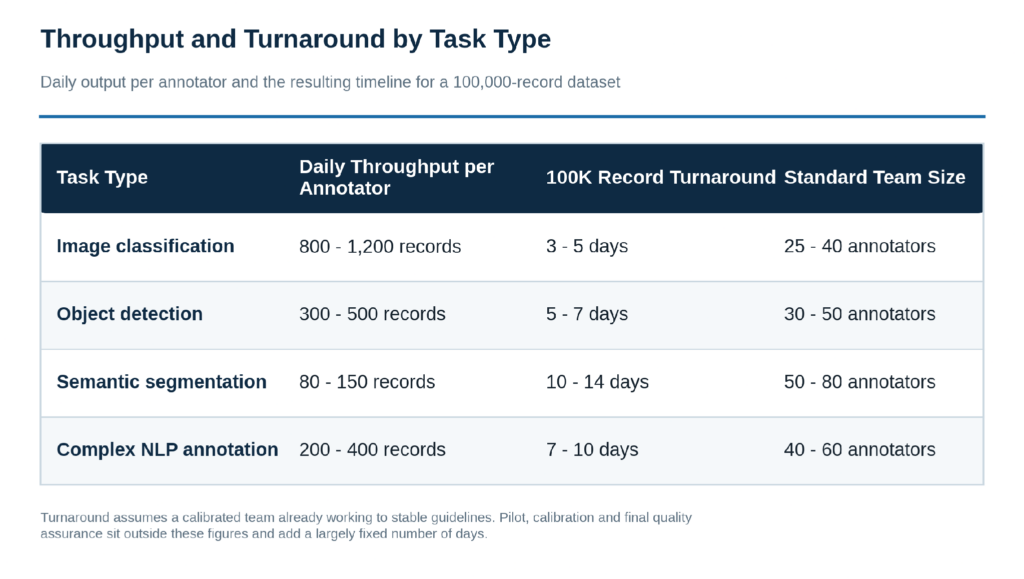
Figure 1. Throughput and turnaround by task type, with the team size each assumes.
What Determines Annotation Project Turnaround Times?
Three variables: dataset volume, annotation complexity, and team size. Simple image classification runs at 800 to 1,200 records per annotator daily, while pixel-level semantic segmentation runs at 80 to 150 — an order-of-magnitude difference that dominates any timeline calculation.
Task complexity matters more than volume in most projects, because it sets the per-annotator rate that everything else multiplies. Quality requirements interact with it: higher accuracy thresholds require more verification passes, and those passes sit on the critical path rather than running invisibly alongside production.
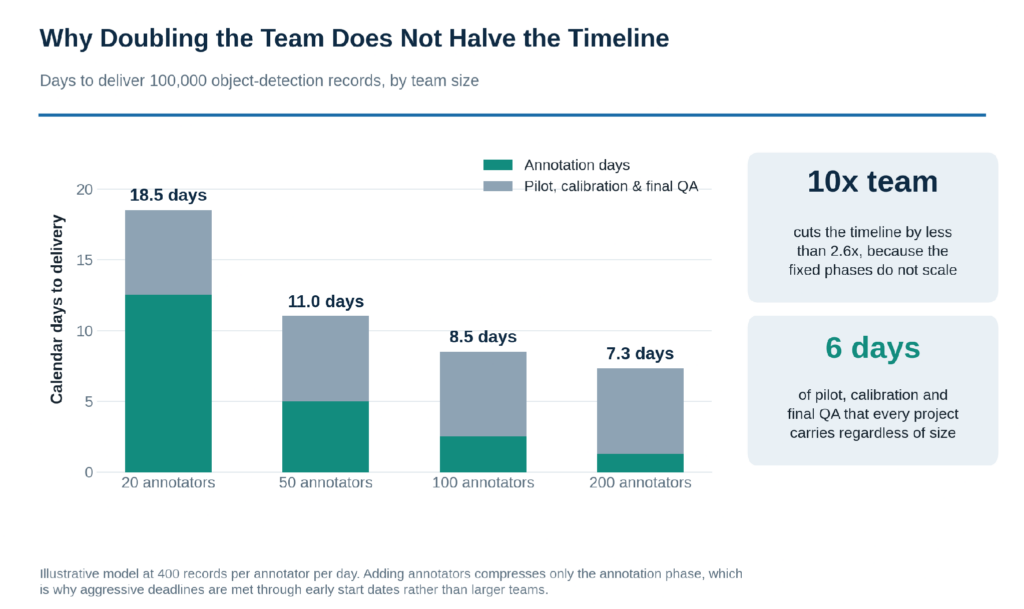
Figure 2. Days to deliver 100,000 object-detection records, by team size.
Team Size Compresses One Phase, Not the Project
Scaling from 20 to 200 annotators cuts the annotation phase by a factor of ten and the overall timeline by considerably less, because pilot, calibration, and final quality assurance are largely fixed in duration. The practical consequence is that aggressive deadlines are met through earlier start dates and parallel QA rather than through larger teams, and a provider proposing to solve a schedule problem purely by adding headcount has not understood the arithmetic.
What Phases Sit Behind a Quoted Turnaround?
Five: a pilot phase of three to five days establishing baseline accuracy, calibration refining guidelines, full production running at scale, quality assurance verification, and final delivery. A quoted turnaround that omits the first two is describing the production phase rather than the project.
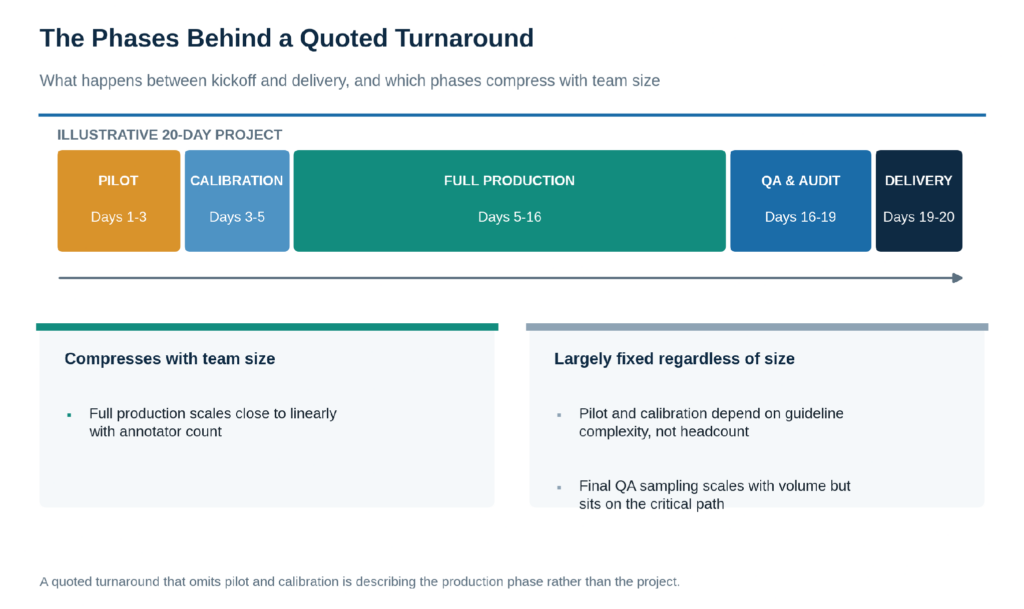
Figure 3. The phases behind a quoted turnaround, and which compress with team size.
The pilot and calibration phases are where the project’s eventual accuracy is determined, and they cost days that cannot be recovered later. Compressing them to hit a start date reliably extends the production phase instead, because unresolved guideline ambiguity surfaces as rework once volume is running.
Run Quality Assurance in Parallel Where Possible
Sequential QA — annotate everything, then verify everything — puts the entire verification window on the critical path. Rolling verification against completed batches keeps most of it off, leaving only a final audit pass before delivery. On deadline-constrained projects this is usually the single largest source of compression available, and it costs nothing beyond planning.
How Do Providers Accelerate Delivery for Urgent Projects?
Through multi-shift operations across a 24-hour cycle, rapid team scaling from pre-trained bench capacity, parallel processing across sub-teams, and priority resource allocation. Together these compress timelines by up to 60% for time-sensitive requirements.
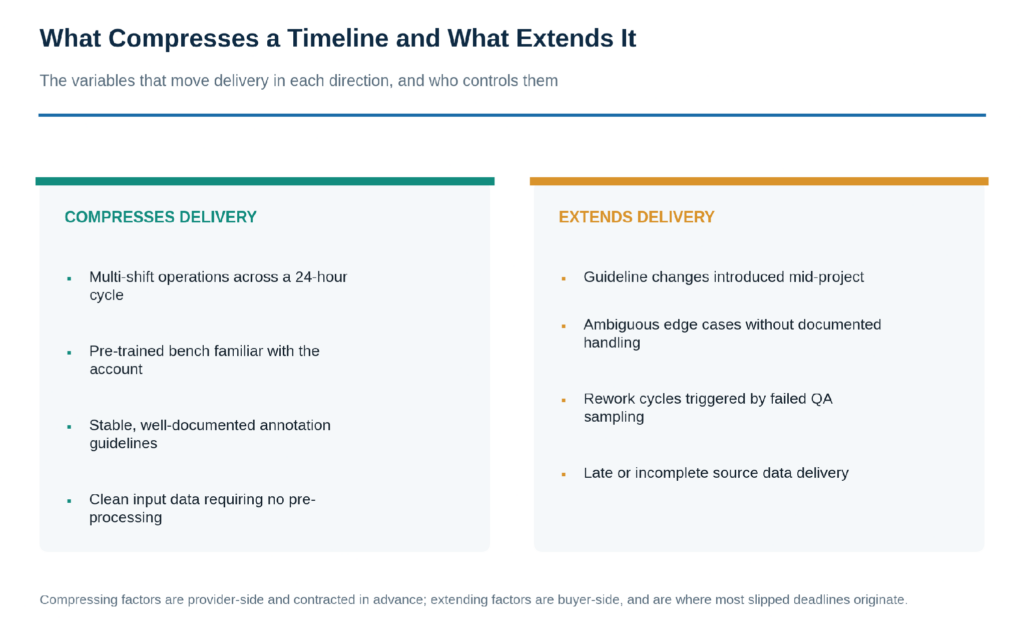
Figure 4. What compresses a timeline and what extends it.
The asymmetry in that figure is worth noticing. The compressing factors are mostly provider-side and mostly contracted in advance — they are available if the arrangement anticipated them. The extending factors are mostly buyer-side: guideline changes introduced mid-project, ambiguous edge cases without documented handling, and late or incomplete source data. Most slipped annotation deadlines trace to that second column.
Lock the Guidelines Before Full Production
A guideline change introduced after volume is running does not simply affect subsequent records. It invalidates completed work, triggers rework at whatever rate the change applies, and resets the calibration the team had reached. Locking guidelines at the end of calibration — and treating later changes as a scoped change request rather than a clarification — is the most effective schedule protection available to a buyer.
Speed without quality is worthless in AI training data. Philippine providers deliver both through disciplined project management, scalable team structures, and quality assurance processes that operate in parallel with annotation rather than as a bottleneck at the end.
— John Maczynski, CEO, PITON-Global
What Should Buyers Verify About Throughput Commitments?
Two things: documented delivery history on comparable projects with volumes and dates attached, and per-annotator throughput measured on the buyer’s own data during a pilot. A quoted benchmark describes someone else’s dataset.
Measure Throughput on Your Own Records
Published throughput figures assume a dataset with particular characteristics — image resolution, object density, document length, edge-case frequency. A pilot on representative records produces the only number that predicts your timeline, and it also surfaces whether the guidelines are clear enough to sustain that rate at volume.
Ask What Happened When a Deadline Slipped
Every provider with a substantial delivery history has missed a date at some point. The informative question is what caused it and what changed afterwards, which reveals both the failure mode and whether the organization learns from it. A provider claiming an unbroken record is describing a short history or an unexamined one.
How Did One Enterprise Meet a Six-Week Delivery Window?
An autonomous systems company needed two million images annotated within six weeks for a product launch. A 150-annotator team running multi-shift operations with parallel quality assurance delivered on schedule at 98.8% accuracy, with guidelines locked before full production began.
Client Challenge
A fixed launch date and two million images left no room for a timeline concession, and no room for the rework that a mid-project guideline change would have caused. The constraint shaped the approach: the schedule had to be protected at the design stage rather than managed during delivery.
Vendor Selection Process
PITON-Global assessed providers on documented throughput capacity and delivery record on comparable projects. Delivery record carried the weight, since stated capacity is a claim every provider makes and evidence of having hit a comparable deadline is the only thing that separates them beforehand.
Solution Implemented
A 150-annotator team deployed across multi-shift operations, with quality assurance running in parallel with production rather than sequentially, and annotation guidelines locked before full production commenced.
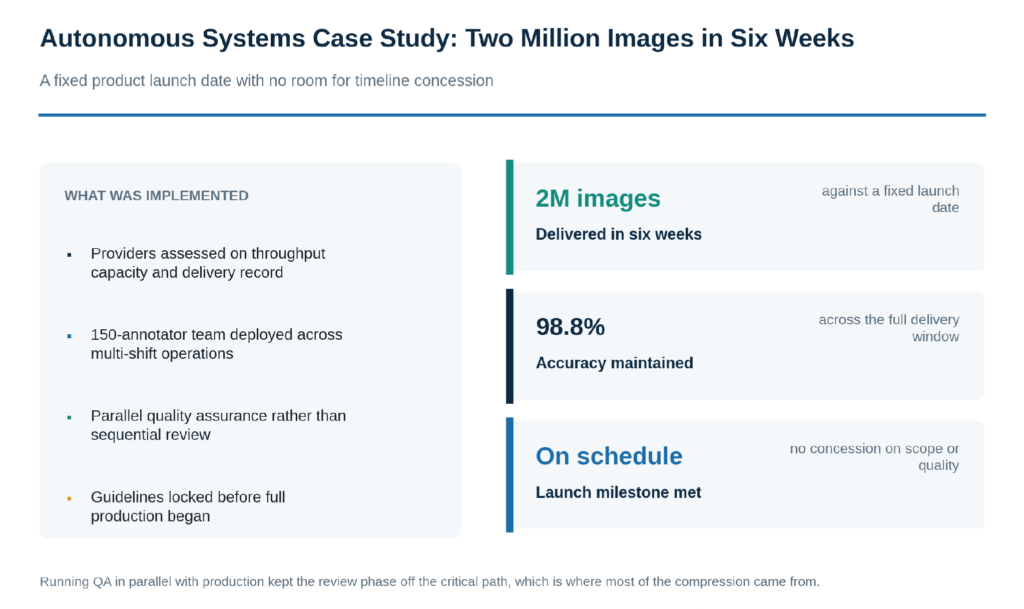
Figure 5. What was implemented, and the outcomes achieved.
Outcomes and Lessons
The programme delivered two million annotated images in six weeks at 98.8% accuracy with no concession on scope or quality. Most of the compression came from running QA in parallel rather than from headcount, which kept the review phase off the critical path — and locking guidelines before production removed the rework that would otherwise have consumed the margin the schedule depended on.
Why Do Leading Global Enterprises Partner with PITON-Global for Outsourcing Advisory?
PITON-Global is a BPO advisory and consultancy firm connecting global enterprises with more than 100 meticulously vetted providers across the Philippines, offering objective, data-driven guidance rather than commission-driven brokerage.
Who Is PITON-Global?
PITON-Global advises enterprise buyers on Philippine outsourcing across provider selection, commercial structuring, and governance. On delivery timelines its relevance is direct: throughput claims are easy to state and hard to verify, and documented delivery history on comparable projects is accessible from inside the market rather than from a proposal.
How Does PITON-Global Differ from Traditional Outsourcing Brokers?
Traditional brokers are driven by vendor commission structures, which shapes the recommendation before the requirement is understood. PITON-Global provides objective advisory tailored to specific corporate objectives, continuing through pilot benchmarking, timeline structuring, and commercial negotiation.
How Does PITON-Global’s Network of 100+ Vetted Philippine Providers Benefit Organizations?
Providers are assessed on documented delivery records, multi-shift capability, and bench depth before a buyer sees a name. For a deadline-constrained project that removes the risk a buyer is least able to evaluate independently: whether a stated turnaround has ever actually been achieved at comparable volume.
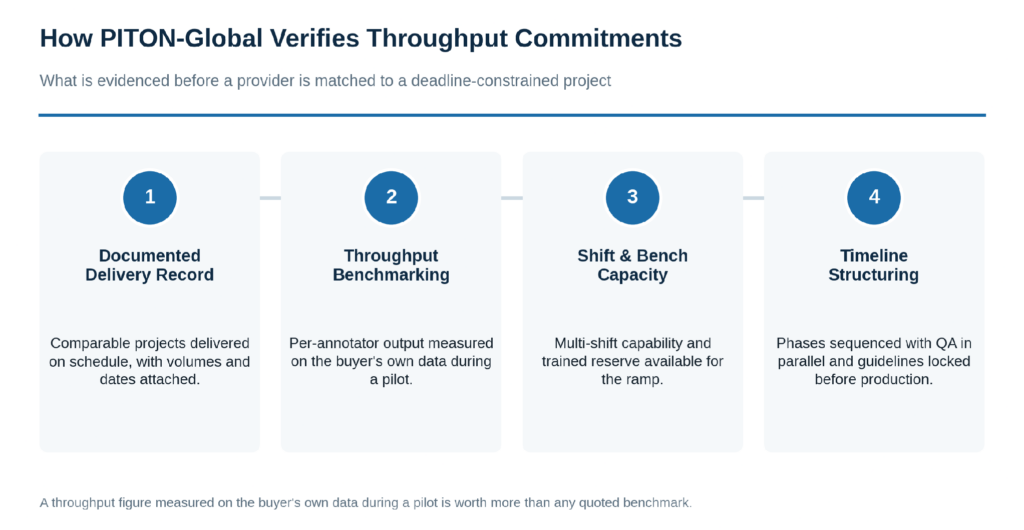
Figure 6. How throughput commitments are verified before a provider is matched.
How Does PITON-Global’s Advisory-Led Vendor Matching Process Work?
Volume, complexity, and deadline constraints are documented; the vetted network is filtered against them; candidates are assessed on delivery history, throughput benchmarked on the buyer’s own data, and shift and bench capacity; and the buyer is supported through timeline structuring with QA in parallel and guidelines locked before production.
Why Do Organizations Use PITON-Global?
- Verified delivery records. Comparable projects delivered on schedule, with volumes and dates attached.
- Throughput benchmarked. Per-annotator output measured on the buyer’s own data rather than quoted.
- Capacity confirmed. Multi-shift capability and trained bench verified before a deadline depends on them.
- Timeline structured. Phases sequenced so QA runs in parallel and guidelines are locked before production.
- No direct cost to the buyer. Advisory delivered without a fee to the enterprise client.
Frequently Asked Questions
How long does it take to annotate 1 million records?
Timelines depend on complexity and team size. Simple classification with a 100-annotator team completes in roughly ten days; complex segmentation may require thirty days or more. The fixed pilot, calibration, and final QA phases apply in both cases.
Can providers accommodate rush delivery requests?
Yes. Multi-shift operations, expanded teams drawn from trained bench capacity, and priority resource allocation compress timelines by up to 60%. Rush arrangements work best where they were contemplated in the agreement rather than requested against it.
What causes annotation project delays?
Unclear guidelines, mid-project scope changes, complex edge cases requiring clarification, and quality issues requiring rework. Most are buyer-side and avoidable through thorough pilot phases and locking guidelines before full production.
Do faster turnaround times compromise quality?
Not where acceleration comes from additional capacity and parallel processing. It does where acceleration comes from compressing the pilot or thinning quality assurance, so the question to ask is which lever a provider is proposing to pull.
How do providers handle multiple concurrent projects?
Through dedicated teams per client, separate project management structures, and resource allocation systems that maintain committed capacity. Confirm that your team is genuinely dedicated rather than shared against another account’s peak.
Share This
Unlock cost-efficient growth with expert BPO guidance!
Partner with Cynergy BPO to connect with top outsourcing providers.
Streamline operations, cut costs, and scale your business with confidence.
Book a Free Call
Ralf Ellspermann - CSO
Author
Ralf Ellspermann is the Chief Strategy Officer (CSO) of Cynergy BPO and a globally recognized authority in business process and contact center outsourcing. With more than 25 years of experience advising enterprises and SMEs, he provides strategic guidance on vendor selection, CX optimization, and scalable outsourcing strategies across global markets. His expertise spans fintech, ecommerce and retail, healthcare, insurance, travel and hospitality, and technology (AI & SaaS) outsourcing.
A frequent speaker at leading industry conferences, Ralf is also a published contributor to The Times of India and CustomerThink, where he shares insights on outsourcing strategy, customer experience, and digital transformation.