



By: Ralf Ellspermann
25-Year, Multi-Awarded BPO Veteran
Published: 28 September 2026

Reviewed By: John Maczynski
Former EVP, World's Largest Contact Center
Updated: 28 September 2026
Directly and at depth for Philippine languages, where a native workforce of tens of millions supports Tagalog, Cebuano, Ilocano, Hiligaynon, Bikol and Waray. For Indonesian, Malay, Vietnamese, Thai and Khmer, Philippine providers act as a delivery platform rather than a native talent pool, and the two are different purchases.
Key Takeaways
- Philippine languages are a genuine native supply. Tagalog at 43 million speakers and Cebuano at 26 million, with Ethnologue recording 182 native languages across the archipelago.
- Other ASEAN languages are a recruitment exercise, not a workforce. Malay and Indonesian are present through expatriates and university language graduates. Vietnamese, Thai and Khmer have no native speaker community in the country.
- Related does not mean intelligible. Tagalog and Indonesian are both Austronesian and share cognates, and a Tagalog speaker cannot follow Indonesian. Vietnamese, Thai and Khmer are not in the family at all.
- Code-switching capability is the real differentiator. Taglish and regional hybrids are a native competence that literal translation pipelines cannot reproduce, and it is genuinely hard to source elsewhere.
- Throughput benchmarks are meaningless without the task named. 1,200 tokens per annotator-hour fits single-pass transcription; code-switch boundary marking with audit runs closer to 350. Both figures circulate as “annotation”.
- For low-resource languages the gold standard is a deliverable. Where no reference corpus exists, the key is built by the same linguists it will measure, so a first-pass yield figure reports consistency rather than correctness.
What Linguistic Capabilities Does the Philippine Workforce Actually Offer?
Native fluency across the major Philippine languages, high-proficiency English, and code-switching competence that no literal translation pipeline reproduces. Providers source graduates in linguistics, literature and communications from regional universities and organise them into cohorts by vernacular.
The Philippines is one of the most linguistically diverse countries in the world. Ethnologue records 182 native languages, with classification methods giving a range of roughly 130 to 195, and the largest of them have speaker populations on the scale of European national languages.
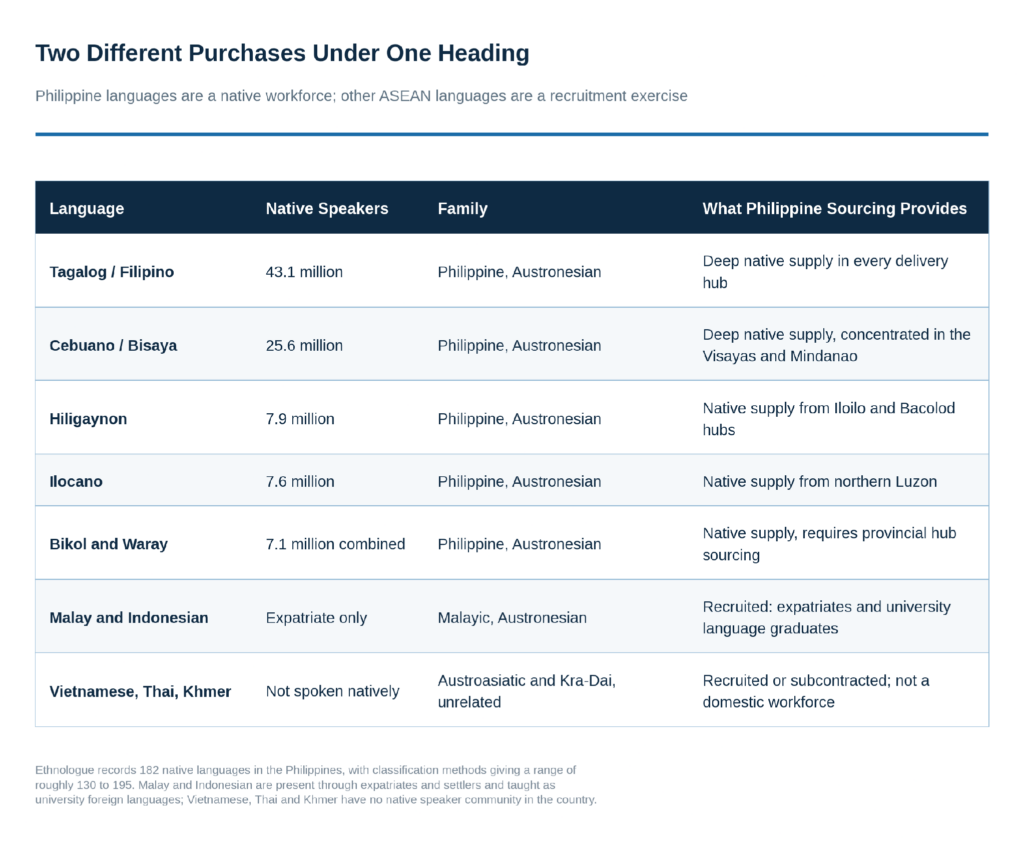
Figure 1. What Philippine sourcing provides, language by language.
For the top six, the supply is real and deep. Tagalog has about 43 million native speakers, Cebuano about 26 million, Hiligaynon and Ilocano around 8 million each, with Bikol and Waray together adding about 7 million more. A provider with a provincial hub network can staff a Hiligaynon pod from Iloilo or Bacolod and an Ilocano pod from northern Luzon with native speakers rather than learners, which is a capability very few markets can match.
The bottom two rows describe something different, and the distinction is the most useful thing a buyer can take from this article.
Are Southeast Asian Languages Related to Philippine Languages?
Some are, distantly; several are not related at all. Tagalog, Cebuano, Malay and Indonesian are all Austronesian. Vietnamese and Khmer are Austroasiatic, and Thai is Kra-Dai — separate families with no common ancestor. Even within Austronesian, the relationship does not produce mutual intelligibility.
Southeast Asia is a geography rather than a language family, and treating it as one is where multilingual sourcing plans go wrong.
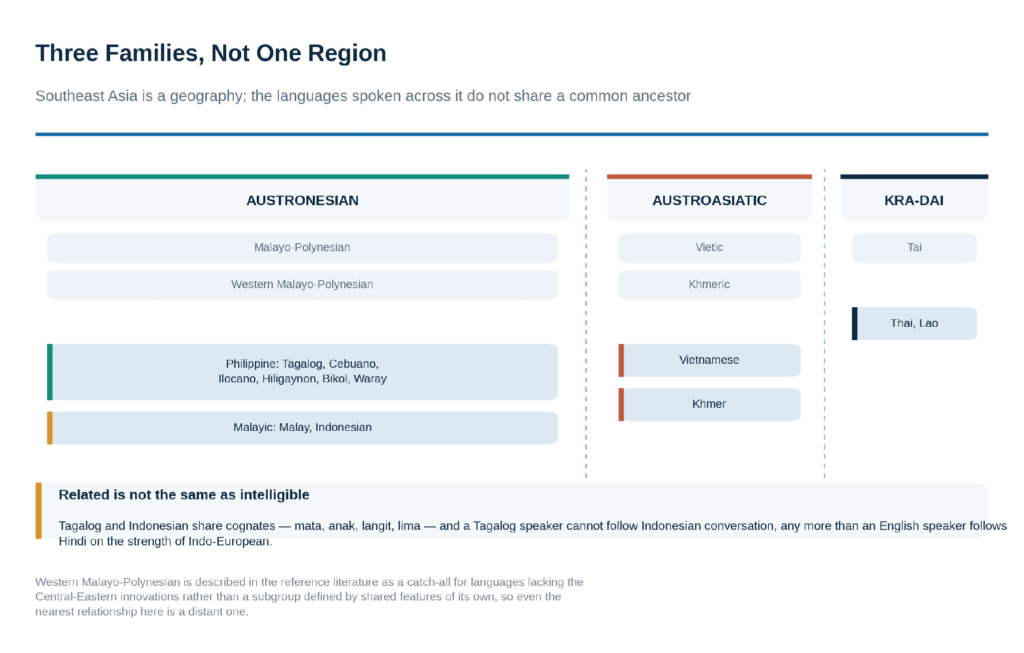
Figure 2. Three language families across one region.
Tagalog and Indonesian do share an ancestor, and the cognates are visible: mata for eye, anak for child, langit for sky, lima for five. But both sit in Western Malayo-Polynesian, which the reference literature describes as a catch-all for languages lacking the Central-Eastern innovations rather than a subgroup defined by features of its own. The practical result is that a Tagalog speaker cannot follow an Indonesian conversation, in the same way an English speaker cannot follow Hindi on the strength of both being Indo-European.
Vietnamese, Thai and Khmer are further away still. They belong to different families entirely, and no amount of Philippine linguistic depth creates capability in them. A provider offering Vietnamese annotation from Manila is offering a recruited cohort or a subcontracted partner, which may be perfectly good — but it is a different thing from the native Cebuano pod in the same building, and it should be evaluated and priced as one.
How Should a Buyer Treat the Two Sourcing Models Differently?
As separate line items with separate risk profiles. Native Philippine language work carries standard managed rates, standard two to four week ramps and standard retention. Recruited ASEAN language work carries a scarcity premium, a longer and less predictable ramp, and a thinner bench that is harder to backfill.
Neither model is a weakness of Philippine providers, who routinely deliver both. The problem is a single blended rate and a single delivery commitment quoted across the two, which conceals where the schedule risk actually sits.
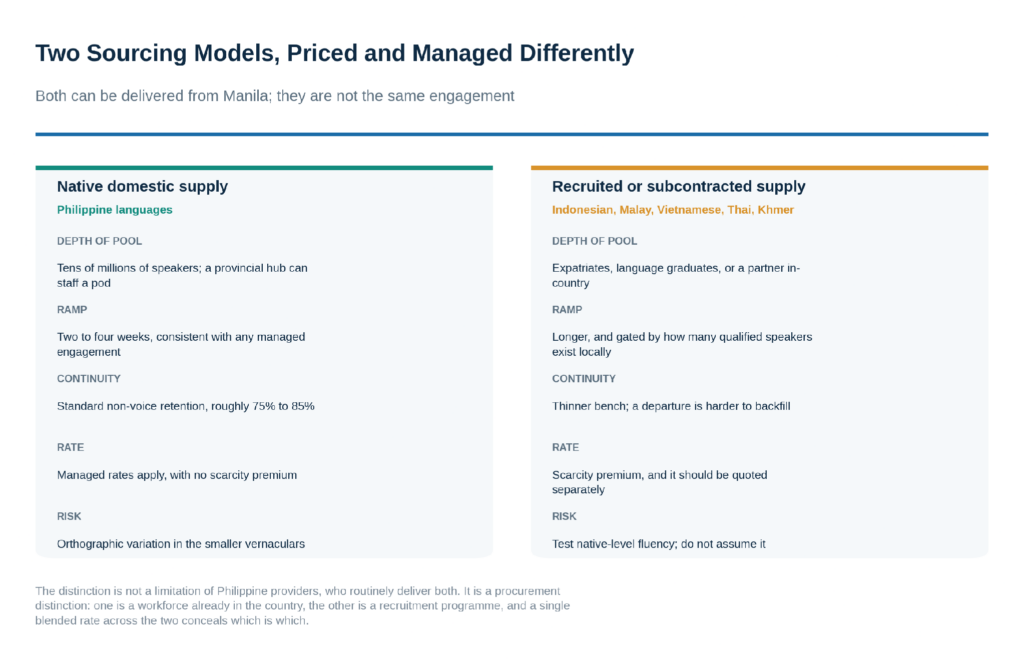
Figure 3. Two sourcing models under one engagement.
Three questions separate them in evaluation. How many speakers of this language does the provider currently employ, as opposed to expect to recruit? Is the cohort native or second-language, and how was that assessed? And if two people leave, what is the backfill time? For Cebuano the answers are unremarkable. For Vietnamese they are the whole engagement, because a four-person Vietnamese cohort losing one member is a 25% capacity loss with no local labour market to draw on.
Fluency assessment deserves particular attention on the recruited side. University language study produces genuine competence and does not by itself produce the intuition needed to judge colloquial register, regional slang or the naturalness of a generated response. That judgement is exactly what the engagement is buying, so it is what the screening trial should test.
How Do Providers Handle Code-Switching and Low-Resource Dialects?
Through specialised frameworks that categorise token boundaries, syntactic structures and intent semantics, with annotators calibrated against reference sets before handling live streams and senior linguists auditing for contextual accuracy in a multi-tier review.
Code-switching is where the Philippine advantage is strongest and least replaceable. Taglish is not a translation problem; it is a single utterance drawing on two grammars, and marking where one ends and the other begins requires someone who produces it naturally. Automated tools fragment it and foreign annotators working from literal semantics miss the register shifts that carry the meaning.
Low-resource dialects introduce a different problem, and it is structural rather than a matter of difficulty.
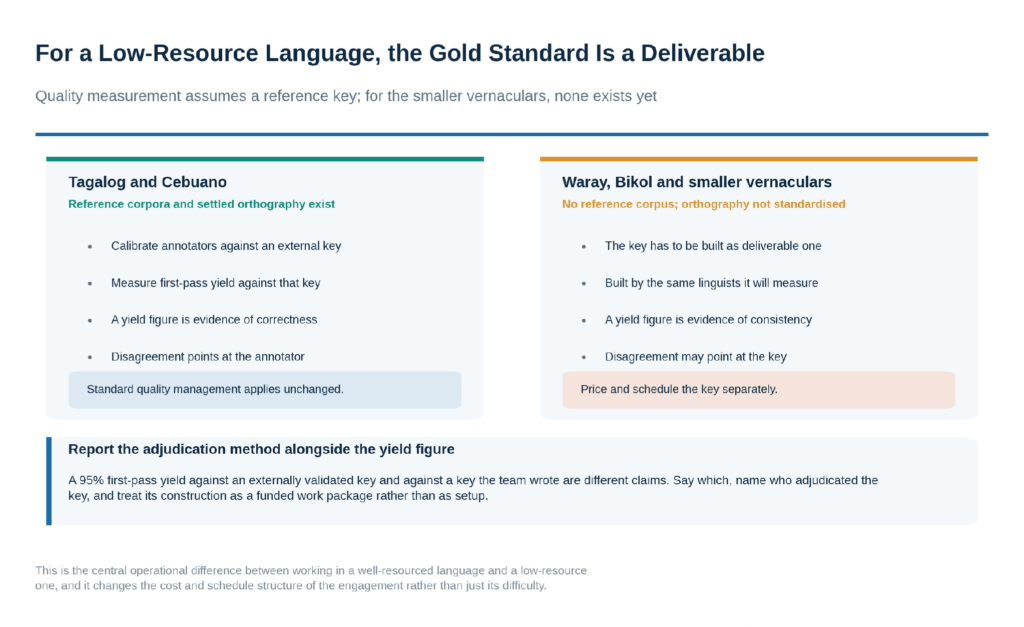
Figure 4. Where the reference key comes from.
For Tagalog and Cebuano, reference corpora and settled orthography exist, so annotators can be calibrated against an external key and a first-pass yield figure is evidence of correctness. For Waray, Bikol and the smaller vernaculars, no such corpus exists and spelling is not standardised. The key therefore has to be built as the first deliverable of the project, by the same linguists who will subsequently be measured against it — which means a yield figure reports agreement with a standard the team wrote.
That is still worth measuring, and it should be reported for what it is. A 95% first-pass yield against an externally validated key and the same figure against a self-authored key are different claims. Name which, state who adjudicated the key, and treat its construction as a funded work package with its own schedule rather than as project setup absorbed into the rate.
What Throughput Should a Buyer Expect?
It depends entirely on the task, and the published figures differ by more than three times. A benchmark of 1,200 annotated tokens per annotator-hour describes single-pass transcription. Code-switch boundary marking with intent tags and a senior audit runs closer to 350.
Throughput benchmarks circulate in this market attached to the word annotation without saying which annotation, and the resulting figures are not comparable.
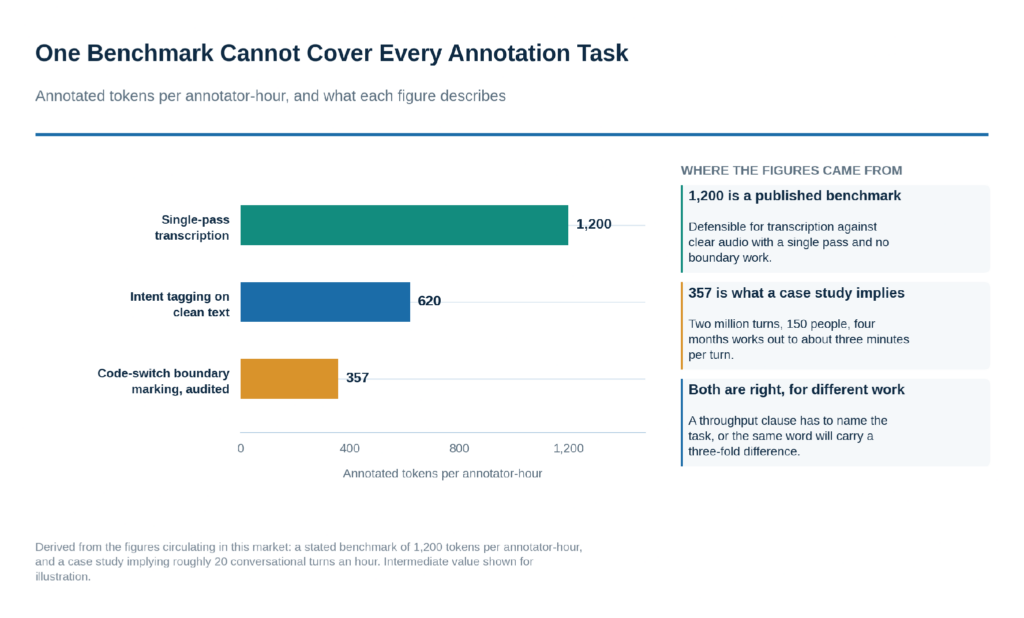
Figure 5. Annotated tokens per hour, by what the task actually involves.
The arithmetic is easy to check against a programme’s own numbers. Two million conversational turns delivered by 150 people over four months is roughly 100,000 person-hours, or about twenty turns an hour — three minutes per turn. At a typical turn length that is in the region of 350 tokens per annotator-hour, which is entirely reasonable for boundary marking on code-switched speech with a review layer, and roughly a third of the rate quoted as a general benchmark.
Neither figure is wrong. They describe different work, and a throughput clause that does not name the task will be satisfied by whichever interpretation suits the party quoting it. Specify the task, the review depth and whether the figure is per pass or per delivered item.
What Security and Governance Applies to Multilingual Corpora?
The same controls as any sensitive annotation work: certified facilities with controlled endpoints, biometric access, clean-desk policies and monitored sessions, against distributed crowd models that rely on unverified home networks and personal devices.
Multilingual training corpora frequently contain conversational transcripts and localised personal data, which makes the security posture a threshold question rather than a differentiator. Managed facilities can evidence what controls applied; a distributed network cannot, which is usually where the comparison ends for regulated material.
Two governance points are specific to multilingual work. Cross-border transfer analysis becomes more complex when the corpus spans several jurisdictions, because the data may carry obligations from each: the Philippines holds no EU adequacy decision, and Indonesian, Vietnamese and Thai personal data carry their own domestic requirements that a Philippine processing location does not discharge. Establish which jurisdictions the corpus touches before selecting a delivery model.
Bias control is the second. Sampling stratification across dialects and demographics is sound practice and is what prevents a model trained on Manila Tagalog from underperforming for Visayan users. It is worth distinguishing clearly from workforce composition: the quota belongs on the data collection design, where it improves representativeness, rather than on hiring, where it raises different questions entirely.
What Do Industry Leaders Say About Multilingual Delivery?
That linguistic fluency alone is not the differentiator. Institutional discipline and security governance are what convert diverse dialects into production-ready datasets, which is the difference between a pool of speakers and a delivery capability.
The distinction matters most precisely where the linguistic supply is thinnest.
The true differentiator for multilingual model training in the Philippines is not just linguistic fluency, but the institutional discipline and security governance that turn diverse dialects into pristine, production-ready AI datasets.
— John Maczynski, CEO, Cynergy BPO
For a native Cebuano pod, fluency is abundant and discipline is what a buyer is paying for. For a recruited Vietnamese cohort, fluency is the scarce input and discipline determines whether the small team assembled around it produces consistent output. Both statements follow from the same principle and lead to different evaluation questions, which is why the two sourcing models should not sit behind one set of assurances.
How Did One Enterprise Build a Multilingual ASEAN Dataset?
A conversational AI developer expanding across Indonesia, Malaysia and the Philippines began with an unmanaged crowd model and encountered severe inconsistency on regional slang alongside data leakage concerns. A dedicated Manila delivery unit of vetted native and multilingual speakers cut error rates from 28% to 1.5% and delivered ahead of schedule at 42% lower preparation cost.
The crowd model failed in the way the material predicts. Regional slang and code-switched speech are exactly the content on which unsupervised distributed labelling produces inconsistency, because there is no shared reference for what the correct annotation is and no mechanism for establishing one.
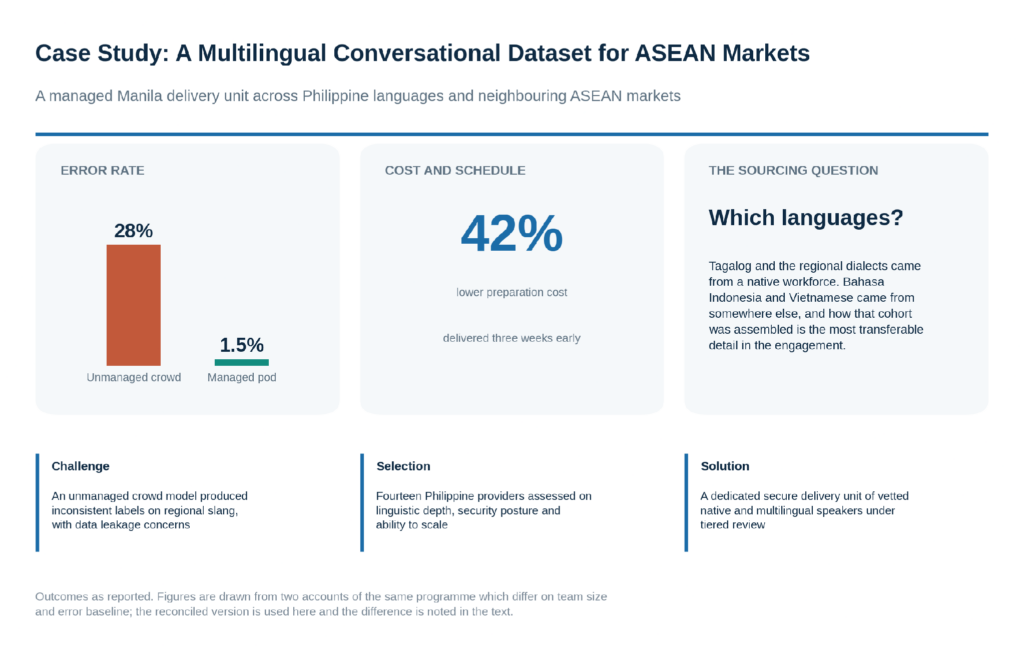
Figure 6. Reported outcomes from a managed multilingual delivery unit.
Two details are worth surfacing for a buyer replicating this. The first is that the accounts of this programme in circulation differ: team size is given as both 120 and 150, and the error baseline as both 28% and 30%. Neither discrepancy changes the conclusion, and both are worth reconciling before the figures are quoted in a proposal.
The second is the sourcing question. Tagalog and the regional dialects came from a native workforce. Bahasa Indonesia and Vietnamese came from somewhere else — a recruited cohort, an in-country partner, or expatriate hires — and how that cohort was assembled, retained and quality-assured is the most transferable lesson in the engagement. It is also the part most likely to determine whether a similar programme hits its schedule.
Why Do Organizations Work with Cynergy BPO on Multilingual Sourcing?
Cynergy BPO is an independent, vendor-neutral outsourcing advisory firm headquartered in Manila, representing a vetted network of more than 100 Philippine providers. It maps requirements against performance data to produce a shortlist within days and manages competitive negotiation on the buyer’s behalf.
Who Is Cynergy BPO?
Cynergy BPO is an independent outsourcing advisory and consultancy firm headquartered in Manila, founded by industry veterans with more than 65 years of combined operational experience governing major global accounts. It specialises in connecting mid-market and enterprise organisations with vetted Philippine BPO providers across voice, back-office and AI data operations.
How Does Cynergy BPO Differ from Traditional Outsourcing Brokers?
Traditional brokers are transactional and are compensated by the providers they place, which shapes which provider is recommended. Cynergy BPO applies an advisory-led methodology, mapping exact technical, security and commercial requirements against performance data rather than against availability. On multilingual work, where every provider will claim coverage of every language, an adviser with no placement incentive can establish which claims rest on a standing workforce.
How Does Cynergy BPO’s Network of 100+ Vetted Philippine BPO Providers Benefit Organizations?
The network answers the questions a buyer cannot answer from outside: which providers operate provincial hubs in the right regions for a given vernacular, how many speakers of a scarce language each currently employs rather than expects to recruit, and which have built a reference corpus for a low-resource language before.
How Does Cynergy BPO’s Advisory-Led Vendor Matching Process Work?
Requirements are mapped against operational, linguistic and commercial criteria, a tailored shortlist of vetted providers is delivered within a few working days, and the firm then manages competitive proposal and negotiation processes on the buyer’s behalf. Language coverage commitments, ramp expectations and throughput definitions are settled as part of that process rather than discovered afterwards.
Why Do Organizations Use Cynergy BPO?
Because a multilingual shortlist is easy to assemble and hard to evaluate. Every provider will list the same languages, and the difference between a native pod and a recruitment promise is invisible in a proposal but decisive for a schedule.
Frequently Asked Questions
Which languages can Philippine providers genuinely staff natively?
Tagalog, Cebuano, Hiligaynon, Ilocano, Bikol, Waray and the smaller Philippine vernaculars, from a native population of tens of millions across 182 recorded native languages. Indonesian, Malay, Vietnamese, Thai and Khmer are delivered through recruited or subcontracted cohorts rather than a domestic workforce.
Does Austronesian kinship help with Indonesian or Malay?
Not usefully. Tagalog and Indonesian share an ancestor and visible cognates, but sit in a grouping the reference literature treats as a catch-all rather than a close subgroup, and there is no mutual intelligibility. Vietnamese, Thai and Khmer belong to entirely separate families.
How do providers handle dialects without standard orthography?
By sourcing native speakers from the relevant province and establishing custom phonetic transcription guidelines with multi-tier verification. Note that this means constructing the reference standard as part of the project, which should be scheduled and priced as a work package rather than absorbed as setup.
What throughput should be written into a contract?
Whatever the task supports, stated with the task named. Single-pass transcription supports figures around 1,200 tokens per annotator-hour; audited code-switch boundary marking runs closer to 350. Specify the review depth and whether the number is per pass or per delivered item.
How long does it take to deploy a multilingual annotation team?
Two to four weeks for Philippine languages, covering recruitment, vetting, workflow ingestion and a pilot. Longer for scarce ASEAN languages, and the timeline is gated by how many qualified speakers the provider can reach rather than by the onboarding process.
What protects proprietary multilingual datasets?
Certified facilities with controlled endpoints, disabled storage media, biometric access, clean-desk policies and monitored sessions. Where the corpus spans several jurisdictions, establish transfer obligations for each separately, since a Philippine processing location does not discharge another country’s requirements.
Can managed teams integrate with client annotation platforms?
Yes. Managed providers routinely work inside client-owned labelling platforms, version control and data pipelines rather than requiring their own tooling, which also keeps the annotated output under the client’s access controls throughout.
How should bias control be specified?
As sampling stratification across dialects and demographics in the data collection design, so a model trained largely on Manila Tagalog does not underperform for Visayan or Ilocano users. Keep that requirement on the dataset specification rather than expressing it as a workforce composition target.
Share This
Unlock cost-efficient growth with expert BPO guidance!
Partner with Cynergy BPO to connect with top outsourcing providers.
Streamline operations, cut costs, and scale your business with confidence.
Book a Free Call
Ralf Ellspermann - CSO
Author
Ralf Ellspermann is the Chief Strategy Officer (CSO) of Cynergy BPO and a globally recognized authority in business process and contact center outsourcing. With more than 25 years of experience advising enterprises and SMEs, he provides strategic guidance on vendor selection, CX optimization, and scalable outsourcing strategies across global markets. His expertise spans fintech, ecommerce and retail, healthcare, insurance, travel and hospitality, and technology (AI & SaaS) outsourcing.
A frequent speaker at leading industry conferences, Ralf is also a published contributor to The Times of India and CustomerThink, where he shares insights on outsourcing strategy, customer experience, and digital transformation.