


By: Ralf Ellspermann
25-Year, Multi-Awarded BPO Veteran
Published: 24 September 2026

Reviewed By: John Maczynski
Former EVP, World's Largest Contact Center
Updated: 24 September 2026
They are not substitutes for the same work. Crowdsourcing buys quality through redundancy, which works when workers err at random and fails when they share a knowledge gap. Managed Philippine teams buy it through selection and supervision, which is the only route that works on domain reasoning.
Key Takeaways
- The decision is not cost against quality. It is whether a wrong answer can be caught cheaply by someone who lacks the expertise. That is a property of the task, not of the supplier.
- Redundancy has a hard ceiling. Where a tenth of items need knowledge nobody in the crowd has, majority voting caps at 90% accuracy however many workers vote. The target is unreachable at any budget.
- And it becomes expensive long before that. Three votes on simple labelling lands inside the managed rate band. Nine votes costs more than the seat it was meant to undercut.
- Philippine retention runs 75% to 85% on non-voice lines. Not above 85%. Industry-wide attrition is 30% to 45% annually, with voice at 45% to 50% and non-voice at 15% to 25%. AI annotation sits in the better group.
- Secondary hubs are the stronger retention argument. Locations outside Metro Manila run 10 to 15 points better on the same line of work, which is a sourcing decision rather than a claim.
- Most pipelines should use both. Routing preparation to a crowd and reserving managed specialists for the judgement layer costs less than either model applied to everything.
How Do the Two Models Differ Across the Dimensions That Matter?
On cost basis, data security, retention, complex-task accuracy and ramp-up. Crowdsourcing wins outright on ramp-up and unit rate; managed teams win outright on security and retention. Complex-task accuracy is the dimension where the difference is structural rather than a matter of degree.
Framed as a scorecard, the comparison tends to produce a draw, with each side ahead on some rows. That framing obscures which row is decisive for a given programme.
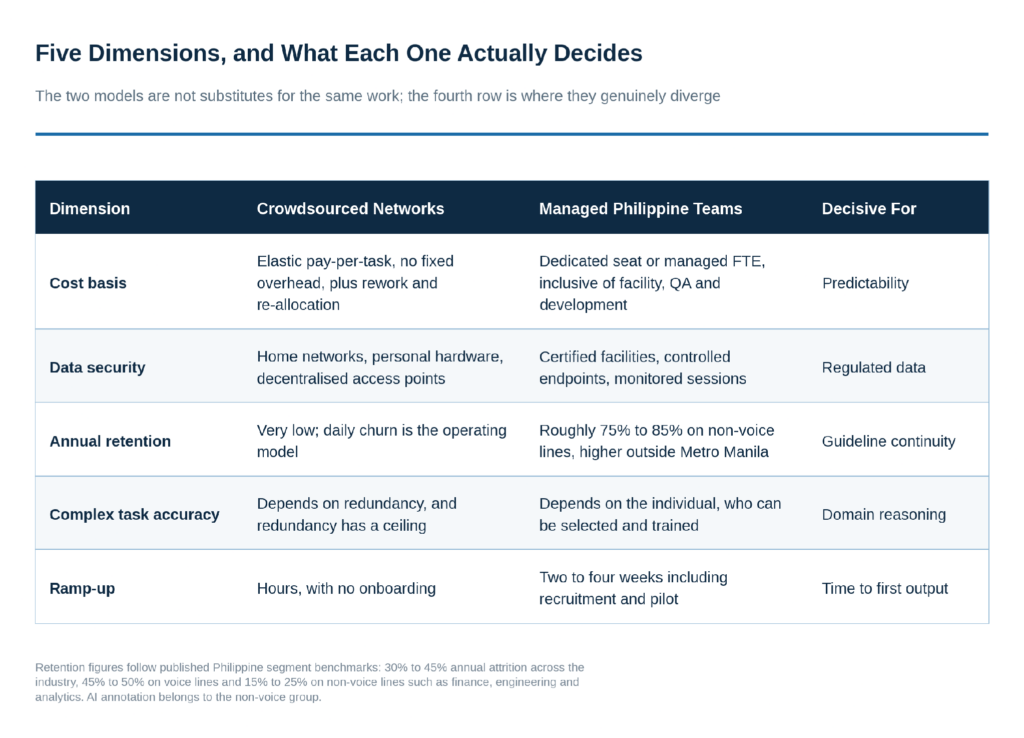
Figure 1. Five dimensions, and what each one actually decides.
Security and compliance are the clearest divide and the least contested. A distributed crowd works on unverified home networks and personal hardware, which for proprietary code, medical records or sensitive financial documents is not a posture a compliance committee will approve. Managed facilities operate with controlled endpoints, biometric access, clean-desk policies and monitored sessions under certification that can be inspected. Where the material is regulated, this row settles the question before any of the others are reached.
Ramp-up cuts the other way and honestly so. A crowd platform delivers output within hours; a managed team takes two to four weeks including recruitment, security vetting and a pilot run. For exploratory work, a one-off backlog, or a dataset whose specification is still moving, that difference is worth real money.
The fourth row is the one that repays analysis, because it is the row where the two models are not merely better and worse but operating on different principles.
Why Does Redundancy Stop Working on Complex Tasks?
Because majority voting removes errors only when they are independent. If a share of items requires knowledge nobody in the pool has, every worker gets them wrong the same way and the vote confirms the error. Accuracy then caps at one minus that shared error rate, regardless of how many people vote.
Crowdsourcing’s quality mechanism is aggregation. An individual worker may be unreliable; enough independent unreliable judgements average out to something good. This is genuinely powerful and it is why crowd platforms produce usable data at very low unit rates on the right tasks.
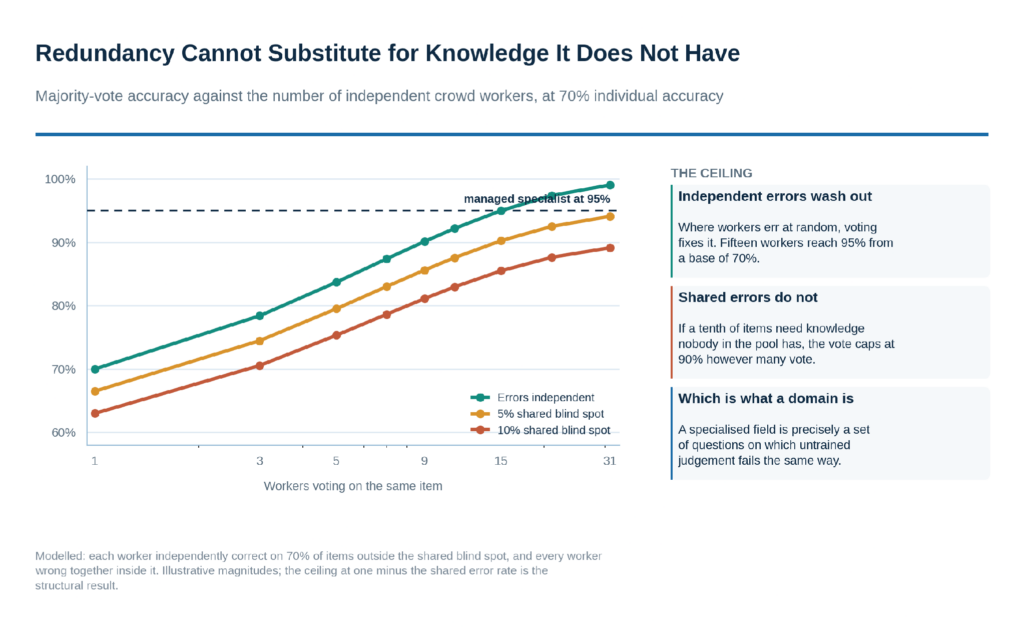
Figure 2. Majority-vote accuracy against the number of workers.
The model behind Figure 2 takes a worker who is right on 70% of domain items. With independent errors, redundancy does the job: fifteen workers voting reach 95%, matching a trained specialist. Introduce a shared blind spot on ten per cent of items — questions where the correct answer depends on training none of the workers has — and the ceiling falls to 90%. Not at fifteen workers or thirty-one, but at any number, because the majority is wrong together on those items and no amount of voting overturns a unanimous error.
This is why the distinction matters more than it first appears. A specialised domain is, almost by definition, a set of questions on which untrained judgement fails in a consistent direction. Tax treatment, clinical contraindication, contractual construction: these are not areas where a layperson is randomly wrong, they are areas where a layperson is predictably wrong. The correlation that makes them a domain is the same correlation that defeats redundancy.
Where the crowd genuinely wins
The converse holds just as strongly. On bounding boxes, transcription against clear audio, sentiment on unambiguous text or deduplication, a competent non-specialist is right about 90% of the time and wrong at random. Three votes take that to 97%, five to 99%. There is no knowledge gap to share, the redundancy is cheap, and output starts within hours. Routing that work to a managed seat is paying a supervision premium for a problem supervision does not solve.
What Does Each Route Cost to Reach the Same Accuracy?
On simple labelling, three crowd votes land inside the managed rate band and arrive far faster. On moderate judgement, the nine votes required cost roughly double a managed seat. On domain reasoning, no amount of redundancy reaches the target, so the comparison stops being a price question.
The cost of crowdsourcing is the unit rate multiplied by the redundancy needed, and the redundancy needed rises steeply as the task gets harder. That product is the number to compare against a managed seat, not the headline per-task rate.
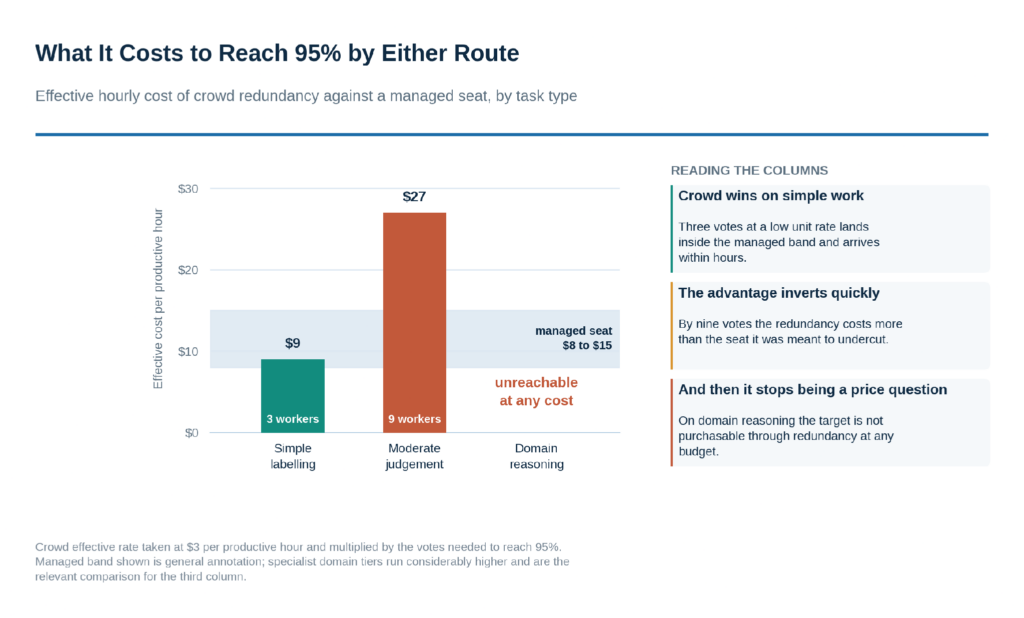
Figure 3. Effective cost of each route, by task type.
The inversion happens quickly. Simple labelling at three votes is competitive. Moderate judgement, where a worker is right four times in five and a small share of items carry a shared blind spot, needs nine votes to reach 95% — and nine votes at even a very low unit rate costs more than the managed seat it was supposed to undercut, while also consuming nine times the coordination and reconciliation effort on the buyer’s side.
Two costs sit outside the arithmetic and both favour the managed model on longer engagements. Rework loops and task re-allocation on a crowd platform are absorbed by the buyer’s own team, and that administrative load does not appear in any per-task rate. And guideline drift is continuous where the worker pool turns over daily, because the institutional memory of what a rubric means never accumulates anywhere.
What Retention Should a Buyer Actually Expect?
Roughly 75% to 85% annually on non-voice delivery lines, which is where AI annotation sits. Philippine BPO attrition runs 30% to 45% across the industry as a whole, 45% to 50% on voice and customer support, and 15% to 25% on non-voice lines such as finance, engineering and analytics.
Retention is the strongest argument for the managed model and it is worth making with the right numbers, because the figures commonly quoted in this market are above what the industry’s own benchmarks support.
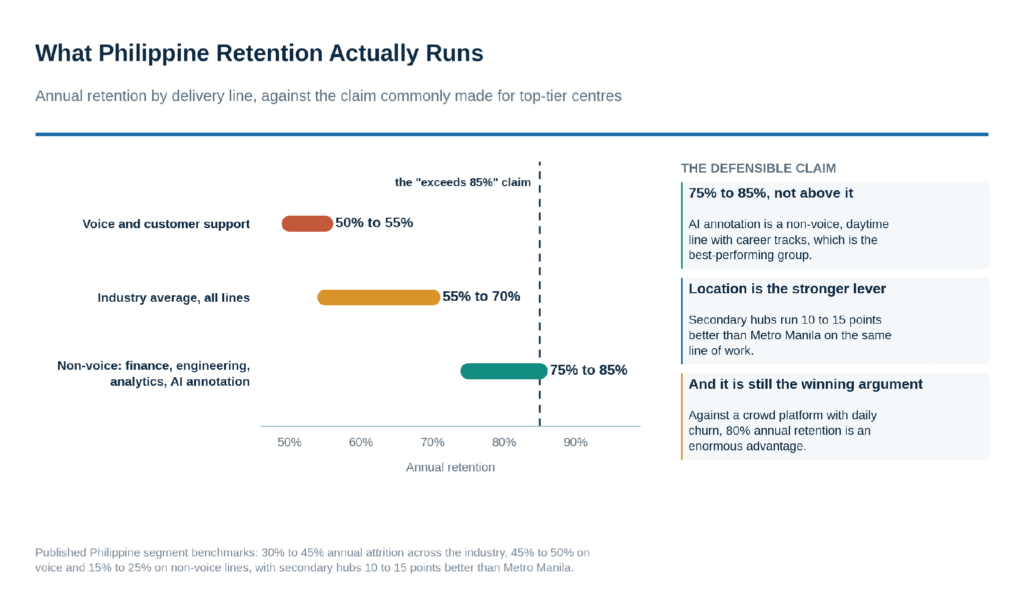
Figure 4. Annual retention by delivery line.
A claim that top-tier centres routinely exceed 85% retention sits above the top of the best-performing segment. The defensible version is that AI annotation is a non-voice, daytime, career-tracked line and therefore belongs to the 75% to 85% group rather than to the voice figures that dominate the industry average. That is a materially better claim than an inflated one, because it survives due diligence.
The stronger lever is location. Secondary hubs run 10 to 15 points better than Metro Manila on the same line of work, largely because of reduced local competition for staff and shorter commutes. That converts retention from a claim into a sourcing decision a buyer can act on, and it is the argument worth making to a client weighing site options.
None of which weakens the comparison. Against a platform where daily churn is the operating model rather than a problem to manage, 80% annual retention is an enormous advantage — and it compounds, because the value of a stable pod is the accumulated understanding of what the client’s rubric actually means in the hard cases.
What Security and Compliance Separates the Two Models?
Managed facilities operate controlled endpoints, biometric access, clean-desk policies and monitored sessions under certification that can be inspected. Distributed crowd networks rely on unverified home networks and personal hardware, which cannot support a transfer analysis or an audit trail.
For enterprise pipelines processing proprietary code, clinical records or sensitive financial documents, this is usually the row that ends the discussion. The relevant question for a compliance committee is not whether a crowd platform has ever suffered a breach but whether the buyer can evidence what controls applied to its data, and on a distributed network the honest answer is that it cannot.
Three specifics are worth raising in evaluation rather than assumed. Certification scope: an ISO 27001 certificate covers named sites and services, and the scope statement matters more than the certificate. Cross-border transfer: the Philippines holds no EU adequacy decision, so EU personal data reaching a Philippine processor needs an Article 46 mechanism irrespective of what either model is certified to. And monitoring of the workforce is itself regulated processing under the Data Privacy Act, requiring a lawful basis, notice and proportionality.
Business continuity belongs in the same conversation and is often skipped. Premier facilities maintain dual commercial power feeds, backup generation and carrier failover, which is the right specification. Site selection carries the other half of it: the Philippines is exposed to typhoons and seismic activity, and provider site diversity across geographically separated hubs is what turns a facility-level uptime figure into a programme-level one.
How Should a Buyer Decide Between Them?
By asking one question of each workstream: can a wrong answer be caught cheaply by someone who does not have the expertise? If yes, redundancy is the cheaper quality mechanism and the crowd is the right supplier. If no, selection and training are the only mechanism that works, and that means a managed team.
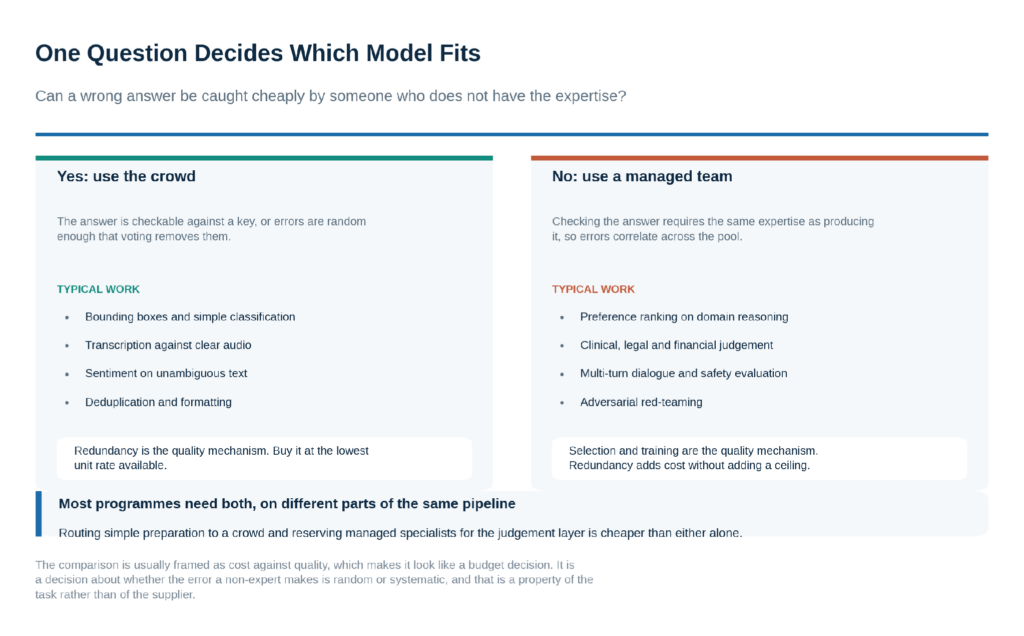
Figure 5. The question that decides which model fits.
- Apply the test per workstream, not per programme. Most pipelines contain both kinds of work, and routing them to the same supplier overpays on one half or under-delivers on the other.
- Price crowd work as rate times redundancy. The per-task rate is not the cost. The cost is the rate multiplied by the votes needed to reach your accuracy target.
- Check whether the target is reachable at all. Where the error is a shared knowledge gap, no redundancy reaches the target and the budget question does not arise.
- Count the buyer-side administrative load. Rework loops, re-allocation and reconciliation on a crowd platform land on the client’s own team and appear in no invoice.
- Let regulated data settle it early. Where the material carries transfer or confidentiality obligations, the security row decides the question before the cost rows are reached.
- Consider a hybrid before either pure model. Crowd preparation feeding a managed judgement layer is frequently cheaper than either applied end to end.
What Do Industry Leaders Say About Managed Delivery?
That the value of Philippine outsourcing for AI training is institutional maturity, supervisory rigour and data security rather than basic cost arbitrage — which is the correct framing for the work where managed delivery is genuinely required.
The emphasis on maturity over arbitrage matters because it identifies what the premium is actually buying.
The true value of Philippine outsourcing for artificial intelligence training lies not in basic cost arbitrage, but in the institutional maturity, supervisory rigour, and unwavering data security that managed partners bring to complex data pipelines.
— John Maczynski, CEO, Cynergy BPO
Institutional maturity is precisely what redundancy cannot manufacture. A crowd can be made larger; it cannot be made to remember what the rubric meant last quarter, to escalate an ambiguous case to someone who has seen it before, or to hold a security posture that an auditor will accept. Those are properties of an organisation rather than of a workforce, and they are the reason the managed premium exists on the work that needs them — and the reason it is waste on the work that does not.
How Did One AI Developer Move Off a Crowd Platform?
A generative AI developer was receiving a 30% error rate on complex reasoning tasks from a global crowd platform, alongside security concerns over proprietary training sets. A 150-person Manila delivery unit stood up in 21 days cut errors to under 2%, reduced labelling expenditure by 40% and brought deployment forward three months.
The diagnostic detail is the 30% error rate, because it is close to what Figure 2 predicts for untrained workers on domain items. That is not a sign the platform was performing badly; it is a sign that multi-modal reasoning and safety red-teaming had been routed to a model whose quality mechanism cannot reach them.
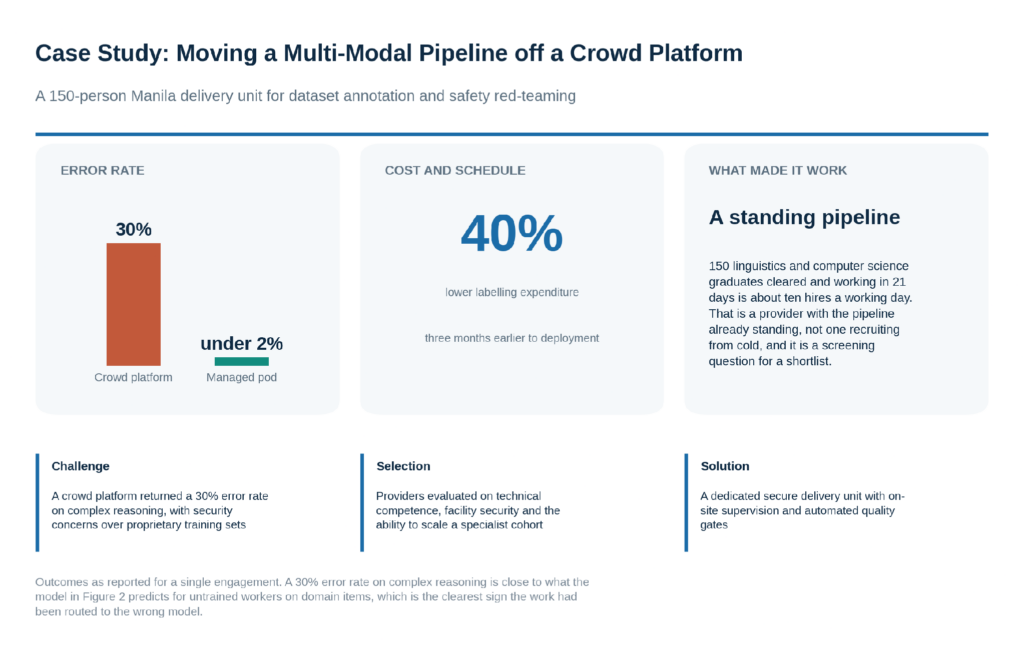
Figure 6. Reported outcomes from a 150-person Manila delivery unit.
The 40% cost reduction alongside a fifteen-fold accuracy improvement looks paradoxical and is not. The crowd platform’s true cost included the redundancy needed to make its output usable and the client-side rework that followed when it was not, neither of which appears in a per-task rate. Once the work moved to a supplier whose individual output was accurate, the redundancy became unnecessary and the saving followed from removing it.
One element deserves surfacing for the next buyer. Recruiting, clearing and standing up 150 linguistics and computer science graduates in 21 days is about ten hires per working day, which requires a provider with that pipeline already established rather than one recruiting from cold. That is a screening question for a shortlist — ask which specialist cohorts a provider can staff from a standing bench and which it would need to recruit for, because the answer determines whether a three-week ramp is realistic.
Why Do Organizations Work with Cynergy BPO on This Decision?
Cynergy BPO is an independent, vendor-neutral outsourcing advisory firm headquartered in Manila, representing a vetted network of more than 100 Philippine providers. It maps requirements against performance data to produce a shortlist within days and manages competitive negotiation on the buyer’s behalf.
Who Is Cynergy BPO?
Cynergy BPO is an independent outsourcing advisory and consultancy firm headquartered in Manila, founded by industry veterans with more than 65 years of combined operational experience governing major global accounts. It specialises in connecting mid-market and enterprise organisations with vetted Philippine BPO providers across voice, back-office and AI data operations.
How Does Cynergy BPO Differ from Traditional Outsourcing Brokers?
Traditional brokers are transactional and are compensated by the providers they place, which shapes which provider is recommended. Cynergy BPO applies an advisory-led methodology, mapping exact technical, security and commercial requirements against performance data rather than against availability. On a build-or-buy question of this kind, an adviser with no placement incentive can say when the crowd is the right answer.
How Does Cynergy BPO’s Network of 100+ Vetted Philippine BPO Providers Benefit Organizations?
The network establishes what is actually available before a decision is made: which providers hold standing benches in the relevant disciplines, what retention they run on comparable lines, which hubs they operate from, and what their certification scope covers. None of that is visible from outside the market.
How Does Cynergy BPO’s Advisory-Led Vendor Matching Process Work?
Requirements are mapped against operational, security and commercial criteria, a tailored shortlist of vetted providers is delivered within a few working days, and the firm then manages competitive proposal and negotiation processes on the buyer’s behalf. Ramp commitments, retention expectations and quality obligations are settled as part of that process rather than after selection.
Why Do Organizations Use Cynergy BPO?
Because the crowd-or-managed question is usually answered by whichever supplier was approached first, and the cost of getting it wrong is invisible until a dataset has already been built. Establishing which workstreams genuinely need managed delivery, and which do not, is where most of the available saving sits.
Frequently Asked Questions
When is crowdsourcing the right choice?
When a wrong answer can be caught cheaply by a non-expert, or when errors are random enough that majority voting removes them: simple classification, transcription against clear audio, unambiguous sentiment, deduplication. It also wins decisively on speed, delivering within hours against a two to four week managed ramp.
Why does redundancy fail on domain tasks?
Because majority voting corrects independent errors only. Where an item needs knowledge the whole pool lacks, every worker is wrong the same way and the vote confirms the error. Accuracy caps at one minus the shared error rate, so a 10% shared blind spot means 90% is the ceiling at any redundancy.
What retention do managed Philippine teams achieve?
Roughly 75% to 85% annually on non-voice lines such as AI annotation, against 45% to 50% attrition on voice and 30% to 45% industry-wide. Secondary hubs outside Metro Manila run 10 to 15 points better than the capital on the same work.
How do managed providers protect proprietary data?
Through controlled endpoints with disabled ports and storage media, biometric facility access, clean-desk policies, network-level loss prevention and monitored sessions, under certification whose scope should be read rather than assumed. Cross-border transfer obligations sit separately and are not discharged by certification.
What does a managed annotation seat cost?
Around $8 to $15 an hour fully loaded for general managed annotation. Specialist domain tiers staffed by licensed professionals run considerably higher, and it is worth establishing which tier a quote refers to before comparing two proposals.
How long does it take to stand up a managed team?
Two to four weeks covering recruitment, security vetting, workflow ingestion and a client-approved pilot. A faster ramp is possible where the provider holds a standing bench in the relevant discipline, which is worth asking about directly rather than inferring from a headline timeline.
Can managed teams handle legal, medical or technical domains?
Yes, through recruitment of licensed professionals into verticalized pods. Establish separately whether those professionals have worked to your target jurisdiction’s framework, since a Philippine credential certifies competence in Philippine standards.
Should a programme use one model or both?
Usually both, applied per workstream. Crowd preparation feeding a managed judgement layer is frequently cheaper than either model applied end to end, and the boundary between them falls wherever checking an answer starts to require the same expertise as producing it.
Share This
Unlock cost-efficient growth with expert BPO guidance!
Partner with Cynergy BPO to connect with top outsourcing providers.
Streamline operations, cut costs, and scale your business with confidence.
Book a Free Call
Ralf Ellspermann - CSO
Author
Ralf Ellspermann is the Chief Strategy Officer (CSO) of Cynergy BPO and a globally recognized authority in business process and contact center outsourcing. With more than 25 years of experience advising enterprises and SMEs, he provides strategic guidance on vendor selection, CX optimization, and scalable outsourcing strategies across global markets. His expertise spans fintech, ecommerce and retail, healthcare, insurance, travel and hospitality, and technology (AI & SaaS) outsourcing.
A frequent speaker at leading industry conferences, Ralf is also a published contributor to The Times of India and CustomerThink, where he shares insights on outsourcing strategy, customer experience, and digital transformation.