



By: Ralf Ellspermann
25-Year, Multi-Awarded BPO Veteran
Published: 28 September 2026

Reviewed By: John Maczynski
Former EVP, World's Largest Contact Center
Updated: 28 September 2026
By scoping the taxonomy and findings policy first, hardening infrastructure, then piloting before scaling. The framework holds. Its weak joint is between pilot and scale-up: a small pod on an untested model finds the accessible vulnerabilities first, so extrapolating its rate overstates six-month yield by roughly three times.
Key Takeaways
- A pilot on a fresh model is the most flattering sample the programme will ever take. Modelled on eight evaluators for two weeks followed by a 25-seat pod for six months, a straight-line projection from the pilot overstates delivered findings by about 2.9 times. The programme lands near 35% of the plan.
- And the pilot is too small to reveal its own decay. Week two of a two-week pilot runs about 95% of week one, which is invisible against noise. Nothing in the pilot warns you that the rate is falling, which is why the error is silent.
- So run part of the pilot on ground someone has already tested. A slice of the surface that has been worked before yields a steady-state find rate rather than a virgin-surface one, and that is the number Phase 4 should be sized on.
- A sector headcount is not a recruitable bench. Philippine IT-BPM employment was 1.9 million at the end of 2025. The pool realistically available for adversarial testing in a given year is on the order of tens of thousands, and every AI data programme in the country draws from it.
- Data Privacy Act compliance does not authorise an EU transfer. The Philippines holds no EU adequacy decision — 17 jurisdictions do, and it is not among them. Transfers of EU personal data need standard contractual clauses and a transfer impact assessment regardless of local compliance.
- A 75% rate gap and a 58% programme saving are both credible. They reconcile if roughly 23% of the cost base does not offshore: client programme management, tooling licences, the secure environment and the buyer’s own triage time. Naming that 23% is what makes a business case survive review.
What Does the Four-Phase Transition Framework Establish?
Scoping fixes the taxonomy and the compliance parameters, infrastructure hardening protects the prompts going in, the pilot proves evaluator quality and taxonomy coverage, and full-scale integration delivers throughput. The ordering is right. What each gate cannot establish is where the planning risk sits.
Four-phase transition frameworks of this shape are the standard approach in this market and they are sound. Scoping genuinely belongs first, because the taxonomy and the findings-handling policy are cheap to set at the outset and expensive to renegotiate once a pod is running. Infrastructure genuinely belongs second, because the pilot needs somewhere to run.
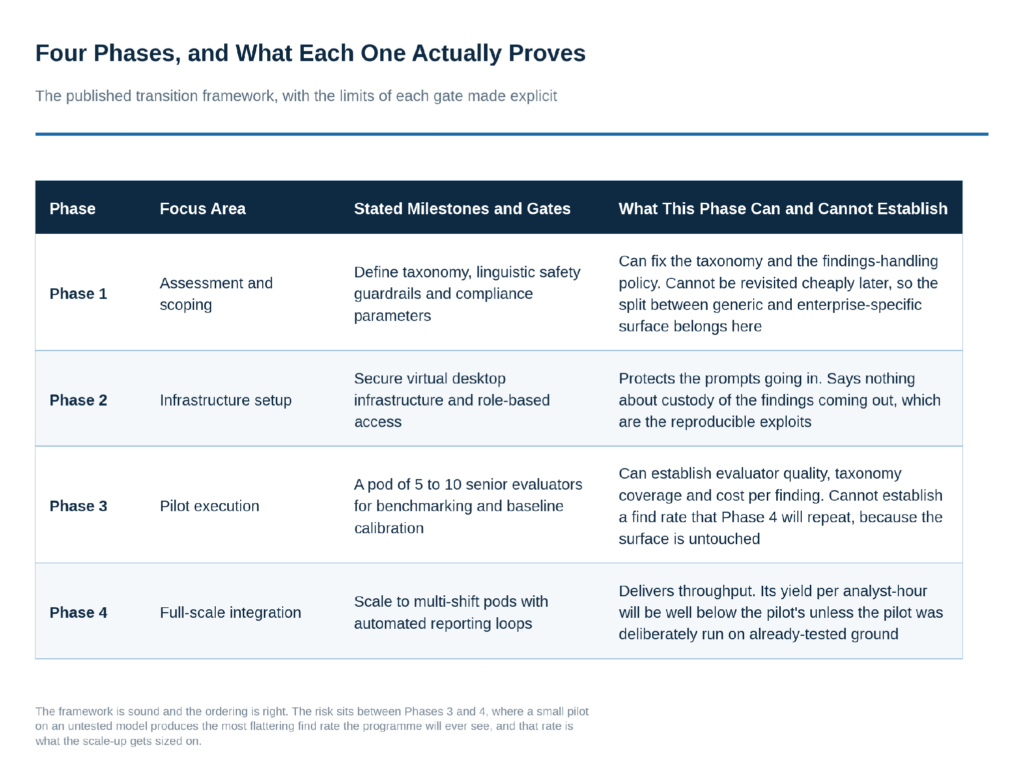
Figure 1. Four phases, and what each one actually proves.
Two limits deserve stating alongside the milestones. Phase 2 hardens the environment against data going in — virtual desktops, role-based access, disabled peripherals — and says nothing about custody of what comes out. In red-teaming the deliverable is a tested, reproducible list of ways to break a production model, which is a more dangerous artefact than any prompt that produced it, and it needs a retention and destruction policy written at Phase 1 rather than discovered at Phase 4.
The larger issue is the joint between Phases 3 and 4, and it is the subject of the next section. A pilot establishes several things well and one thing badly, and the thing it establishes badly is exactly the number most often carried into the scale-up plan.
Why Does the Pilot Overstate What the Scale-Up Will Find?
Because red-teaming yield decays with cumulative effort. A fresh model gives up its accessible vulnerabilities first, so a two-week pilot samples the steepest part of the curve. Projecting that rate onto a six-month scaled pod overstates findings by roughly 2.9 times.
This is a measurement error rather than a performance problem, and it is the most consequential thing a buyer can get wrong in a transition, because the whole Phase 4 business case is built on the Phase 3 number.
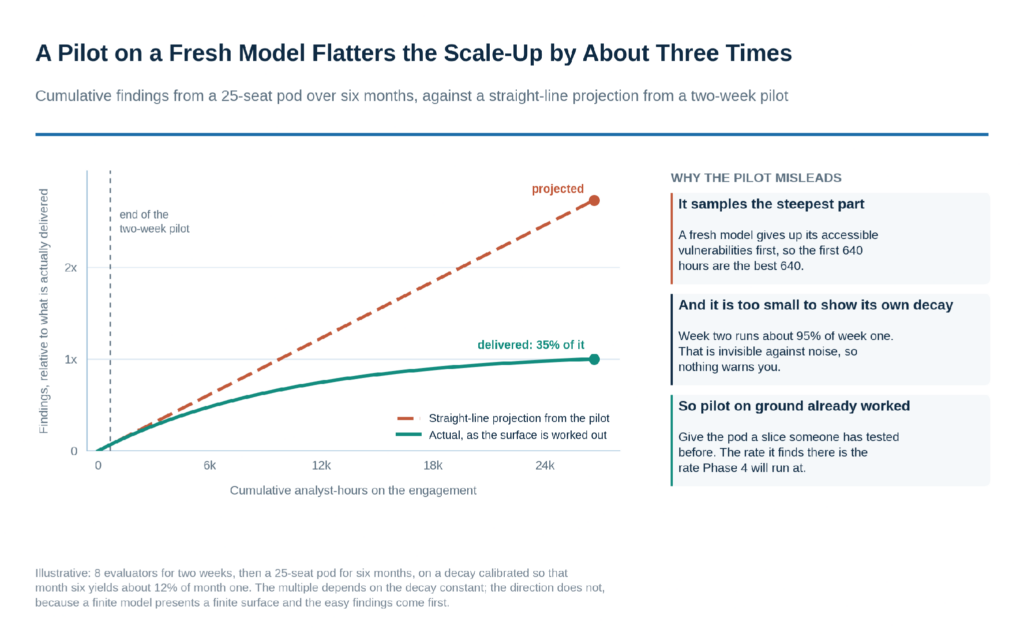
Figure 2. Straight-line projection against what a decaying surface actually yields.
The mechanism is simply that a finite model presents a finite attack surface and a competent team works it from the accessible end. Take eight senior evaluators for two weeks — about 640 analyst-hours — and then a 25-seat pod for six months, around 26,000 hours. On a decay calibrated so that month six yields about 12% of month one, the linear projection from the pilot predicts roughly 2.9 times what the engagement delivers. Put the other way, the programme comes in at about 35% of plan, and cost per finding lands at nearly three times the modelled figure.
What makes this dangerous rather than merely wrong is that the pilot cannot detect it. Over 640 hours, week two runs at about 95% of week one — a 5% decline that no small sample distinguishes from noise. The curve is steep in absolute terms and nearly flat across the pilot’s own window, so the data look stable right up to the point where they are extrapolated forty-fold.
The fix is a design choice rather than a longer pilot. Give the pilot pod two slices: one untested, which measures whether the evaluators are any good and whether the taxonomy has coverage, and one that has been worked before — by an internal team, a previous vendor, or an earlier wave. The find rate on the second slice is a steady-state rate, and that is the number Phase 4 should be sized on. It costs nothing beyond deciding which data to give the pod, and it converts the most over-extrapolated figure in the transition into a measured one.
Two contract consequences follow. Size the first scaled engagement against a model revision or a new attack taxonomy rather than as standing capacity, since those are the events that re-open surface. And do not penalise a declining find rate on an unchanged model — a provider measured that way will reclassify variations of known findings as new ones, which is worse than the decline it conceals.
How Large Is the Addressable Talent Pool, Really?
Much smaller than the sector headline. Philippine IT-BPM employment was 1.9 million at the end of 2025 on $40 billion of export revenue, but that is people already in jobs. The pool available for adversarial testing in a given year runs to tens of thousands, and it is shared.
Talent-pool figures in the seven-figure range are quoted across this market as evidence of scaling headroom. They describe sector employment, which is a different quantity from a recruitable bench, and the difference is roughly two orders of magnitude.
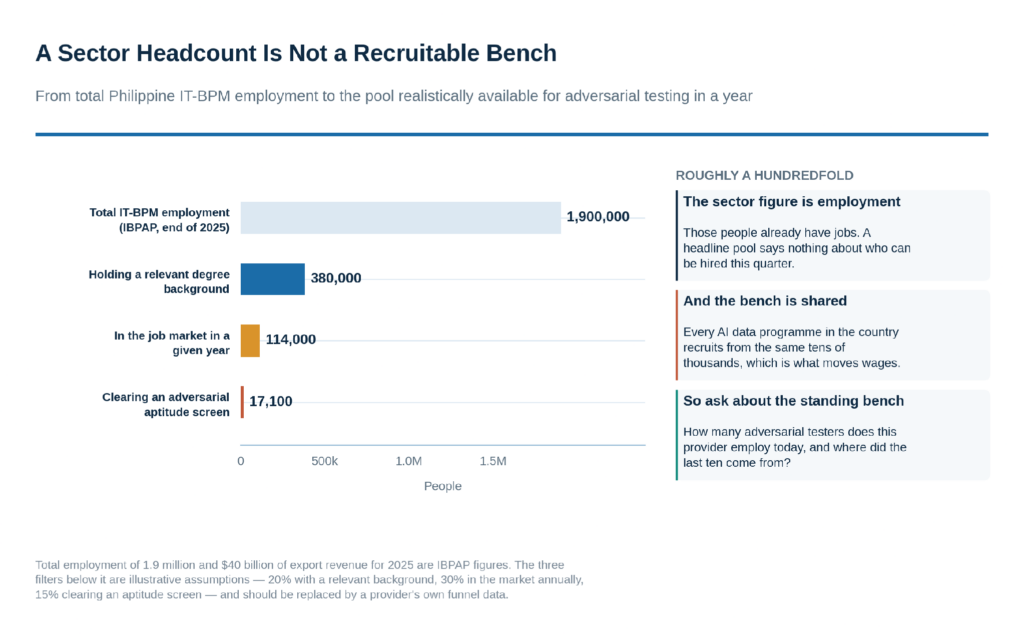
Figure 3. From sector employment to an annually addressable pool.
Three filters do the work. A minority of the sector holds the degree background this work draws on — computer science, linguistics, cognitive psychology, analytics. A minority of those are in the job market in any given year rather than employed and staying put. And a minority of those clear a screen for adversarial aptitude, which is a distinct trait from annotation accuracy and has to be tested for directly. On illustrative but defensible assumptions the three filters take 1.9 million to around 17,000.
Seventeen thousand is a healthy number for most engagements and a small one for the country as a whole, and the second observation is the one that matters commercially. Every AI data programme in the Philippines recruits from the same pool, which is what moves specialist wages and what makes a provider’s standing bench more valuable than its stated capacity. The question worth asking is not how large the national pool is but how many adversarial testers this provider employs today, and where the last ten came from — an existing bench, a competitor, or a graduate intake that has yet to be trained.
This also reframes the ramp claim. Any transition timeline that assumes recruitment from a deep national pool is assuming access to a bench that either exists at that provider or does not. Where it does not, the timeline is a recruitment forecast rather than a delivery plan.
Does Philippine Data Privacy Act Compliance Satisfy GDPR?
No. The Data Privacy Act imposes real and comparable obligations — consent, 72-hour breach notification, security measures, a registered data protection officer — but the Philippines holds no EU adequacy decision. Transfers of EU personal data require standard contractual clauses and a transfer impact assessment regardless.
The claim that Philippine data protection law integrates seamlessly with GDPR and CCPA appears widely in this market and is the single most consequential inaccuracy in it, because a buyer who accepts it will not put a transfer mechanism in place.
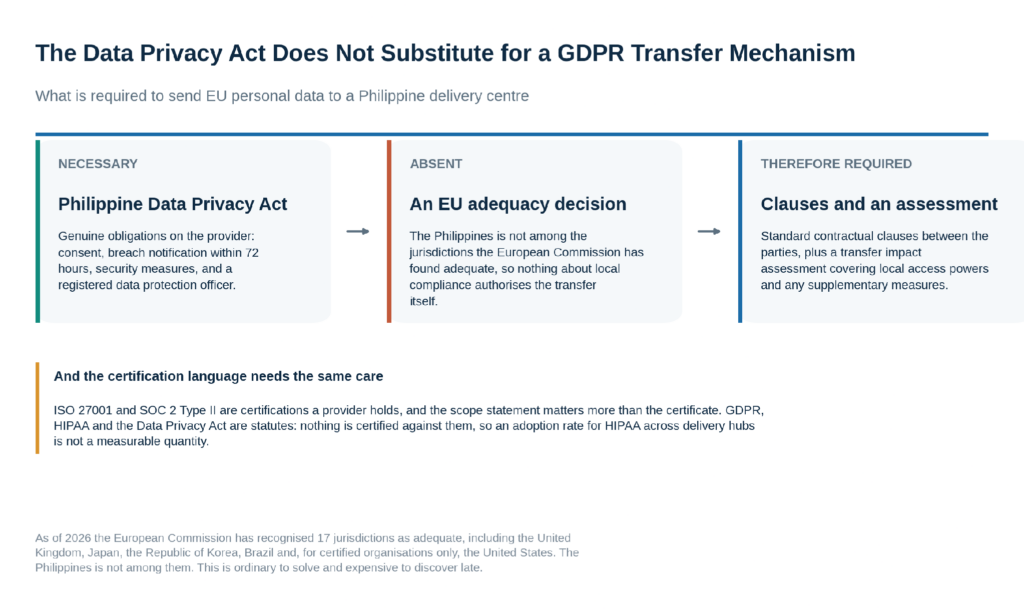
Figure 4. What Data Privacy Act compliance does and does not cover.
Adequacy is a formal finding by the European Commission that a third country’s protections are essentially equivalent. As of 2026 seventeen jurisdictions hold one, including the United Kingdom, Japan, the Republic of Korea, Brazil and — for certified organisations only — the United States. The Philippines is not among them, and a strong domestic statute is not a substitute for the finding. Nor is CCPA satisfied by the same arrangements: it imposes its own service-provider contract terms, which are a separate drafting exercise.
None of this is an obstacle to the transition. Standard contractual clauses are routine, a transfer impact assessment is a piece of work rather than a barrier, and thousands of engagements run on exactly that footing. The cost is only ever in discovering the requirement late, typically when a customer’s privacy team reviews a live arrangement.
The certification language needs the same discipline. ISO 27001 and SOC 2 Type II are certifications a provider holds, and the scope statement matters more than the certificate — confirm the delivery floor, the tooling and any escalation channels sit inside the certified boundary. GDPR, HIPAA and the Data Privacy Act are statutes: nothing is certified against them, which means an adoption rate for HIPAA across delivery hubs is not a measurable quantity and any chart of one would be inventing a metric.
What Do the Rate Numbers Actually Imply?
A 74.7% gap on rate at the midpoints — $28.50 against $112.50 an hour — against a claimed operational saving of 50% to 65%. Both are credible together if roughly 23% of the cost base does not offshore, and naming that 23% is what makes the business case defensible.
Rate comparisons and programme savings are usually quoted side by side as if they were the same claim. They are not, and the gap between them is the most useful number in the section.
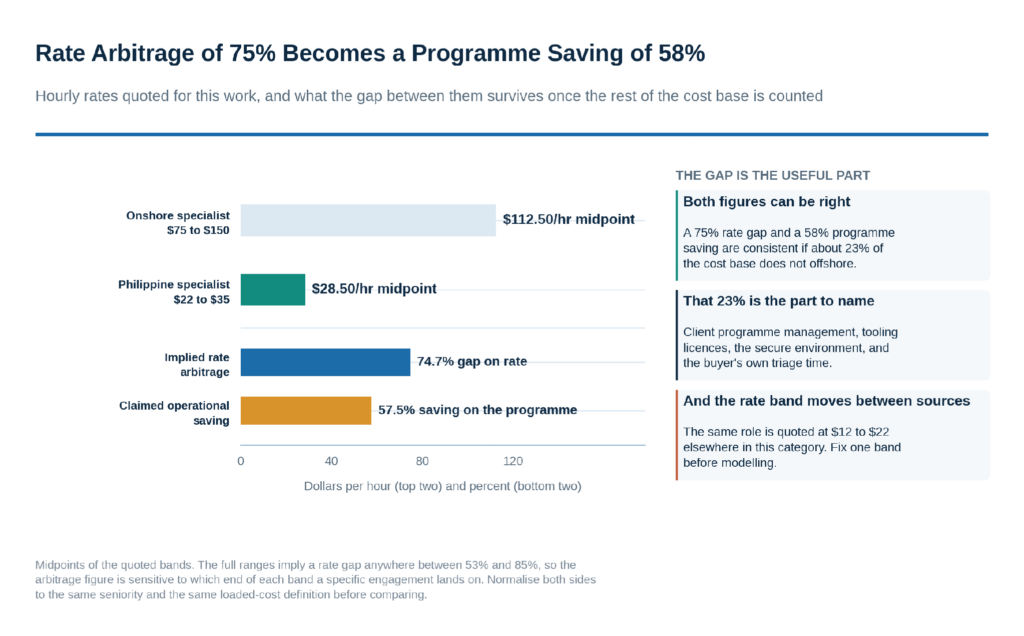
Figure 5. Rate arbitrage against programme saving.
At the midpoints of the quoted bands the rate gap is 74.7%, while the stated operational saving is 57.5%. Those reconcile if about 77% of the cost base is offshorable labour and 23% is not — the client’s own programme management and triage time, tooling and API licences, the secure environment, and the internal engineering effort to consume findings. That decomposition is worth stating in a business case, because a reviewer who sees a 75% rate gap and a 58% programme saving without it will assume one of the two is wrong.
The bands themselves need attention before anything is modelled from them. The full ranges imply a rate gap anywhere between 53% and 85%, so which end of each band a specific engagement lands on matters more than the headline. And the same role is quoted at $12 to $22 an hour elsewhere in this category against $22 to $35 here — a difference large enough to change a build-versus-buy decision. Normalise both sides to the same seniority and the same definition of fully loaded cost before comparing anything.
Transitioning technical AI governance offshore is no longer just about labor arbitrage; it is about accessing structured cognitive capacity and rigorous operational discipline. Enterprises that succeed treat their Philippine partners as co-innovation extensions rather than simple task-takers, integrating them directly into the model development lifecycle.
— John Maczynski, CEO, Cynergy BPO
Integration into the development lifecycle has a specific test on this workload, and it is about the return path. A red team that files findings into a tracker is a task-taker regardless of how it is described. A red team whose analysts see which findings were fixed, which were accepted as risk and which were reclassified is being integrated, and it will produce better findings within a quarter because it learns what the engineering team considers exploitable. That feedback loop costs almost nothing and is the clearest available evidence of whether the relationship is what the quotation describes.
What Should Buyers Establish Before Committing to Phase 4?
Seven things, each of which is cheap to establish during the pilot and expensive to discover after scaling. They concern the representativeness of the pilot, the provider’s standing bench, and the legal footing of the data flow.
- A pilot find rate measured on already-tested ground. A virgin-surface rate extrapolates to roughly three times what the scale-up delivers, and the pilot is too small to show its own decline.
- Coverage against the taxonomy, not just volume of findings. A pilot that found a great deal in one region of the taxonomy and nothing in three others has told you about the evaluators, not about the model.
- Cost per finding at a defined depth, with reproduction required. A finding nobody can reproduce is not a finding, and depth is what separates a real rate from a padded one.
- The provider’s standing adversarial bench today, and its recent sources. The national pool is not the question. How many testers this provider employs now, and where the last ten came from, is.
- A findings custody policy: where they live, who reads them, when they are destroyed. The engagement’s product is a working exploit list for a production model. It needs governing as its own asset class from Phase 1.
- Standard contractual clauses and a transfer impact assessment where EU data is involved. Local compliance is necessary and not sufficient. The Philippines holds no adequacy decision, and that does not change with the provider.
- A defined return path from engineering back to the analysts. Which findings were fixed, accepted or reclassified. It is the cheapest quality improvement available and the real test of integration.
How Did One Financial Institution Transition Its Red-Teaming?
A North American financial services firm facing domestic talent shortages and high recruitment costs assessed three pre-vetted Philippine providers, then deployed a dedicated 25-seat red-teaming pod under virtual desktop protocols with custom multi-turn testing scripts — reducing testing cost 58% and accelerating vulnerability detection 40% within six months.
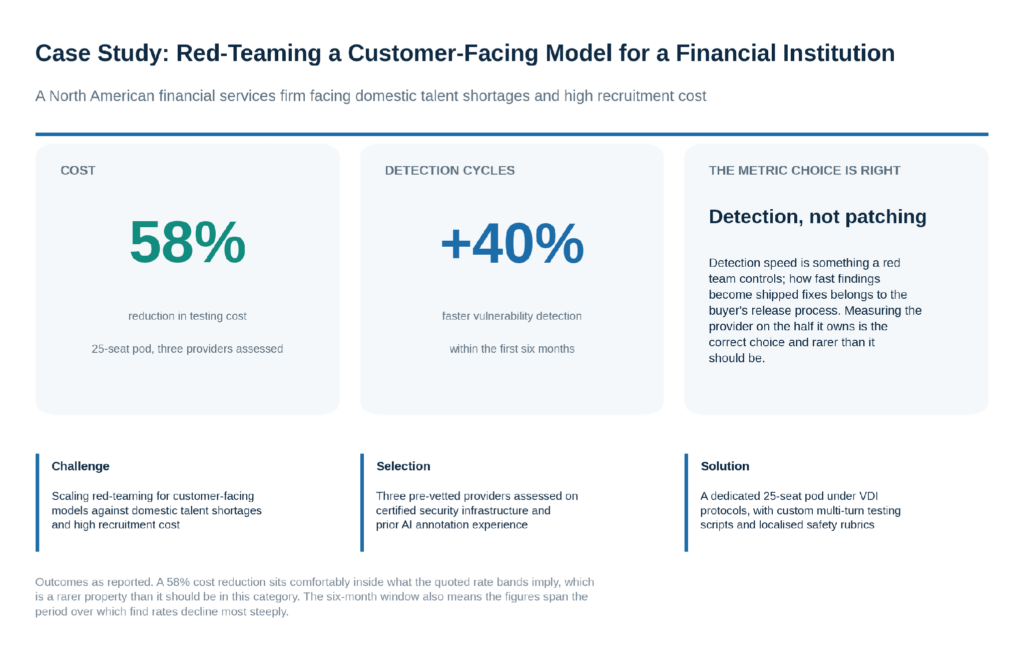
Figure 6. Reported outcomes from a 25-seat red-teaming pod.
The metric choice deserves specific credit. Measuring the provider on vulnerability detection speed rather than on patch deployment attributes the outcome to the half of the work the provider actually controls; how quickly a finding becomes a shipped fix depends on the buyer’s triage, engineering capacity and release cadence. That distinction is drawn correctly here and is drawn incorrectly more often than not.
The 58% cost reduction is also internally consistent, which is worth noting because it frequently is not. It sits comfortably inside the 53% to 85% range the quoted rate bands imply and just inside the 50% to 65% operational band, so a reviewer can reconcile the case study against the pricing section without adjustment.
One caveat for anyone modelling from these figures. Six months is precisely the window over which find rates decline most steeply on an unchanged model, so a 40% acceleration measured across it describes an average over a falling curve rather than a steady state. If the same pod is renewed for a second six months against the same model revision, expect the detection figures to look worse without anything having gone wrong — and plan the renewal around a model revision or a new attack taxonomy, which is what re-opens the surface.
Why Do Organizations Work with Cynergy BPO on Red-Teaming Transitions?
Cynergy BPO is an independent, vendor-neutral outsourcing advisory firm headquartered in Manila, representing a vetted network of more than 100 Philippine providers. It maps requirements against performance data to produce a shortlist within days and manages competitive negotiation on the buyer’s behalf.
Who Is Cynergy BPO?
Cynergy BPO is an independent outsourcing advisory and consultancy firm headquartered in Manila, founded by industry veterans with more than 65 years of combined operational experience governing major global accounts. It specialises in connecting mid-market and enterprise organisations with vetted Philippine BPO providers across voice, back-office and AI data operations.
How Does Cynergy BPO Differ from Traditional Outsourcing Brokers?
Traditional brokers are transactional and are compensated by the providers they place, which shapes which provider is recommended. Cynergy BPO applies an advisory-led methodology, mapping exact technical, security and commercial requirements against performance data. On adversarial work, where the right answer is sometimes a smaller scope than a provider would prefer to sell, that independence is the point.
How Does Cynergy BPO’s Network of 100+ Vetted Philippine BPO Providers Benefit Organizations?
The network establishes which providers hold a standing adversarial-testing bench rather than adjacent annotation experience, which can evidence findings-handling practice from prior engagements, and which have run a programme long enough to show a find-rate curve — the three things a single procurement cannot see.
How Does Cynergy BPO’s Advisory-Led Vendor Matching Process Work?
Requirements are mapped against operational, security and commercial criteria, a tailored shortlist of vetted providers is delivered within a few working days, and the firm then manages competitive proposal and negotiation processes on the buyer’s behalf. Pilot design, findings custody, taxonomy ownership and the transfer mechanism are settled during that process rather than after selection.
Why Do Organizations Use Cynergy BPO?
Because adversarial testing is bought on the same template as annotation and needs a different one. The questions that decide the outcome — what the pilot actually measured, who holds the findings, what re-opens the surface — appear in no capability deck.
Frequently Asked Questions
How long does a red-teaming transition to the Philippines take?
Six to ten weeks is the commonly quoted range and it is achievable where the provider already holds an adversarial-testing bench. Where the specialists are being recruited for the engagement, recruitment and training for that tier runs seven to twelve weeks on its own, so ask which situation applies.
What should a pilot actually measure?
Evaluator quality, coverage against the agreed taxonomy, reproduction rate and cost per finding at a defined depth. Not a raw find rate on an untested model — that number extrapolates to roughly three times what a scaled engagement delivers, and the pilot is too small to reveal its own decline.
Why do findings decline over a long engagement?
Because a finite model presents a finite surface and a competent team works it from the accessible end. Month six on an unchanged model can yield around an eighth of month one. That is saturation rather than underperformance, and a provider penalised for it will reclassify variants of known findings as new.
Does the Philippine Data Privacy Act satisfy GDPR?
No. It creates real and broadly comparable obligations, but the Philippines has no EU adequacy decision — seventeen jurisdictions do, and it is not among them. Transfers of EU personal data need standard contractual clauses and a transfer impact assessment. CCPA imposes its own separate service-provider terms.
How big is the Philippine talent pool for AI safety work?
Sector employment was 1.9 million at the end of 2025, but that counts people in jobs. The pool realistically available for adversarial testing in a year is on the order of tens of thousands nationally, and every AI data programme competes for it. Ask about the provider’s standing bench instead.
What hourly rates apply to Philippine red-teaming specialists?
Quoted bands run $22 to $35 fully loaded against $75 to $150 onshore, though the same role appears at $12 to $22 in other sources. Normalise seniority and the definition of fully loaded cost before comparing, and expect a rate gap anywhere between 53% and 85% depending on where each engagement lands.
Why is the programme saving lower than the rate gap?
Because some of the cost base does not offshore. A 74.7% rate gap and a 57.5% operational saving reconcile if about 23% of costs stay onshore: client programme management, tooling and API licences, the secure environment, and the engineering time to triage and act on findings.
How should the provider’s performance be measured?
On coverage against the agreed taxonomy, novel findings at a defined depth, reproduction rate, and detection speed — all of which the provider controls. Not on patch deployment, which depends on the buyer’s own release process, and not on a flat find rate over time, which the surface makes impossible.
Share This
Unlock cost-efficient growth with expert BPO guidance!
Partner with Cynergy BPO to connect with top outsourcing providers.
Streamline operations, cut costs, and scale your business with confidence.
Book a Free Call
Ralf Ellspermann - CSO
Author
Ralf Ellspermann is the Chief Strategy Officer (CSO) of Cynergy BPO and a globally recognized authority in business process and contact center outsourcing. With more than 25 years of experience advising enterprises and SMEs, he provides strategic guidance on vendor selection, CX optimization, and scalable outsourcing strategies across global markets. His expertise spans fintech, ecommerce and retail, healthcare, insurance, travel and hospitality, and technology (AI & SaaS) outsourcing.
A frequent speaker at leading industry conferences, Ralf is also a published contributor to The Times of India and CustomerThink, where he shares insights on outsourcing strategy, customer experience, and digital transformation.