



By: Ralf Ellspermann
25-Year, Multi-Awarded BPO Veteran
Published: 28 September 2026

Reviewed By: John Maczynski
Former EVP, World's Largest Contact Center
Updated: 28 September 2026
Through university-linked sourcing, multi-stage screening against a scored key, and multi-week calibration academies before live work. The mechanism is sound. Its blind spot is that screening on agreement with a key selects for deference as strongly as for accuracy, and nothing downstream can detect the difference.
Key Takeaways
- Screening on agreement selects for deference, not only for judgement. Modelled on 20,000 candidates, a top-15% screen raises accuracy by 8.7 points and deference to the key by 9.6. Candidates who would flag a wrong key fall from 18% of applicants to 8% of hires.
- And the quality system cannot see it. Downstream monitoring measures agreement. A cohort selected for agreeing will score well whether the key is right or wrong, so the one failure mode the screen creates is the one production metrics are blind to.
- Kappa is not a percentage. An inter-annotator agreement target written as “90% Cohen’s / Fleiss’ kappa” conflates two different quantities. Kappa runs from minus one to one, and 0.90 sits above what mature production pods reach.
- A gate nobody clears gets waived. Experienced pods after weeks of calibration land around 0.82 to 0.88. Asking trainees to clear 0.90 before live work sets a threshold that will be quietly relaxed, which teaches a programme that its gates are decorative.
- Per-evaluator golden-set thresholds fire on sampling noise. At 7% insertion on 300 items a week, an individual is judged on 21 items. An evaluator genuinely working at 96% will read as 90% or worse in about one week in five, and at least once a quarter with near certainty.
- 96% is the most credible headline figure in this category. On genuinely subjective evaluation, a number near 100% would indicate the task had been reduced to something mechanical. The lower figure is the more believable one.
What Academic Backgrounds Do Philippine Providers Recruit From?
Linguistics and literature for register and semantic nuance, computer science and mathematics for reasoning and code validation, philosophy and cognitive science for contested judgements, and licensed professionals for regulated domains. The useful screening question is not what each background brings but what it does not confer.
Philippine providers building evaluation teams recruit from the University of the Philippines, Ateneo de Manila, De La Salle and the larger regional universities, and the profiles they target are genuinely distinct from call centre hiring. That much of the market description is accurate. What is usually missing is the negative space: every background carries a specific competence gap, and a pod assembled without reference to those gaps will have blind regions nobody notices, because the evaluators in it do not know what they are not equipped to see.
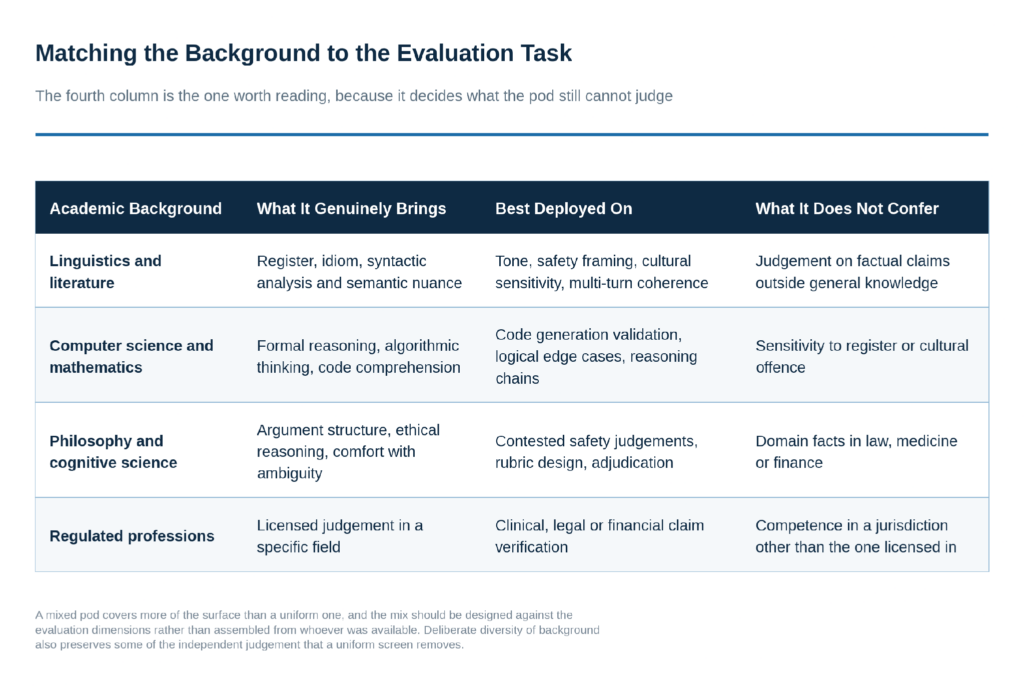
Figure 1. Matching the background to the evaluation task.
The fourth column is where pod composition is actually decided. A linguistics graduate assessing whether a model’s medical claim is correct is exercising general knowledge, not trained judgement. A computer science graduate assessing whether a response is offensive in register is doing the same thing in the other direction. Both will produce a confident label, and both labels will be recorded with the same weight as one from someone qualified to give it.
The practical consequence is that a mix should be designed against the evaluation dimensions in the rubric rather than assembled from whoever was available in the hiring window. If the rubric scores factuality, helpfulness, tone and safety compliance, then each of those four dimensions needs someone in the pod whose training actually covers it, and the routing rules should reflect that rather than distributing items uniformly.
What Does Screening on Agreement with a Key Actually Select For?
Two traits at once. Candidates who agree with a scored key are more accurate, which is the intent, and more deferential, which is not. Because the key is itself imperfect, deference raises a candidate’s score on every item the key gets wrong, and the screen cannot distinguish the two sources of agreement.
This is the structural issue at the centre of graduate-level evaluation hiring, and it is worth stating plainly because it is invisible from inside the process. Multi-stage screening against custom prompt-engineering tests, logic assessments and blind test sets is the standard approach in this market, and it is a reasonable one. The scoring key for those tests is written by people, reviewed by people, and wrong on some fraction of items — 5% to 10% is an ordinary rate for genuinely subjective material.
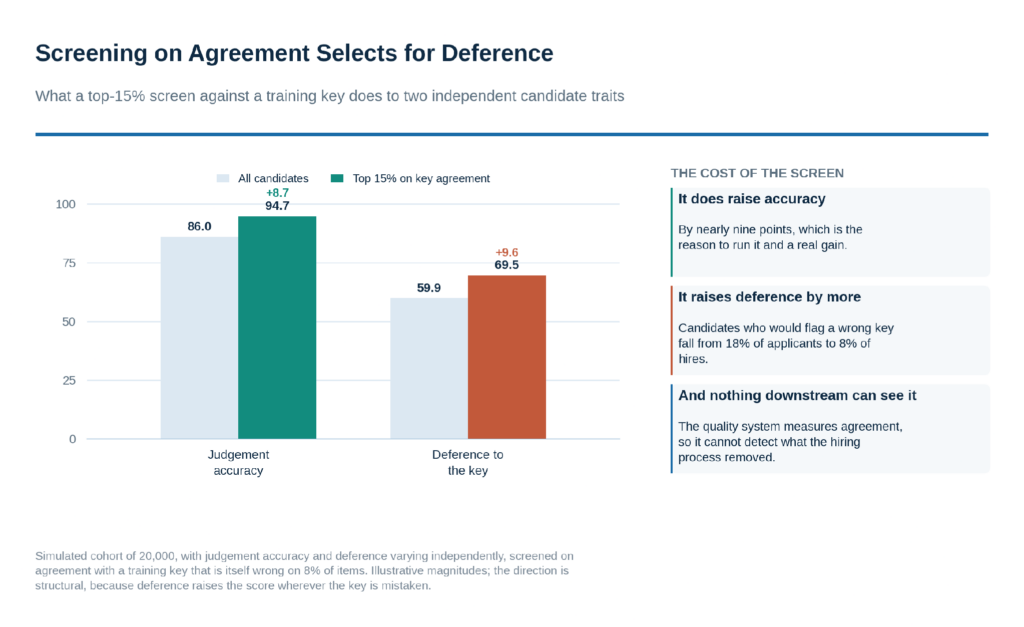
Figure 2. Two traits rise together, and only one is wanted.
Model a candidate as having two independent properties: judgement accuracy, and a tendency to defer to an authoritative answer when their own reading differs. On items the key gets right, only accuracy helps. On items the key gets wrong, only deference helps. Screening on total agreement therefore rewards both, and it rewards them in proportion to how often the key is mistaken.
Simulated across 20,000 candidates with a key wrong on 8% of items, a top-15% screen lifts mean accuracy from 86.0 to 94.7 — a real and worthwhile gain — while lifting deference from 59.9 to 69.5. The share of the cohort who would flag a wrong key rather than match it falls from 18.1% of applicants to 7.6% of hires. The exact magnitudes depend on the assumed distributions; the direction does not, because it follows from the arithmetic of scoring against an imperfect standard.
What makes this matter rather than merely interesting is the second half. The quality system that runs after hiring measures inter-annotator agreement and golden-set accuracy — both of which are agreement metrics. A cohort selected for agreeing will score well on them regardless of whether the underlying key is correct. The programme’s own instrumentation is therefore structurally unable to detect the one distortion its hiring process introduced.
Three corrections cost very little. Audit the screening key before it is used at scale, by having two senior evaluators independently work a sample of it and adjudicating the disagreements — the disagreement rate on the key is the size of the problem. Score at least part of the assessment on reasoning quality rather than answer match, so a well-argued dissent can score highly. And keep a small standing panel whose explicit job is to challenge rubric interpretations, recruited on the trait the main screen removes.
Is a 0.90 Inter-Annotator Agreement Graduation Gate Achievable?
Not as written, and the way it is written contains a second problem. Kappa is not a percentage, so “90% kappa” conflates two different measures. Read as 0.90, the gate sits above what experienced production pods reach after weeks of calibration, so it will be waived rather than met.
The metric table circulating in this category specifies inter-annotator agreement of “90% or higher, Cohen’s / Fleiss’ kappa” as a condition of graduating from training to live client work. Two things are wrong with that, and they compound.
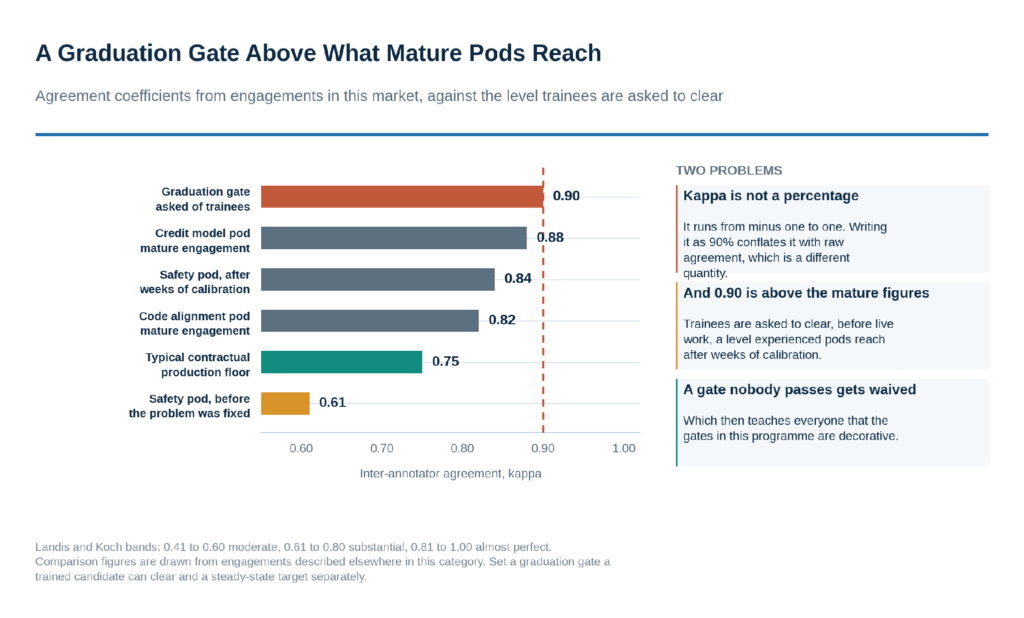
Figure 3. What the gate asks for, against what mature pods reach.
The first is terminological. Raw percentage agreement and kappa are different quantities: kappa corrects for the agreement expected by chance and runs from minus one to one. On a binary judgement where both evaluators mostly say the same thing, 90% raw agreement can correspond to a kappa near zero. Writing a kappa target with a percent sign leaves genuine ambiguity about which measure governs, and the two can be satisfied by very different data.
The second is calibration. Read as a kappa of 0.90, the gate is above the figures mature pods report in this same category: around 0.88 on a credit model engagement, 0.84 for a safety pod after weeks of calibration, 0.82 on code alignment, against a typical contractual production floor of 0.75. Asking trainees to clear, before their first live item, a level experienced teams reach only after sustained calibration produces one of two outcomes. Either almost nobody graduates and the recruitment funnel collapses, or the gate is quietly relaxed — and a programme that waives its own stated threshold has taught every participant that its gates are negotiable.
The fix is to separate the two numbers that are currently one. Set a graduation gate a well-trained candidate can genuinely clear, in the 0.70 to 0.75 range on the task’s own difficulty, and set a separate steady-state target the pod is expected to reach after several weeks on live work. Then state the measure explicitly — Cohen’s kappa for pairs, Fleiss’ for more than two, raw agreement if that is what is meant — and report the prevalence alongside it, because kappa on a skewed class distribution falls sharply at constant reviewer skill.
Why Do Per-Evaluator Golden-Set Thresholds Fire on Noise?
Because the individual sample is tiny. At 7% insertion on 300 items a week, an evaluator is judged on 21 golden items, where two misses reads as 90.5%. An evaluator genuinely working at 96% will fall below a 90% threshold in about one week in five.
Golden dataset insertion at 5% to 10% is the right mechanism and works well at the level it was designed for. Aggregated across a pod, it detects drift reliably and cheaply. The failure appears when a batch-scale threshold is applied to an individual’s much smaller sample and wired to an automatic consequence.
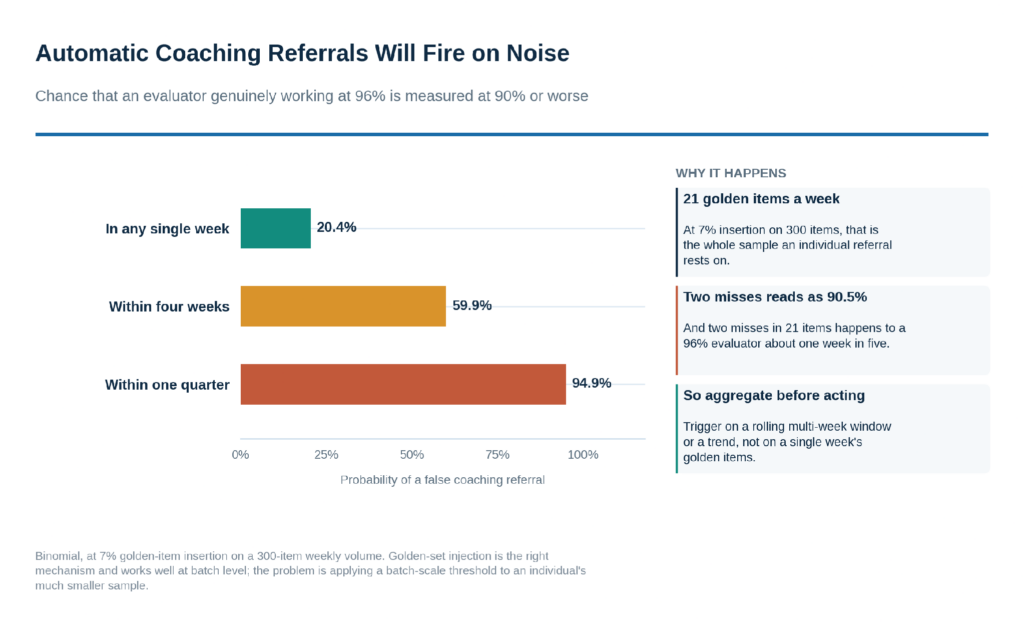
Figure 4. False coaching referrals for an evaluator genuinely at 96%.
The arithmetic is unforgiving. Twenty-one items is the entire evidence base for a weekly individual judgement. Zero misses reads as 100%, one as 95.2%, two as 90.5%, three as 85.7% — there is no value between 95.2% and 90.5% that the measurement can even express. A genuinely 96% evaluator misses two or more of 21 items about 20.4% of the time, which means a false referral roughly every fifth week, 59.9% within any four-week window, and 94.9% within a quarter.
Routing that evaluator to remedial coaching is worse than merely wasteful. It consumes coaching capacity that a genuinely struggling evaluator needs, it signals to the pod that the measurement is arbitrary, and it creates a documented performance record built on sampling noise. Where coaching referrals feed appraisal or retention decisions, the noise becomes consequential.
Two changes make the mechanism work as intended. Trigger on a rolling multi-week window — four weeks gives 84 items, which separates 96% from 90% with far more confidence than any single week — or on a trend rather than a level. And raise insertion for evaluators already under review rather than for everyone, which concentrates measurement precisely where a decision is pending and keeps the cost of golden items down elsewhere.
What Does a 45-Day Ramp to 150 Graduate-Level Evaluators Require?
At an 85% screen-out rate, roughly 1,000 candidates assessed, or about 31 a working day sustained for nine weeks. The same 45 days must also contain a multi-week training academy, so recruitment and training have to run as overlapping cohorts rather than in sequence.
Ramp figures are the easiest claim to verify in any provider proposal, because the funnel arithmetic is fixed once the screen-out rate is stated. It is worth doing before signing rather than after.
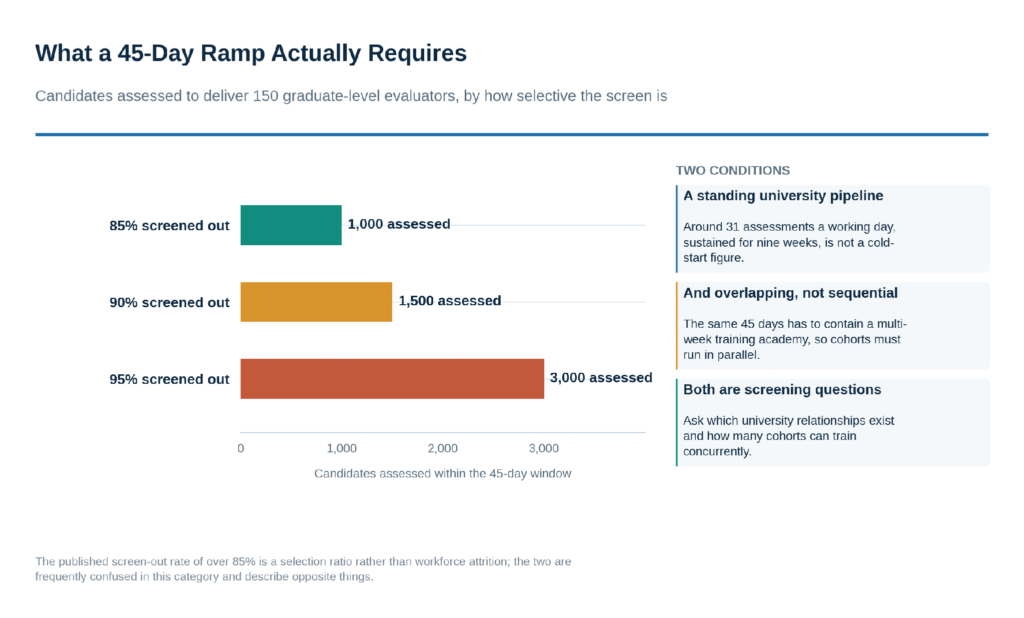
Figure 5. Candidates assessed to deliver 150 evaluators.
The daily assessment rate is the first condition. Thirty-one graduate-level candidates assessed every working day for nine consecutive weeks is not a cold-start figure; it implies standing university relationships, a pre-built assessment infrastructure and an existing candidate pipeline. A provider building that from scratch for one engagement will not hit the number, and the honest version of the claim names the pipeline rather than the deadline.
The second condition is concurrency. If a training academy runs several weeks, a sequential funnel — assess everyone, then train everyone — cannot fit inside 45 days at any screening rate. The only arrangement that works is overlapping cohorts, with later intakes screening while earlier ones train and the first cohorts going live before the last are hired. That is a real operational capability and a fair thing to ask about: how many cohorts can train concurrently, with how many instructors, and what happens to agreement scores when instructor-to-trainee ratios stretch.
One terminology point belongs here, because it recurs. A screen-out rate “exceeding 85%” is a selection ratio — the share of applicants not hired — and it is a sign of a selective process. Workforce attrition is the share of hired staff who leave, and a high figure is a problem. Describing the selection ratio as an attrition rate inverts the meaning of a favourable statistic, and the two appear close enough together in this category to be worth separating explicitly.
The misconception is that AI evaluation is a commodity data-labeling task. In reality, scaling high-end LLM refinement in the Philippines requires building intellectual ecosystems that rival Silicon Valley R&D centers. Success depends entirely on institutionalizing continuous learning loops, deep cultural contextualization, and uncompromising quality governance.
— John Maczynski, CEO, Cynergy BPO
The continuous learning loop is the right emphasis, and it points at where the design effort belongs. A loop that feeds only agreement metrics back into coaching will converge on a pod that agrees — with the key, with each other, and with whatever the rubric said when it was written. What keeps the loop honest is an input it cannot generate itself: periodic re-adjudication of the key by people who were not selected for agreeing with it.
What Should Buyers Ask Providers About Recruitment and Training?
Seven questions, all of which have specific answers a capable provider can give from existing engagements. They are about the key, the gate, the sample size behind individual decisions, the pipeline and the cohort structure, rather than about the curriculum.
- How was the screening key validated, and what is its own error rate? Two senior evaluators working a sample independently, with adjudicated disagreements, gives the number. It is the size of the deference problem.
- Is any part of the assessment scored on reasoning rather than answer match? If not, a candidate who correctly disputes a wrong key item is penalised for being right, and that candidate is the one worth hiring.
- Which agreement measure governs, and at what prevalence? Cohen’s for pairs, Fleiss’ for more, raw agreement if that is what is meant. Kappa falls on skewed classes at constant reviewer skill, so the target moves with the data.
- What is the graduation gate, and what share of trainees clear it? A gate with a near-100% pass rate is not screening. One with a near-zero pass rate has been waived in practice. Ask for the distribution.
- How many golden items back an individual coaching decision? If the answer is a single week’s insertion, the decision rests on about 20 items and will fire on noise. Ask for the aggregation window.
- Which university relationships already exist, and how deep is the bench? The ramp figure depends entirely on whether the pipeline exists or is being built for this engagement.
- How many training cohorts can run concurrently? This determines whether a stated timeline is arithmetically possible, and it sets the instructor-to-trainee ratio that quality will actually depend on.
How Did One Enterprise Build a 150-Person Evaluation Team?
An enterprise AI developer needing 150 graduate-level evaluators for multi-turn conversational nuance and coding validation assessed seven Philippine providers through an advisory process, then stood up custom recruitment funnels and a training academy co-designed with its own engineering leads — reaching full deployment in 45 days at 96% sustained annotation accuracy.
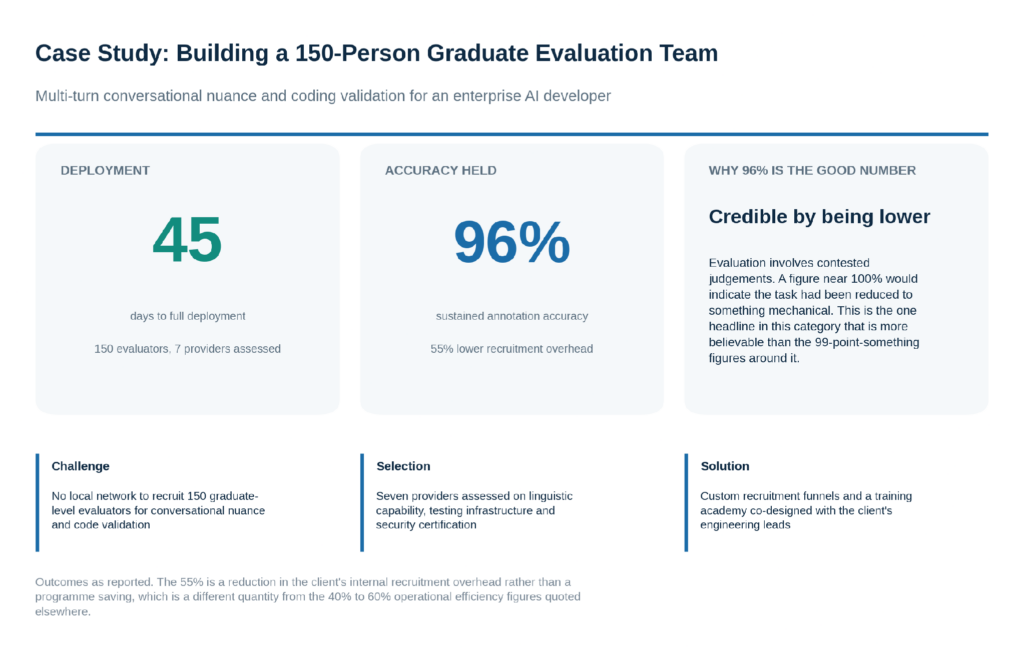
Figure 6. Reported outcomes from a 150-person evaluation build.
The co-design decision is the strongest feature of this engagement and the one that generalises. Curriculum written by a provider in isolation teaches the rubric as the provider understood it; curriculum written with the client’s engineering leads teaches the rubric as the people consuming the labels intended it. The reported acceleration in time-to-productivity follows directly, and the mechanism is cheap to replicate.
The 96% deserves a defence, because it reads as modest next to the 99-point-something figures that appear elsewhere in this category. On genuinely subjective evaluation — tone, helpfulness, safety framing, multi-turn coherence — 96% is the more credible number precisely because it is lower. A figure approaching 100% on contested judgements would indicate either that the task had been reduced to something mechanical or that the measurement was scoring agreement with a convention rather than correctness. This is the one headline in the category that gains believability by being smaller.
The 55% figure needs a label. It is a reduction in the client’s internal recruitment overhead, which is a different quantity from the 40% to 60% operational efficiency range quoted for programme delivery. Both may be true; they measure different things, and quoting them in the same breath invites a buyer to add them together. Ask which cost base each percentage applies to before modelling either.
Why Do Organizations Work with Cynergy BPO on Evaluation Talent?
Cynergy BPO is an independent, vendor-neutral outsourcing advisory firm headquartered in Manila, representing a vetted network of more than 100 Philippine providers. It maps requirements against performance data to produce a shortlist within days and manages competitive negotiation on the buyer’s behalf.
Who Is Cynergy BPO?
Cynergy BPO is an independent outsourcing advisory and consultancy firm headquartered in Manila, founded by industry veterans with more than 65 years of combined operational experience governing major global accounts. It specialises in connecting mid-market and enterprise organisations with vetted Philippine BPO providers across voice, back-office and AI data operations.
How Does Cynergy BPO Differ from Traditional Outsourcing Brokers?
Traditional brokers are transactional and are compensated by the providers they place, which shapes which provider is recommended. Cynergy BPO applies an advisory-led methodology, mapping exact technical, security and commercial requirements against performance data. On talent programmes, where the decisive questions concern a provider’s screening key and cohort structure rather than its curriculum deck, that independence determines what actually gets asked.
How Does Cynergy BPO’s Network of 100+ Vetted Philippine BPO Providers Benefit Organizations?
The network establishes which providers hold standing university relationships rather than building them per engagement, which can evidence graduation pass rates and steady-state agreement figures from live work, and which have run enough concurrent cohorts to support an aggressive ramp without stretching instructor ratios.
How Does Cynergy BPO’s Advisory-Led Vendor Matching Process Work?
Requirements are mapped against operational, security and commercial criteria, a tailored shortlist of vetted providers is delivered within a few working days, and the firm then manages competitive proposal and negotiation processes on the buyer’s behalf. Screening-key validation, the graduation gate and the golden-set aggregation window are settled during that process rather than discovered in production.
Why Do Organizations Use Cynergy BPO?
Because the questions that decide whether an evaluation team produces usable judgement are not in any capability deck. How the screening key was validated, what the graduation gate’s pass rate actually is, and how many items sit behind an individual coaching decision are answerable, consequential, and almost never asked.
Frequently Asked Questions
What qualifications do Philippine LLM evaluators typically hold?
Bachelor’s or postgraduate degrees in linguistics, literature, computer science, data science or philosophy, from the major Philippine universities. The more useful screening criterion is fit between background and rubric dimension, since each background carries a specific competence gap the evaluator will not recognise in themselves.
Is a 90% inter-annotator agreement requirement realistic?
Not as a kappa, and “90% kappa” confuses two measures. Kappa runs from minus one to one; mature production pods report 0.82 to 0.88 after weeks of calibration. Set a graduation gate near 0.70 to 0.75 and a separate steady-state target, and state which measure governs.
How much golden-set data is needed to assess an individual evaluator?
More than a single week supplies. At 7% insertion on 300 items, an individual is judged on 21 items, where two misses reads as 90.5%. Aggregate over a rolling four-week window or trigger on trend, and raise insertion only for evaluators already under review.
How quickly can a specialised evaluation team be deployed?
Reported timelines of 45 days for 150 evaluators are achievable where a standing university pipeline exists and cohorts train concurrently. At an 85% screen-out rate that implies roughly 1,000 candidates assessed, about 31 each working day, alongside a training academy running in parallel.
Does screening for agreement harm evaluation quality?
It raises accuracy and simultaneously selects for deference to the key. Since downstream quality metrics also measure agreement, the distortion is invisible to the production system. Validate the key, score part of the assessment on reasoning, and keep a panel recruited to challenge rubric interpretations.
What does a screen-out rate above 85% mean?
It is a selection ratio, the share of applicants not hired, and it indicates a selective process. It is not workforce attrition, which is the share of hired staff who leave. The two are frequently conflated in this category and describe opposite things.
Which certifications apply to evaluation work?
ISO 27001 and SOC 2 Type II are held and auditable, and their scope statements matter more than their existence. HIPAA and data protection statutes are laws against which nothing is certified; the obligations they create fall on the buyer and are met through contractual and technical controls.
How should training quality be measured after graduation?
On steady-state agreement at stated prevalence, on the rate at which escalated ambiguous items are resolved consistently, and on how often the pod surfaces a rubric defect. The last of these is the only routine metric that detects a wrong key rather than confirming it.
Share This
Unlock cost-efficient growth with expert BPO guidance!
Partner with Cynergy BPO to connect with top outsourcing providers.
Streamline operations, cut costs, and scale your business with confidence.
Book a Free Call
Ralf Ellspermann - CSO
Author
Ralf Ellspermann is the Chief Strategy Officer (CSO) of Cynergy BPO and a globally recognized authority in business process and contact center outsourcing. With more than 25 years of experience advising enterprises and SMEs, he provides strategic guidance on vendor selection, CX optimization, and scalable outsourcing strategies across global markets. His expertise spans fintech, ecommerce and retail, healthcare, insurance, travel and hospitality, and technology (AI & SaaS) outsourcing.
A frequent speaker at leading industry conferences, Ralf is also a published contributor to The Times of India and CustomerThink, where he shares insights on outsourcing strategy, customer experience, and digital transformation.