



By: Ralf Ellspermann
25-Year, Multi-Awarded BPO Veteran
Published: 30 September 2026

Reviewed By: John Maczynski
Former EVP, World's Largest Contact Center
Updated: 30 September 2026
By staggering Manila shifts to overlap client business hours and joining the ceremonies inside that window. The overlap is real and it belongs to the client’s time zone: one region buys a full eight hours on an afternoon shift, three regions buy three to four on a shift running past midnight.
Key Takeaways
- A three-to-four hour overlap is the multi-region compromise, not the ceiling. A single-region client can have eight. A 15:00 Manila start gives full European cover on an afternoon shift; a 21:00 start gives full US Eastern cover on a night one.
- Covering three regions costs a shift that runs past midnight. The best single eight-hour shift starts at 19:00 Manila and yields 3 hours with US Pacific, 6 with US Eastern and 4 with Central Europe. Ask which shift a quoted overlap assumes.
- Ceremonies consume 29% of the overlap window. Scrum time boxes for a two-week sprint total about 10 hours against a 35-hour overlap budget, leaving roughly 2.5 hours a day for blockers, review and pairing.
- And the biggest lever is fewer questions, not more overlap. Doubling the window from 3.5 to 6 hours cuts average wait 23%. Halving the blocker rate through up-front documentation cuts total delay 50%, and costs nothing at run time.
- Which is what the case study already found. Front-loading ontology documentation in the first two sprints is reported as the lesson learned. It is also the larger of the two remedies available.
- The 50% cycle-time claim is internally consistent. Returning 45% of sprint bandwidth raises feature throughput 82%, and Little’s Law converts that to a 45% cycle-time reduction. But a sprint is a fixed time box — what fell is cycle time per work item.
What Does a Three-to-Four Hour Overlap Actually Require?
It depends entirely on where the client is. Central European business hours fall at 15:00 to 23:00 Manila time, US Eastern at 21:00 to 05:00 and US Pacific at midnight to 08:00. One region can be covered completely by one shift. Three cannot.
Overlap is quoted in this market as a capability of the provider. It is better understood as a property of the client’s time zone, and stating it that way changes both what a buyer should expect and what the arrangement costs.
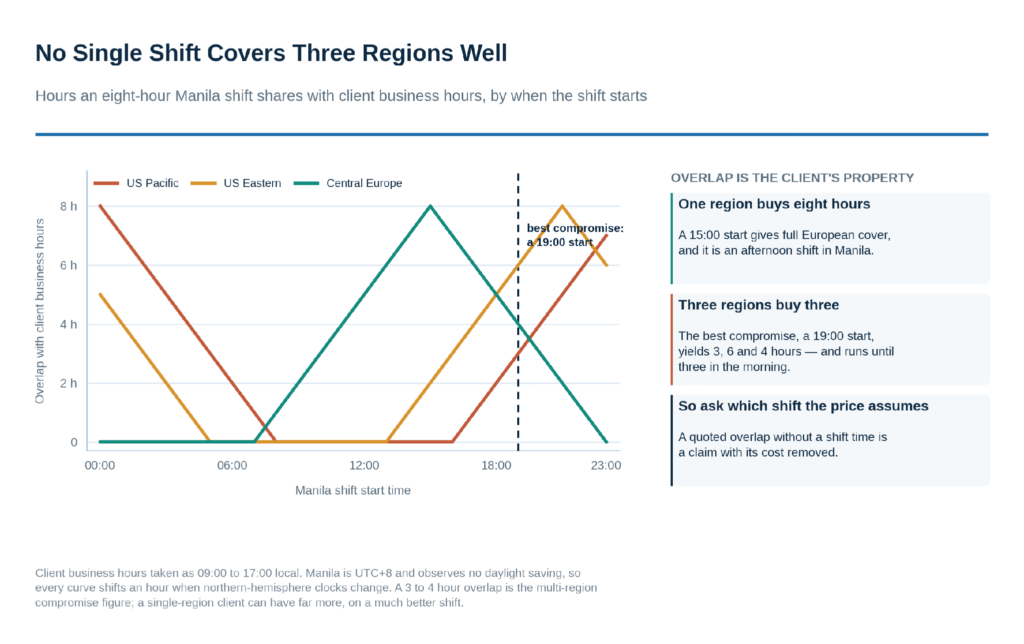
Figure 1. Overlap hours by Manila shift start, for three client regions.
For a single-region engagement the picture is better than the quoted figure suggests. A Manila shift starting at 15:00 overlaps Central European business hours completely — eight hours, not three or four — and it is an afternoon-to-late-evening shift, which sits at the favourable end of the published Philippine attrition bands rather than the punishing end. A European client should not accept a three-hour overlap as a constraint; it is a choice.
For a multi-region engagement the picture is harder and the quoted figure is right. The best compromise available from one eight-hour shift starts at 19:00 Manila and yields three hours with US Pacific, six with US Eastern and four with Central Europe. That shift runs until three in the morning, which is a genuine night shift with the retention cost that carries — and that cost lands hardest on the specialist roles with the longest replacement pipelines.
The practical question for a buyer is therefore not how many overlap hours a provider offers but which shift the quoted rate assumes. A three-hour overlap delivered from an afternoon shift and a three-hour overlap delivered from a graveyard shift are the same number attached to two different staffing propositions, and only one of them is priced correctly by a standard rate.
What Do the Ceremonies Cost Against That Window?
About 10 hours of a 35-hour sprint budget. Sprint planning takes up to four, daily stand-ups two and a half across ten days, sprint review two and the retrospective one and a half. That is 29% of the total overlap before any blocker is discussed.
The ceremony comparison in general use is a fair description of what good integration looks like, and joint retrospectives in particular are a genuine improvement on the offshore norm. What the table omits is that every ceremony is charged to the same scarce window as everything else.
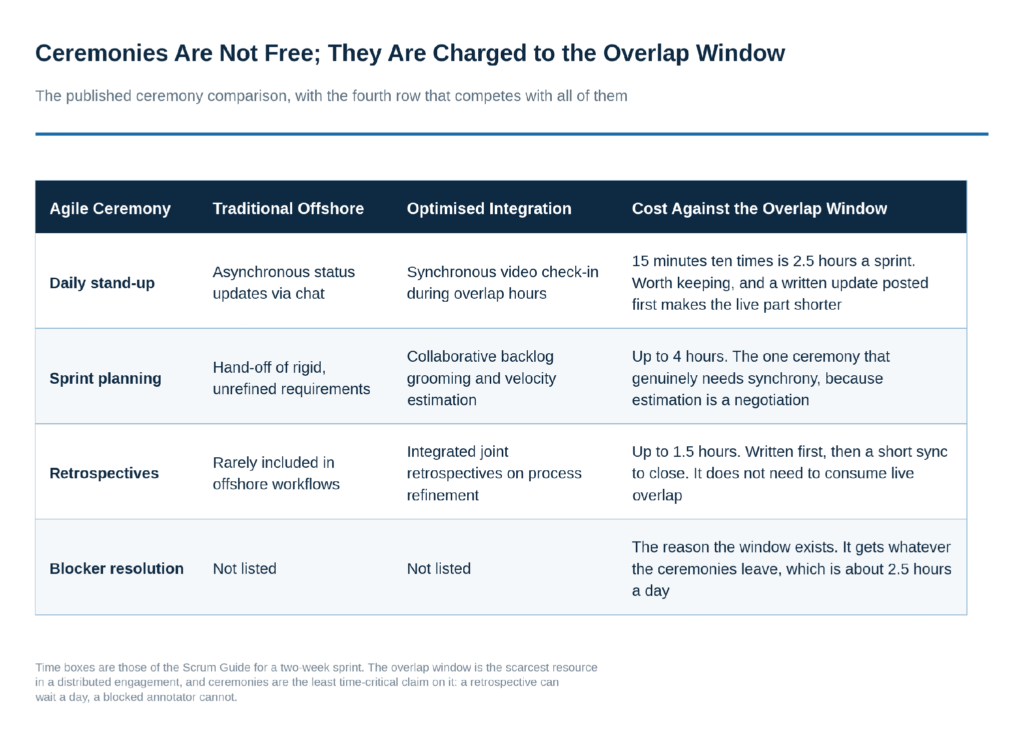
Figure 2. The ceremony comparison, with what each one costs.
The fourth row is the one competing with the other three. Blocker resolution is why a synchronous window exists at all: an annotator who cannot proceed without a ruling is idle until someone answers, and that is the delay agile integration is supposed to remove. It receives whatever the ceremonies leave, which on these figures is around two and a half hours a day.
Not every ceremony needs the live window equally. Sprint planning genuinely does, because estimation is a negotiation and it works badly in writing. A retrospective does not: written first, then closed in fifteen minutes of discussion, it costs a fraction of the ninety scheduled. A sprint review demo records well, and what needs people present is the discussion afterwards. Moving review and retrospective largely out of the window returns three and a half hours a sprint to the work the window exists for.
How Should the Overlap Budget Be Spent?
With sprint planning protected, stand-ups shortened by a written update posted beforehand, and review and retrospective moved largely out of the live window. That returns roughly three and a half hours a sprint to blocker resolution without removing any ceremony.
Treating the overlap window as a budget rather than as a schedule is the shift that makes the arithmetic visible.
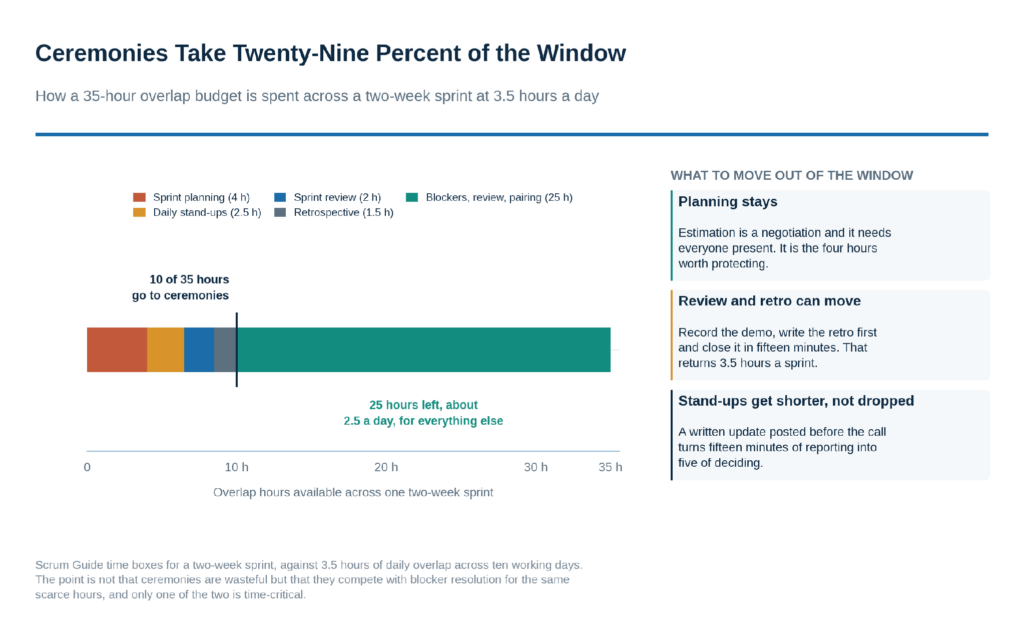
Figure 3. How a 35-hour overlap budget is spent.
The sequencing principle is simple: anything that can be written should be written first, and the live window should be spent on the parts that only work when people are present. A stand-up where everyone reports status consumes fifteen minutes of the scarcest resource in the engagement to transmit information that a written update transmits better; a stand-up where the written updates are already posted spends five minutes on the decisions those updates surfaced.
The same logic applies to code and data hand-offs, and it is where a definition of done earns its cost. For code, a definition of done can be a checklist a reviewer applies at a pull request. For annotation data it should be a script that runs in continuous integration — schema validity, class coverage, per-class counts against expected ranges, geometry sanity. A data definition of done that requires a human to check it has simply moved the bottleneck into the overlap window, where there was no room for it.
Is More Overlap the Right Fix?
It helps less than reducing the need for it. Extending the window from 3.5 to 6 hours cuts the average wait for an answer from 8.8 hours to 6.8 — a 23% improvement. Halving the rate at which questions arise cuts total delay by 50%, and costs nothing once the documentation exists.
When a distributed engagement feels slow, the instinctive remedy is more synchronous time. The arithmetic says that is the weaker of the two available levers and the more expensive one.
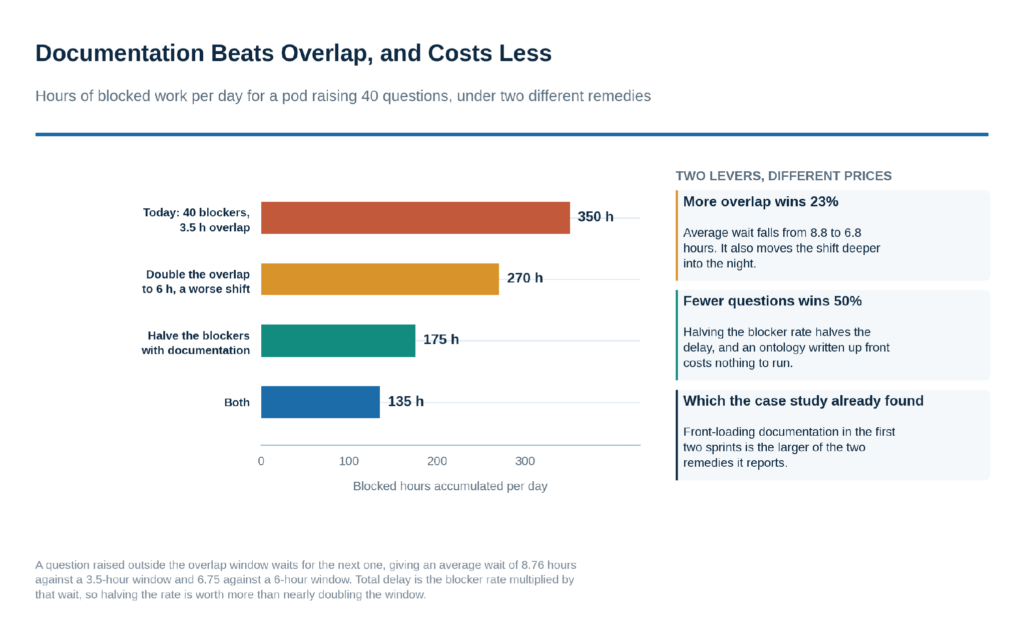
Figure 4. Two remedies for the same delay.
Total delay is the blocker rate multiplied by the average wait. A pod raising forty questions a day against a 3.5-hour window accumulates about 350 blocked hours a day. Doubling the window to six hours brings that to 270 — real, and it comes at the price of a later shift with worse retention. Halving the blocker rate brings it to 175, which is more than twice the improvement, and the shift stays where it is.
What halves the blocker rate is documentation of exactly the kind the case study in this category reports: an ontology written up front, a definition of done that is machine-checkable, and worked examples for the cases that are genuinely ambiguous. Each question answered once in writing is a question that does not need the window again. The engagement’s own stated lesson is therefore also its strongest finding, and it deserves more prominence than it usually gets.
The two remedies compound rather than compete, and the order matters. Documentation first, because it is cheap and permanent; then extend the window only if the residual blocker rate still justifies a worse shift. Doing it the other way round buys a night shift to answer questions that need not have been asked.
Agile robotics requires absolute synchronization between software architecture and data pipelines. When enterprises work with Cynergy BPO, we bypass traditional sales brokers to match them with the exact technical partner equipped for their specific agile framework.
— John Maczynski, CEO, Cynergy BPO
Synchronisation between architecture and data pipelines is the right target, and the useful specification of it is the definition of done. A perception dataset merges into a training pipeline the way a branch merges into a trunk, and the same discipline applies: automated checks that pass or fail without a human in the loop, run at the moment of hand-off. Matching on an agile framework matters less than matching on whether a provider can meet a machine-checkable acceptance test, because the framework describes how teams talk and the acceptance test describes what actually crosses the boundary.
Does the 50% Cycle-Time Claim Hold Up?
Yes, and the mechanism is capacity rather than ceremony design. Returning 45% of sprint bandwidth to feature work raises throughput by 82%, and Little’s Law converts that directly into a 45% cycle-time reduction at constant work in progress. The reported 50% lands within five points.
This is one of the rarer cases in this category where a headline figure follows from another figure in the same paragraph, and it is worth showing the working rather than simply repeating it.
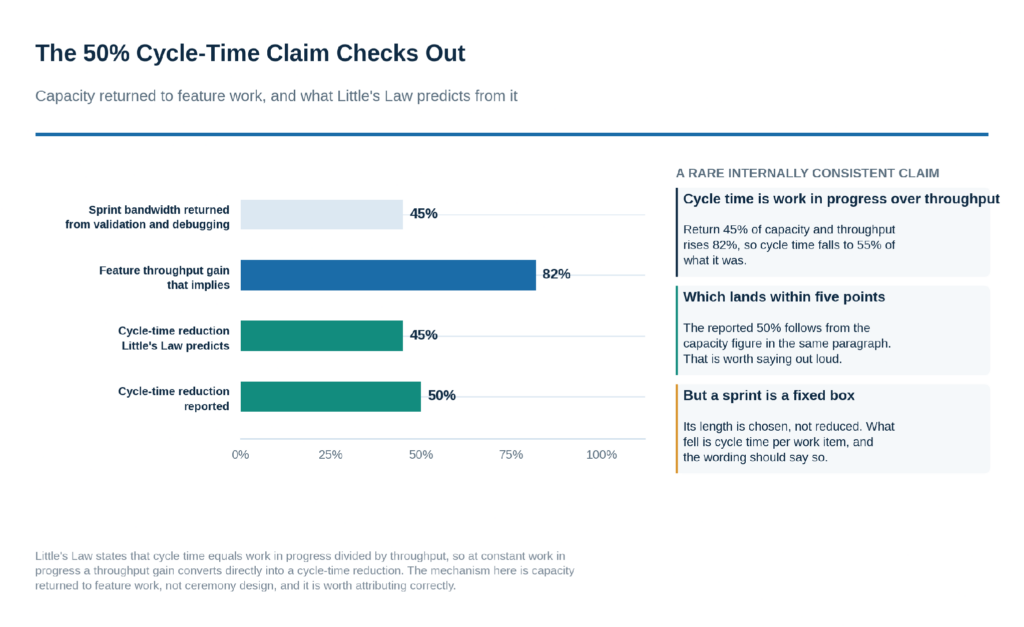
Figure 5. The claim checked against the capacity figure.
Little’s Law states that cycle time equals work in progress divided by throughput. Engineers spending 45% of a sprint on validation and simulation debugging had 55% available for feature work; removing that load takes them to 100%, which is an 82% increase in the throughput applied to features. At constant work in progress, cycle time falls to 55% of its previous value — a 45% reduction against a claimed 50%.
One piece of terminology is worth correcting before the figure is reused. A sprint is a fixed time box; its length is chosen by the team and does not shrink because capacity arrived. What fell is cycle time per work item, which is the measurable and meaningful quantity. Stated as “halved the cycle time per work item,” the claim is both defensible and clearer about what improved.
The attribution matters as well. This result came from removing routine load from expensive engineers, not from how the stand-ups were run. Agile integration is what makes an offshore pod usable; capacity is what makes it valuable. A buyer evaluating this engagement should expect the benefit to scale with how much routine work the internal team is currently absorbing, and to be modest where that share is already small.
What Should Buyers Specify in an Agile Integration Contract?
Seven things, most of which cost a provider nothing and all of which are easier to set before the first sprint than after. They concern which shift the overlap comes from, what the window is spent on, and what crosses the boundary.
- The shift the quoted overlap assumes, in Manila local time. A three-hour overlap from an afternoon shift and from a graveyard shift are different staffing propositions priced identically.
- Overlap hours per client region, not a single blended figure. One region can be covered completely. Three cannot, and the compromise shift runs past midnight.
- A written ceremony policy: what happens live and what happens in writing. Planning live, retrospectives written first, demos recorded. It returns about three and a half hours a sprint to blocker resolution.
- An ontology and worked examples delivered in the first two sprints. Halving the blocker rate removes twice the delay that doubling the overlap window does, and it does not require a worse shift.
- A machine-checkable definition of done for data. Schema validity, class coverage, per-class counts and geometry sanity, run in continuous integration. A human-checked data gate consumes the window it was meant to protect.
- Blocker latency measured and reported, not just velocity. Time from question raised to ruling received is the metric agile integration is bought to improve, and the one no standard report contains.
- Which roles sit in the pod, at which rate tier. Annotation and engineering are different labour markets. A blended rate for a squad described as both hides which one is being staffed.
How Did One Robot Developer Scale Its Sprints Offshore?
A North American autonomous mobile robot developer, losing 45% of sprint bandwidth to sensor data validation and simulation debugging and having missed three consecutive release milestones, assessed three Philippine providers and deployed a 65-person squad inside its own Jira and GitHub — halving cycle time per work item and cutting annotation cost 61%.
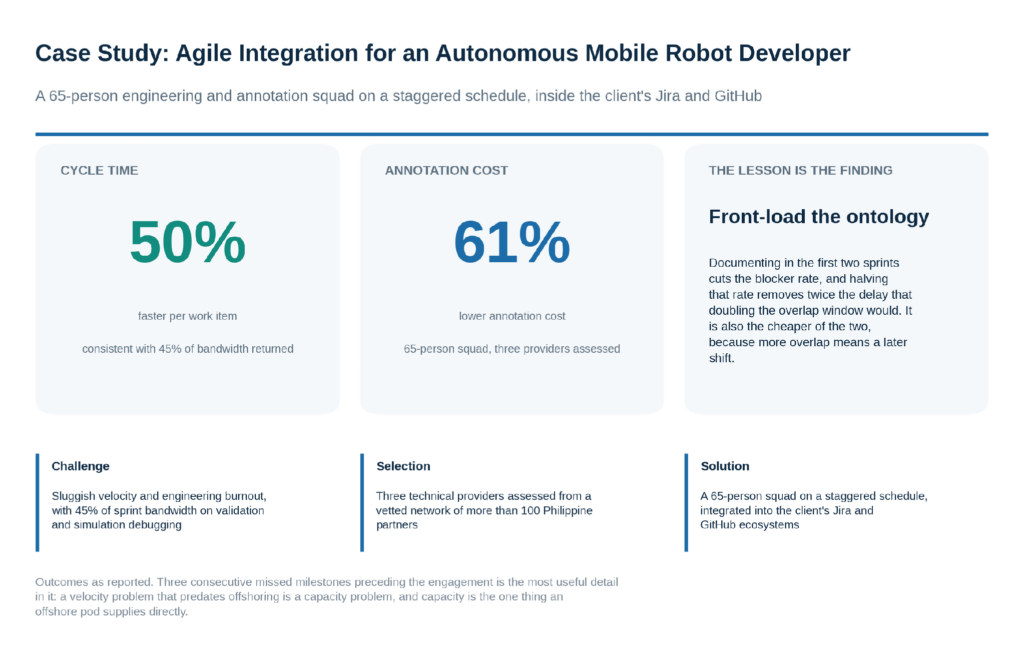
Figure 6. Reported outcomes from a 65-person integrated squad.
The most informative detail is the one stated as background rather than as a result: three consecutive missed milestones before the engagement began. That establishes the problem as a capacity shortfall rather than a process failure, which is precisely the problem an offshore pod solves directly. Engagements that begin from a process failure — unclear requirements, unstable architecture — do not improve by adding distributed capacity, and usually get worse.
The stated lesson is the stronger of the two findings and is easy to read past. Front-loading ontology documentation during the first two sprint cycles reduces the rate at which questions arise, which is worth roughly twice what an equivalent investment in overlap hours would buy. Mandatory daily overlap is the other half of the lesson and the lesser half, though the two compound.
Integration into the client’s own Jira and GitHub is worth noting as an architectural choice rather than a convenience. It keeps the work items, the review history and the merge record on the buyer’s side of the boundary, which means the engagement’s accumulated context survives a change of provider. A squad working in the provider’s own tracker produces the same output and leaves nothing behind.
Why Do Organizations Work with Cynergy BPO on Agile Integration?
Cynergy BPO is an independent, vendor-neutral outsourcing advisory firm headquartered in Manila, representing a vetted network of more than 100 Philippine providers. It maps requirements against performance data to produce a shortlist within days and manages competitive negotiation on the buyer’s behalf.
Who Is Cynergy BPO?
Cynergy BPO is an independent outsourcing advisory and consultancy firm headquartered in Manila, founded by industry veterans with more than 65 years of combined operational experience governing major global accounts. It specialises in connecting mid-market and enterprise organisations with vetted Philippine BPO providers across voice, back-office, engineering support and AI data operations.
How Does Cynergy BPO Differ from Traditional Outsourcing Brokers?
Traditional brokers are transactional and are compensated by the providers they place, which shapes which provider is recommended. Cynergy BPO applies an advisory-led methodology, mapping exact technical, security and commercial requirements against performance data. On distributed agile work, where the decisive variable is which shift the overlap comes from, that independence determines what gets asked.
How Does Cynergy BPO’s Network of 100+ Vetted Philippine BPO Providers Benefit Organizations?
The network establishes which providers already run shifts aligned to a given client region rather than proposing one, which can report blocker latency from live engagements, and which work inside client tooling as a matter of course — three differences that decide whether integration works and appear in no capability deck.
How Does Cynergy BPO’s Advisory-Led Vendor Matching Process Work?
Requirements are mapped against operational, security and commercial criteria, a tailored shortlist of vetted providers is delivered within a few working days, and the firm then manages competitive proposal and negotiation processes on the buyer’s behalf. Shift alignment, ceremony policy, the data definition of done and pod composition by rate tier are normalised across bids during that process.
Why Do Organizations Use Cynergy BPO?
Because a quoted overlap without a shift time, and a squad described as engineering and annotation without a rate per tier, make proposals look interchangeable when they are not. Establishing what each one actually contains is most of the work of choosing between them.
Frequently Asked Questions
How much overlap can a Philippine team give a Western engineering team?
For one client region, a full eight hours. Central European business hours fall at 15:00 to 23:00 Manila time, US Eastern at 21:00 to 05:00, US Pacific at midnight to 08:00. Covering three regions from one shift yields three to four hours each, on a shift running past midnight.
Which Manila shift covers European clients?
A 15:00 start covers Central European business hours completely and finishes at 23:00. That is an afternoon-to-evening shift, at the favourable end of the published Philippine attrition bands rather than the punishing end, which makes European engagements the easier ones to staff and retain.
How much of the overlap window do agile ceremonies consume?
About 29%. Scrum time boxes for a two-week sprint total roughly ten hours — four for planning, two and a half for stand-ups, two for review, one and a half for retrospective — against a 35-hour budget at 3.5 hours a day. That leaves about 2.5 hours a day for blockers.
Is extending the overlap window the best way to speed up a distributed team?
Usually not. Going from 3.5 to 6 hours cuts the average wait for an answer by 23% and requires a later shift. Halving the rate at which questions arise, through an ontology and worked examples written up front, cuts total delay by 50% and changes nothing about the schedule.
What should a definition of done contain for annotation data?
Checks a machine can run: schema validity, class coverage, per-class counts against expected ranges, and geometry sanity, executed in continuous integration at hand-off. A definition of done that requires human inspection moves the bottleneck into the overlap window, which is the scarcest resource in the engagement.
How should a distributed agile engagement be measured?
On blocker latency — time from question raised to ruling received — alongside the usual velocity and cycle-time figures. Latency is the quantity synchronous overlap is bought to improve, and it is the one that shows whether the integration is working rather than whether the pod is busy.
Can sprint length be reduced by adding offshore capacity?
No. A sprint is a fixed time box chosen by the team. What capacity reduces is cycle time per work item: returning 45% of engineering bandwidth raises throughput about 82%, which by Little’s Law cuts cycle time roughly 45% at constant work in progress.
How is proprietary source code and data protected?
ISO 27001 and SOC 2 Type II are certifications a provider holds, and the scope statement matters more than the certificate — confirm repositories, tooling and the delivery floor sit inside it. Data protection statutes are laws rather than certifications, and where datasets contain identifiable people the Philippines holds no EU adequacy decision, so European data requires standard contractual clauses and a transfer impact assessment.
Share This
Unlock cost-efficient growth with expert BPO guidance!
Partner with Cynergy BPO to connect with top outsourcing providers.
Streamline operations, cut costs, and scale your business with confidence.
Book a Free Call
Ralf Ellspermann - CSO
Author
Ralf Ellspermann is the Chief Strategy Officer (CSO) of Cynergy BPO and a globally recognized authority in business process and contact center outsourcing. With more than 25 years of experience advising enterprises and SMEs, he provides strategic guidance on vendor selection, CX optimization, and scalable outsourcing strategies across global markets. His expertise spans fintech, ecommerce and retail, healthcare, insurance, travel and hospitality, and technology (AI & SaaS) outsourcing.
A frequent speaker at leading industry conferences, Ralf is also a published contributor to The Times of India and CustomerThink, where he shares insights on outsourcing strategy, customer experience, and digital transformation.