



By: Ralf Ellspermann
25-Year, Multi-Awarded BPO Veteran
Published: 30 September 2026

Reviewed By: John Maczynski
Former EVP, World's Largest Contact Center
Updated: 30 September 2026
Point-cloud annotation, segmentation and spatial validation, delivered at $10 to $16 an hour. The competency list also includes Python and OpenCV, which is a different job in a different labour market — Philippine machine learning engineers start around $20 to $30 an hour. Scope and price the two separately.
Key Takeaways
- Three of the four listed competencies are annotation; the fourth is engineering. An annotator works in CVAT or Supervisely. OpenCV is the library used to build the system that consumes the labels. Quoting both under one hourly band implies an engineer at annotation rates.
- And the market does not support that. Published Philippine rates for international work put a junior machine learning engineer at $20 to $30 an hour and a mid-level one at $30 to $45, against the $10 to $16 quoted here.
- The two named robotics applications differ in tolerance by roughly a hundred times. Autonomous mobile robot navigation localises obstacles to 50 to 100 millimetres; robotic arm pick-and-place needs 1 to 3, and precision assembly tighter still. A 20 millimetre label error is invisible to one and disqualifying to the other.
- They also need different label types, not just tighter ones. Navigation consumes a cuboid. Manipulation consumes a six-degree-of-freedom pose with grasp points, often registered against a CAD model. Those are different tools, different training and different quality regimes.
- A pose label cannot be scored as a percentage. Its error is a translation and a rotation acting together: a 2° misalignment adds 3.5 millimetres at the edge of a 100 millimetre object. Specify millimetres and degrees, or use the field’s average-distance metric at 10% of object diameter.
- The 6 to 8 week onboarding window fits three roles and misses the fourth. Annotation staffs in about a week and a spatial specialist in four and a half. A computer vision engineer takes twelve or more, which is outside the window the same proposal quotes.
What Competencies Does the Skills Table Actually Describe?
Three annotation roles and one engineering role, presented as a single capability. Spatial geometry, segmentation and toolchain fluency are all forms of labelling. Python, OpenCV and deep learning frameworks are how the system consuming those labels gets built, which is a different job.
The underlying claim about the talent pool is sound. The Philippines produces a large volume of engineering and computer science graduates, and spatial data work has a genuine adjacent pool in the country’s geographic information systems community. The difficulty is that the table mixes two labour markets under one rate.
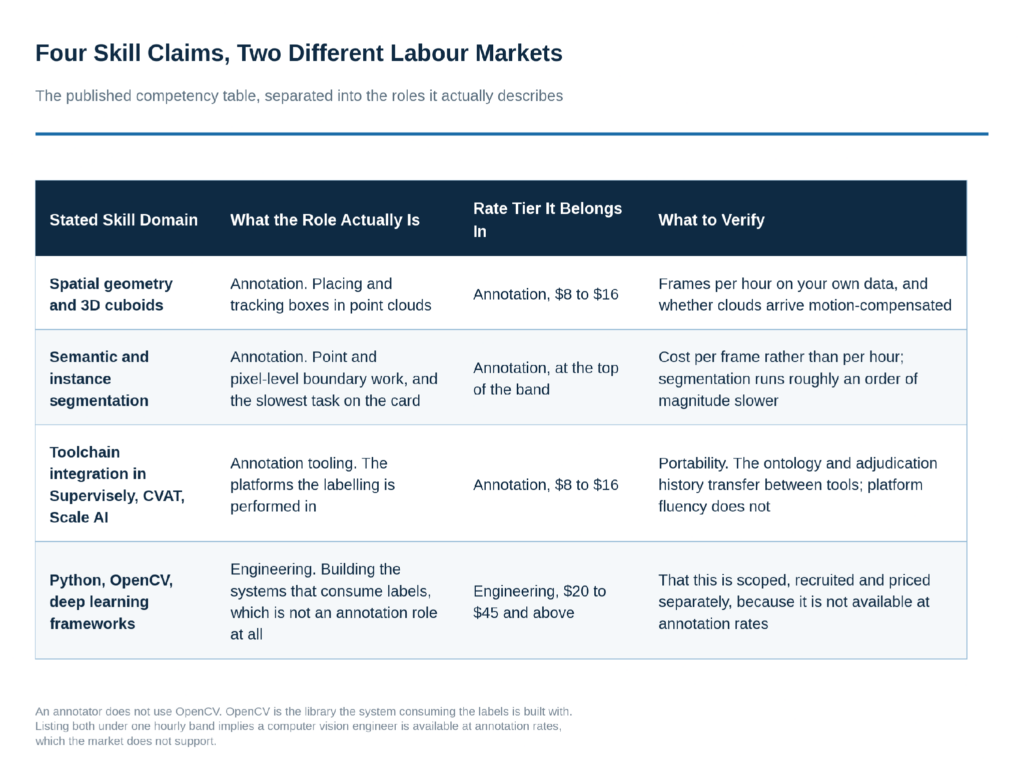
Figure 1. Four skill claims, separated into the roles they describe.
The geographic information systems point deserves a note of its own because it is both real and partial. A GIS practitioner brings exactly the right instincts for coordinate frames, projections and point-cloud handling, and ramps quickly onto static three-dimensional work such as aerial or facility scans. What that background does not carry is temporal reasoning: multi-frame tracking, object permanence through occlusion, and identity maintenance across a sequence are the harder half of robotics annotation and are not part of geospatial practice. Treat GIS as the fastest-ramping source pool for static spatial tasks and as a starting point rather than a finished skill for dynamic ones.
The practical consequence of the mixing is a scoping error rather than an exaggeration. A buyer reading this table can reasonably conclude that a single pod delivers both labelled data and the pipeline code that validates it. That pod exists, but it is two rate tiers with different recruitment timelines, and treating it as one produces a budget that is wrong in one direction and a schedule that is wrong in the other.
Why Do AMR Navigation and Pick-and-Place Need Different Data?
Because their tolerances differ by roughly two orders of magnitude. Mobile robot navigation localises obstacles to within 50 to 100 millimetres, since a safety margin absorbs the rest. Robotic arm pick-and-place needs 1 to 3 millimetres, because the gripper either closes on the object or it does not.
The skills table pairs spatial geometry with autonomous mobile robot navigation and segmentation with robotic arm pick-and-place, which is the right mapping. What follows from that mapping is that a single accuracy threshold and a single rate cannot cover both.
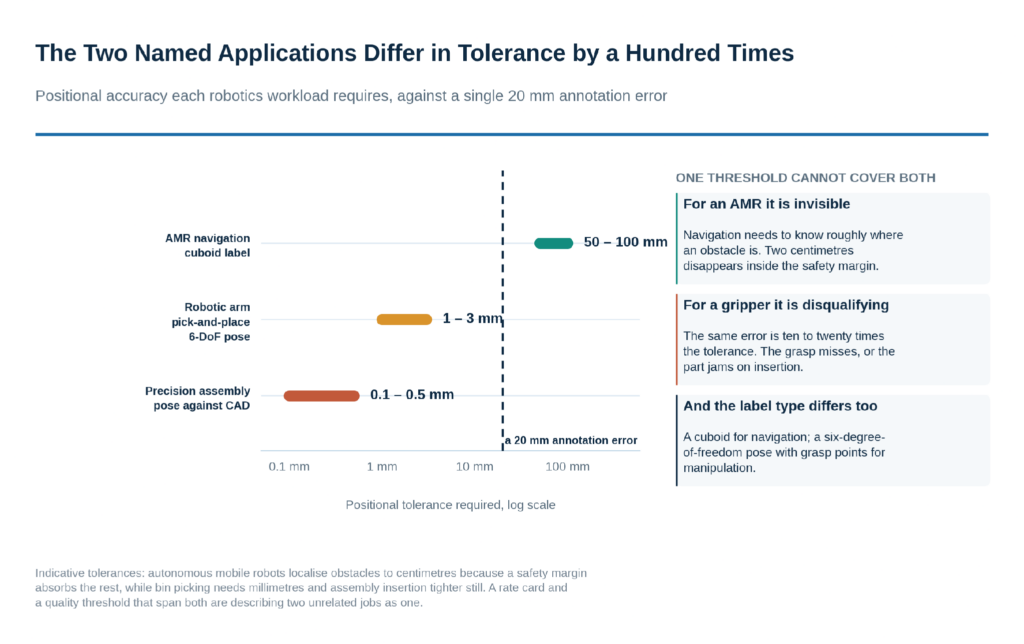
Figure 2. Tolerance required by each workload, against one annotation error.
Take a single 20 millimetre error in a label. For an autonomous mobile robot that is well inside the margin the planner already carries; the obstacle is still avoided and nothing downstream notices. For a gripper it is ten to twenty times the tolerance, and the grasp fails. For an assembly insertion it is two orders of magnitude out, and the part jams. The identical annotator, working identically, produces data that is excellent for one application and unusable for another.
The deliverable differs as well as the precision. Navigation consumes a cuboid: a position, an extent and a yaw. Manipulation consumes a six-degree-of-freedom pose, usually with grasp points and often registered against a CAD model of the part. These are different label schemas produced in different tools with different training, and the second is substantially slower and scarcer work than the first.
So the question to settle before any rate is quoted is which robot the data is for. A provider experienced in autonomous mobile robot datasets is not thereby experienced in manipulation datasets, and a quality figure earned on one says nothing about the other. Ask for the tolerance the data was accepted at, not the percentage it scored.
How Should Pose Accuracy Be Specified?
As two numbers, not one. A pose error is a translation and a rotation acting together, and the rotation converts to displacement at the object’s edge — a 2° error adds 3.5 millimetres on a 100 millimetre object. Specify millimetres and degrees, or use average distance of model points.
This is where a percentage-based quality threshold breaks down completely, and it is worth being precise because manipulation data is the higher-value half of industrial robotics work.
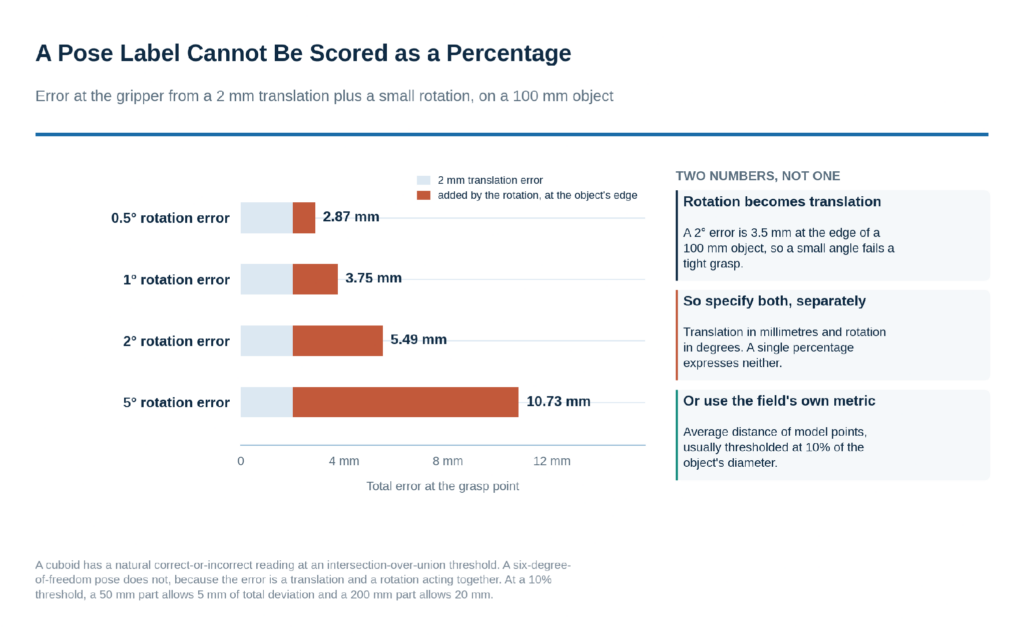
Figure 3. Error at the grasp point from translation plus rotation.
A cuboid has a natural correct-or-incorrect reading: compute intersection over union against the reference box, threshold it, and the label passes or fails. A six-degree-of-freedom pose has no equivalent single reading, because two labels with the same translation error can behave completely differently depending on how the rotation lands relative to the grasp. On a 100 millimetre object a 2 millimetre translation error plus a 2° rotation produces 5.5 millimetres at the extremity — nearly three times the translation figure alone.
The field’s own answer is the average distance of model points, computed by transforming the object’s model under both the labelled and reference poses and averaging the point-to-point distances, conventionally thresholded at 10% of object diameter. That yields 5 millimetres of allowance on a 50 millimetre part and 20 on a 200 millimetre one, which correctly scales the requirement to the object rather than applying one figure to everything.
For a contract, the workable specification is three lines: translation error in millimetres, rotation error in degrees, and the proportion of labels meeting both, reported per object class. A provider capable of manipulation-grade work can report those from an existing engagement. One that answers with a single percentage has most likely only done navigation-grade labelling.
Industrial robotics is only as smart as the vision data feeding its core algorithms. When enterprises match with the right technical partner in the Philippines, they secure both engineering precision and dramatic cost efficiency.
— John Maczynski, CEO, Cynergy BPO
Engineering precision is the right phrase and it has a number attached, which is the useful move here. Precision in this domain is a tolerance in millimetres and degrees, tied to a named workload, not an accuracy percentage tied to nothing. A match made on the tolerance the client’s robot actually requires is a technical match; one made on a quality figure without its units is a match on a number that happens to be high.
What Do the Quoted Rates Actually Cover?
Annotation work, competently and competitively. The $10 to $16 band is a real annotation rate and a good one. It sits below the entry rate for the engineering skills listed in the same table: published Philippine figures put a junior machine learning engineer at $20 to $30 an hour for international work.
This is the most useful clarification available in this article, because it resolves an apparent inconsistency that runs across the whole category rather than creating one.
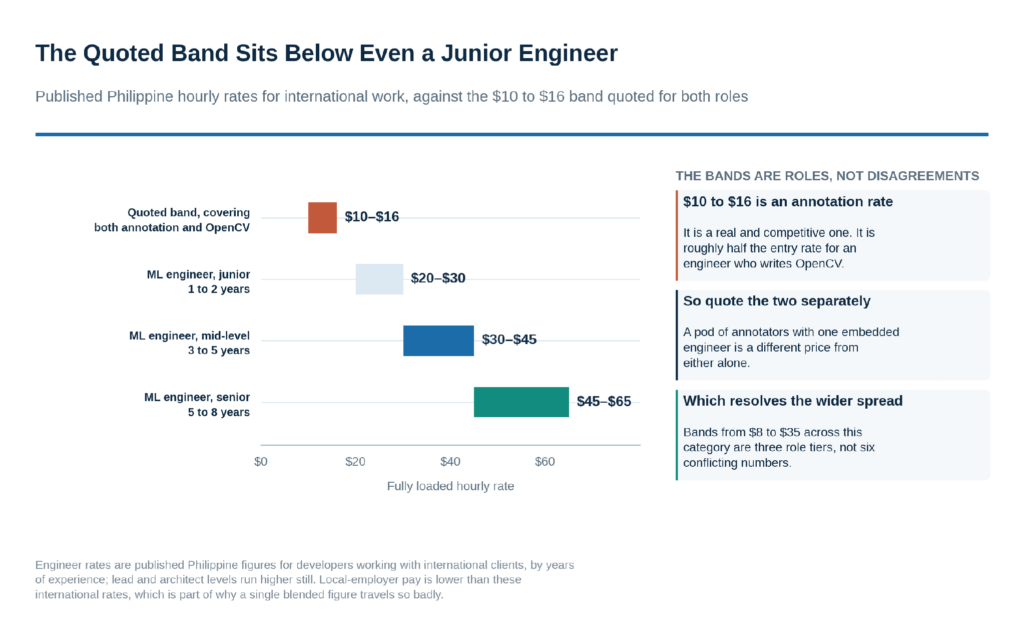
Figure 4. The quoted band against published engineering rates.
Rates quoted for Philippine technical and AI work in this market span roughly $8 to $35 an hour, which reads as inconsistency until the roles are named. Separated by tier it resolves cleanly: annotation work sits around $8 to $16, specialist and quality-assurance roles around $12 to $22, and engineering roles from about $20 upward, rising with seniority. Those are not six conflicting numbers; they are three role tiers, and each individual band is defensible once the role is stated.
The practical recommendation follows directly. Quote a pod composition rather than a blended rate: so many annotators at the annotation tier, so many reviewers at the specialist tier, and — if the engagement genuinely needs pipeline or validation code — an engineer priced at the engineering tier. A buyer can then compare proposals, and a provider is not implicitly promising engineering capability at labelling prices.
It is also worth checking whether the engineering seat belongs in the pod at all. For a small number of engineering hours, hiring into the client’s own organisation is often faster than recruiting into an offshore pod, and it keeps the code with the team that maintains it. The offshore advantage is strongest where the work is continuous and volume-driven, which describes annotation and describes engineering far less well.
Does the Six-to-Eight Week Window Fit Every Role?
It fits three of them. General annotation reaches productive output in about a week, a spatial specialist in roughly four and a half, and a quality lead in six. A computer vision engineer takes twelve weeks or more, which falls outside the quoted window entirely.
Onboarding is quoted as a single range in this market while the roles inside the pod differ by more than an order of magnitude in how long they take to fill. Both statements cannot hold.
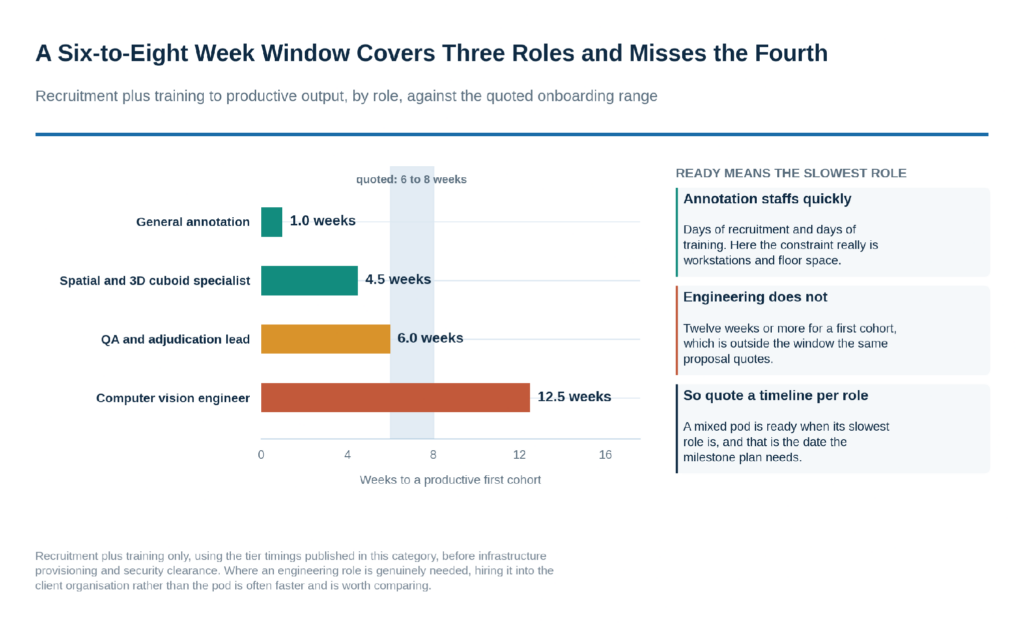
Figure 5. Time to a productive first cohort, by role.
A mixed pod is ready when its slowest role is ready, not when its average is. A team that is mostly annotators with two engineering seats will show most of its capacity at week five and reach full strength somewhere past week twelve, and a milestone plan built on the blended figure schedules its first deliverable against capability that does not yet exist. Quoting a timeline per role costs nothing and prevents that specific failure.
This also interacts with the rate question. The role that takes longest to recruit is the one priced at the highest tier, which means a provider under time pressure has an obvious incentive to fill the engineering seat with a strong annotator and describe the result as a technical squad. Asking what the engineering seat will actually produce — which repository, which pipeline, reviewed by whom — is the cheapest way to establish whether the seat is real.
What Should Buyers Specify for Industrial Robotics Vision Work?
Seven things, each answerable in a sentence by a provider who has done this work. They concern which robot the data serves, how precision is expressed, and which roles are actually in the pod.
- The target workload, named: navigation, manipulation or inspection. Tolerances differ by about a hundred times across them, and a quality figure earned on one says nothing about another.
- Tolerance in millimetres, not accuracy as a percentage. A 20 millimetre error is invisible for an autonomous mobile robot and disqualifying for a gripper. The percentage cannot distinguish them.
- For pose labels, translation and rotation error stated separately. Or average distance of model points at 10% of object diameter, reported per object class. One number cannot express a six-degree-of-freedom error.
- Pod composition by role, with a rate for each tier. Annotation around $8 to $16, specialist and review around $12 to $22, engineering from about $20 upward. A blended rate hides which you are buying.
- What the engineering seat will produce, if there is one. Which repository, which pipeline, reviewed by whom. It is the quickest way to establish whether the seat is an engineer or a senior annotator.
- A timeline per role, with the slowest one named. The pod is ready when its slowest role is ready. A blended six-to-eight week figure schedules the first milestone against capability that does not yet exist.
- The ontology handbook as a buyer-owned deliverable. It holds labels consistent across a rotation where no two shifts share a supervisor, and it survives a change of provider, platform or sensor generation.
How Did One Robotics Manufacturer Scale Its Vision Operations?
A North American industrial robotics manufacturer running 65% over budget, with engineers losing 40% of their week to fixing labels, assessed three Philippine providers and deployed a 55-person squad on a 24/7 rotation inside its own cloud environment — cutting annotation spend 60% and compressing iteration from ten days to forty-eight hours.
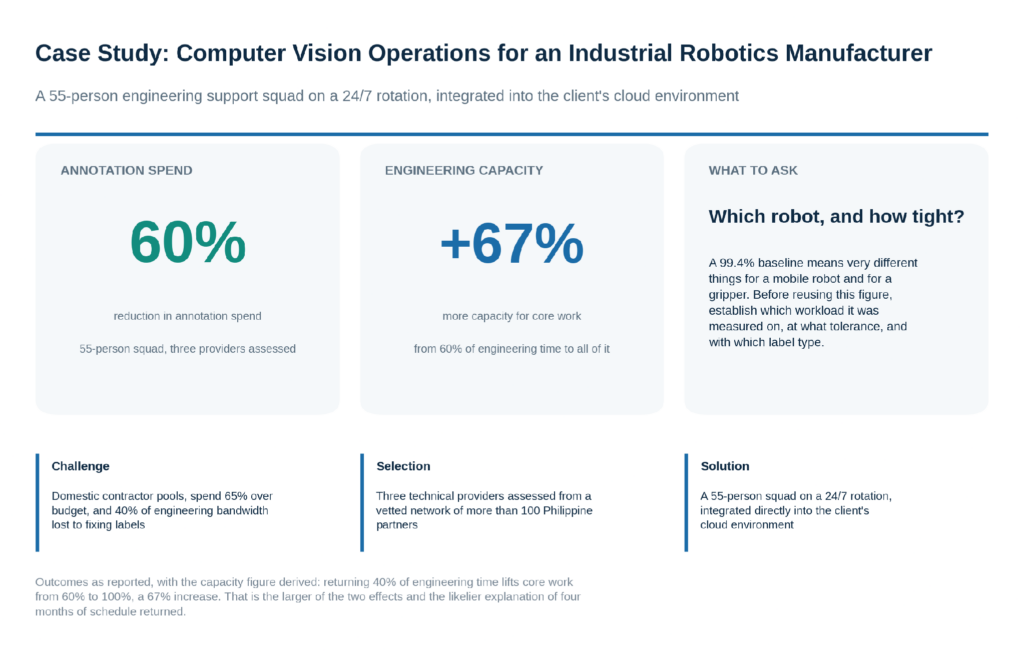
Figure 6. Reported outcomes from a 55-person computer vision squad.
The capacity figure is the one the engagement reports as a problem rather than as a result, and it is the larger effect. Engineers were spending 40% of the week fixing labels, leaving 60% for the work they were hired for. Ending the rework lifts that to all of it — a 67% increase in effective engineering capacity, which is a better explanation of four months of schedule returned than a 60% cut in the annotation line.
The 99.4% baseline needs a unit before it can be reused. On an autonomous mobile robot dataset, 99.4% of cuboids within a centimetre-scale tolerance is a strong and meaningful result. On a manipulation dataset the same percentage says almost nothing, because the question is how many poses fell within a millimetre-scale tolerance in both translation and rotation. Before that figure enters another proposal, establish which workload it was measured on and at what tolerance.
The two-week parallel pilot and the ontology handbook are the parts worth copying, and they are the same lesson stated twice. Running both teams against the same data before the incumbent stands down is what converts an undocumented workflow into a transferable one, and the handbook is the artefact that survives the transfer. On a 24/7 rotation where no two shifts share a supervisor, a written standard is the only thing that holds consistency — oversight cannot.
Why Do Organizations Work with Cynergy BPO on Technical Outsourcing?
Cynergy BPO is an independent, vendor-neutral outsourcing advisory firm headquartered in Manila, representing a vetted network of more than 100 Philippine providers. It maps requirements against performance data to produce a shortlist within days and manages competitive negotiation on the buyer’s behalf.
Who Is Cynergy BPO?
Cynergy BPO is an independent outsourcing advisory and consultancy firm headquartered in Manila, founded by industry veterans with more than 65 years of combined operational experience governing major global accounts. It specialises in connecting mid-market and enterprise organisations with vetted Philippine BPO providers across voice, back-office, engineering support and AI data operations.
How Does Cynergy BPO Differ from Traditional Outsourcing Brokers?
Traditional brokers are transactional and are compensated by the providers they place, which shapes which provider is recommended. Cynergy BPO applies an advisory-led methodology, mapping exact technical, security and commercial requirements against performance data. On robotics vision work, where the decisive question is which tolerance a provider has actually delivered to, that independence determines what gets asked.
How Does Cynergy BPO’s Network of 100+ Vetted Philippine BPO Providers Benefit Organizations?
The network separates the tiers. It establishes which providers have delivered manipulation-grade pose data rather than navigation-grade cuboids, which hold genuine engineering seats rather than senior annotators, and what each role tier actually costs — distinctions a single procurement cannot see.
How Does Cynergy BPO’s Advisory-Led Vendor Matching Process Work?
Requirements are mapped against operational, security and commercial criteria, a tailored shortlist of vetted providers is delivered within a few working days, and the firm then manages competitive proposal and negotiation processes on the buyer’s behalf. Target workload, tolerance specification, pod composition by role and ontology ownership are normalised across bids during that process.
Why Do Organizations Use Cynergy BPO?
Because a quality percentage without a tolerance, and a blended rate without a pod composition, make four proposals look interchangeable when they are not. Establishing what each one actually contains is most of the work of choosing between them.
Frequently Asked Questions
What computer vision skills does the Philippine workforce genuinely offer?
Deep capability in annotation: 3D cuboid placement and tracking, semantic and instance segmentation, and fluency across CVAT, Supervisely and Labelbox. Engineering skills in Python, OpenCV and deep learning frameworks also exist locally, but they are a separate labour market at roughly twice the hourly rate.
Can one provider supply both annotation and computer vision engineering?
Yes, but as two priced tiers rather than one. Annotation runs about $10 to $16 an hour; published Philippine rates put a junior machine learning engineer at $20 to $30 and mid-level at $30 to $45 for international work. Ask for pod composition by role and a rate for each.
How does data for mobile robots differ from data for robotic arms?
By about two orders of magnitude of tolerance, and by label type. Navigation localises obstacles to 50 to 100 millimetres and consumes cuboids. Pick-and-place needs 1 to 3 millimetres and consumes six-degree-of-freedom poses with grasp points, often registered to a CAD model.
How should annotation quality be specified for manipulation data?
As translation error in millimetres and rotation error in degrees, reported per object class, or as average distance of model points thresholded at 10% of object diameter. A single accuracy percentage cannot express a pose error, because rotation converts to displacement at the object’s edge.
Do GIS skills transfer to robotics computer vision?
Partly, and usefully. Coordinate frames, projections and point-cloud handling transfer directly, which makes GIS practitioners the fastest-ramping pool for static three-dimensional work. Temporal reasoning does not — multi-frame tracking, occlusion handling and identity maintenance are the harder half and are not part of geospatial practice.
How long does it take to stand up a computer vision team?
About a week for general annotation, four to five weeks for a spatial specialist, six for a quality lead, and twelve or more for a computer vision engineer. Six to eight weeks is a fair blended figure that excludes the engineering role, so quote and schedule per role.
What pricing model suits computer vision annotation?
Unit pricing for the dense tiers, where throughput is least predictable and an hourly model leaves the buyer carrying the estimate. Full-time-equivalent pricing works well for steady navigation-grade work. In both cases ask for measured frames or objects per hour on a sample of your own data.
How is proprietary robotics data protected?
ISO 27001 and SOC 2 Type II are certifications a provider holds, and the scope statement matters more than the certificate — confirm the delivery floor and tooling sit inside it. Data protection statutes are laws rather than certifications. Where scenes contain identifiable people the data is personal data, and the Philippines holds no EU adequacy decision, so European footage requires standard contractual clauses and a transfer impact assessment.
Share This
Unlock cost-efficient growth with expert BPO guidance!
Partner with Cynergy BPO to connect with top outsourcing providers.
Streamline operations, cut costs, and scale your business with confidence.
Book a Free Call
Ralf Ellspermann - CSO
Author
Ralf Ellspermann is the Chief Strategy Officer (CSO) of Cynergy BPO and a globally recognized authority in business process and contact center outsourcing. With more than 25 years of experience advising enterprises and SMEs, he provides strategic guidance on vendor selection, CX optimization, and scalable outsourcing strategies across global markets. His expertise spans fintech, ecommerce and retail, healthcare, insurance, travel and hospitality, and technology (AI & SaaS) outsourcing.
A frequent speaker at leading industry conferences, Ralf is also a published contributor to The Times of India and CustomerThink, where he shares insights on outsourcing strategy, customer experience, and digital transformation.