



By: Ralf Ellspermann
25-Year, Multi-Awarded BPO Veteran
Published: 24 September 2026

Reviewed By: John Maczynski
Former EVP, World's Largest Contact Center
Updated: 24 September 2026
By organising alignment work into three cognitive tiers: supervised fine-tuning dataset creation by degree-holding writers, preference ranking by certified professionals in law, finance and engineering, and adversarial red-teaming by senior quality staff. Each tier needs a different success measure, and using one measure across all three is where these engagements fail.
Key Takeaways
- Alignment work divides by judgement required, not by task type. Supervised fine-tuning, preference ranking and red-teaming need different people, different rubrics and different measurement.
- The published rate range is a ladder, not a contradiction. Simple annotation at $5 to $10 an hour and domain-expert AI training at $14 to $25 describe different work. The bands overlap on the way up.
- On preference data, high agreement can mean easy pairs. Inter-annotator agreement largely measures how far apart the two responses were. Pushing it higher means sampling comparisons that teach a reward model less.
- Report agreement alongside the margin spread. One number tells you whether the rubric is unambiguous. The other tells you whether the data is informative. Neither is sufficient alone.
- Never measure a red team on zero findings. A team paid for a clean result is paid not to look hard. Attack-class coverage, novel findings and reproduction rate align the incentive instead.
- A failed quality gate should revise the rubric, not just the labels. Reworking output without fixing the instruction that produced it reproduces the same disagreement in the next batch.
How Do Philippine BPO Providers Structure Supervised Fine-Tuning and RLHF Workflows?
Into verticalized pods organised by cognitive tier rather than by task volume. Tier 1 writes instruction and response pairs, Tier 2 performs pairwise preference ranking with certified professionals, and Tier 3 runs adversarial red-teaming with senior quality engineers and compliance specialists.
The shift underway in the Philippine sector is from processing work to judgement work. Supervised fine-tuning and reinforcement learning from human feedback both require evaluators who can assess tone, factuality, safety and logical consistency — none of which reduce to a labelling rule. Leading centres in Manila, Cebu and Davao therefore organise around domain verticals such as legal compliance, financial auditing and software engineering, where a specialist writes and ranks within their own field rather than against a generic rubric.
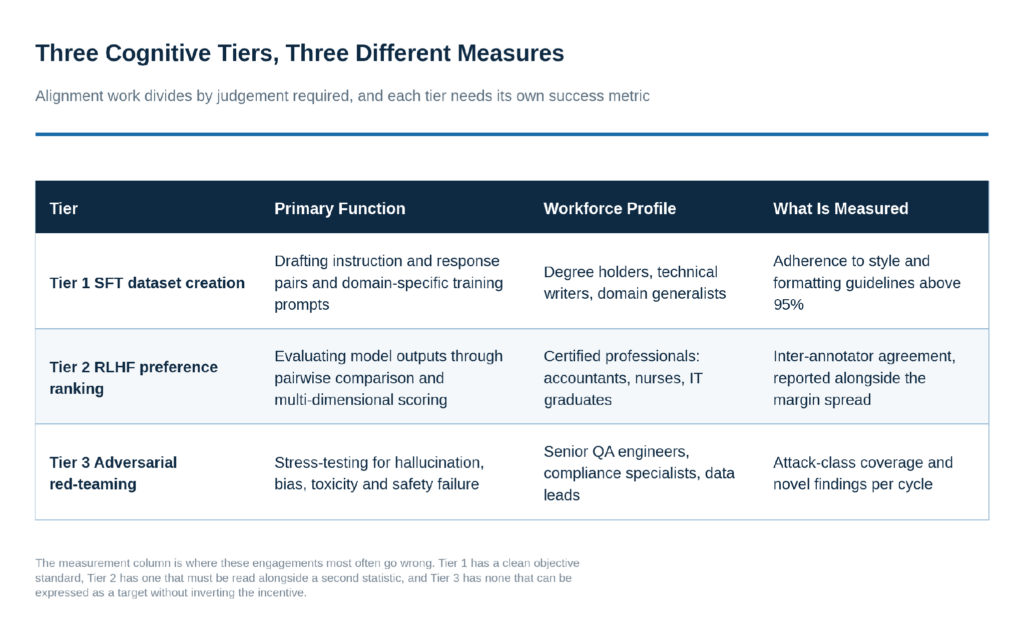
Figure 1. Three cognitive tiers, and the measure appropriate to each.
The measurement column is where these engagements most often come apart, and the three tiers are genuinely different in this respect. Tier 1 has a clean objective standard: adherence to a documented style guide, sampled and scored. Tier 2 has a standard that is only interpretable alongside a second statistic, for reasons the next sections set out. Tier 3 has no target that can be stated as a number without inverting the incentive of the people doing the work.
A buyer who applies a single quality threshold across all three tiers will get compliance with it, and will learn very little about whether the alignment data is any good.
What Do These Engagements Cost, and Why Do Published Rates Vary So Widely?
Because the published figures describe different rungs of the same ladder. General Philippine back-office work runs about $7 to $12 an hour; specialised AI training with domain experts runs about $14 to $25 depending on technical complexity and the qualification required.
Rate comparisons in this category are routinely made between figures that were never measuring the same work. A quoted band means nothing without the judgement required alongside it, and the gap between the bottom and top of the Philippine range is more than a factor of four.
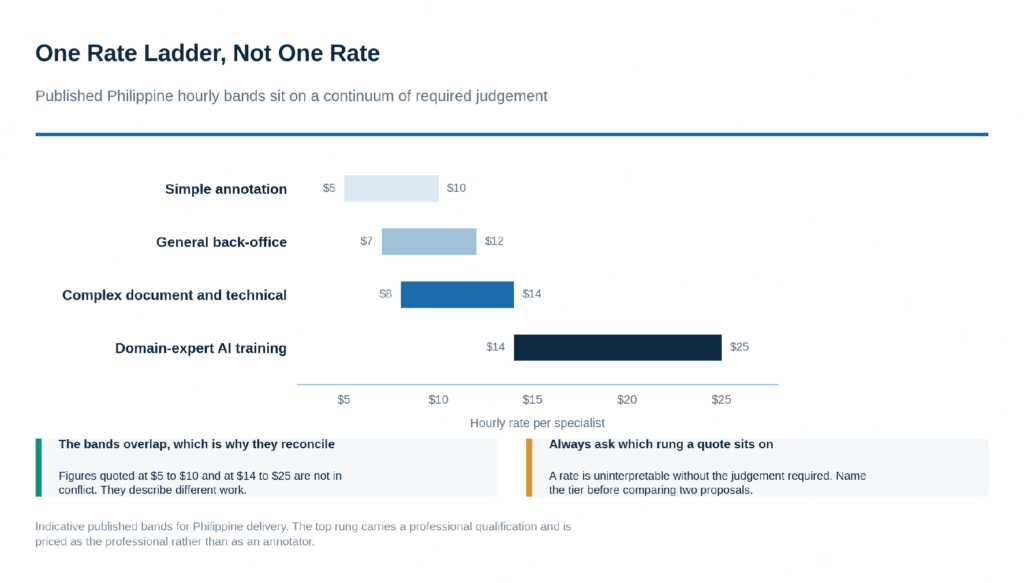
Figure 2. Published Philippine hourly bands arranged by the judgement each requires.
The top rung is the one that explains the spread. When a certified public accountant ranks financial reasoning, or a registered nurse ranks clinical text, the engagement is buying a professional qualification and paying accordingly. That is not labour arbitrage on annotation; it is arbitrage on professional time, and the saving against an equivalent Western professional is substantially larger than the saving on general annotation.
The practical procurement step is to name the rung before comparing two proposals. A provider quoting $9 and a provider quoting $19 may both be competitive, and the difference between them may be entirely explained by who is doing the work.
What Does Inter-Annotator Agreement Actually Tell You on Preference Data?
Less than it appears, taken alone. On pairwise preference tasks, agreement is driven mainly by how far apart the two responses were. A high figure is good evidence the rubric is unambiguous, and also evidence that most sampled pairs were easy comparisons.
Cohen’s kappa is the right statistic for categorical preference judgements, and tracking it continuously is sound practice. The subtlety is what moves it. Two raters comparing an obviously strong response against an obviously weak one will agree almost always, regardless of how skilled they are. Two raters comparing near-equivalent responses will agree closer to chance, regardless of how skilled they are. Aggregate agreement across a dataset therefore tracks the spread of quality margins in the pairs that were sampled.
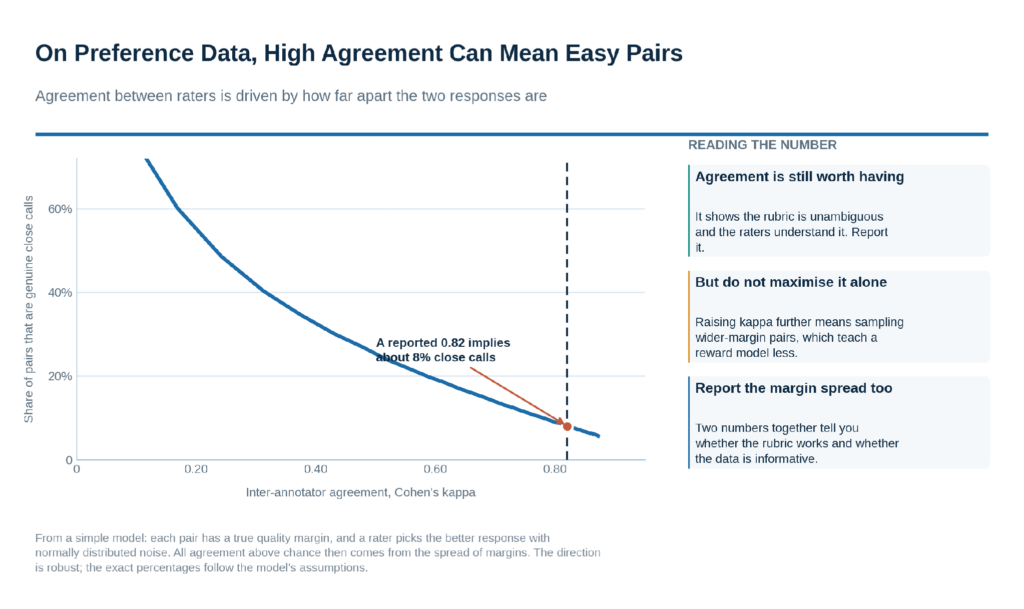
Figure 3. Agreement against the share of pairs that are genuine close calls.
This matters because the close calls are what a reward model learns most from. A pair where one response is plainly better confirms something the model probably already encodes; a pair where the two are nearly equivalent is where the preference signal carries new information. Under the simple model behind Figure 3, a kappa of 0.82 implies that only a small minority of sampled pairs were genuine close calls, and pushing agreement higher necessarily means sampling easier ones.
None of this argues for lower agreement. It argues for reporting two numbers rather than one: the agreement statistic, which shows the rubric works and the raters understand it, and the distribution of margins in the sampled pairs, which shows whether the data is worth collecting. A provider who can report both is running a considerably more sophisticated operation than one who can only report the first.
How Should Adversarial Red-Teaming Be Measured?
On attack-class coverage against an agreed taxonomy, novel findings not already known to the client, and reproduction rate. Not on the absence of findings, which pays a team to look less hard and cannot distinguish a safe model from an ineffective red team.
Zero high-risk safety regression is the correct goal for the model and the wrong contractual target for the team whose job is to find regressions. Setting it as the metric creates an incentive pointing directly away from the work, and produces exactly the reports a client least wants: clean ones, arrived at quickly.
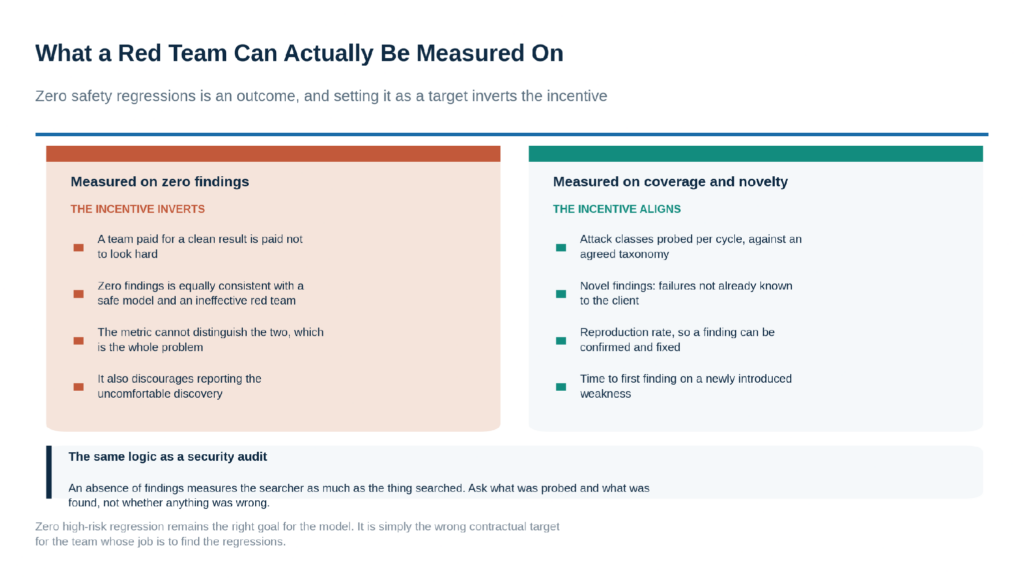
Figure 4. Two ways to measure a red team, and what each one rewards.
The logic is the same as in security assurance, where an absence of incidents measures the detection capability as much as the thing detected. A red team that has probed thirty attack classes and surfaced four novel failures has demonstrated a capability. A red team that reports nothing may have done the same work against a safer model, or may have done considerably less work — and the metric cannot tell you which.
Coverage against a written attack taxonomy makes the work auditable, novelty separates genuine discovery from rediscovery, and a reproduction rate ensures a finding can be handed to engineering in a form they can act on. All three can be agreed before work begins.
How Do Providers Ensure Data Security and Quality Control on Alignment Work?
Through locked-down virtual desktops in ISO 27001 and SOC 2 Type II certified facilities, with peripheral ports disabled and restricted network access, combined with multi-tier review in which annotator output is cross-validated by peers and audited by senior quality leads.
The infrastructure requirements for alignment work do not differ materially from those for any sensitive annotation engagement, and are treated at length elsewhere. What is specific here is the sensitivity of the material: proprietary prompts and evaluation rubrics reveal how a client thinks about its own model’s weaknesses, which makes them closer in character to source code than to a training corpus.
One caution attaches to the monitoring that commonly accompanies these controls. Automated screen-capture and behavioural monitoring is itself processing of the workforce’s personal data under the Data Privacy Act, and Philippine specialists are data subjects in the same way the client’s users are. Monitoring should be proportionate to the sensitivity of the material, disclosed to staff and documented — which is also what makes the resulting records usable later.
How Can Enterprises Mitigate Risk When Scaling Offshore Alignment Operations?
Write explicit annotation taxonomies with boundary examples, assign critical samples to three or more independent reviewers, run a short calibration pilot before scaling, and keep domain experts in the loop against model drift. Above all, route a failed quality gate back to the rubric rather than to the labels.
A two-week pilot with ten to fifteen specialists is sufficient to establish baseline agreement with real precision: at a ten per cent overlap rate such a pilot generates several thousand doubly-annotated comparisons, enough to measure agreement to within about a percentage point. What it cannot establish is stability, which only appears as a trend over several weeks, so a pilot of that length should be understood as a calibration exercise rather than a test of steady-state quality.
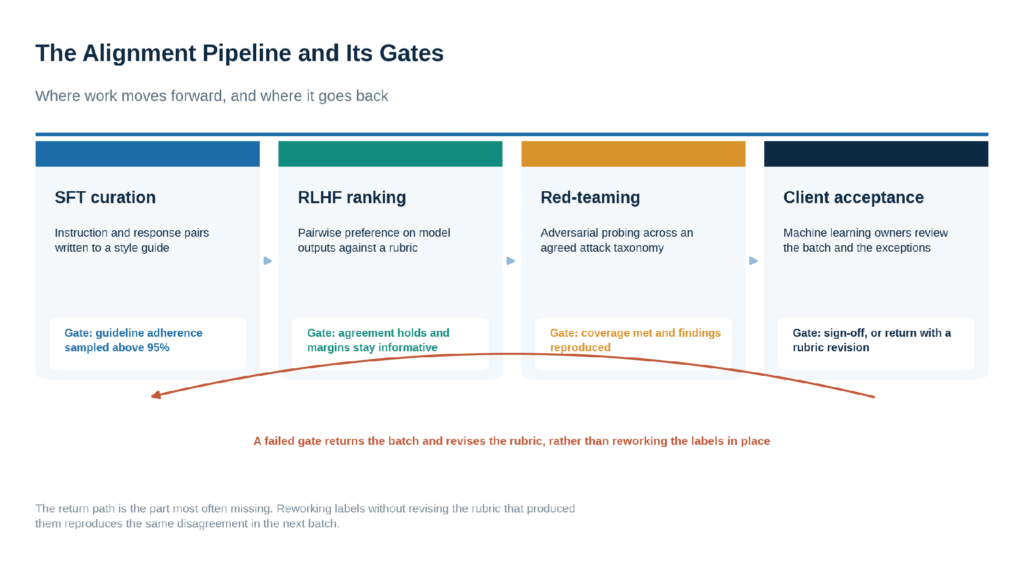
Figure 5. The alignment pipeline, its gates, and the return path.
The return path is the element most often missing from these workflows. When a batch fails its gate, the instinct is to send the labels back for rework. That fixes the symptom and leaves the cause in place, because the disagreement was produced by an instruction that permitted two readings. Revising the rubric and re-running the calibration is slower for one batch and considerably faster across ten.
What Strategic Guidance Do Industry Leaders Offer on Offshore Alignment Work?
Treat model alignment as a data governance and human judgement operation rather than a software engineering problem. The organisations that succeed pair agile model architecture with disciplined, domain-expert feedback loops and hold both to explicit standards.
The framing error that causes most difficulty is treating alignment as an engineering task with a data dependency, when it is a human judgement task with an engineering dependency.
The misconception in enterprise boardrooms is that AI model training is purely a software engineering challenge. In reality, scaling an LLM for production use is an intensive data governance and human alignment operation. The organizations winning the AI race are those combining agile model architectures with highly disciplined, domain-expert human feedback loops based in operational hubs like the Philippines.
— John Maczynski, CEO, Cynergy BPO
- Match the tier to the measure before contracting. Agree what will be reported for each of the three tiers, since a single blended quality figure will satisfy the contract and tell you nothing.
- Ask for the margin distribution, not just the agreement score. A provider who reports both understands what the preference data is for. One who reports only agreement may be optimising the wrong quantity.
- Define the red team’s taxonomy in advance. Coverage is only measurable against an agreed list of attack classes, and that list is a client deliverable rather than a provider one.
How Did One Enterprise Align a Code Generation Model?
A Silicon Valley enterprise software provider lacked the internal bandwidth to review and rank over 150,000 code-completion pairs. A 45-person Manila pod of computer science graduates ran the curation, ranking and red-teaming, cutting data preparation cost 54% against United States onshore annotation and bringing release forward four months.
The binding constraint was engineering attention rather than budget. Reviewing and ranking that volume would have consumed the same engineers who were building the model, which is the trade most teams make badly: the work is genuinely skilled, so it looks like something the engineers should do, and doing it stops them building.
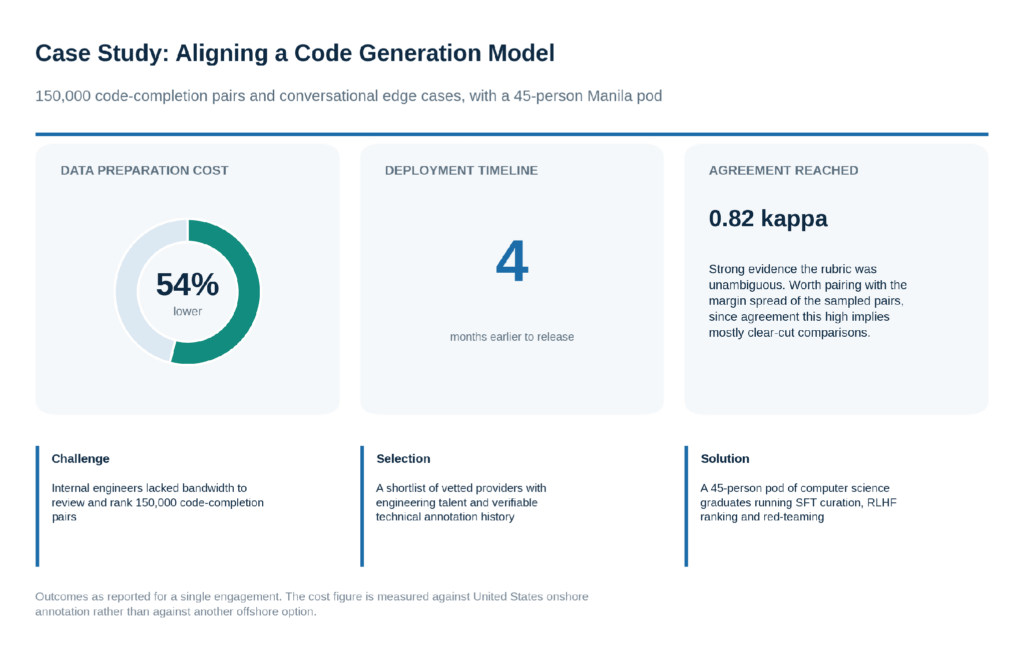
Figure 6. Reported outcomes from a 45-person alignment pod in Manila.
The reported inter-annotator agreement of 0.82 is strong evidence that the rubric was unambiguous and the pod understood it, which for a code-generation task with subtle correctness criteria is a real achievement. Read alongside Figure 3, it also suggests the sampled pairs were mostly clear-cut comparisons — so the natural follow-up question for that programme is what the margin distribution looked like, and whether a subsequent round should deliberately oversample the near-ties.
The four-month schedule gain is the outcome that justified the engagement, and it came from parallelism rather than from cost. Forty-five people working through the backlog concurrently is not something an internal team absorbs at the margin.
Why Do Organizations Work with Cynergy BPO on Alignment Sourcing?
Cynergy BPO is an independent, vendor-neutral outsourcing advisory firm headquartered in Manila, representing a vetted network of more than 100 Philippine providers. It maps requirements against performance data to produce a shortlist quickly, and manages competitive negotiation on the buyer’s behalf.
Who Is Cynergy BPO?
Cynergy BPO is an independent outsourcing advisory and consultancy firm headquartered in Manila, founded by industry veterans with more than 65 years of combined operational experience governing major global contracts. It specialises in connecting mid-market and enterprise buyers with vetted Philippine BPO providers across voice, back-office and increasingly AI data operations.
How Does Cynergy BPO Differ from Traditional Outsourcing Brokers?
Traditional brokers are transactional and are compensated by the providers they place, which shapes which provider is recommended. Cynergy BPO uses an advisory-led sourcing methodology, mapping operational requirements against performance data rather than against availability. For alignment work in particular, where the difference between providers is the depth of domain expertise rather than the seat rate, that distinction determines whether a shortlist is useful.
How Does Cynergy BPO’s Network of 100+ Vetted Philippine BPO Providers Benefit Organizations?
The network makes a shortlist possible in days rather than weeks, and makes it possible to shortlist on the criteria that matter for alignment work: whether a provider has genuinely staffed a legal, clinical or engineering vertical before, and whether it can report agreement statistics rather than throughput alone. Approaching the market cold, a buyer cannot establish either before contracting.
How Does Cynergy BPO’s Advisory-Led Vendor Matching Process Work?
Requirements are mapped against operational and performance criteria, a tailored shortlist of vetted providers is delivered within a few working days, and the firm then manages competitive proposal and negotiation processes on the buyer’s behalf. Governance frameworks and quality obligations are settled as part of that process rather than after selection.
Why Do Organizations Use Cynergy BPO?
Because the difference between providers in this category is not visible from outside. Two firms quoting similar rates may differ entirely in whether they can staff a domain vertical, report meaningful agreement statistics, or run a red team that finds anything. Organisations use Cynergy BPO to establish that before committing, and to structure the engagement so the obligations are explicit.
Frequently Asked Questions
What AI training tasks can Philippine providers handle?
Supervised fine-tuning dataset creation, RLHF pairwise ranking, data categorisation, prompt engineering quality assurance, adversarial red-teaming and multilingual content alignment. The practical constraint is domain depth rather than task type: the question is whether a provider has staffed your vertical before.
What do domain-expert AI training rates look like?
Roughly $14 to $25 an hour depending on technical complexity and the professional qualification required, against about $7 to $12 for general back-office work. The higher band buys a certified professional’s judgement, and the saving against an equivalent Western professional is proportionally larger than on general annotation.
What inter-annotator agreement should be required for RLHF work?
A kappa above 0.7 is a reasonable floor and indicates the rubric is unambiguous. Require it to be reported alongside the distribution of quality margins in the sampled pairs, because agreement on preference data rises as the comparisons get easier, and very high figures can indicate a dataset that teaches a reward model little.
How should red-teaming performance be specified in a contract?
By attack-class coverage against a taxonomy agreed in advance, the count of novel findings, and the reproduction rate for each finding. Avoid specifying an absence of findings, which rewards a team for not looking and cannot distinguish a safe model from an ineffective test.
What educational background do Philippine alignment specialists have?
University graduates across relevant disciplines, including certified public accountants, registered nurses, legal professionals and software engineers. For regulated or diagnostic material the qualification should match the claim the model will make, and that requirement belongs in the statement of work.
How quickly can a dedicated alignment team be deployed?
Standard production teams of 20 to 100 specialists can be scoped, calibrated and operational within two to four weeks after guideline alignment and pilot testing. Allow longer where a specialist vertical requires custom curriculum development.
How long should the calibration pilot run?
Two weeks with ten to fifteen specialists is enough to establish baseline agreement precisely, since even a modest overlap rate produces thousands of doubly-annotated comparisons. It is not long enough to demonstrate stability, which requires watching the trend over several weeks.
How do providers secure proprietary prompts and evaluation rubrics?
Through locked-down virtual desktop environments in ISO 27001 certified and SOC 2 aligned facilities, with peripheral access restricted and network egress controlled. Prompts and rubrics deserve source-code handling, since they describe how a client understands its own model’s weaknesses.
Share This
Unlock cost-efficient growth with expert BPO guidance!
Partner with Cynergy BPO to connect with top outsourcing providers.
Streamline operations, cut costs, and scale your business with confidence.
Book a Free Call
Ralf Ellspermann - CSO
Author
Ralf Ellspermann is the Chief Strategy Officer (CSO) of Cynergy BPO and a globally recognized authority in business process and contact center outsourcing. With more than 25 years of experience advising enterprises and SMEs, he provides strategic guidance on vendor selection, CX optimization, and scalable outsourcing strategies across global markets. His expertise spans fintech, ecommerce and retail, healthcare, insurance, travel and hospitality, and technology (AI & SaaS) outsourcing.
A frequent speaker at leading industry conferences, Ralf is also a published contributor to The Times of India and CustomerThink, where he shares insights on outsourcing strategy, customer experience, and digital transformation.