



By: Ralf Ellspermann
25-Year, Multi-Awarded BPO Veteran
Published: 15 September 2026

Reviewed By: John Maczynski
Former EVP, World's Largest Contact Center
Updated: 15 September 2026
Top-tier Philippine providers scale dedicated AI training teams from 10 to 500 qualified annotators within 30 to 45 days. Rapid deployment depends on established talent pools in Manila and Cebu, pre-vetted candidate pipelines, and modular training infrastructure that holds labeling accuracy through the expansion.
Key Takeaways
- 45-day ceiling for a full ramp. Deep talent pools across Manila, Clark, and Cebu support expansion from 10 to 500 specialists inside six weeks.
- Pre-existing pipelines prevent degradation. Standing recruitment databases and modular onboarding curricula are what keep quality intact during rapid growth.
- Multi-tiered QA holds agreement rates. Structured verification sustains inter-annotator agreement while hundreds of operators onboard simultaneously.
- Infrastructure and ratios are the constraint. Facility readiness, bandwidth redundancy, and supervisory ratios determine whether a schedule is achievable.
- Verify surge history before committing. Documented prior ramps are the only evidence that distinguishes stated capacity from demonstrated capability.
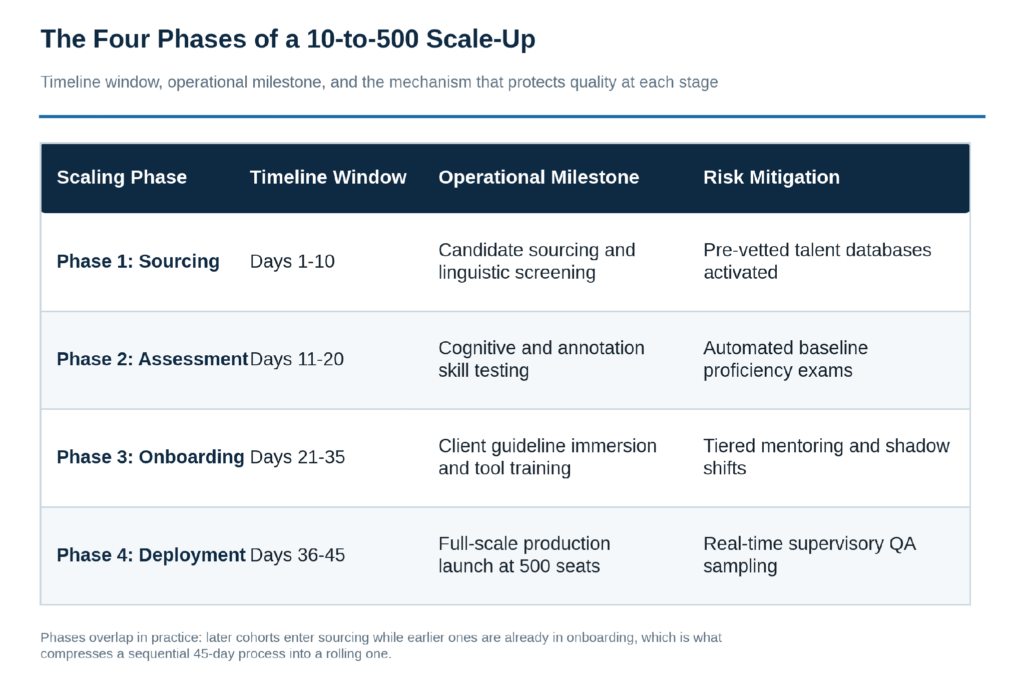
Figure 1. The four phases of a 10-to-500 scale-up, with the mechanism protecting quality at each stage.
What Recruitment and Sourcing Pipelines Enable Rapid Expansion?
Continuous talent pipelines combining professional networks, university partnerships, and proprietary applicant databases pre-screened for linguistic proficiency, cognitive aptitude, and technical literacy. Surge requests activate pre-cleared pools rather than starting a recruitment cycle.
The distinction that makes a 45-day ramp possible is between capacity that is activated and capacity that is recruited. A provider maintaining standing databases has already done the screening that ordinarily consumes the first three weeks, which is why onboarding hundreds simultaneously does not compromise the baseline capability complex NLP or computer vision work requires.
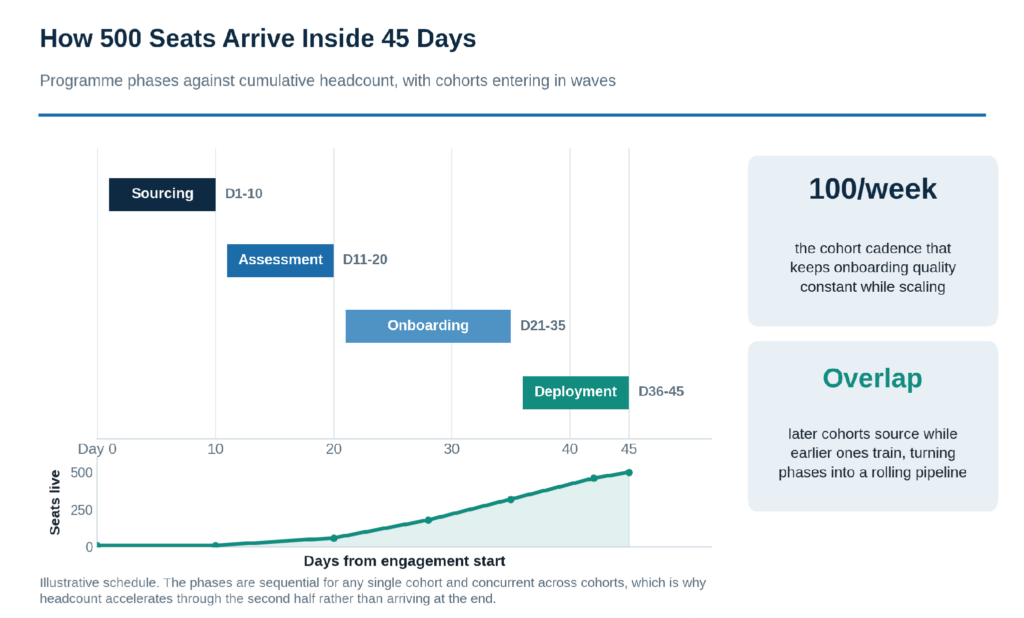
Figure 2. How 500 seats arrive inside 45 days, with phases running concurrently across cohorts.
The Phases Overlap, Which Is What Compresses Them
Read as a sequence, the four phases add to 45 days for a single cohort. Read as a pipeline, later cohorts enter sourcing while earlier ones are already in onboarding, so headcount accelerates through the second half rather than arriving at the end. A cadence of roughly 100 annotators a week is what keeps onboarding quality constant while the total climbs.
Ask Which Phase the Provider Is Already In
A provider that begins sourcing on the day of signature is quoting 45 days from a standing start. One with a pre-cleared pool relevant to your task type is quoting from somewhere inside phase one, and the difference is a fortnight. It is a reasonable question to ask during evaluation and an informative answer either way.
How Do Structured Onboarding Programs Maintain Accuracy at Scale?
Modular training academies simulate the exact client annotation environment before operators touch live data. Cohorts of 50 to 100 complete multi-day modules on edge-case identification, taxonomy comprehension, and tool navigation, then face daily calibration tests through the initial deployment weeks.
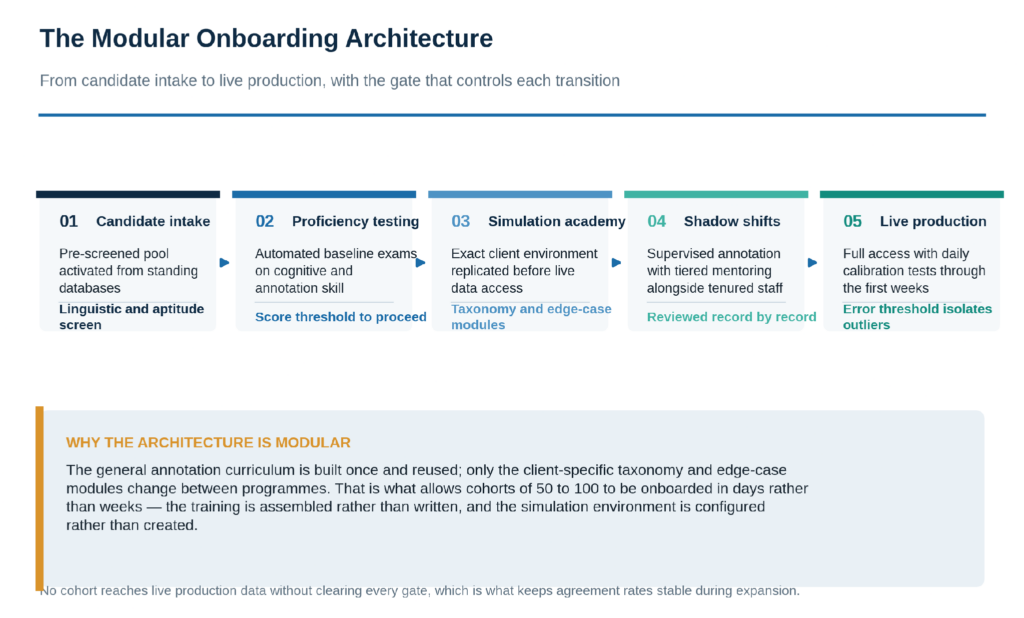
Figure 3. The modular onboarding architecture, with the gate controlling each transition.
Rapid expansion is where dataset contamination begins if onboarding lacks standardization, because every unaligned cohort introduces its own interpretation of the guidelines. The architecture prevents that by gating each transition: no cohort reaches production data without clearing a proficiency threshold, a simulation environment, and supervised shadow shifts reviewed record by record.
Modularity Is What Makes the Speed Possible
The general annotation curriculum is built once and reused; only the client-specific taxonomy and edge-case modules change between programmes. Training is assembled rather than written and the simulation environment configured rather than created, which is the difference between onboarding a cohort in days and in weeks.
Calibration Testing Isolates Outliers Early
Daily calibration during the first weeks identifies operators whose error rates exceed threshold while the affected volume is still small. Catching a misaligned annotator in week one costs a retraining session; catching the same person at delivery costs a batch, which is why the testing cadence matters more than its existence.
What Infrastructure and Management Ratios Does a 500-Seat Operation Require?
Dedicated secure production floors with redundant high-speed fiber, enterprise-grade firewalls, and isolated virtual desktop infrastructure — plus supervisory ratios of one team lead and QA specialist per 15 to 20 annotators, which for 500 seats means roughly 30 supervisory staff.
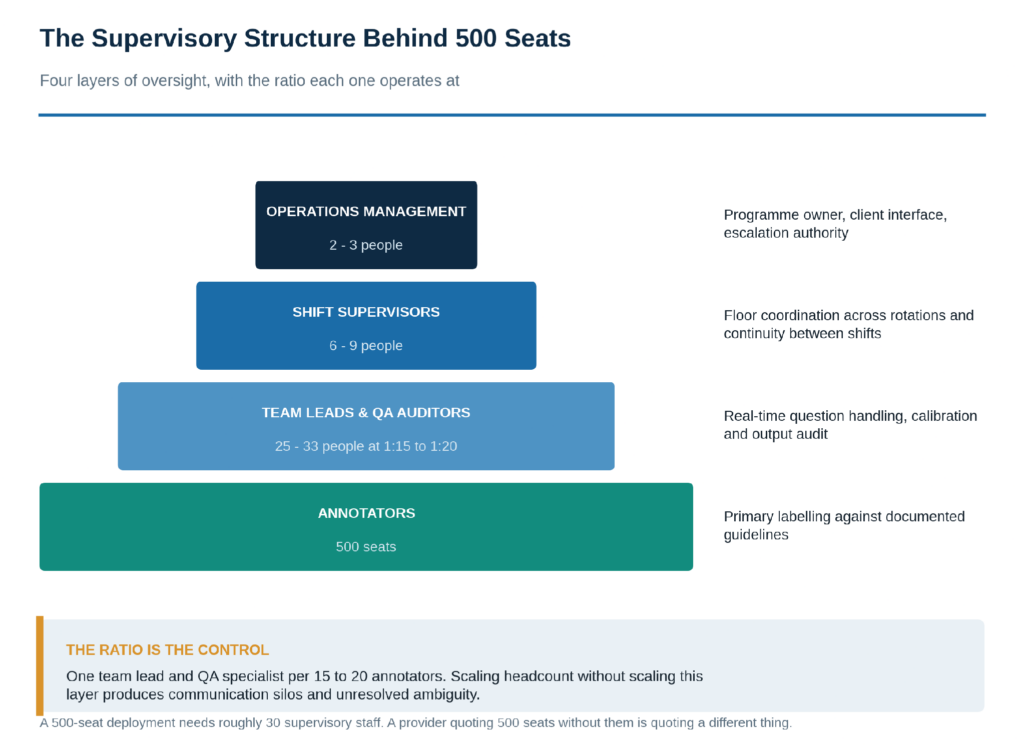
Figure 4. The supervisory structure behind 500 seats, with the ratio each layer operates at.
Failing to maintain those ratios during a rapid ramp produces communication silos, unaddressed annotation ambiguity, and downstream model training failures. The ratio is the control rather than an overhead line: it determines how quickly a question about an edge case gets answered, and unanswered questions become inconsistent labels.
Check the Concurrent-User Question, Not the Seat Count
Virtual desktop capacity is frequently quoted as an aggregate licence count, which says nothing about how the environment behaves with hundreds of simultaneous sessions. Asking what has been tested at full concurrency — and what degraded when it was — is more useful than confirming that VDI exists.
Scaling an artificial intelligence training team from 10 to 500 annotators in the Philippines is entirely achievable within weeks, but success depends entirely on pre-existing infrastructure and modular training pipelines. Organizations that sacrifice operational readiness for speed inevitably compromise their underlying model training data.
— John Maczynski, CEO, PITON-Global
What Should Be Established Before a Large-Scale Agreement?
Three things: documented proof of prior surge deployments with volumes and dates attached, confirmed virtual desktop capacity for hundreds of concurrent users, and KPIs tied to both ramp velocity and post-deployment accuracy thresholds.
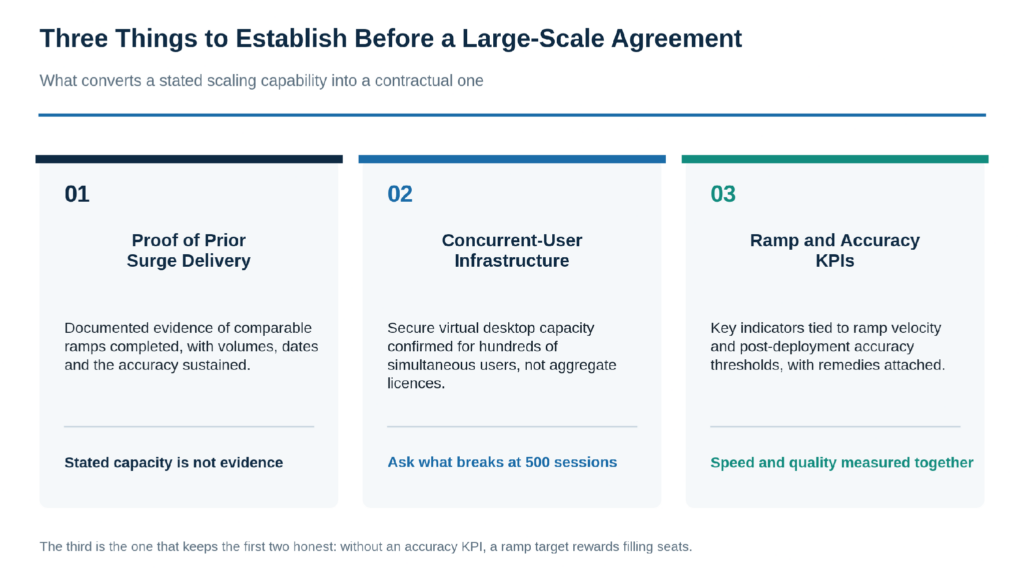
Figure 5. Three things to establish before a large-scale agreement.
Measure Speed and Quality Together
A ramp KPI on its own rewards filling seats. Pairing it with a post-deployment accuracy threshold makes the two variables accountable to the same agreement, which matters because the fastest way to hit a headcount target is to relax the gates that protect the dataset. Attaching remedies to both is what keeps the trade-off visible rather than silent.
How Did One Enterprise Scale an Annotation Team Rapidly?
An autonomous technology enterprise needing 20 to 500 computer vision annotators within 45 days deployed a phased rollout across two secure Manila delivery centres, onboarding 100 weekly. Full capacity was reached in 38 days at 99.1% accuracy, with datasets delivered two weeks early.
Client Challenge
Direct-vendor outreach had stalled on infrastructure constraints and insufficient recruitment bandwidth in secondary markets. The requirement was not simply a large team but a large team inside 45 days without accuracy concession, which is a facility and pipeline question before it is a hiring one.
Vendor Selection Process
PITON-Global evaluated five pre-screened Philippine providers on historical surge capacity, recruitment velocity, and facility infrastructure. Facility capacity proved decisive: most candidates could source the people and fewer had the secure workstation headroom to seat them without displacing existing programmes.
Solution Implemented
A phased rollout across two secure Manila delivery centres, onboarding 100 annotators weekly in structured cohorts with dedicated supervisor ratios maintained throughout the ramp.
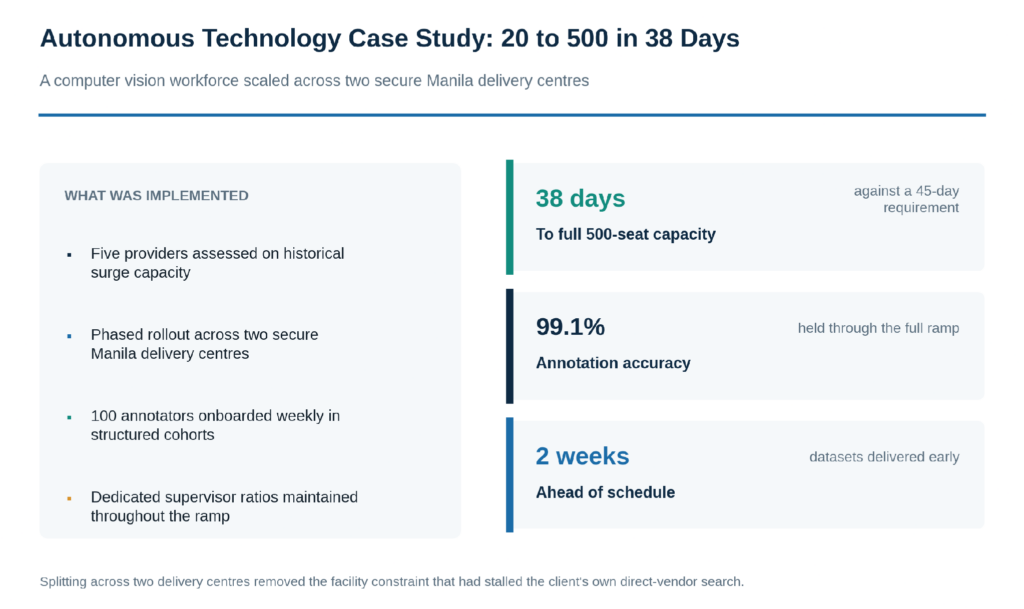
Figure 6. What was implemented, and the outcomes achieved.
Outcomes and Lessons
Full 500-seat capacity was reached in 38 days against a 45-day requirement, accuracy held at 99.1% through the ramp, and datasets arrived two weeks early. Splitting across two delivery centres removed the facility constraint that had stalled the direct search — and maintaining supervisor ratios through the expansion is what allowed accuracy to hold rather than dip and recover.
Why Do Leading Global Enterprises Partner with PITON-Global for Outsourcing Advisory?
PITON-Global is a BPO advisory and consultancy firm connecting global enterprises with more than 100 meticulously vetted providers across Manila, Cebu, and emerging Philippine technology hubs, offering objective, data-driven guidance rather than commission-driven brokerage.
Who Is PITON-Global?
PITON-Global advises enterprise buyers on Philippine outsourcing across provider selection, commercial structuring, and governance. On large-scale ramps its relevance is concrete: pipeline depth, facility headroom, and documented surge history are verifiable from inside the market and indistinguishable from marketing language in a proposal.
How Does PITON-Global Differ from Traditional Outsourcing Brokers?
Traditional brokers are driven by vendor commission structures, which shapes the recommendation before the requirement is understood. PITON-Global provides objective advisory tailored to specific corporate objectives, continuing through capacity verification, ramp planning, and KPI structuring.
How Does PITON-Global’s Network of 100+ Vetted Philippine Providers Benefit Organizations?
Providers are audited on recruitment speed, infrastructure, and historical surge performance before any client introduction. For a deadline-bound ramp that removes the failure the client in the case study had already encountered: spending weeks with providers that could not seat the team regardless of how quickly they could hire it.
How Does PITON-Global’s Advisory-Led Vendor Matching Process Work?
Scale requirements are documented — target headcount, deadline, task complexity, and accuracy threshold; the vetted network is filtered against them; candidates are assessed on pipeline depth, facility headroom, supervisory capacity, and documented ramp history; and the buyer is supported through phased rollout planning and KPI design covering velocity and accuracy together.
Why Do Organizations Use PITON-Global?
- Verified surge history. Documented prior ramps with volumes, dates, and sustained accuracy rather than stated capability.
- Facility headroom confirmed. Secure workstation capacity checked before a schedule depends on it.
- Supervisory capacity assessed. Team lead and QA availability evaluated alongside annotator supply.
- Phased rollout planning. Cohort cadence structured so onboarding quality holds as headcount climbs.
- No direct cost to the buyer. Advisory delivered without a fee to the enterprise client.
Frequently Asked Questions
How fast can Philippine BPO providers scale an AI training team to 500 annotators?
Top-tier providers reach 500 qualified operators from a base of 10 within 30 to 45 days using established recruitment pipelines. The timeline assumes pre-cleared candidate pools and available facility capacity rather than a standing start.
What recruitment channels support rapid workforce expansion in Manila and Cebu?
Active professional databases, university partnerships, targeted digital sourcing, and pre-screened candidate pools maintained continuously rather than assembled on request.
How do providers maintain data quality when onboarding hundreds of annotators simultaneously?
Through modular training academies, simulated annotation environments, daily calibration tests during initial deployment, and supervisory ratios held at one team lead and QA specialist per 15 to 20 annotators.
What infrastructure requirements are essential for a 500-seat annotation facility?
Redundant high-speed connectivity, isolated virtual desktop environments tested at full concurrency, secure physical clean rooms, and robust power backup. Confirm the VDI environment has been run at the session count your programme requires.
How does PITON-Global help enterprises find Philippine partners capable of rapid scaling?
By auditing its network of more than 100 pre-vetted providers on recruitment speed, infrastructure, and historical surge performance, then supporting rollout planning and KPI structuring before the ramp begins.
Share This
Unlock cost-efficient growth with expert BPO guidance!
Partner with Cynergy BPO to connect with top outsourcing providers.
Streamline operations, cut costs, and scale your business with confidence.
Book a Free Call
Ralf Ellspermann - CSO
Author
Ralf Ellspermann is the Chief Strategy Officer (CSO) of Cynergy BPO and a globally recognized authority in business process and contact center outsourcing. With more than 25 years of experience advising enterprises and SMEs, he provides strategic guidance on vendor selection, CX optimization, and scalable outsourcing strategies across global markets. His expertise spans fintech, ecommerce and retail, healthcare, insurance, travel and hospitality, and technology (AI & SaaS) outsourcing.
A frequent speaker at leading industry conferences, Ralf is also a published contributor to The Times of India and CustomerThink, where he shares insights on outsourcing strategy, customer experience, and digital transformation.