



By: Ralf Ellspermann
25-Year, Multi-Awarded BPO Veteran
Published: 15 September 2026

Reviewed By: John Maczynski
Former EVP, World's Largest Contact Center
Updated: 15 September 2026
Philippine AI training providers mitigate annotator fatigue and turnover through structured shift rotations, competitive compensation, and ergonomic workstation standards. These operational measures prevent the data degradation that fatigue and churn otherwise produce, sustaining labeling accuracy across complex enterprise machine learning programmes.
Key Takeaways
- Fatigue is an operational design problem. Mandatory rest intervals, ergonomic workstations, and structured multi-shift rotations address it directly.
- Compensation and progression hold retention. Competitive salary structures and career paths keep turnover well below contact centre averages.
- Multi-tiered verification catches drift early. Layered quality loops prevent label noise from reaching the model as contaminated training data.
- Training reduces cognitive friction. Strong guideline comprehension lowers the effort each ambiguous record demands.
- Tenure mix matters more than the attrition rate. The composition of the floor is what the dataset actually experiences.
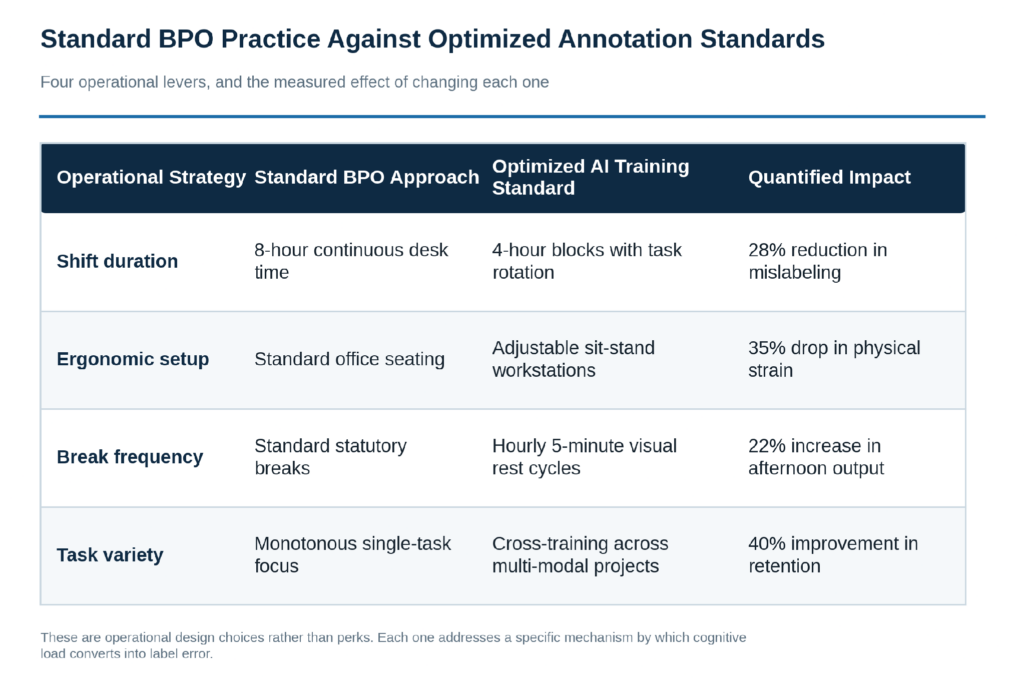
Figure 1. Standard BPO practice against optimized annotation standards, with the measured effect of each change.
What Operational Strategies Mitigate Operator Fatigue?
Structured shift rotations with operators cycling through distinct task categories roughly every ninety minutes, mandatory micro-breaks including hourly visual rest cycles, and ergonomic infrastructure covering sit-stand desks, anti-glare monitors, and specialized seating.
Sustaining cognitive focus during repetitive image segmentation or text alignment requires deliberate design rather than supervision. The mechanisms are specific: visual strain accumulates with uninterrupted screen focus, and attention degrades with task monotony. Rotation and rest cycles address each one, which is why they are operational controls rather than staff amenities.
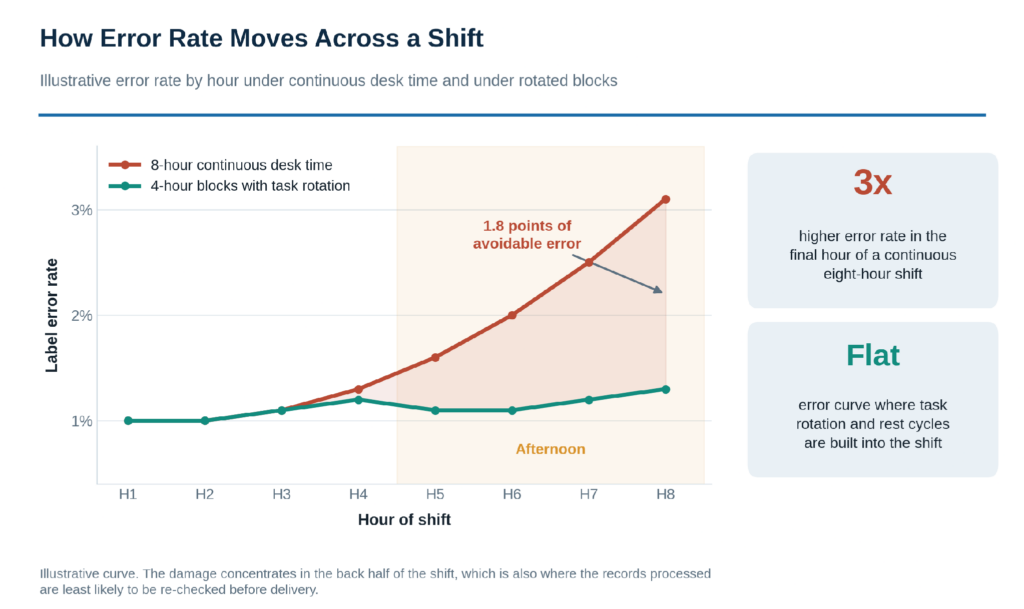
Figure 2. Error rate by hour of shift under continuous desk time and under rotated blocks.
The Damage Concentrates Where Nobody Is Looking
Error rate under continuous desk time climbs steeply through the back half of a shift, reaching roughly three times the morning baseline by the final hour. That matters more than the average suggests, because the records processed late in a shift are also the ones least likely to be re-checked before a batch closes — fatigue error and review coverage decline together.
Ergonomics Shows Up in the Data, Not Just in Wellbeing
Physical strain and cognitive error are connected through sustained attention: an operator adjusting posture or squinting at a reflective display is spending effort that is not going into the label. Reported figures of a 35% drop in physical strain and a 22% lift in afternoon output describe the same mechanism from two directions.
How Do Retention Initiatives Prevent Institutional Knowledge Loss?
Above-market compensation, comprehensive healthcare benefits, and visible progression into supervisory and quality assurance roles. Leading providers sustain turnover below 10% annually against roughly 30% in traditional customer support, preserving the guideline comprehension that long-running projects depend on.
When an experienced annotator leaves, the accumulated project context goes with them — the edge cases they had learned to recognize, the interpretation they had settled on for ambiguous records, the reasons behind decisions nobody wrote down. That is the single greatest threat to dataset consistency in offshore AI operations, and it is invisible until the labels start diverging from earlier batches.
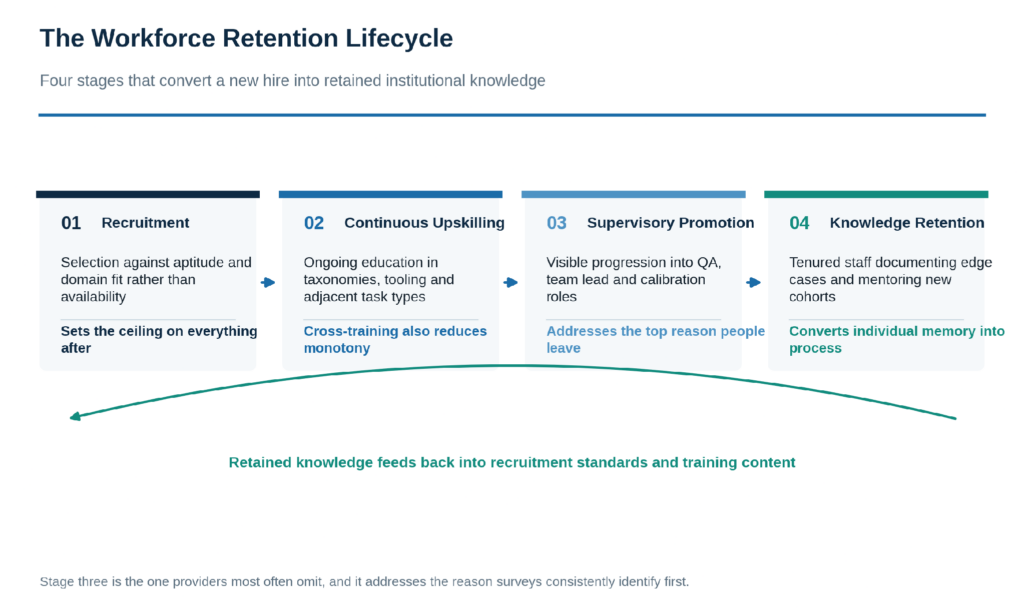
Figure 3. The workforce retention lifecycle, from recruitment through to retained institutional knowledge.
Progression Addresses the Reason People Actually Leave
Surveys consistently identify compensation and career growth as the two drivers of voluntary resignation. Pay is the one providers address; progression is the one they more often omit, because it requires building QA, calibration, and team lead roles that annotators can move into. Stage three of the lifecycle is where retention is won, and it is the stage a buyer should ask about specifically.
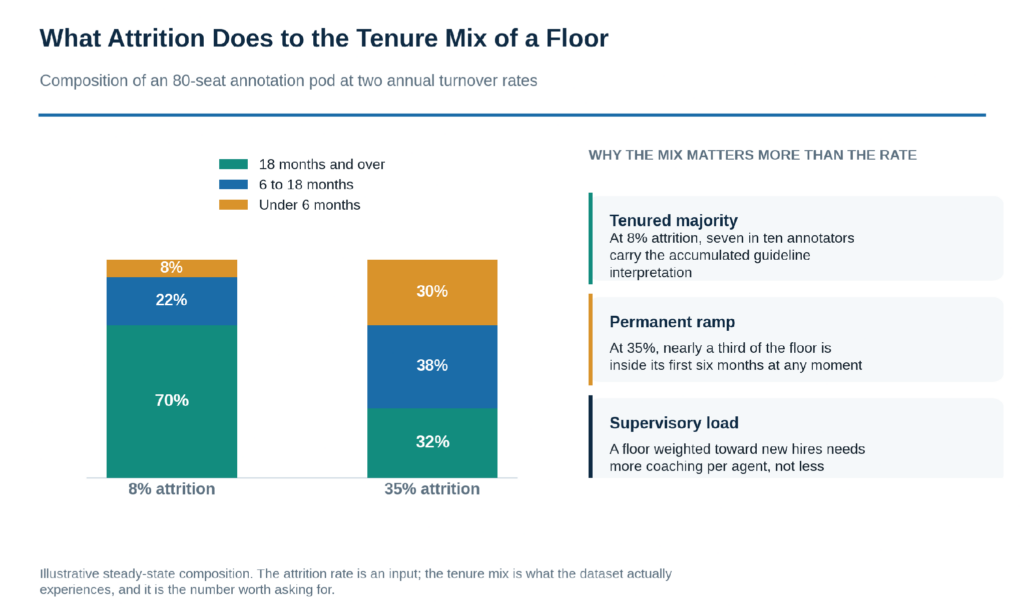
Figure 4. What attrition does to the tenure mix of an 80-seat annotation pod.
Ask for the Tenure Mix, Not the Attrition Rate
An attrition percentage is an input; the composition of the floor is the output, and it is what the dataset experiences. At 8% turnover roughly seven in ten annotators carry accumulated guideline interpretation. At 35%, nearly a third of the floor is inside its first six months at any moment, which means a permanent ramp rather than an occasional one — and a supervisory load that rises rather than falls as the team matures.
What Quality Control Frameworks Protect Against Annotation Drift?
Multi-tiered verification where primary annotations flow into supervisory queues, automated programmatic validation runs alongside statistical sampling, and senior auditors review a randomized share of every completed batch with real-time feedback to operators. That closed loop sustains inter-annotator agreement above 98%.
Fatigue management reduces error; it does not eliminate it, and human error remains inevitable at scale. The verification architecture exists to catch what gets through, and the feedback component is what distinguishes it from inspection: correcting a record fixes one label, while returning the finding to the operator and the guidelines prevents the next hundred.
Sampling Rate Should Be Contractual
A randomized sample of every completed batch is the standard, and the share should be written into the agreement alongside who performs the review. Where sampling is discretionary, it is the first thing compressed under schedule pressure — which is precisely when error rates are highest and detection matters most.
Data quality in artificial intelligence projects is directly proportional to operator well-being. When providers cut corners on workforce compensation and ergonomic standards, the hidden cost manifests as corrupted model training data and failed production deployments.
— John Maczynski, CEO, Cynergy BPO
What Should Buyers Verify During Evaluation?
Three things: complete visibility into operator compensation models, historical error rates alongside remediation turnaround times, and SLAs tied directly to inter-annotator agreement thresholds and workforce stability metrics.
Compensation Transparency Validates Everything Else
A reported retention figure without a compensation model behind it is a number that may not survive the next hiring cycle in the same hub. Asking how pay is positioned against the local market, what benefits extend to dependents, and how the structure has changed over two years establishes whether stability is structural or circumstantial.
Remediation Speed Is More Diagnostic Than Error Rate
Every annotation operation produces errors; providers differ in how quickly supervisory teams detect and correct them. An error caught within a shift affects a handful of records, while one caught at delivery affects a batch. Request the historical detection-to-correction interval rather than the headline accuracy figure, because the second is easy to present and the first is hard to fake.
Put Stability Metrics in the SLA
Tying service levels to inter-annotator agreement thresholds is common. Tying them to workforce stability — attrition ceilings and tenure mix reporting — is less common and more useful, because it makes the provider accountable for the variable that determines whether the quality threshold remains achievable.
How Did One Enterprise Overcome Turnover and Data Inconsistency?
An autonomous vehicle firm carrying 35% annual operator turnover and persistent labeling inconsistency at an unvetted facility moved to a dedicated 80-seat pod with optimized shift rotations and enhanced compensation. Turnover fell to 8%, accuracy reached 99.4%, and datasets arrived two weeks early.
Client Challenge
Persistent labeling inconsistencies alongside 35% annual turnover were introducing severe noise into computer vision training sets and delaying software release milestones. The two problems were one problem: a floor turning over at that rate is permanently in ramp, and inconsistency is what a permanently ramping floor produces.
Vendor Selection Process
Cynergy BPO audited four pre-screened Philippine providers on workforce retention metrics, ergonomic standards, and multi-tiered QA protocols. Ergonomic standards were assessed alongside the other two rather than treated as a soft criterion, because they feed the same error mechanism the retention data was being used to predict.
Solution Implemented
A dedicated 80-seat annotation pod operating under optimized shift rotations, compensation positioned above the local market, and automated validation layered over primary annotation.
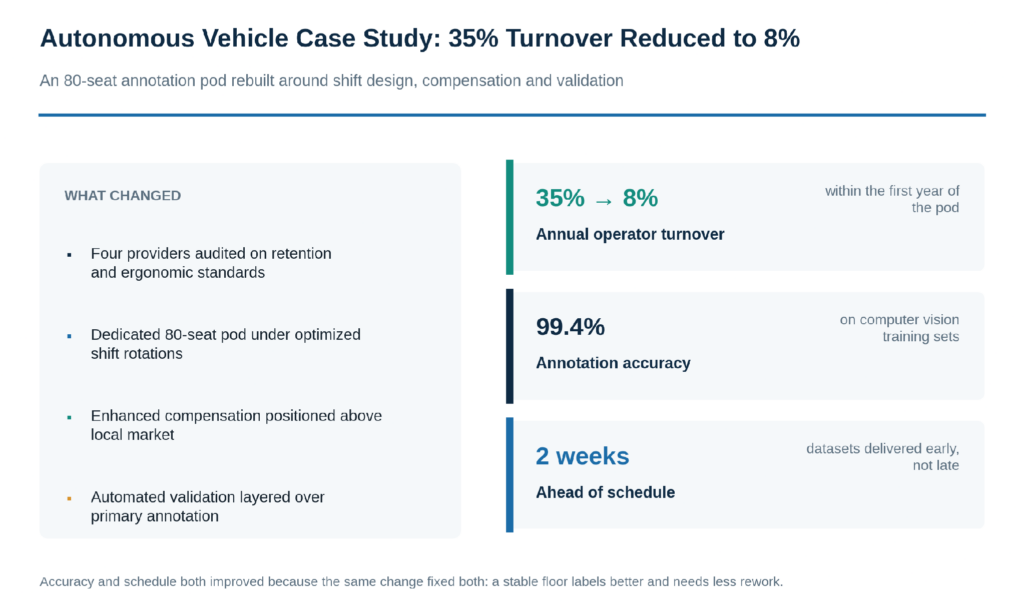
Figure 5. What changed, and the outcomes achieved.
Outcomes and Lessons
Operator turnover fell from 35% to 8%, annotation accuracy reached 99.4%, and training datasets were delivered two weeks ahead of schedule. Accuracy and schedule improved together because the same change produced both: a stable floor labels more consistently and generates less rework, and rework was where the previous timeline had been going. Prioritizing workforce stability over lowest-bid pricing eliminates data drift and accelerates delivery rather than trading one for the other.
Why Do Leading Global Enterprises Partner with Cynergy BPO for Outsourcing Advisory?
Cynergy BPO is a BPO advisory and consultancy firm connecting global enterprises with more than 100 meticulously vetted providers across Manila, Cebu, and emerging Philippine technology hubs, offering objective, data-driven guidance rather than commission-driven brokerage.
Who Is Cynergy BPO?
Cynergy BPO advises enterprise buyers on Philippine outsourcing across provider selection, commercial structuring, and governance. On workforce stability its relevance is direct: compensation positioning, tenure mix, and progression structures are verifiable from inside the market and are the variables that determine whether a quality commitment holds beyond the first quarter.
How Does Cynergy BPO Differ from Traditional Outsourcing Brokers?
Traditional brokers are driven by vendor commission structures, which shapes the recommendation before the requirement is understood. Cynergy BPO provides objective advisory tailored to specific corporate objectives, continuing through workforce evaluation, SLA design, and commercial structuring.
How Does Cynergy BPO’s Network of 100+ Vetted Philippine Providers Benefit Organizations?
Providers are audited on workforce stability, QA protocols, and facility infrastructure before any client introduction. For a long-running annotation programme that removes the risk a buyer cannot assess from a proposal: whether the people labelling the data in month eighteen will be the people who learned the guidelines in month one.
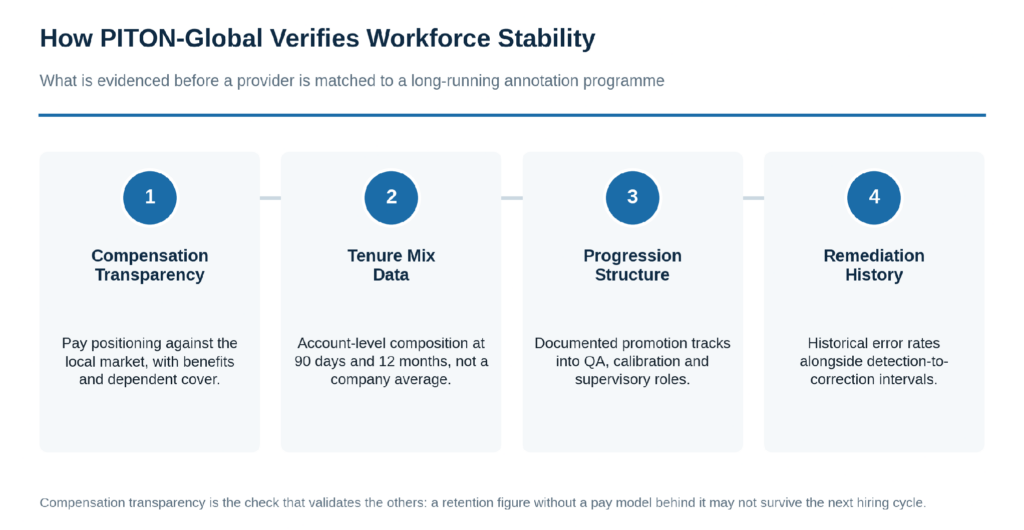
Figure 6. How workforce stability is verified before a provider is matched.
How Does Cynergy BPO’s Advisory-Led Vendor Matching Process Work?
Requirements are documented — duration, complexity, accuracy threshold, and continuity needs; the vetted network is filtered against them; candidates are assessed on compensation transparency, account-level tenure mix, progression structure, and remediation history; and the buyer is supported through SLA design covering both quality and stability metrics.
Why Do Organizations Use Cynergy BPO?
- Compensation transparency. Pay positioning verified rather than retention figures accepted at face value.
- Tenure mix data. Account-level composition at 90 days and 12 months rather than a company average.
- Progression structures examined. Documented promotion tracks into QA and supervisory roles, not stated intentions.
- Remediation history. Detection-to-correction intervals alongside headline error rates.
- No direct cost to the buyer. Advisory delivered without a fee to the enterprise client.
What Else Do Buyers Ask About Annotator Stability?
Common questions concern what causes fatigue, how providers hold turnover below industry averages, acceptable inter-annotator agreement rates, how shift rotation improves accuracy, and how advisory support identifies reliable partners.
What causes annotator fatigue during large-scale data labeling projects?
Prolonged visual focus, repetitive micro-tasks, monotonous workflows, and inadequate ergonomic configuration. Each contributes independently, which is why mitigation addresses all four rather than lengthening breaks alone.
How do Philippine BPO providers maintain turnover below industry averages?
Through above-market compensation, comprehensive health benefits extended to dependents, structured shift rotations, and clear career progression into QA and supervisory roles. The last is the one most often missing from providers reporting weaker retention.
What is an acceptable inter-annotator agreement rate for enterprise datasets?
Buyers should require a minimum of 95% to 98%, enforced through multi-tiered quality assurance. Set the threshold against the task type, since subjective classification carries a lower practical ceiling than structured detection.
How do structured shift rotations improve data labeling accuracy?
Rotating operators across task types roughly every ninety minutes prevents the mental burnout and visual strain that drive error rates up through the back half of a shift. The gain is concentrated in the afternoon, where continuous-shift error is highest.
How does Cynergy BPO help enterprises identify reliable data labeling partners?
By pre-screening its network of more than 100 providers on workforce stability, QA protocols, and infrastructure before recommendations, then supporting the buyer’s evaluation and SLA design.
Share This
Unlock cost-efficient growth with expert BPO guidance!
Partner with Cynergy BPO to connect with top outsourcing providers.
Streamline operations, cut costs, and scale your business with confidence.
Book a Free Call
Ralf Ellspermann - CSO
Author
Ralf Ellspermann is the Chief Strategy Officer (CSO) of Cynergy BPO and a globally recognized authority in business process and contact center outsourcing. With more than 25 years of experience advising enterprises and SMEs, he provides strategic guidance on vendor selection, CX optimization, and scalable outsourcing strategies across global markets. His expertise spans fintech, ecommerce and retail, healthcare, insurance, travel and hospitality, and technology (AI & SaaS) outsourcing.
A frequent speaker at leading industry conferences, Ralf is also a published contributor to The Times of India and CustomerThink, where he shares insights on outsourcing strategy, customer experience, and digital transformation.