



By: Ralf Ellspermann
25-Year, Multi-Awarded BPO Veteran
Published: 15 September 2026

Reviewed By: John Maczynski
Former EVP, World's Largest Contact Center
Updated: 15 September 2026
US technology companies vet Philippine AI data labeling providers through multi-stage audits covering physical security infrastructure, SOC 2 compliance, workforce retention metrics, and domain-specific annotation accuracy. Successful procurement teams prioritize structured pilot programs and clean-room security verification over headline cost savings.
Key Takeaways
- Certification is the entry requirement. ISO 27001 and SOC 2 Type II compliance with verified data privacy alignment, checked at facility scope rather than company level.
- Screen the workforce, not the brochure. Staff retention, multi-shift capacity, and collegiate credentials matter more than a broker listing.
- Paid pilots are the definitive benchmark. Throughput velocity, error rates, and guideline comprehension measured under real production constraints.
- Physical security is non-negotiable. Biometric access and clean-room device bans verified in practice, not in policy.
- A single high-risk indicator should stop an evaluation. Each one signals a structural gap rather than a negotiable shortfall.
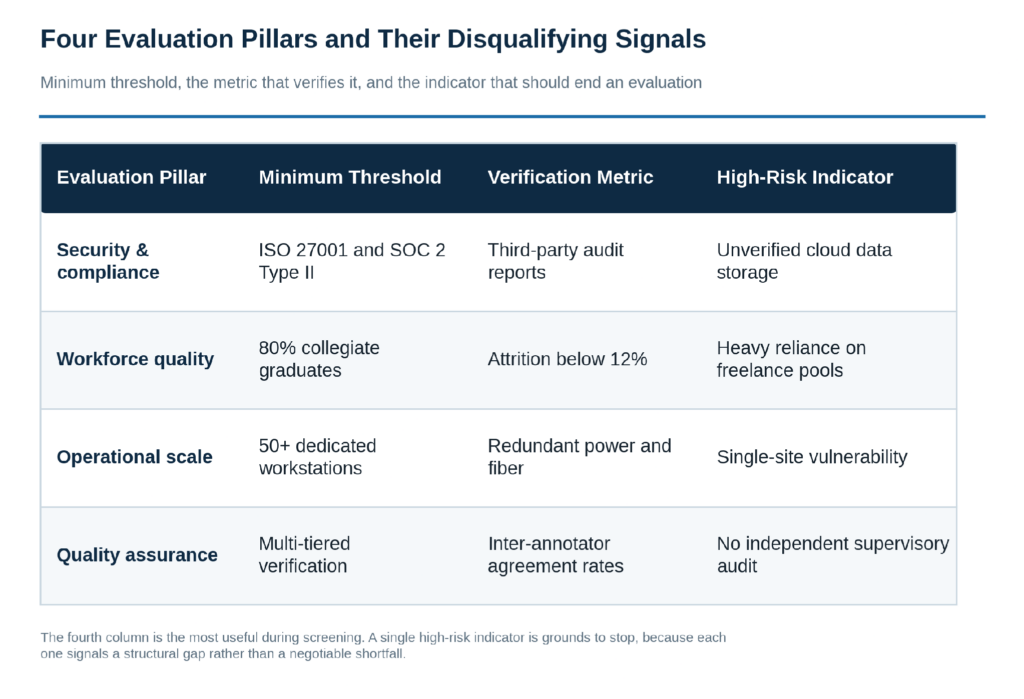
Figure 1. Four evaluation pillars, their thresholds, and the indicators that should end an evaluation.
What Core Evaluation Criteria Should Procurement Teams Establish First?
An evaluation matrix covering security and compliance, workforce quality, operational scale, and quality assurance — each with a defined threshold, a verification metric, and a disqualifying indicator. Data annotation demands higher cognitive alignment and tighter security than traditional customer support offshoring.
Start with historical delivery performance on complex multi-modal projects, then examine workforce composition — specifically the proportion of collegiate-educated professionals against general contract labour. That ratio predicts whether a provider can handle intricate NLP and reinforcement learning work without compromising data fidelity, and it is not visible from a capability statement.
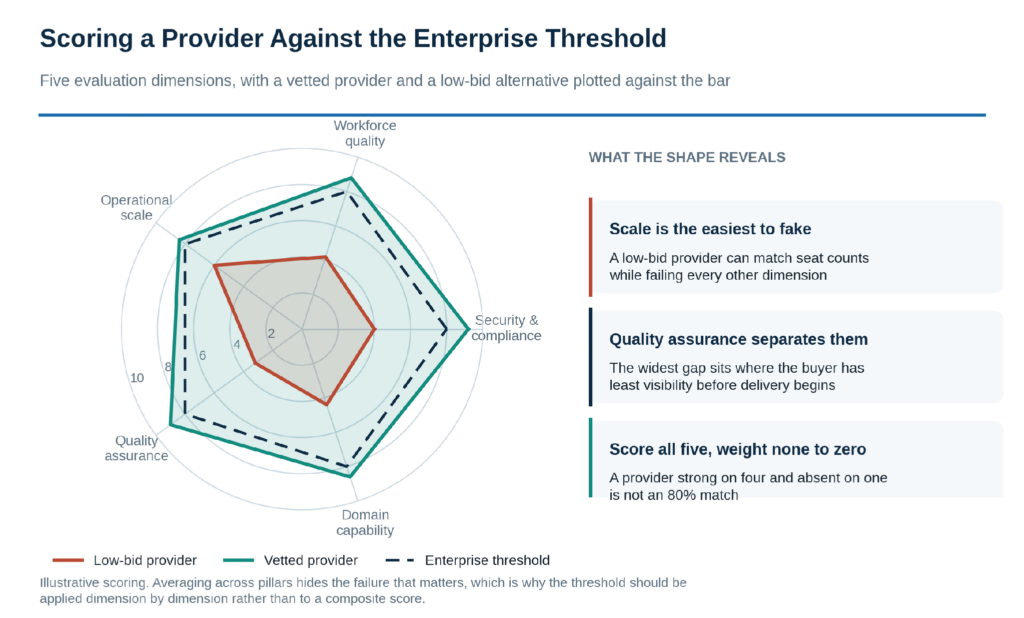
Figure 2. Scoring a provider against the enterprise threshold across five dimensions.
Score Dimension by Dimension, Not on a Composite
Averaging the pillars conceals the failure that matters. A provider scoring strongly on scale, workforce, and infrastructure while falling well short on quality assurance is not an eighty percent match — it is a provider that will deliver volume with unverified accuracy. Applying the threshold to each dimension separately is what prevents a weak pillar from being carried by strong ones.
Operational Scale Is the Easiest Pillar to Satisfy
Seat counts and workstation numbers are straightforward to present and straightforward to meet, which makes them a poor differentiator. The dimensions that separate providers — quality assurance architecture and workforce stability — are precisely the ones a buyer has least visibility into before delivery begins, which is why they warrant disproportionate diligence effort.
How Do Buyers Verify Data Security and Clean-Room Compliance?
Through a four-stage workflow: documentation review of certificates and audit reports, architecture walkthrough of VDI configuration and export controls, facility inspection verifying clean-room enforcement in practice, and attestation reconciled into contractual liability before signature.
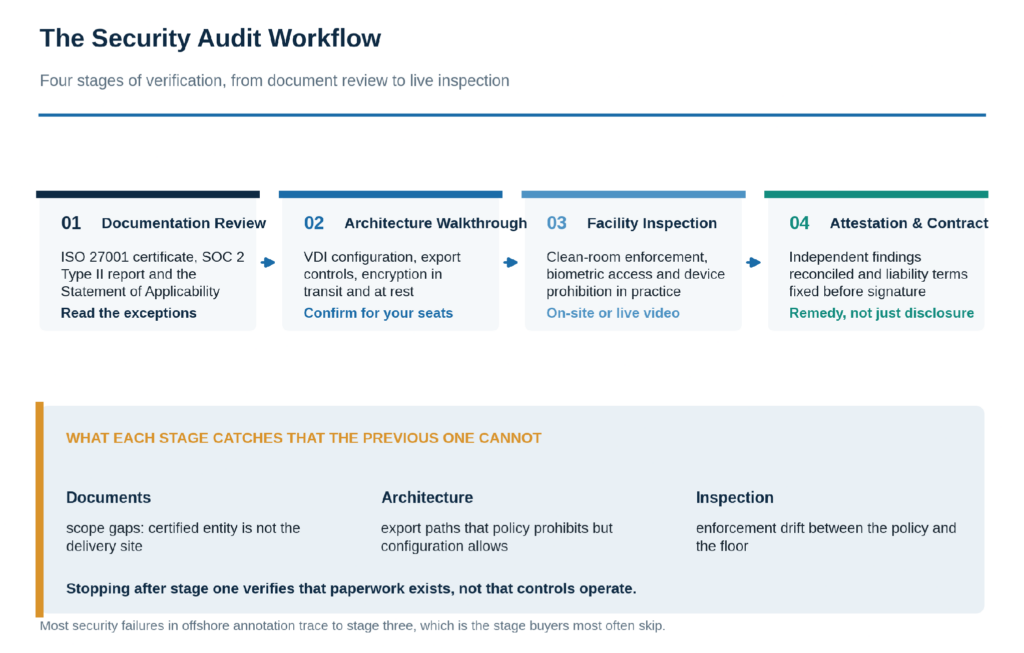
Figure 3. The security audit workflow, and what each stage catches that the previous one cannot.
Elite facilities operate isolated virtual desktop infrastructure with USB ports, screenshot utilities, and local storage permanently disabled, behind multi-factor biometric access, continuous CCTV, and a total prohibition on personal devices on the production floor. Verifying that those controls exist is stage one; verifying that they operate is stages two and three.
Each Stage Catches Something the Previous One Cannot
Documentation reveals scope gaps — a certified entity that is not the delivery site. Architecture review reveals export paths that policy prohibits but configuration permits. Facility inspection reveals enforcement drift between the written protocol and the floor. Stopping after the first stage verifies that paperwork exists rather than that controls operate, and most security failures in offshore annotation trace to the stage buyers most often skip.
What Role Do Structured Pilot Programs Play?
A two-to-three week paid pilot measures how effectively a provider translates complex guidelines into consistent operator output, exposing latent bottlenecks before a master services agreement locks them in. Inter-annotator agreement and throughput velocity are the two metrics that matter.
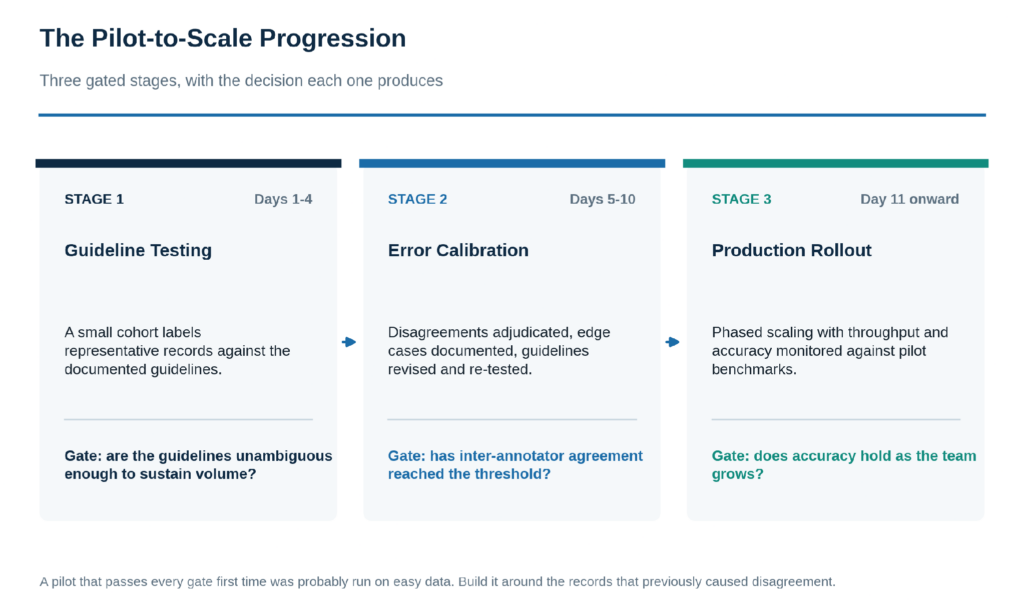
Figure 4. The pilot-to-scale progression, with the decision each gate produces.
The pilot is structured as three gated stages rather than one continuous test. Guideline testing establishes whether the documentation is unambiguous enough to sustain volume; error calibration adjudicates disagreements and revises the guidelines; production rollout confirms that accuracy holds as the team grows. Each gate produces a decision, and a pilot without gates produces only a report.
Build the Pilot Around the Hard Records
A pilot that passes every gate on the first attempt was probably run on convenient data. Construct it from the records that caused disagreement or rework in a previous engagement, because those are where providers actually differ — and a pilot that surfaces problems has done its job at a fraction of what discovering them during production would cost.
When vetting artificial intelligence partners in the Philippines, procurement teams must look past promotional marketing claims. True vendor reliability is proven through transparent operational audits, robust data security infrastructure, and consistent workforce retention.
— John Maczynski, CEO, Cynergy BPO
What Else Should Be Established Before Signature?
Three things: transparency on staff compensation models supporting the claimed retention rates, historical error remediation workflows showing how quickly discrepancies are caught, and penalty-backed SLAs tied to accuracy thresholds and delivery milestones.
Compensation Explains Retention
A low attrition figure is an output. Asking how compensation is positioned against the local market, what benefits extend to dependents, and whether a promotional track exists establishes whether that figure is structural or temporary. A provider reporting strong retention without a compensation model that explains it is reporting a number that may not survive the next hiring cycle in the same hub.
Remediation Speed Matters More Than Error Rate
Every annotation operation produces errors. What distinguishes providers is how quickly supervisory teams detect and correct them, because an error caught within a shift affects a handful of records while one caught at delivery affects a batch. Asking for the historical remediation workflow, including detection-to-correction intervals, is more diagnostic than asking for a headline accuracy figure.
Tie Penalties to Thresholds, Not to Intentions
An SLA that commits a provider to high quality without defining the accuracy threshold, the measurement method, or the remedy is an expression of intent. Penalty-backed terms tied to specific inter-annotator agreement levels and delivery milestones convert quality from a shared aspiration into a contractual obligation.
How Did One Enterprise Secure Compliant LLM Annotation?
A Silicon Valley developer facing a 35% error rate and security compliance gaps from a previous vendor moved legal text annotation to a dedicated 50-seat secure unit in Manila. The programme reached 99.5% accuracy, cut turnaround 40%, and passed all enterprise security audits without findings.
Client Challenge
Persistent 35% error rates and severe security compliance gaps were threatening model deployment schedules. Both problems had the same root cause: a provider selected without domain verification or a security audit that reached the production floor, which is the combination that produces failures on two fronts simultaneously.
Vendor Selection Process
Cynergy BPO audited five pre-screened Philippine providers on legal domain expertise, VDI security infrastructure, and staff retention metrics. Retention was assessed alongside the other two because turnover in a legal annotation pod destroys the accumulated interpretation of the guidelines that accuracy at that level depends on.
Solution Implemented
A dedicated 50-seat secure annotation unit in Manila with customized workflow validation tooling and continuous quality audits under ISO-compliant security controls.
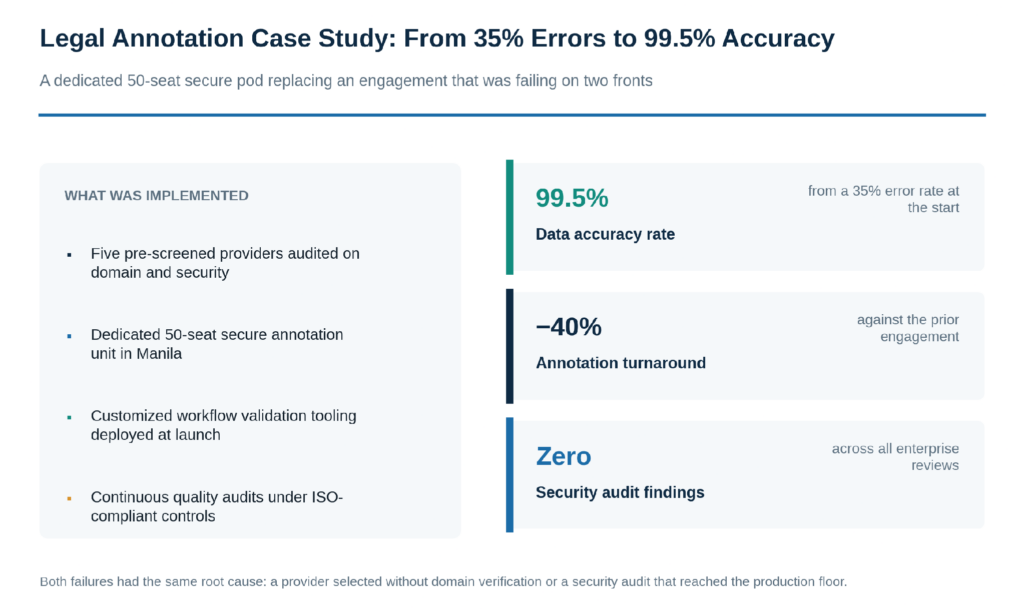
Figure 5. What was implemented, and the outcomes achieved.
Outcomes and Lessons
The programme achieved 99.5% data accuracy against a 35% prior error rate, reduced annotation turnaround by 40%, and passed all enterprise security audits without incident. Rigorous pre-screening and structured pilot validation eliminate downstream performance friction, and the sequence matters: both improvements came from selection decisions made before the contract rather than from management applied after it.
Why Do Leading Global Enterprises Partner with Cynergy BPO for Outsourcing Advisory?
Cynergy BPO is a BPO advisory and consultancy firm connecting global enterprises with more than 100 meticulously vetted providers across Manila, Cebu, and emerging Philippine technology hubs, offering objective, data-driven guidance rather than commission-driven brokerage.
Who Is Cynergy BPO?
Cynergy BPO advises enterprise buyers on Philippine outsourcing across provider selection, commercial structuring, and governance. On vetting its relevance is direct: the diligence a buyer would need weeks and a site visit to complete is largely already done, and the market knowledge that distinguishes a genuine control from its description is not available from outside.
How Does Cynergy BPO Differ from Traditional Outsourcing Brokers?
Traditional brokers are driven by vendor commission structures, which shapes the recommendation before the requirement is understood and introduces exactly the discovery bias a vetting process is meant to remove. Cynergy BPO provides objective advisory tailored to specific corporate objectives, continuing through audit support, pilot design, and commercial structuring.
How Does Cynergy BPO’s Network of 100+ Vetted Philippine Providers Benefit Organizations?
Providers are screened on operational history, financial stability, security posture, and workforce metrics before any client introduction. That does not replace the buyer’s own audit — it removes the providers that would fail it, which is where most of the time in an unassisted vetting process is spent.
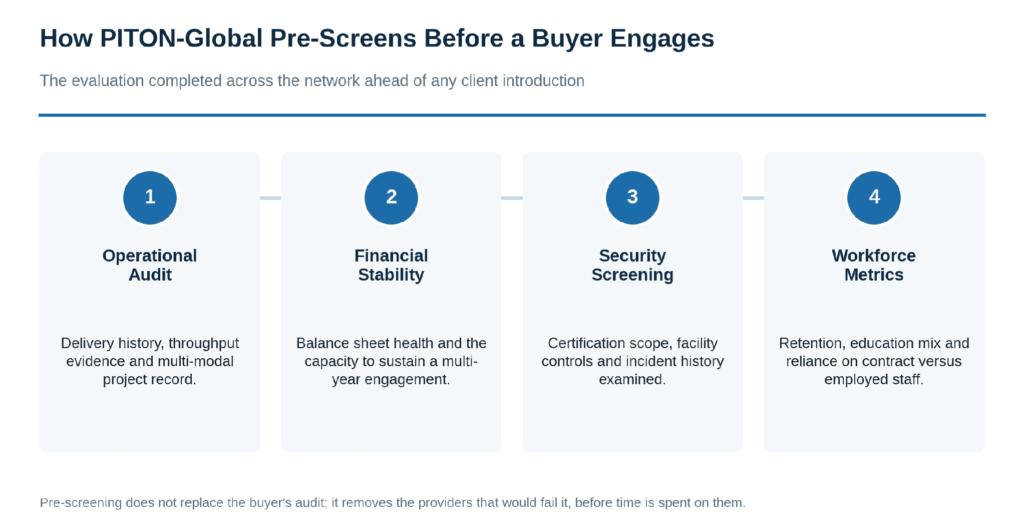
Figure 6. How providers are pre-screened before a buyer engages.
How Does Cynergy BPO’s Advisory-Led Vendor Matching Process Work?
Requirements are documented — task complexity, security obligations, volume, and domain needs; the pre-screened network is filtered against them; candidates are assessed on delivery history, certification scope, retention metrics, and QA architecture; and the buyer is supported through facility audit scheduling, pilot design, and penalty-backed SLA structuring.
Why Do Organizations Use Cynergy BPO?
- Eliminated discovery bias. Recommendations driven by fit rather than by which provider pays the referrer.
- Completed pre-screening. Operational, financial, and security evaluation done before a buyer spends time on a shortlist.
- Audit support. Facility inspection and documentation review structured so each stage catches what the last could not.
- Pilot design. Gated pilots built around hard records rather than convenient ones.
- No direct cost to the buyer. Advisory delivered without a fee to the enterprise client.
Frequently Asked Questions
What certifications are mandatory when vetting Philippine AI data labeling providers?
Active ISO 27001 certification for information security management and SOC 2 Type II attestation confirming controls operated over a period. Verify that the scope of each covers the specific facility and service handling your data rather than the provider as a whole.
How can US enterprises verify the actual skill level of Philippine annotation operators?
Require anonymized sample tests on representative records, review recruitment standards and the qualification mix of the assigned team, and evaluate internal training programmes during the vetting phase rather than after onboarding.
What is the ideal duration for a pilot program before signing a long-term contract?
Two to three weeks, paid, structured as gated stages covering guideline testing, error calibration, and initial rollout. That is long enough to measure throughput, guideline comprehension, and error correction efficiency under realistic conditions.
How do Philippine BPO providers protect client data against insider security threats?
Through clean-room policies prohibiting mobile phones and external media, isolated virtual desktops with export functions disabled, role-based access to authorized fragments only, and comprehensive background checks on personnel with data access.
How does Cynergy BPO assist enterprises in streamlining the vendor vetting process?
By pre-screening its network of more than 100 providers on operational, financial, and security criteria before client recommendations, then supporting the buyer’s own audit, pilot design, and contractual protections.
Share This
Unlock cost-efficient growth with expert BPO guidance!
Partner with Cynergy BPO to connect with top outsourcing providers.
Streamline operations, cut costs, and scale your business with confidence.
Book a Free Call
Ralf Ellspermann - CSO
Author
Ralf Ellspermann is the Chief Strategy Officer (CSO) of Cynergy BPO and a globally recognized authority in business process and contact center outsourcing. With more than 25 years of experience advising enterprises and SMEs, he provides strategic guidance on vendor selection, CX optimization, and scalable outsourcing strategies across global markets. His expertise spans fintech, ecommerce and retail, healthcare, insurance, travel and hospitality, and technology (AI & SaaS) outsourcing.
A frequent speaker at leading industry conferences, Ralf is also a published contributor to The Times of India and CustomerThink, where he shares insights on outsourcing strategy, customer experience, and digital transformation.