



By: Ralf Ellspermann
25-Year, Multi-Awarded BPO Veteran
Published: 15 September 2026

Reviewed By: John Maczynski
Former EVP, World's Largest Contact Center
Updated: 15 September 2026
Enterprises must mandate active ISO 27001 certification, SOC 2 Type II attestation, and isolated virtual desktop infrastructure. Procurement teams should enforce physical clean-room protocols, biometric access restrictions, and comprehensive device bans to protect proprietary data assets.
Key Takeaways
- Certification is the baseline, not the answer. ISO 27001 and SOC 2 Type II are required, and neither covers facility-level scope on its own.
- VDI isolation removes the export path. Centralized data with local storage, USB, and screen capture disabled blocks extraction by design rather than by policy.
- Physical controls must be observed. 24/7 CCTV, multi-factor biometric access, and clean-room device bans verified on the floor rather than in a document.
- Penalties must attach to findings. SLAs tying financial consequence to audit outcomes and breach remediation convert security into an obligation.
- Advisory-led procurement accelerates verification. Pre-screening removes the providers that would fail an audit before a buyer spends time on them.
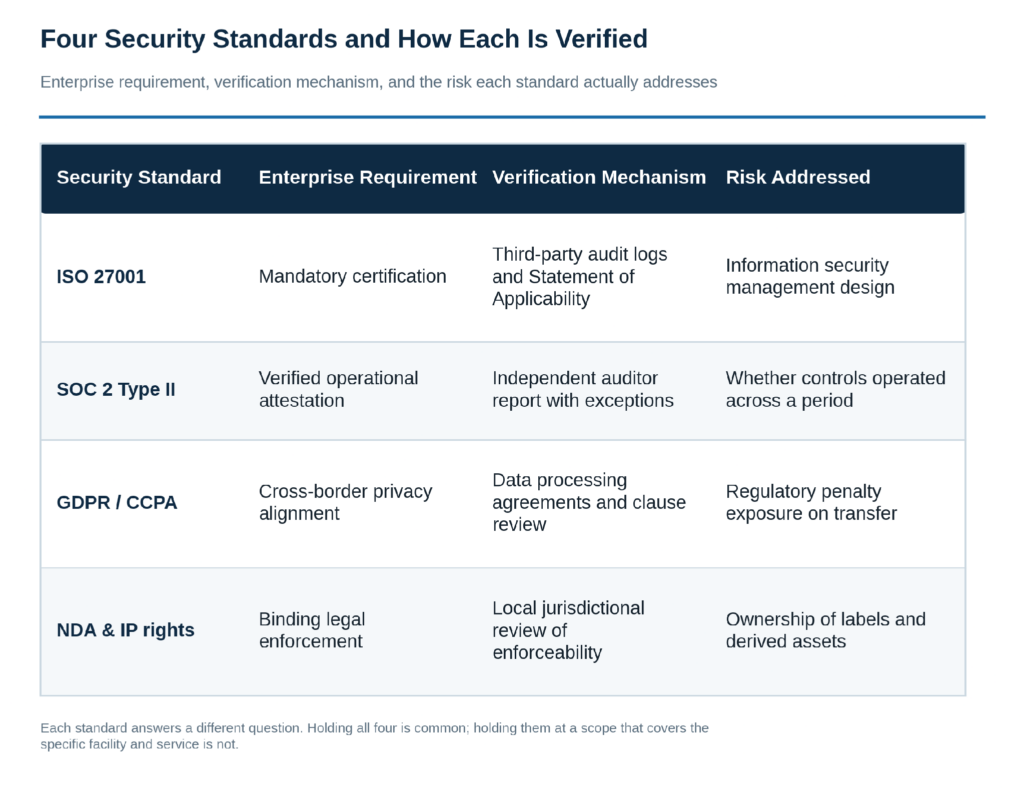
Figure 1. Four security standards, how each is verified, and the risk each addresses.
What Core Security Frameworks Are Non-Negotiable?
Active ISO 27001 certification for information security management and verified SOC 2 Type II reports confirming control efficacy over an extended window. Beyond the certificates, end-to-end encryption in transit and at rest, with role-based access restricting operators to assigned annotation batches.
Standard IT outsourcing baselines are insufficient for machine learning datasets, LLM prompt alignments, and proprietary computer vision assets, because the exposure is the training data itself rather than a system that processes it. The distinction shapes what needs verifying: not whether the provider is secure in general, but whether the specific environment handling your data is.
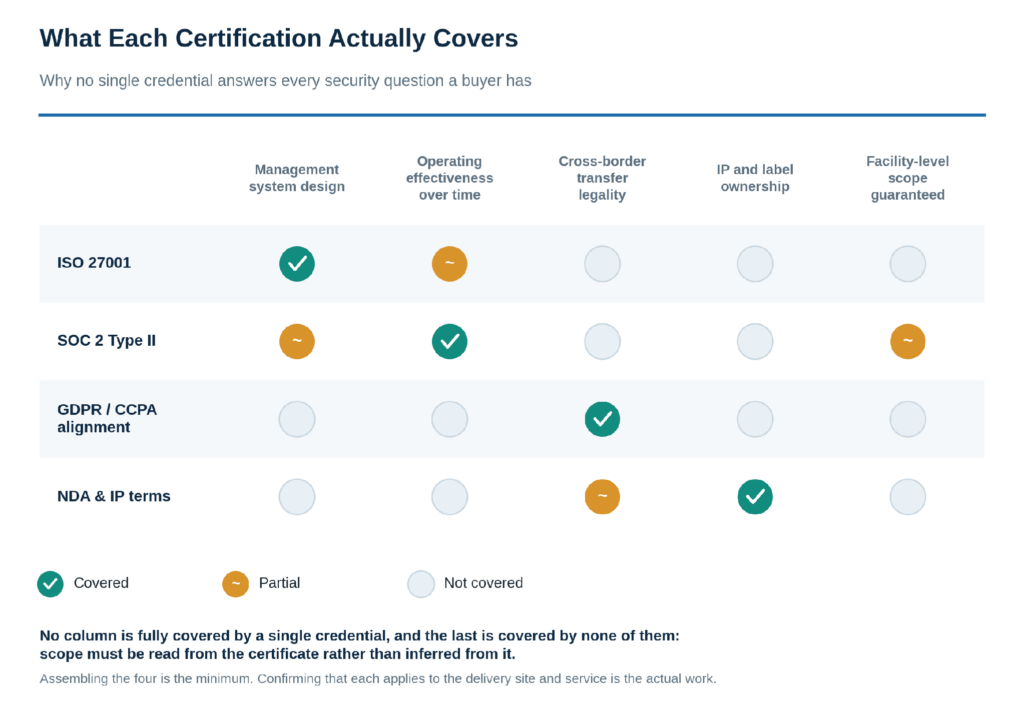
Figure 2. What each certification actually covers across five security questions.
No Single Credential Answers Every Question
ISO 27001 evidences that a management system was designed; SOC 2 Type II evidences that controls operated across a period; GDPR and CCPA alignment addresses cross-border transfer legality; NDA and IP terms address ownership of labels and derived assets. Facility-level scope is covered by none of them directly and must be read from the certificate rather than inferred from its existence. Assembling all four is the minimum — confirming each applies to the delivery site is the actual work.
Read the Statement of Applicability
An ISO 27001 certificate establishes that something was certified. The Statement of Applicability establishes what — which controls were in scope, which were excluded and why, and which locations the certification covers. A provider with multiple sites may hold certification at one, and the buyer discovers which only by asking.
How Do Elite Facilities Enforce Clean-Room and Device Isolation?
Operators work on locked-down virtual desktop infrastructure with USB ports, web browsing, and screenshot utilities permanently disabled. Physical access requires multi-factor biometric authentication with continuous CCTV, and personal electronics including smartphones, smartwatches, and external media are prohibited on the production floor.
The principle behind both layers is the same: remove the path rather than prohibit its use. A policy against copying data depends on compliance; a workstation with no local storage, no removable media interface, and no screen capture function depends on nothing. That distinction is what separates a control from a rule, and it is why VDI isolation is the single most consequential technical requirement in this list.
Smartwatches Are the Gap Buyers Forget
Device bans routinely cover phones and cameras and omit wearables, which photograph and transmit as readily. A clean-room policy worth relying on enumerates categories rather than devices, and enforcement is visible during a floor inspection in a way that a written policy is not.
What Role Do Comprehensive Vendor Audits Play?
Independent recurring audits by accredited third-party examiners testing network vulnerability, reviewing employee background check records, and verifying that data retention and purging protocols match enterprise specification. Vendor self-assessment introduces blind spots that no amount of detail compensates for.
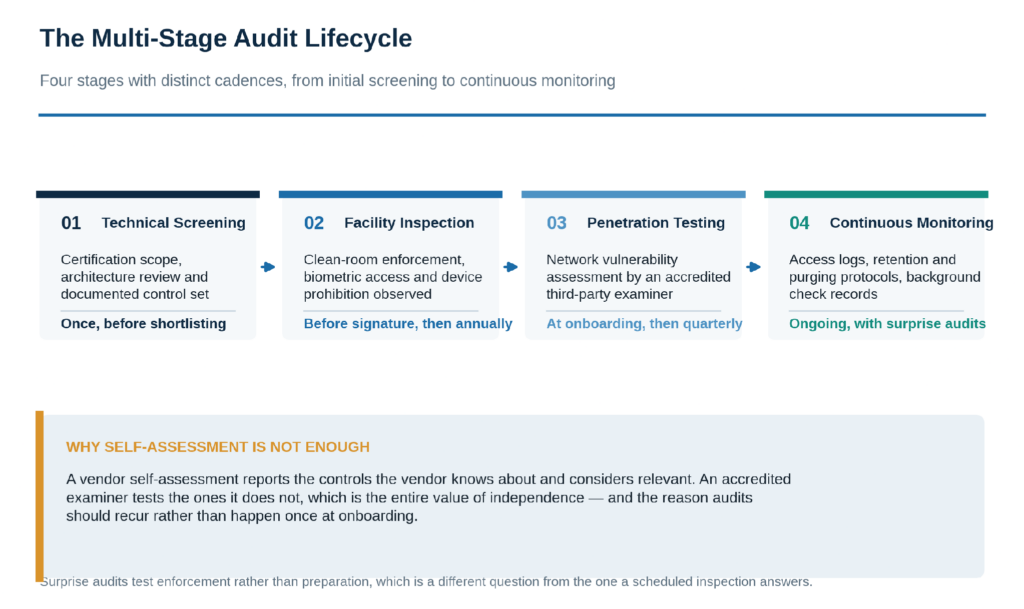
Figure 3. The multi-stage audit lifecycle, with the cadence each stage requires.
A self-assessment reports the controls the vendor knows about and considers relevant. An accredited examiner tests the ones it does not, which is the entire value of independence — and the reason audits should recur rather than happen once at onboarding. Procurement teams should mandate quarterly digital vulnerability scans and annual on-site physical audits as the standing cadence.
Surprise Audits Test a Different Question
A scheduled inspection measures whether controls can be in place; an unannounced one measures whether they are. Both are worth doing, and only the second detects enforcement drift — the gradual gap that opens between a written protocol and daily practice on a floor that has not been visited in eleven months.
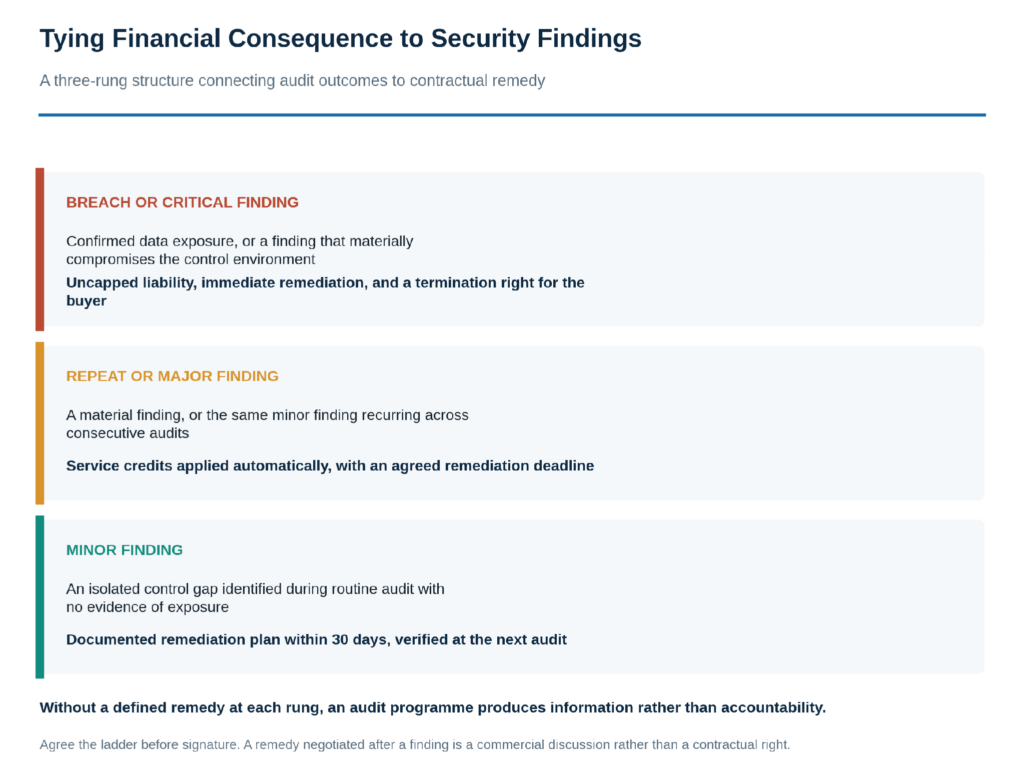
Figure 4. Tying financial consequence to security findings across three rungs.
An Audit Without a Remedy Is Information
Penalty-backed SLAs are what convert audit findings into action. A minor finding should trigger a documented remediation plan within a defined window; a repeat or material finding should trigger automatic service credits; a breach or critical finding should carry uncapped liability, immediate remediation, and a termination right. Agree the ladder before signature, because a remedy negotiated after a finding is a commercial discussion rather than a contractual right.
When enterprises outsource artificial intelligence training to the Philippines, data security cannot be treated as a checklist item. True asset protection requires verifiable virtual infrastructure isolation, strict physical clean-room controls, and unwavering commitment to international compliance standards.
— John Maczynski, CEO, Cynergy BPO
What Else Should Procurement Teams Establish?
Three things: complete architectural transparency before signing a master services agreement, a right to conduct surprise physical and digital audits, and confirmation that the provider employs a dedicated internal compliance officer rather than distributing the function across shared IT support.
Dedicated Compliance Ownership Is the Strongest Single Signal
Where security compliance is absorbed into a shared IT role, it competes with uptime and support tickets for attention and loses. A named compliance officer with independent reporting indicates the function is owned rather than accommodated, and it is among the most predictive indicators available to a buyer during evaluation — partly because it is difficult to fabricate and easy to verify.
Write the Audit Right Into the Agreement
A right to inspect that depends on the provider’s cooperation at the time is not a right. Specify notice periods, including the provision for unannounced visits, the scope of access, who bears the cost, and what happens when access is refused. These terms cost nothing to agree at contracting and are close to impossible to obtain once a concern has arisen.
How Did One Enterprise Secure Compliant Model Training?
A multinational fintech processing customer service transcripts under US banking regulations replaced an engagement with lax device controls and unverified cloud storage. A dedicated 60-seat secure pod in Cebu passed all internal banking audits with zero deficiencies, cut processing latency 35%, and accelerated deployment by two months.
Client Challenge
Regulatory compliance gaps and unverified data storage practices were threatening deployment schedules. The detail worth noting is that security was the constraint on speed rather than a tax on it: the previous engagement could not be cleared for production, so every week spent on compliance remediation was a week the model did not ship.
Vendor Selection Process
Cynergy BPO audited four pre-screened Philippine providers on ISO certification validity, VDI isolation capability, and physical access controls. Certification validity was checked at scope rather than at existence, since a current certificate covering a different site answers the wrong question for a banking-regulated workload.
Solution Implemented
A dedicated 60-seat secure annotation pod with biometric entry restrictions, mobile device bans, and continuous supervisory audits operating under isolated VDI and ISO-compliant clean-room protocols.
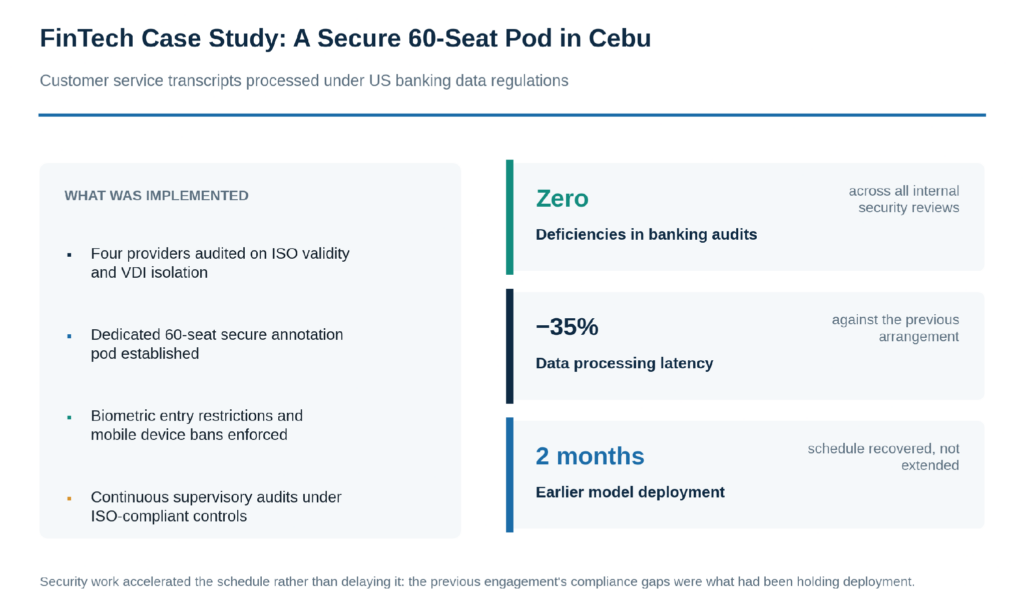
Figure 5. What was implemented, and the outcomes achieved.
Outcomes and Lessons
The programme passed all internal banking security audits with zero deficiencies, reduced data processing latency by 35%, and accelerated model deployment by two months. Rigorous up-front security vetting and infrastructure isolation eliminated regulatory risk — and the schedule gain came from removing a blocker rather than from working faster, which is the pattern whenever compliance is the binding constraint.
Why Do Leading Global Enterprises Partner with Cynergy BPO for Outsourcing Advisory?
Cynergy BPO is a BPO advisory and consultancy firm connecting global enterprises with more than 100 meticulously vetted providers across Manila, Cebu, and emerging Philippine technology hubs, offering objective, data-driven guidance rather than commission-driven brokerage.
Who Is Cynergy BPO?
Cynergy BPO advises enterprise buyers on Philippine outsourcing across provider selection, commercial structuring, and governance. On security its relevance is specific: certificate scope, architecture configuration, and compliance ownership are verifiable from inside the market and take a buyer weeks and a site visit to establish independently.
How Does Cynergy BPO Differ from Traditional Outsourcing Brokers?
Traditional brokers are driven by vendor commission structures, which shapes the recommendation before the requirement is understood. Cynergy BPO provides objective advisory tailored to specific corporate objectives, continuing through security evaluation, audit scheduling, and contractual protection design.
How Does Cynergy BPO’s Network of 100+ Vetted Philippine Providers Benefit Organizations?
Providers are screened on certification scope, architecture, compliance ownership, and incident history before any client introduction. That does not replace the buyer’s own audit — it removes the providers that would fail it, which is where most of the elapsed time in an unassisted security evaluation is spent.
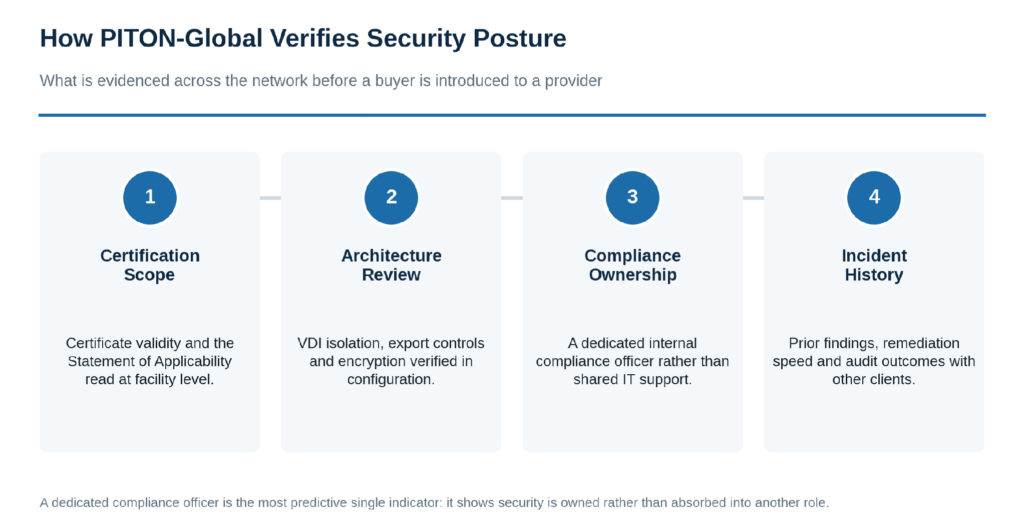
Figure 6. How security posture is verified before a buyer is introduced to a provider.
How Does Cynergy BPO’s Advisory-Led Vendor Matching Process Work?
Security requirements are documented — applicable frameworks, data categories, isolation needs, and audit obligations; the vetted network is filtered against them; candidates are assessed on certificate scope, architecture configuration, compliance ownership, and incident history; and the buyer is supported through audit scheduling and penalty-backed SLA design.
Why Do Organizations Use Cynergy BPO?
- Certificate scope verified. Validity and Statement of Applicability read at facility level rather than accepted at company level.
- Architecture confirmed. VDI isolation, export controls, and encryption checked in configuration rather than in policy.
- Compliance ownership established. A dedicated internal officer rather than a function distributed across shared IT support.
- Contractual protection designed. Audit rights and penalty ladders agreed before signature rather than after a finding.
- No direct cost to the buyer. Advisory delivered without a fee to the enterprise client.
Frequently Asked Questions
What specific security certifications are mandatory for Philippine AI training providers?
Active ISO 27001 certification for information security management and SOC 2 Type II attestation verifying control efficacy over time. Confirm the scope of each covers the specific facility and service rather than the organization as a whole.
How do virtual desktop infrastructures protect sensitive training data?
They keep all data centralized on secure servers, preventing local file downloads, USB transfers, and unauthorized screen captures. The protection is structural rather than procedural, which is why it is the most consequential technical control on the list.
Why are physical clean-room protocols necessary for data labeling operations?
They eliminate insider threat vectors by removing the devices capable of capturing data from the production floor. Ensure the policy enumerates categories rather than named devices, so wearables and other emerging hardware are covered.
How frequently should enterprise buyers conduct security audits on offshore vendors?
Quarterly digital vulnerability scans and annual on-site physical audits by accredited third-party examiners, with a contractual right to unannounced inspection. Scheduled audits test capability; unannounced ones test enforcement.
How does Cynergy BPO help enterprises verify vendor security compliance?
By pre-screening its network of more than 100 providers on operational, financial, and security criteria before client recommendations, then supporting the buyer’s own audit, contractual protections, and ongoing compliance cadence.
Share This
Unlock cost-efficient growth with expert BPO guidance!
Partner with Cynergy BPO to connect with top outsourcing providers.
Streamline operations, cut costs, and scale your business with confidence.
Book a Free Call
Ralf Ellspermann - CSO
Author
Ralf Ellspermann is the Chief Strategy Officer (CSO) of Cynergy BPO and a globally recognized authority in business process and contact center outsourcing. With more than 25 years of experience advising enterprises and SMEs, he provides strategic guidance on vendor selection, CX optimization, and scalable outsourcing strategies across global markets. His expertise spans fintech, ecommerce and retail, healthcare, insurance, travel and hospitality, and technology (AI & SaaS) outsourcing.
A frequent speaker at leading industry conferences, Ralf is also a published contributor to The Times of India and CustomerThink, where he shares insights on outsourcing strategy, customer experience, and digital transformation.