



By: Ralf Ellspermann
25-Year, Multi-Awarded BPO Veteran
Published: 12 October 2026

Reviewed By: John Maczynski
Former EVP, World's Largest Contact Center
Updated: 12 October 2026
Evaluate on the metric before the number. A single accuracy threshold across an ontology is not one standard, because large regions absorb boundary error and thin objects cannot. Ask for per-class IoU, a boundary metric at a stated pixel tolerance, and the measured agreement between two of the provider’s own experts.
Key Takeaways
- Pixel accuracy is close to blind to the classes that matter. On a representative frame, three background classes hold 89% of the pixels. Deleting every person and every thin structure still returns 98.90% pixel accuracy, clearing a 98.5% gate.
- The same boundary error produces very different scores by object size. A two-pixel slip gives Mask IoU of 0.990 on a road region and 0.195 on an overhead cable. Interior area grows with the square of size while perimeter grows only linearly.
- “Sub-pixel edge snapping” asserts precision the image does not contain. Boundary pixels are mixed by definition, a corrected lens spreads an edge over one and a half to two and a half pixels, and a forklift at four metres per second smears it eight pixels further.
- Fully loaded technical annotation and engineering support ranges from $10 to $16 per hour. Roughly $1,730 to $2,770 per seat per month at 173 hours, with onboarding and ontology alignment typically spanning four to six weeks.
- Thirty-five masks an hour implies model assistance, which changes the audit. That rate is 103 seconds an item, between a simple polygon and a careful instance mask. It is reachable with pre-labelling, after which what matters is correction on the model’s errors rather than agreement with it.
- Advisory-led matching settles what quality means before it prices it. Fixing the metric, measuring the achievable ceiling and setting thresholds per class group are decisions that shape the statement of work and constrain the shortlist.
What Does a 98.5% Accuracy Figure Actually Guarantee?
Very little, unless it names a metric, a class breakdown and how the reference labels were produced. Pixel accuracy is dominated by large background regions. A dataset that misses every person and every thin structure in a representative frame still scores 98.90%.

Figure 1. What a pixel-accuracy figure is mostly measuring.
The arithmetic is worth seeing because it is so lopsided. On a representative 1920 by 1080 warehouse or low-speed street frame, floor and road surface account for roughly 41% of pixels, wall, building and sky another 35%, and large static structure such as shelving a further 13%. Those three classes are 89% of everything the metric counts, and they are also the easiest regions to label, being large, contiguous and high-contrast.
People occupy under 1% of the frame and thin structures, cables, forklift tines and guard rails, around a third of a percent. Those are the classes on which a mobile robot’s safety behaviour depends, and together they are 1.10% of the pixel count. Delete them entirely and the pixel accuracy reads 98.90%, comfortably past a 98.5% gate. A measure that a catastrophic dataset passes is not a quality control.
What the Same Annotation Looks Like Under a Better Metric
Apply a uniform two-pixel boundary error to every object in that frame and the pixel accuracy reads 99.37%, while the mean Mask IoU across those objects reads 0.725. Restricted to the three smallest objects the mean IoU is 0.441. These are the same labels described three ways, and only the last two tell a buyer anything about whether the dataset will train a usable perception model.
Why Does One Threshold Across an Ontology Not Work?
Because interior pixels grow with the square of object size while boundary pixels grow only linearly. A large object absorbs boundary error that destroys a small one. A two-pixel error scores 0.990 on a road surface and 0.195 on an overhead cable, from identical annotator behaviour.
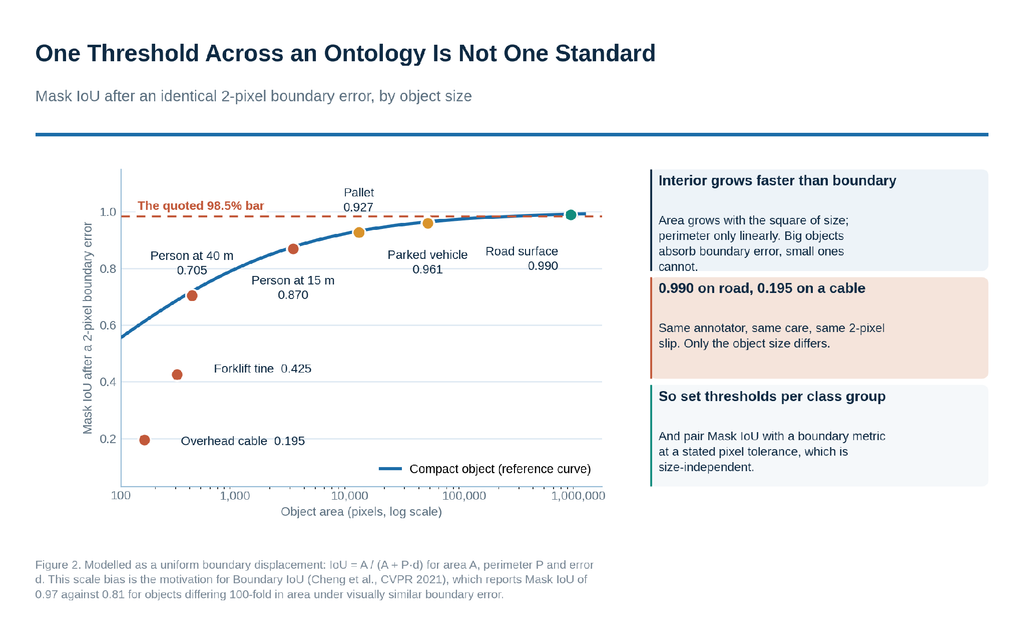
Figure 2. Identical boundary error, very different scores.
This scale bias is well documented in the computer vision literature and is the motivation for Boundary IoU, introduced by Cheng and colleagues at CVPR 2021. Their observation is that the number of interior pixels grows quadratically in object size and can far exceed the number of boundary pixels, which grows linearly, so larger objects tolerate more boundary misclassification without penalty. They report Mask IoU scores of 0.97 against 0.81 for objects differing more than a hundredfold in area under visually similar boundary discrepancies. Crucially, they note that boundary ambiguity is fixed and independent of object area: the annotator’s uncertainty does not shrink because the object is small.
The consequence for a contract is direct. A single 98.5% figure applied across an ontology is a loose standard for floors, walls and vehicles, and an unreachable one for pedestrians at distance, cables and tines. A provider held to it will either miss on the small classes and be penalised for work no one could do, or will quietly report an aggregate that the large classes carry. Neither outcome tells the buyer what they need to know.
What to Specify Instead
Two changes fix most of it. Set thresholds per class group rather than one number: large regions, rigid mid-size objects, people, and thin or distant structures each get their own figure. And pair the region metric with a boundary metric evaluated at a stated pixel tolerance, because a boundary score is size-independent by construction and will expose sloppiness that Mask IoU hides on large objects.
Is Sub-Pixel Edge Precision a Meaningful Commitment?
No. A mask is a binary decision per pixel, and the image is not binary at the boundary. Mixed pixels contain both classes, a corrected lens spreads an edge over one and a half to two and a half pixels, and motion adds several more. The claim asserts precision finer than the data.
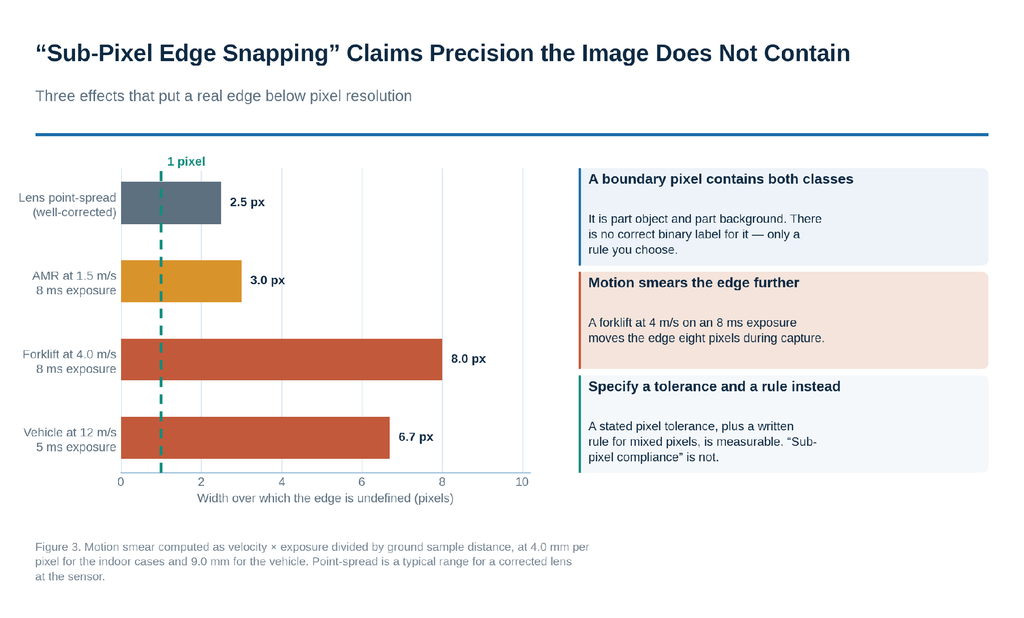
Figure 3. Three effects that put an edge below pixel resolution.
A pixel straddling an object boundary genuinely contains both the object and the background, in proportion to how much of its area each covers. There is no correct binary label for that pixel. There is only a rule the project chooses, and the rule is a legitimate and necessary thing to write down: assign to the object, assign to the background, or assign by majority coverage. What cannot be done is to discover the right answer by looking harder.
Motion makes it worse in exactly the settings robotics cares about. An autonomous mobile robot moving at 1.5 metres per second with an eight-millisecond exposure at four millimetres per pixel smears an edge across three pixels during capture. A forklift at four metres per second smears it across eight. At those magnitudes, an argument about sub-pixel vertex placement is an argument about a boundary the sensor never resolved.
The practical replacement is a tolerance and a rule. State the boundary tolerance in pixels, state the mixed-pixel convention, and then measure conformance to that specification. Both parties can audit it, and it tells the annotation team where to spend effort. “98.5% sub-pixel edge-snapping compliance” cannot be audited by anyone, because it does not name a quantity.
What Is the Achievable Ceiling, and Who Sets It?
The provider’s own experts set it. If two experienced annotators differ by around one and a half pixels of boundary placement, the achievable IoU ceiling is roughly 0.899 on a pedestrian at fifteen metres and 0.244 on a cable. No threshold above the measured agreement is meaningful.
This is the most useful single test a procurement team can run, and it costs almost nothing. Send the same frames to two of the provider’s experienced annotators independently, and measure how much they agree with each other, per class. That number is the ceiling. Any threshold written above it commits the provider to beating the consistency of its own best people, which is a promise that will be met by adjusting the measurement rather than the work.
It also exposes a circularity that runs through most quality claims in this category. If the reference labels against which accuracy is measured were produced by the same team, using the same handbook, under the same ambiguity, then the measurement is substantially self-referential. A figure of 98.5% against such a reference can mean the annotators are accurate, or merely that they are consistent with each other in the same wrong way. Reference labels should be adjudicated by a third annotator or built from the consensus of several, and the contract should say which.
Are the Quoted Throughput Figures Realistic?
The comparison mixes units, and the higher figure implies tooling the draft does not disclose. Thirty-five items an hour is 103 seconds each, between a simple polygon and a careful instance mask. Hand-drawn pixel-level segmentation runs far slower; model-assisted correction reaches that rate comfortably.
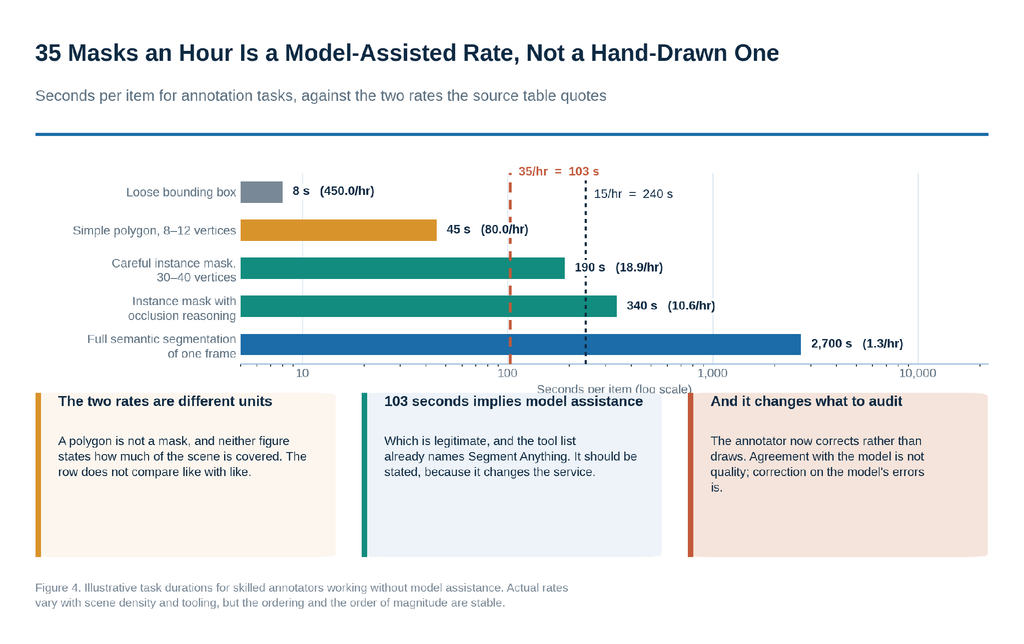
Figure 4. Seconds per item against the two quoted rates.
A polygon is not a mask, and a comparison of fifteen complex polygons per hour against thirty-five verified masks per hour does not compare like with like, particularly when neither figure states how much of the scene is covered. Taking realistic durations, a loose bounding box runs around eight seconds, a simple eight to twelve vertex polygon around forty-five, a careful instance mask with thirty to forty vertices around 190, an instance mask requiring occlusion reasoning around 340, and full semantic segmentation of a single frame closer to 2,700 seconds. At 103 seconds an item, the quoted rate sits well above hand-drawn instance masking.
Model Assistance Is Legitimate, and It Changes the Audit
The draft’s own tool list already names Segment Anything, so pre-labelling is almost certainly in use, and that is a good thing: it is how modern annotation operations reach commercial throughput. What matters is that it is declared, because it changes what quality means. The annotator is now correcting a proposal rather than drawing from scratch, and the failure mode shifts accordingly. A plausible-looking wrong boundary is accepted more readily than a blank canvas is drawn wrong.
If a model is wrong on 12% of masks and reviewers catch 90% of those, residual error is 1.2%. If they catch 65%, it is 4.2%. If they catch 40%, it is 7.2%. The same team, the same handbook, the same headline agreement figure, and a sixfold difference in what reaches the training set. The metric that matters is therefore the correction rate on cases the model gets wrong, and audits must deliberately oversample where model confidence is low, rather than sampling uniformly and measuring how often the human agreed with the machine.
What Should the Acceptance Clause Say?
It should name the metric, set thresholds per class group, state a boundary tolerance in pixels, give a written mixed-pixel rule, say how reference labels are adjudicated, report the measured expert-to-expert ceiling, oversample audits on hard instances, and disclose model assistance.
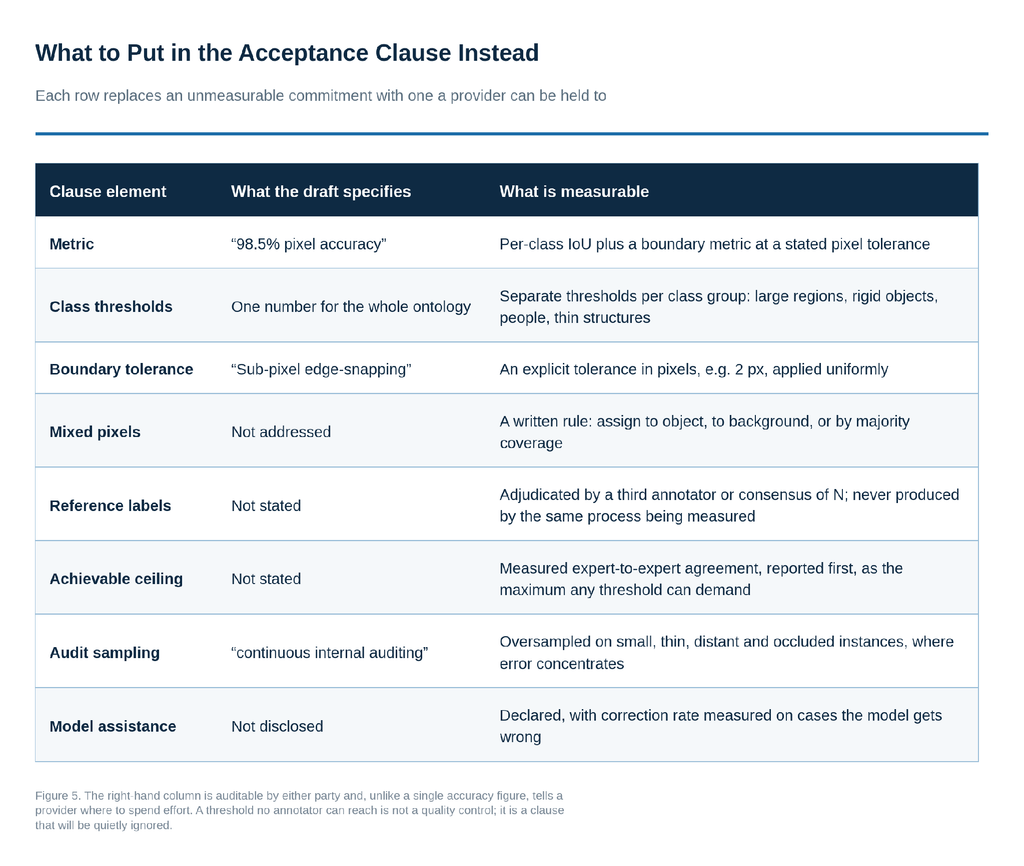
Figure 5. Replacing unmeasurable commitments with auditable ones.
Each of these is a small change to the wording and a large change to what the parties can actually hold each other to. A threshold no annotator can reach is not a strict quality control but a clause that both sides will learn to ignore, and ignored clauses are how disputes start eighteen months into a programme rather than during negotiation.
What Operational Risks and Tradeoffs Must Procurement Teams Navigate?
The main risks are an unmeasurable acceptance standard, an ontology whose ambiguity is blamed on the annotators, audits that sample uniformly when error concentrates in small and occluded instances, and undisclosed model assistance that turns agreement into a measure of compliance rather than accuracy.
Ontology Ambiguity Is Usually the Buyer’s Problem
Rework loops attributed to offshore misinterpretation frequently originate in a handbook that never resolved the hard cases: where a boundary sits on a motion-blurred edge, how much of an object must be visible before it is labelled, how to treat reflections, shadows and transparent surfaces. Distributed pods expose that ambiguity faster than a co-located team because they cannot resolve it by asking across a desk. The handbook is a joint deliverable, and the pilot’s real purpose is to find the cases it does not cover.
Where Error Actually Concentrates
Research on human annotator performance finds that people are measurably better at detection than at segmentation, and that they commit more false negatives than false positives, missing objects more often than inventing them. Both findings point the same way for audit design: sample disproportionately from small, thin, distant and occluded instances, and check for omissions specifically rather than only grading the boundaries of objects that were labelled. A uniform sample of a frame is mostly a sample of floor.
Security and Data Protection
Leading Philippine facilities enforce data loss prevention policies, isolated clean rooms with disabled removable media, biometric access control and zero-trust network access, commonly alongside ISO 27001 certification and SOC 2 attestation. Buyers should verify the scope of a certificate rather than its existence, since scope is what determines whether it covers the delivery floor. Where imagery contains identifiable people or number plates, the buyer’s own obligations are engaged: transfers of European personal data require standard contractual clauses or another Article 46 mechanism, because the Philippines does not hold a European Commission adequacy decision.
What Does Pixel-Level Annotation Cost?
Fully loaded technical annotation and engineering support ranges from $10 to $16 per hour, roughly $1,730 to $2,770 per seat per month at 173 hours. Onboarding covering ontology alignment, toolchain integration and pilot testing typically spans four to six weeks.
A dedicated full-time equivalent model does offer steadier monthly cost than per-item rates, but predictability is a choice about which quantity is fixed rather than a property of the model. An FTE contract fixes the cost and lets throughput vary; a per-item contract fixes the unit price and lets the monthly total vary. Whichever is chosen, the useful discipline is to measure actual throughput on the client’s own imagery during the pilot, because the break-even between the two structures is set by that number and by nothing else.
Why Do Global Enterprises Partner with Cynergy BPO for Technical Outsourcing?
Because the decisive question is what quality will mean in the contract, and it has to be settled before providers are compared. Cynergy BPO fixes the metric, establishes the achievable ceiling, sets thresholds per class group and checks whether model assistance is in use, then matches against more than 100 vetted Philippine providers.
Who Is Cynergy BPO?
Cynergy BPO is a specialised, vendor-neutral advisory and consultancy that partners with more than 100 carefully vetted BPO and back-office service providers across the Philippines. Its focus is the structured evaluation and selection of outsourcing partners for organisations whose requirements are technical rather than purely transactional, including computer vision annotation, perception data operations and robotics engineering support.
Pixel-level annotation is the foundation of robotic spatial intelligence. When enterprises partner with Cynergy BPO, we bypass traditional sales brokers to match them with Philippine technical providers whose data security, toolchain mastery, and quality rigor match elite global standards.
John Maczynski, CEO, Cynergy BPO
How Does Cynergy BPO Differ from Traditional Outsourcing Brokers?
A broker’s shortlist reflects which providers it can place work with. An advisory shortlist should reflect which providers can meet a specified requirement, and should say plainly when the requirement itself cannot be met by anyone. In this category that matters more than usual: a buyer asking for 98.5% accuracy without naming a metric will receive agreement from every provider approached, and will learn nothing that distinguishes them.
How Does Cynergy BPO’s Network of 100+ Vetted Philippine BPO Providers Benefit Organizations?
Providers differ in ways a capability list does not reveal: depth on a specific annotation platform rather than familiarity with several, whether clean rooms are physically isolated or nominally designated, how annotators are trained on a particular ontology rather than on segmentation generally, and whether model-assisted workflows are used and disclosed. A network of that size lets these be treated as hard constraints, and supports comparison on the measures that predict delivery, including measured throughput on the client’s own imagery and inter-annotator agreement within the provider’s own team.
How Does Cynergy BPO’s Advisory-Led Vendor Matching Process Work?
The sequence is deliberate. The first three steps decide what quality will mean in the contract; the last two decide who can deliver it.
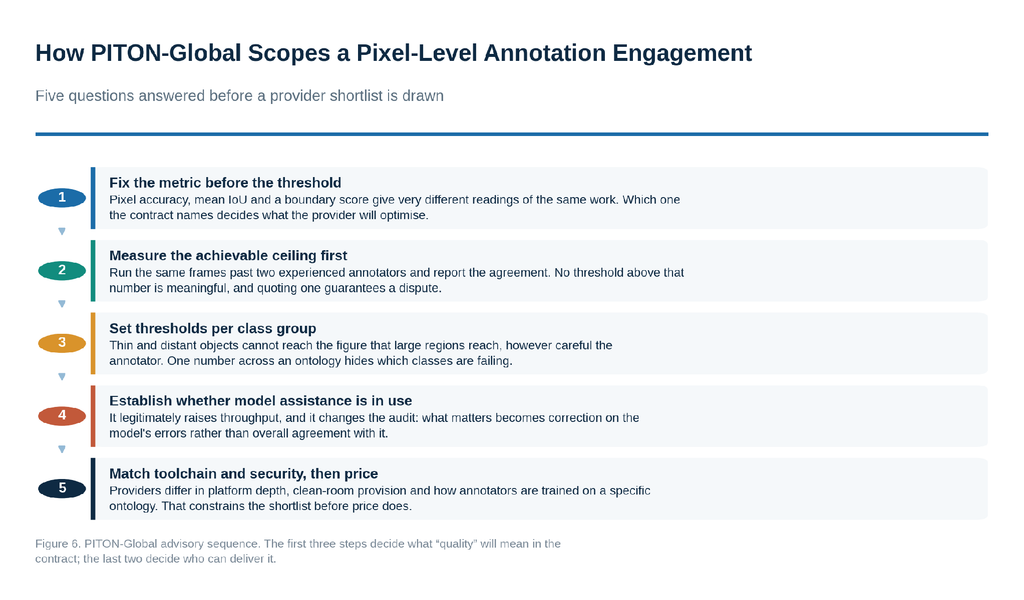
Figure 6. The advisory sequence, from metric to shortlist.
Why Do Organizations Use Cynergy BPO?
Because the expensive errors in this category are made in the specification and are cheap to correct beforehand. Naming the metric, measuring the ceiling, setting per-class thresholds and establishing whether a model is proposing the masks are all decisions that shape the statement of work and that no provider has an incentive to raise unprompted. Objective market intelligence and structured matchmaking then reduce transition risk against a requirement that is sound to begin with.
Frequently Asked Questions
What technical tools should Philippine annotation providers be proficient in?
CVAT, LabelImg, Roboflow, Segment Anything and client-provided suites are the common toolchain. Depth on the platform a client actually uses matters more than breadth across several, and if Segment Anything or a similar model is used for pre-labelling, that should be disclosed because it changes how quality is measured.
What accuracy metric should we specify?
Per-class IoU together with a boundary metric evaluated at a stated pixel tolerance. Avoid overall pixel accuracy, which is dominated by large background regions, and avoid a single threshold across the ontology, since thin and distant objects cannot reach figures that large regions reach easily.
How do we know whether a threshold is achievable?
Measure it. Send identical frames to two of the provider’s experienced annotators independently and report their agreement per class. That figure is the ceiling, and any contractual threshold above it will be met by adjusting the measurement rather than the work.
How are edge cases and occluded objects handled during segmentation?
Through a pre-approved annotation handbook stating explicit rules for occlusion, blur tolerance, minimum visible extent and boundary interpolation. The handbook is a joint deliverable: most rework attributed to offshore misinterpretation traces back to cases the handbook never resolved, and the pilot’s purpose is to find them.
How do Philippine providers protect proprietary image and video datasets?
Through data loss prevention protocols, isolated secure clean rooms, disabled removable media, biometric access control and non-disclosure agreements, commonly alongside ISO 27001 certification and SOC 2 attestation. Verify the scope of any certificate rather than its existence, since scope determines whether it covers the delivery floor.
What is the typical onboarding timeline for a pixel-level annotation squad?
Four to six weeks covering ontology alignment, toolchain integration and pilot testing. The pilot should produce two numbers before full ramp: measured throughput on the client’s own imagery, and inter-annotator agreement within the provider’s team.
What pricing model works best for continuous annotation?
Dedicated full-time equivalent monthly pricing gives a steadier monthly cost, at roughly $1,730 to $2,770 per seat. It fixes cost and lets throughput vary, where per-item pricing fixes the unit price and lets the monthly total vary. Which is better depends on measured throughput, so settle that in the pilot rather than in the negotiation.
What should we settle before approaching providers?
Which metric will govern acceptance, and what agreement two experienced annotators actually achieve on the relevant classes. Those two answers determine every threshold in the contract and should be settled before price is discussed.
Share This
Unlock cost-efficient growth with expert BPO guidance!
Partner with Cynergy BPO to connect with top outsourcing providers.
Streamline operations, cut costs, and scale your business with confidence.
Book a Free Call
Ralf Ellspermann - CSO
Author
Ralf Ellspermann is the Chief Strategy Officer (CSO) of Cynergy BPO and a globally recognized authority in business process and contact center outsourcing. With more than 25 years of experience advising enterprises and SMEs, he provides strategic guidance on vendor selection, CX optimization, and scalable outsourcing strategies across global markets. His expertise spans fintech, ecommerce and retail, healthcare, insurance, travel and hospitality, and technology (AI & SaaS) outsourcing.
A frequent speaker at leading industry conferences, Ralf is also a published contributor to The Times of India and CustomerThink, where he shares insights on outsourcing strategy, customer experience, and digital transformation.