



By: Ralf Ellspermann
25-Year, Multi-Awarded BPO Veteran
Published: 12 October 2026

Reviewed By: John Maczynski
Former EVP, World's Largest Contact Center
Updated: 12 October 2026
Philippine teams support exception handling by advising robots that have already brought themselves to a safe state, not by steering them remotely. Manila to San Francisco has a 181-millisecond network floor and a human needs roughly 700 milliseconds more, so the safety reflex stays onboard and the judgment call goes offshore.
Key Takeaways
- The safety-critical loop must never cross the ocean. Collision avoidance, speed limiting and the safe stop are onboard functions that have to hold when the link fails. Everything an offshore desk does begins after the robot is already safe.
- A sub-200-millisecond human intervention is not achievable from anywhere. The network floor from Manila to San Francisco is about 181 milliseconds and simple human visual reaction time is about 250 milliseconds. The full loop runs near one second.
- Fully loaded specialised technical exception-handling and teleoperation staffing ranges from $10 to $16 per hour. Round-the-clock cover needs three shifts, and the night portion carries a statutory differential on top of the base rate.
- Desk size is set by exception rate and handle time, not by headcount. At 0.2 exceptions per robot-hour and three minutes of handling, roughly thirteen operators on desk supervise about 890 robots. At one exception per robot-hour the same desk covers 356.
- A high-uptime fleet is the hardest kind of desk to staff. A 99.98% uptime target implies a few dozen exceptions per robot-year, and detection performance in sustained monitoring falls measurably within the first fifteen to thirty minutes, more so when events are rare.
- Advisory-led matching aligns the architecture with the provider. Which tier of work is genuinely offshorable, and at what measured exception rate, should constrain the shortlist before price does.
Can a Philippine Desk Resolve a Robot Exception in Under 200 Milliseconds?
No, and neither can a desk anywhere else. The network round trip from Manila to San Francisco is about 181 milliseconds before a pixel is encoded, and human visual reaction time starts near 250 milliseconds. A realistic glass-to-glass loop runs close to one second.
This is the most consequential number in the category, and it is routinely stated as a service tier rather than tested against physics. The figure of 200 milliseconds is a plausible budget for an onboard controller. Applied to a service whose defining feature is a person in the middle, it describes something that cannot exist.
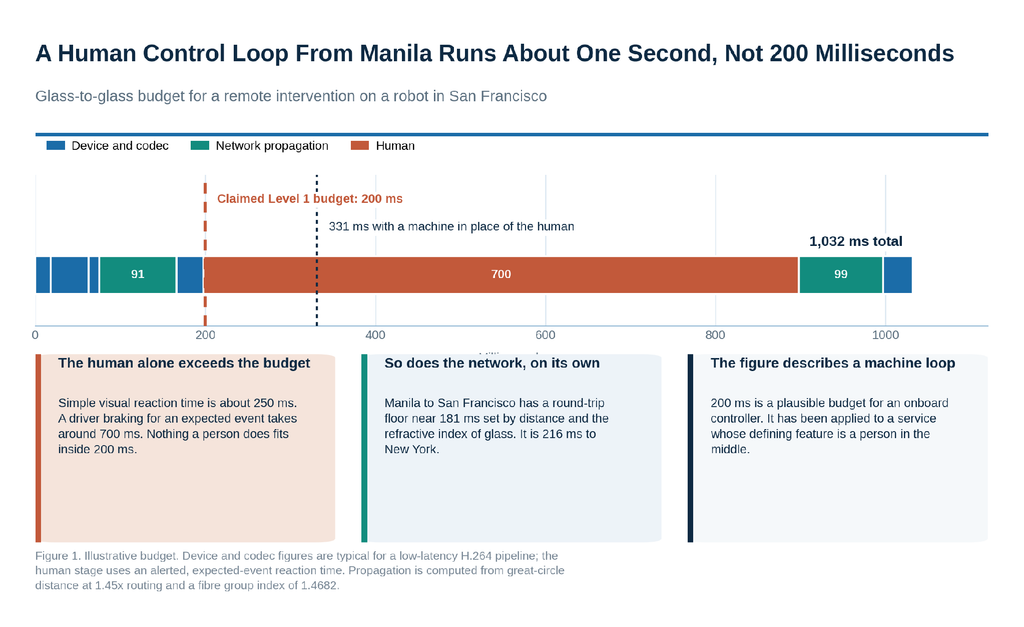
Figure 1. The glass-to-glass budget for a remote intervention.
The loop decomposes into stages that are each individually modest and collectively decisive: camera capture and exposure, video encoding, uplink to the nearest edge, transoceanic transit, decode and display at the operator’s station, the operator’s own perception and decision, the command’s return journey, and actuation on the robot. Even replacing the human with a machine, the remaining stages total around 331 milliseconds, already more than the stated budget. With a person in place the total approaches 1,030 milliseconds.
Human reaction time deserves particular attention because it is the stage most often omitted. Simple visual reaction, pressing a key when a light flashes, takes about 250 milliseconds. A choice between several responses takes around 450. A driver braking for an expected event takes roughly 700 milliseconds, and for an unexpected one closer to 1,250. Assessing an unfamiliar scene and selecting a path is a multi-second task. No human activity fits inside 200 milliseconds, which means the specification is not demanding but impossible, and a provider who agrees to it has not read it.
Why Do Leased Lines and Video Compression Not Solve This?
A private circuit removes congestion and jitter, not propagation delay. The Manila to San Francisco floor is set by distance and the refractive index of glass. Video compression trades bandwidth for latency in the wrong direction: a quality codec preset adds more delay than the entire stated budget.
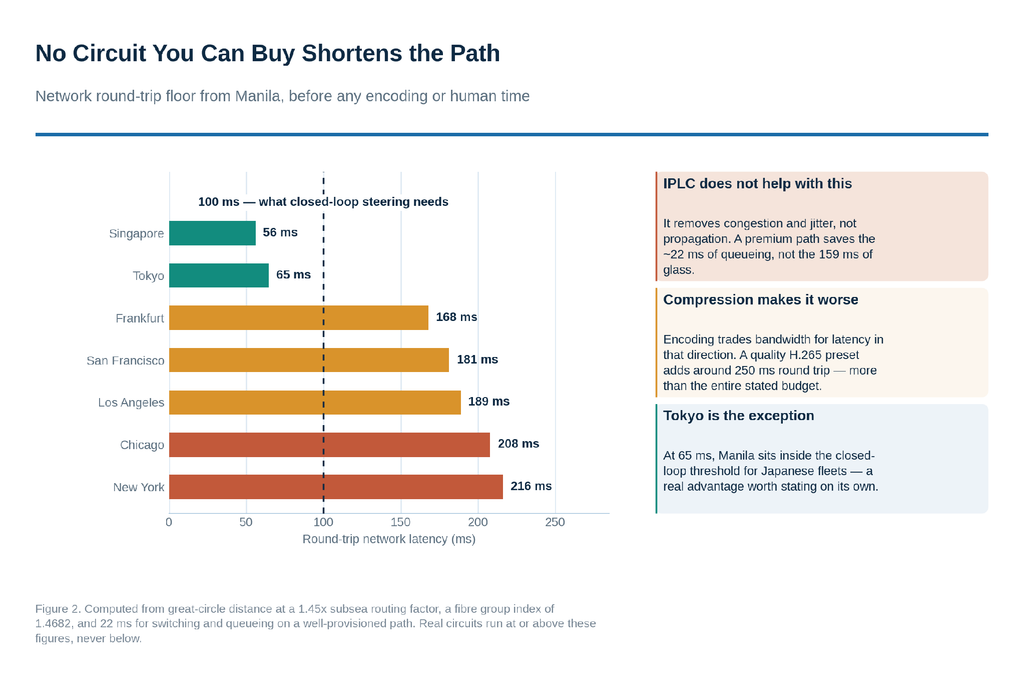
Figure 2. The distance floor, and what it permits.
Dedicated international private leased circuits and carrier-diverse fibre are genuinely valuable. They remove variance, protect against congestion collapse, and survive a cable cut. What they cannot do is shorten the path. Light travels through single-mode fibre at about two-thirds of its vacuum speed, and subsea routing adds roughly 45% to the great-circle distance. On a well-provisioned path, perhaps 22 milliseconds of the Manila to San Francisco round trip is switching and queueing, which a premium circuit can largely remove. The remaining 159 milliseconds is glass, and no commercial product shortens it.
Edge compression is the more serious misdirection, because it is offered as a latency remedy when it is a bandwidth remedy. Encoding and decoding cost time. A low-latency H.264 configuration with B-frames disabled might add 37 milliseconds round trip. A conventional H.264 pipeline adds around 165. A quality H.265 preset adds roughly 250, which alone exceeds the tier’s whole budget. Compressing harder to save bandwidth makes the control loop slower, so the two goals have to be traded explicitly rather than presented as one improvement.
Where the Geography Does Work in the Philippines’ Favour
The Manila to Tokyo round trip is about 65 milliseconds, comfortably inside the threshold that tighter control loops require. For Japanese and wider Asia-Pacific robotics fleets this is a real and specific advantage, and it is stronger stated on its own than blended into a general claim about global responsiveness. A provider serving a Japanese fleet is in a materially different latency position from one serving a Californian fleet, and the two should not be quoted against the same service tier.
What Should the Tier Model Actually Look Like?
It needs a tier zero that most published models omit: the onboard reflex. Collision avoidance, speed limiting and the safe stop are local functions that must hold when the link fails. The offshore desk begins at tier one, advising a robot that has already stopped safely.
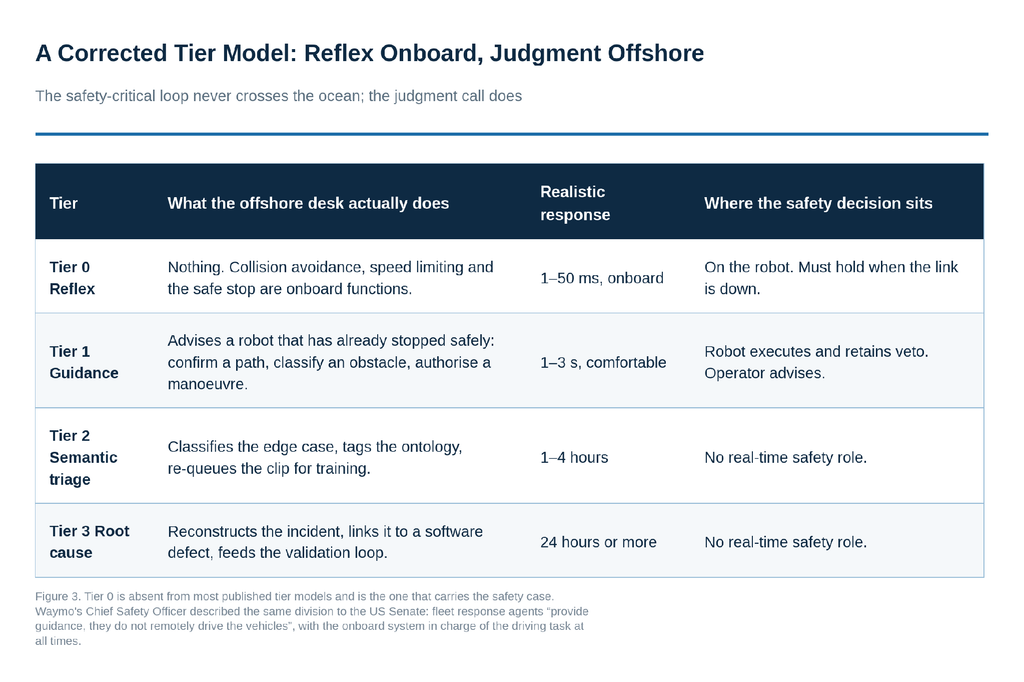
Figure 3. A corrected tier model.
The omission matters most for emergency stop. A functional safety stop has to reach the safe state when the communication channel fails, not only when it works, and a remote stop routed across a transoceanic link has the failure mode exactly inverted: the moment the link drops is both when the stop is most needed and when the command cannot arrive. Loss-of-link behaviour therefore has to be autonomous. The robot watches for a heartbeat, and after two or three missed beats, typically 100 to 300 milliseconds, enters its own safe state without being told to.
This is not a theoretical position. Waymo’s Chief Safety Officer, Mauricio Peña, described the same division to the United States Senate: the company’s fleet response agents, some based in the Philippines, “provide guidance, they do not remotely drive the vehicles,” and the onboard system “is in control of the vehicle at all times.” That is the architecture that survives scrutiny, and it is also the one Philippine desks genuinely execute well.
What the Achievable Latency Does Support
Reframed honestly, a one-second loop is entirely adequate for the work that actually needs a person. A robot that has stopped at an ambiguous obstacle is not in a time-critical state; it is in a safe state waiting for a judgment it cannot make. Confirming a path, classifying an unfamiliar object, authorising a manoeuvre past an unexpected barrier and re-routing around a blocked aisle are all tasks where a second of latency is imperceptible. The offshore desk’s value is judgment under ambiguity, and ambiguity is not resolved in milliseconds by anyone.
How Many Operators Does a Fleet Actually Need?
It depends on the exception rate and handle time, not on fleet size directly. A 45-person squad across three shifts holds roughly thirteen operators on desk at any moment. At 0.2 exceptions per robot-hour and three minutes of handling that supervises about 890 robots; at one per robot-hour, about 356.
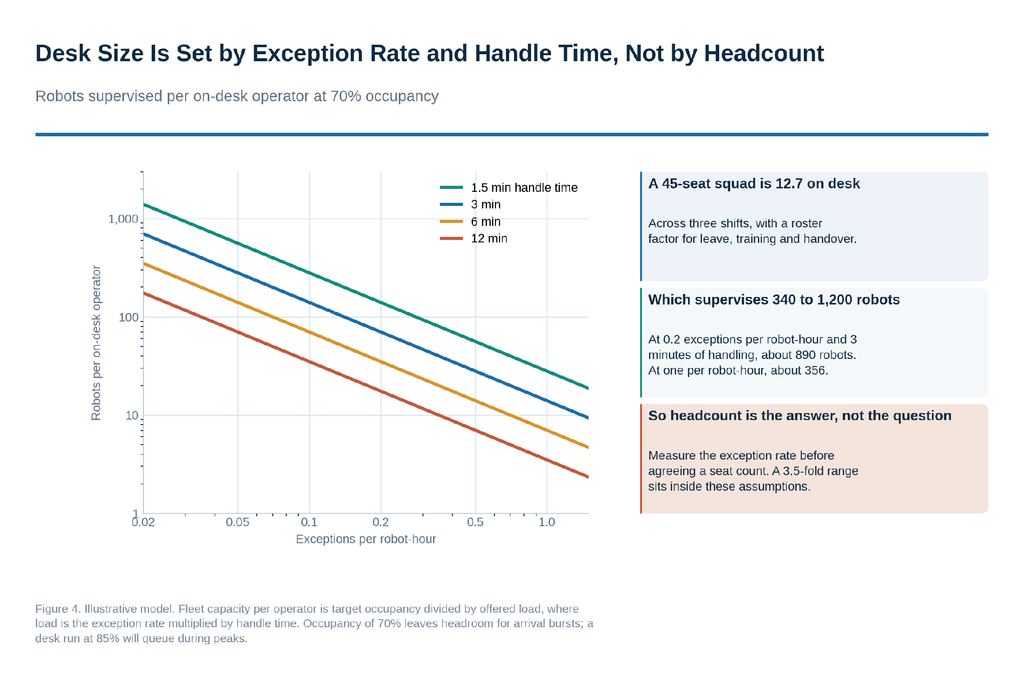
Figure 4. Robots supervised per on-desk operator.
The offered load per robot is the exception rate multiplied by the handle time, which gives a figure in erlangs. Divide a target occupancy by that load and the result is how many robots each on-desk operator can carry. Running the desk at 70% occupancy rather than 85% leaves headroom for the bursts that arrive when a whole site hits the same novel obstacle, and a desk sized at 85% will queue during exactly those peaks.
The practical consequence is that a seat count agreed before the exception rate has been measured is a guess. A 3.5-fold range of desk sizes sits inside entirely plausible assumptions about rate and handle time, which is larger than any pricing difference between providers. The first deliverable of a pilot should be the measured exception rate on the client’s own fleet, in the client’s own environments, because warehouse aisles, pavements and public roads produce very different numbers.
Reading the Case Study Arithmetic
Where internal engineers are reported to spend a third of their night shifts resolving navigation deadlocks, the recovered engineering time alone rarely funds a 45-seat round-the-clock desk. Eighteen engineers losing 35% of night capacity is roughly $1.2M a year at fully loaded onshore rates, and a 45-seat pod at $13 an hour is roughly the same. The engagement is justified by coverage and scale, by supervising a fleet the internal team could not watch at all, rather than by the hours it hands back. Stating it that way survives a finance review; stating it as a labour arbitrage does not.
What Risks and Tradeoffs Must Enterprises Consider?
The main risks are specifying a latency tier that physics does not permit, placing a safety function at the end of a network link, agreeing a seat count before measuring the exception rate, and treating operator fatigue as a break-scheduling problem when it is a vigilance problem.
The Vigilance Problem Is Worse on a Good Fleet
Sustained monitoring of a rare-event stream degrades in a well-documented way. Detection performance falls measurably within the first fifteen minutes, and classic vigilance research records a 10 to 15% decline over the first thirty, continuing more gradually thereafter. Critically, a lower event rate makes the decrement more pronounced, not less.
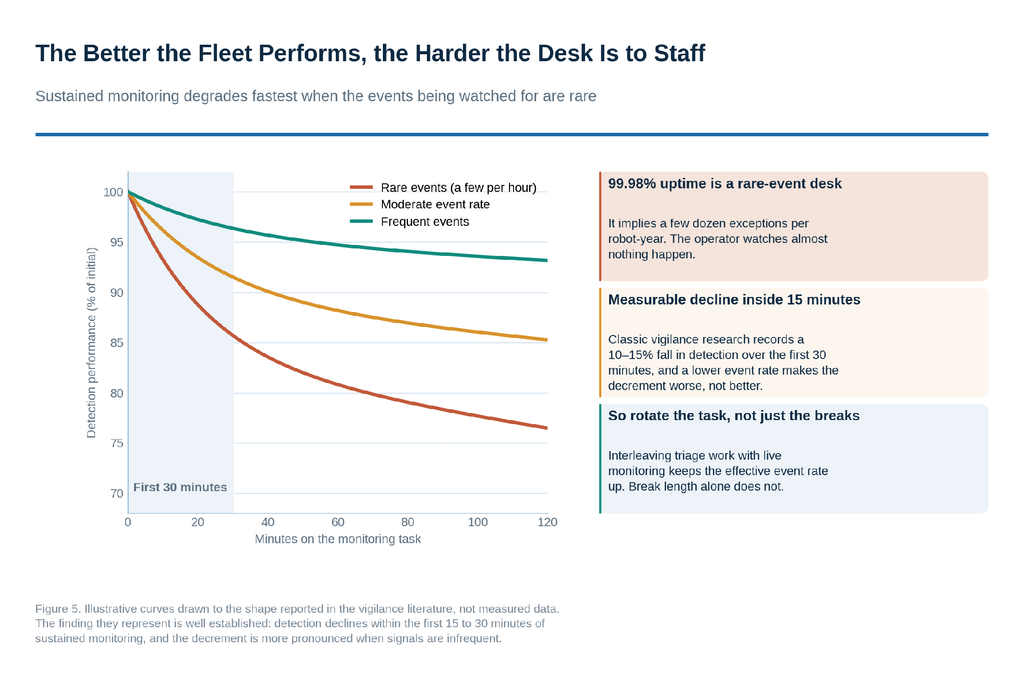
Figure 5. Detection declines fastest when events are rare.
This produces an uncomfortable result. A fleet performing at 99.98% uptime generates only a few dozen exceptions per robot-year, so an operator supervising it watches almost nothing happen for hours at a time. That is the hardest possible monitoring condition, and it is created by success rather than by failure. The mitigation is not longer breaks but a different task design: interleaving semantic triage and review work with live monitoring keeps the effective event rate up and the operator engaged with the same domain. Rotation off the monitoring task matters more than rotation within the shift.
Classification Drift and the Training Set
Tier two work feeds the training corpus, so inconsistent edge-case classification does not merely produce a bad ticket; it corrupts the dataset the fleet will learn from. Standardised annotation handbooks, automated audit trails and a validation gate before newly classified cases enter the training branch are the controls that matter. Offshore teams are frequently blamed for drift that originates in an ambiguous ontology, so the handbook is a joint deliverable rather than a provider obligation.
Infrastructure, Continuity and Security
Philippine enterprise facilities maintain carrier-diverse fibre and redundant power, which matters during the regional typhoon season, though buyers should ask for tested failover time and generator fuel autonomy rather than the presence of equipment. Video feeds and telemetry are protected through data loss prevention policies, isolated secure rooms, zero-trust network access and non-disclosure agreements, commonly alongside ISO 27001 certification and SOC 2 attestation. Because teleoperation video routinely captures identifiable people, buyers carry their own obligations: transfers of personal data from the European Union require standard contractual clauses or another Article 46 mechanism, since the Philippines does not hold a European Commission adequacy decision.
What Does Round-the-Clock Exception Handling Cost and How Long Does It Take to Stand Up?
Fully loaded specialised exception-handling and teleoperation staffing ranges from $10 to $16 per hour, roughly $1,730 to $2,770 per seat per month at 173 hours. Continuous cover requires three shifts, and platform-specific operator training typically spans four to six weeks before live deployment.
Two adjustments make the band usable. Article 86 of the Philippine Labor Code requires a night shift differential of not less than 10% of the regular wage for each hour worked between 22:00 and 06:00, and a genuine 24/7 desk has two of its three shifts substantially inside that window, so the effective blended rate sits above the headline. And simulation-based training on the client’s own platform before live deployment is what removes the initial error variance; it is the difference between an operator who knows the handbook and one who has seen the failure modes, and it should be contracted explicitly rather than assumed.
Why Do Global Enterprises Partner with Cynergy BPO for Technical Outsourcing?
Because the first question in this category is architectural rather than commercial: which tier of work can be offshored at all. Cynergy BPO separates the onboard reflex from the offshore judgment call, measures the exception rate before sizing a desk, and matches the result against more than 100 vetted Philippine providers.
Who Is Cynergy BPO?
Cynergy BPO is a specialised, vendor-neutral advisory and consultancy that partners with more than 100 carefully vetted BPO and back-office service providers across the Philippines. Its focus is the structured evaluation and selection of outsourcing partners for organisations whose requirements are technical rather than purely transactional, including robotics operations, teleoperation support and perception data engineering.
Human-in-the-loop exception handling is the vital safety net of autonomous systems. When enterprises partner with Cynergy BPO, we match them with Philippine technical providers whose network resilience and teleoperation rigor meet the stringent safety demands of global robotics leaders.
John Maczynski, CEO, Cynergy BPO
How Does Cynergy BPO Differ from Traditional Outsourcing Brokers?
A broker’s shortlist reflects which providers it can place work with. An advisory shortlist should reflect which providers can meet a specified requirement, and should say plainly when the requirement itself is unsound. In this category that distinction carries real weight: a buyer asking for sub-200-millisecond remote intervention is asking for something no provider on earth can supply, and the useful response is to redesign the tier model rather than to find a vendor willing to sign.
How Does Cynergy BPO’s Network of 100+ Vetted Philippine BPO Providers Benefit Organizations?
Providers differ in ways a capability statement does not reveal: whether circuit diversity is genuine or nominal, what the tested generator autonomy is, whether secure rooms are physically isolated, and how operators are trained and certified on a specific robot platform. A network of that size allows infrastructure and operator vetting to be treated as hard constraints, and supports comparison on the dimensions that determine delivery, including measured exception handle time and the attrition of night-shift staff reported separately from day staff.
How Does Cynergy BPO’s Advisory-Led Vendor Matching Process Work?
The sequence is deliberate. The first step settles what may be offshored at all; the rest size it and price it.
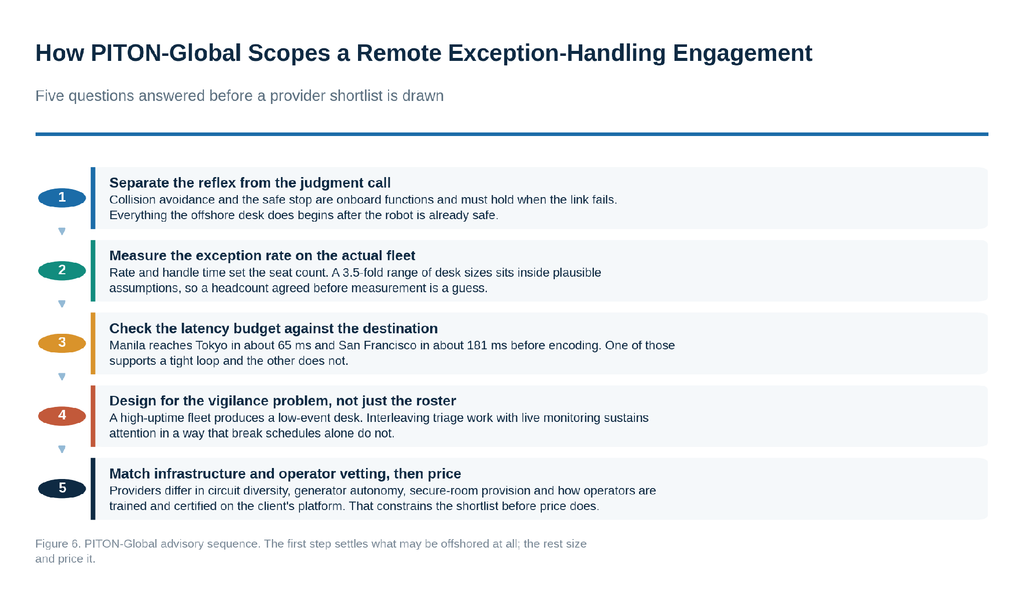
Figure 6. The advisory sequence, from architecture to shortlist.
Why Do Organizations Use Cynergy BPO?
Because the expensive errors here are made in the specification, and they are cheap to correct beforehand. Separating the reflex from the judgment call, measuring the exception rate on the real fleet, checking the latency budget against the destination rather than the provider, and designing for vigilance rather than for break schedules are all decisions that shape the statement of work. Objective market intelligence and structured matchmaking then reduce transition risk against a requirement that is sound to begin with.
Frequently Asked Questions
What bandwidth and latency do Philippine facilities maintain for teleoperation?
Enterprise facilities run symmetrical gigabit-plus fibre with diverse carriers, which controls jitter and congestion. Propagation is set by distance: roughly 65 milliseconds round trip to Tokyo, 181 to San Francisco and 216 to New York before any encoding. Buyers should specify the destination, because the same facility gives very different figures for different fleets.
Can offshore operators perform emergency stops?
They should not be the mechanism. A safety stop must reach the safe state when the link fails, which is precisely when a remote command cannot arrive. The robot should detect a missing heartbeat within 100 to 300 milliseconds and enter its safe state autonomously. The offshore desk then advises on recovery.
How are offshore exception-handling operators trained on specific robot platforms?
Through four to six week programmes built around the client’s simulation environment, vehicle dynamics and triage handbook. Simulation exposure before live deployment is what removes initial error variance, and it is worth contracting as a named deliverable rather than assuming it.
What shift models ensure continuous 24/7 coverage?
Three shifts with overlapping handovers. Two nine-hour shifts cannot span a full day at any overlap, so genuine round-the-clock cover is a three-shift commitment. Handover periods should be staffed rather than assumed, since most continuity failures occur at the seam.
How do Philippine providers protect video feeds and proprietary telemetry?
Through data loss prevention policies, isolated secure rooms, zero-trust network access and non-disclosure agreements, commonly alongside ISO 27001 certification and SOC 2 attestation. Because teleoperation video captures identifiable people, buyers should also confirm their own transfer basis, including an Article 46 mechanism for European personal data.
What pricing structures cover 24/7 teleoperation and exception management?
Dedicated full-time equivalent monthly pricing bundling operator labour, supervisory oversight and infrastructure is standard, at roughly $1,730 to $2,770 per seat per month. The night differential required for hours between 22:00 and 06:00 should be shown separately rather than absorbed into a single blended rate.
How do providers manage operator fatigue during high-concentration night shifts?
Break schedules, ergonomic stations and premium compensation are the usual answers and are necessary but insufficient. The sharper control is task rotation: interleaving triage and review work with live monitoring keeps the effective event rate up, which addresses the vigilance decrement directly. Ask how the desk sustains attention when very little is happening.
What should we settle before approaching providers?
Which tier of work is genuinely offshorable given the destination latency, and what the measured exception rate is on the actual fleet. Those two answers determine the architecture, the seat count and the cost base, and they should be settled before price is discussed.
Share This
Unlock cost-efficient growth with expert BPO guidance!
Partner with Cynergy BPO to connect with top outsourcing providers.
Streamline operations, cut costs, and scale your business with confidence.
Book a Free Call
Ralf Ellspermann - CSO
Author
Ralf Ellspermann is the Chief Strategy Officer (CSO) of Cynergy BPO and a globally recognized authority in business process and contact center outsourcing. With more than 25 years of experience advising enterprises and SMEs, he provides strategic guidance on vendor selection, CX optimization, and scalable outsourcing strategies across global markets. His expertise spans fintech, ecommerce and retail, healthcare, insurance, travel and hospitality, and technology (AI & SaaS) outsourcing.
A frequent speaker at leading industry conferences, Ralf is also a published contributor to The Times of India and CustomerThink, where he shares insights on outsourcing strategy, customer experience, and digital transformation.