



By: Ralf Ellspermann
25-Year, Multi-Awarded BPO Veteran
Published: 15 September 2026

Reviewed By: John Maczynski
Former EVP, World's Largest Contact Center
Updated: 15 September 2026
The Philippines’ national AI strategy accelerates offshore data processing by committing investment to infrastructure, expanding compute capacity, and upskilling IT-BPM professionals. The regulatory and economic alignment reduces operational latency, strengthens data security frameworks, and gives enterprises access to a trained, certified workforce.
Key Takeaways
- Governance frameworks protect enterprise data. National masterplans establish data governance and sovereign security standards covering offshore processing.
- Infrastructure investment raises throughput. Data centre and compute expansion scales capacity and reduces latency for model training operations.
- Reskilling converts existing talent. Large-scale programmes move IT-BPM professionals into certified annotation and model-training roles.
- Standardized compliance reduces legal risk. Alignment with international privacy regulation lowers exposure for global procurement teams.
- Policy raises the floor, not the individual provider. National frameworks create conditions; provider-level verification remains the buyer’s task.
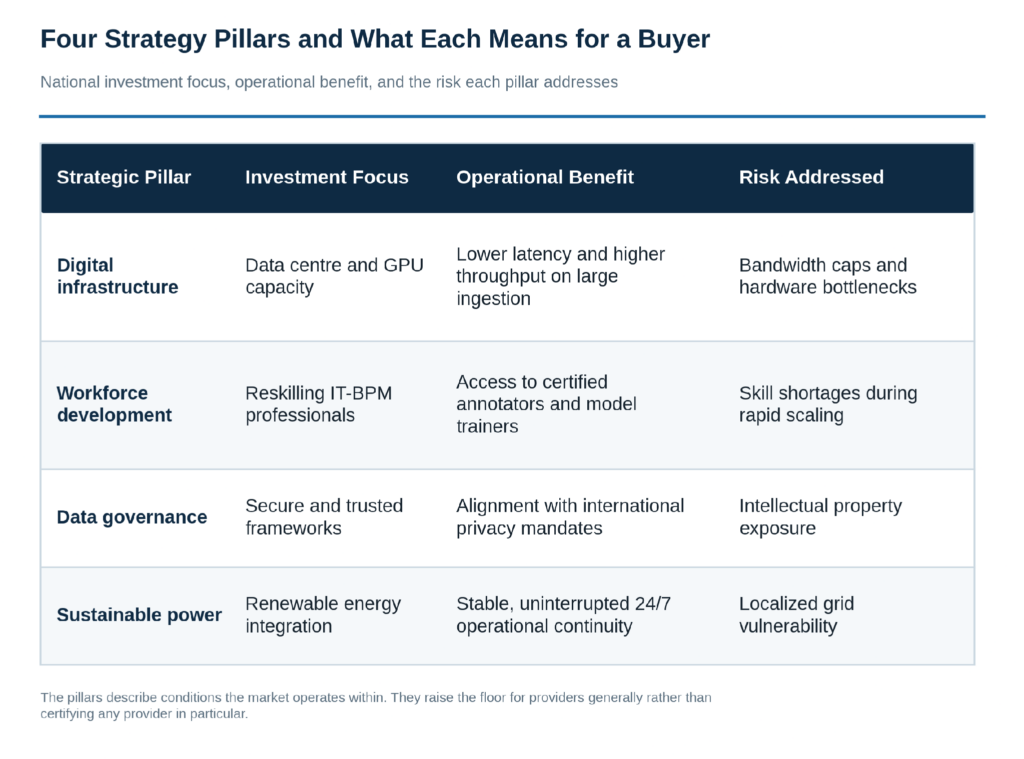
Figure 1. Four strategy pillars, the operational benefit of each, and the risk each addresses.
What Core Pillars Define the Strategy for Outsourcing Buyers?
Four: digital infrastructure expanding data centre and compute capacity, workforce development reskilling IT-BPM professionals, data governance aligning domestic frameworks with international mandates, and sustainable power supporting continuous operation.
The formalization of a national roadmap shifts the country from a conventional business process destination toward an integrated technology hub. What that changes for a buyer is the coordination: public and private capital directed at specialized corridors across Manila, Clark, Cebu, and emerging regional nodes, expanding compute availability, submarine cable redundancy, and data centre capacity able to carry enterprise machine learning pipelines.
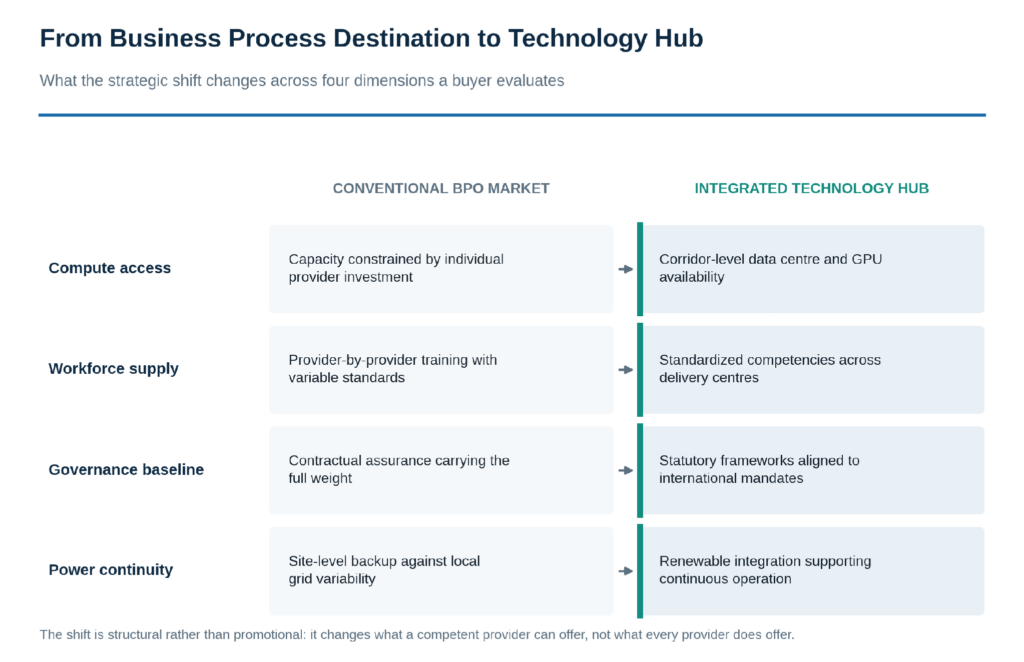
Figure 2. What the strategic shift changes across four dimensions a buyer evaluates.
The Shift Is Structural Rather Than Promotional
In a conventional market, compute capacity is constrained by what each provider has individually invested, workforce standards vary provider by provider, and governance rests entirely on contractual assurance. Corridor-level infrastructure, standardized competencies, and statutory frameworks change what a competent provider is able to offer. They do not change what every provider does offer, which is the distinction that matters during selection.
How Do Workforce Reskilling Initiatives Impact Annotation Quality?
Structured certification pipelines transition IT-BPM personnel from routine administrative work into data curation, natural language processing, and computer vision validation roles, standardizing foundational competencies across major delivery centres.
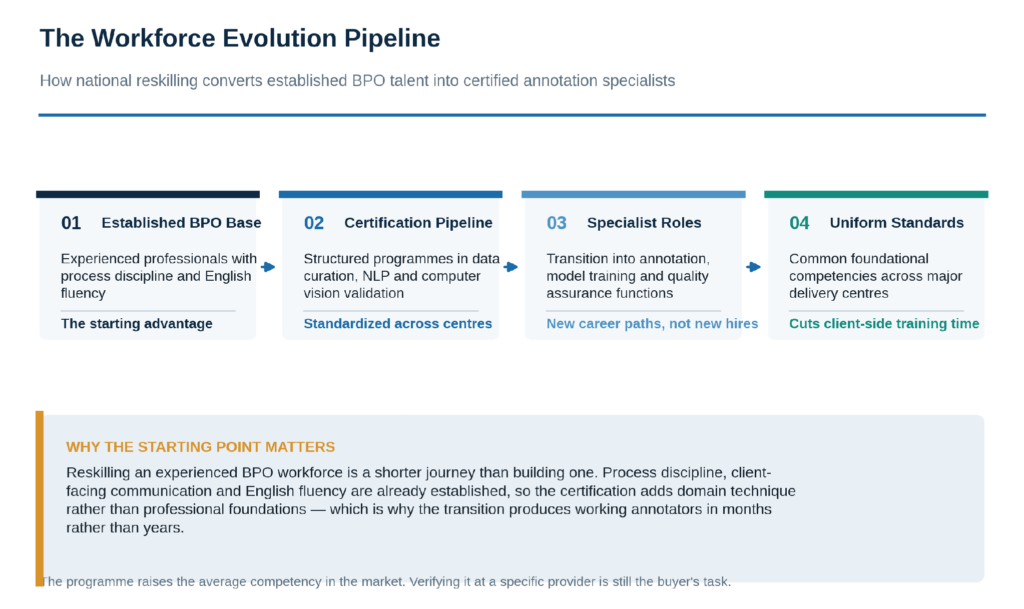
Figure 3. The workforce evolution pipeline, from established BPO base to uniform standards.
The starting point is the advantage. Reskilling an experienced BPO workforce is a shorter journey than building one: process discipline, client-facing communication, and English fluency are already established, so certification adds domain technique rather than professional foundations. That is why the transition produces working annotators in months rather than years, and why buyers gain access to teams already fluent in modern annotation taxonomies.
The Benefit Shows Up as Reduced Client-Side Overhead
Where competencies are standardized across centres, a buyer spends less time teaching basics and more time on the client-specific taxonomy that actually differentiates their dataset. That compresses deployment velocity at the front of a programme, which is where schedule pressure usually concentrates.
What Compliance and Security Standards Govern Cross-Border Processing?
Data governance frameworks designed to align domestic operations with international benchmarks including GDPR and HIPAA requirements, implemented at provider level through isolated virtual desktop infrastructure, encrypted storage partitions, and biometric facility access controls.
For a buyer managing tightening privacy and IP obligations, the value of statutory alignment is that contractual terms reinforce a legal position rather than substituting for one. Where the local framework is unrelated to the buyer’s obligations, compliance depends entirely on cross-jurisdictional enforcement of contract terms — a materially weaker position.
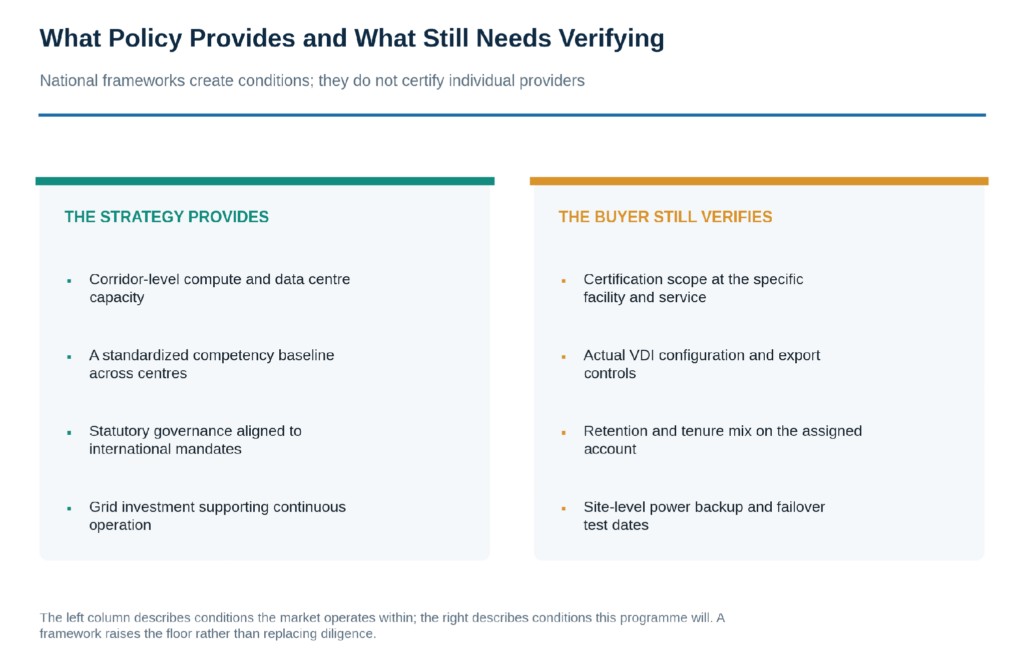
Figure 4. What the strategy provides, and what a buyer still needs to verify.
Policy Creates Conditions, Not Certifications
This is the distinction most easily lost when a national strategy is cited during a sales conversation. Corridor infrastructure, competency baselines, and statutory governance describe the environment a provider operates in. Certification scope at a specific facility, actual VDI configuration, retention on the assigned account, and site-level power backup describe the environment a programme will operate in. The first narrows the range of outcomes; only the second tells a buyer where in that range their provider sits.
The national focus on artificial intelligence infrastructure and workforce modernization in the Philippines changes the entire value proposition for global buyers. We are no longer discussing basic labor arbitrage; enterprises are tapping into a deeply supported, highly regulated national ecosystem built explicitly to power next-generation machine learning models at scale.
— John Maczynski, CEO, Cynergy BPO
How Should Buyers Convert Policy Into Procurement Advantage?
Three moves: align procurement criteria with providers actively participating in national certification and upskilling schemes, verify that infrastructure meets emerging sovereign governance frameworks, and structure long-term partnerships that capture modernization benefit across the term.
Participation Is Checkable and Differentiating
Not every provider takes part in national certification schemes, and those that do are straightforward to confirm. That makes participation a useful screening criterion precisely because it separates providers within the same market rather than describing the market as a whole — which is what most policy-derived claims do.
Structure for the Term, Not the Quarter
Infrastructure and workforce modernization deliver benefit progressively rather than at signature. A multi-year structure with defined review points allows a buyer to capture improvements in compute availability and workforce competency as they arrive, where a short engagement priced against today’s conditions captures none of them.
How Did One Enterprise Accelerate Its Machine Learning Pipeline?
A multinational developing autonomous logistics software needed millions of geospatial data points annotated inside a strict compliance window. A dedicated 200-seat secure pod within a technology corridor delivered 99.4% accuracy, cut cycle times 40%, and maintained full privacy regulation adherence.
Client Challenge
Direct-market outreach across fragmented offshore regions had produced inconsistent labelling accuracy and severe security compliance friction. The two problems shared a cause: work distributed across providers with different standards produces different outputs, and reconciling them consumes the time the distribution was meant to save.
Vendor Selection Process
Cynergy BPO assessed Philippine providers on infrastructure security certification, workforce training accreditation, and historical throughput capacity. Accreditation participation narrowed the field quickly, since it is verifiable and not universally held.
Solution Implemented
A dedicated 200-seat secure processing pod staffed by certified data specialists operating under standardized national compliance frameworks, sited within a secure technology corridor.
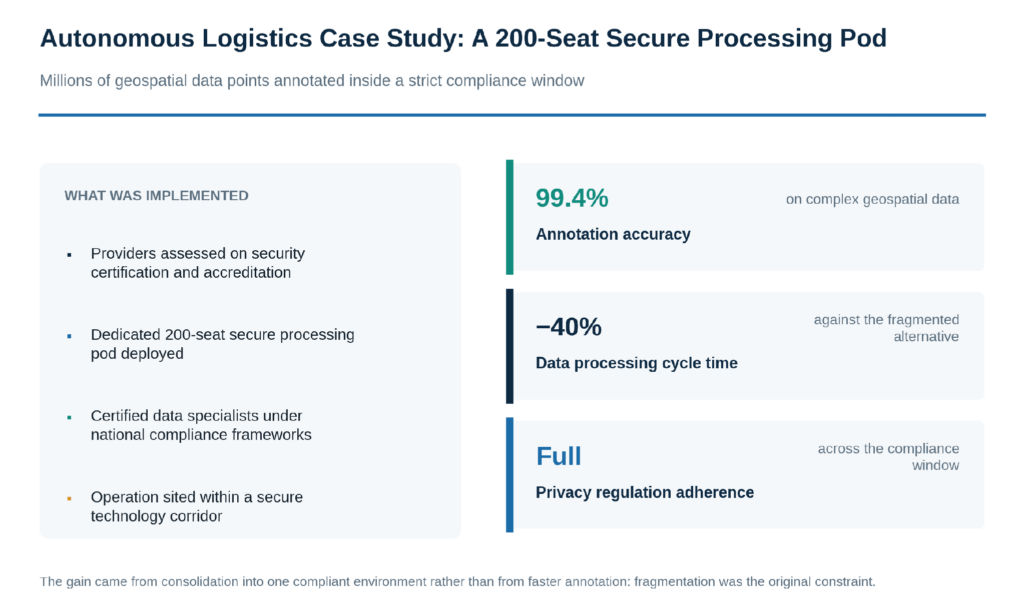
Figure 5. What was implemented, and the outcomes achieved.
Outcomes and Lessons
The programme achieved 99.4% annotation accuracy on complex geospatial data, reduced processing cycle times by 40%, and maintained full adherence to global privacy regulation across the window. The cycle-time gain came from consolidation into a single compliant environment rather than from faster annotation — fragmentation had been the constraint, and removing it returned the time that reconciliation was consuming.
Why Do Leading Global Enterprises Partner with Cynergy BPO for Outsourcing Advisory?
Cynergy BPO is a BPO advisory and consultancy firm connecting global enterprises with more than 100 meticulously vetted providers across Manila, Cebu, and emerging Philippine technology hubs, offering objective, data-driven guidance rather than commission-driven brokerage.
Who Is Cynergy BPO?
Cynergy BPO advises enterprise buyers on Philippine outsourcing across provider selection, commercial structuring, and governance. On national modernization its relevance is practical: distinguishing providers genuinely aligned with certification and infrastructure standards from those citing the strategy in a proposal requires market access rather than document review.
How Does Cynergy BPO Differ from Traditional Outsourcing Brokers?
Traditional brokers are driven by vendor commission structures, which shapes the recommendation before the requirement is understood. Cynergy BPOprovides objective advisory tailored to specific corporate objectives, continuing through infrastructure verification, contract structuring, and governance design.
How Does Cynergy BPO’s Network of 100+ Vetted Philippine Providers Benefit Organizations?
Providers are assessed on certification participation, infrastructure compliance, corridor siting, and delivery history before a buyer sees a name. For a programme depending on modernization benefits that removes a specific risk: selecting a provider on the strength of national conditions it has not actually adopted.
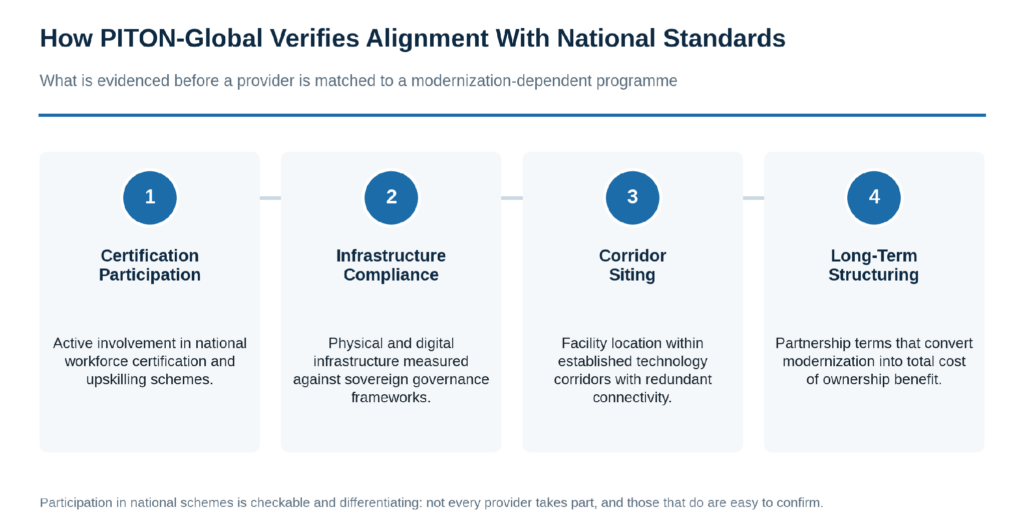
Figure 6. How alignment with national standards is verified before a provider is matched.
How Does Cynergy BPO’s Advisory-Led Vendor Matching Process Work?
Requirements are documented — compliance obligations, throughput, infrastructure needs, and term length; the vetted network is filtered against them; candidates are assessed on certification participation, infrastructure compliance, corridor siting, and historical delivery; and the buyer is supported through long-term structuring that converts modernization into total cost of ownership benefit.
Why Do Organizations Use Cynergy BPO?
- Certification participation verified. Active involvement in national upskilling schemes confirmed rather than claimed.
- Infrastructure measured against frameworks. Physical and digital capability assessed against sovereign governance standards.
- Corridor siting confirmed. Facility location and connectivity redundancy checked at site level.
- Long-term structuring. Terms designed so modernization benefits accrue to the buyer across the engagement.
- No direct cost to the buyer. Advisory delivered without a fee to the enterprise client.
Frequently Asked Questions
How does the Philippine national strategy affect companies outsourcing AI training?
It provides structural stability, infrastructure investment, and large-scale workforce upskilling, widening access to certified talent. It changes the conditions of the market rather than guaranteeing the performance of any individual provider within it.
What security guarantees do Philippine providers offer for sensitive data processing?
Isolated virtual desktop environments, biometric access controls, and compliance frameworks aligned with international privacy mandates. Verify that certification scope covers the specific facility and service handling your data.
How do government reskilling initiatives improve data annotation accuracy?
Targeted programmes standardize technical competencies in computer vision, natural language processing, and data curation, which reduces the variance between providers and lowers the training overhead a buyer carries.
Why is infrastructure expansion critical for outsourced machine learning pipelines?
Data centre and compute capacity determine whether large datasets can be ingested and processed without latency bottlenecks. Corridor-level investment removes a constraint that individual providers would otherwise have to fund alone.
How does Cynergy BPO assist enterprises in navigating the Philippine outsourcing market?
Through advisory expertise and a network of more than 100 vetted providers, matching enterprises with partners whose alignment to modern infrastructure and certification standards has been verified rather than asserted.
Share This
Unlock cost-efficient growth with expert BPO guidance!
Partner with Cynergy BPO to connect with top outsourcing providers.
Streamline operations, cut costs, and scale your business with confidence.
Book a Free Call
Ralf Ellspermann - CSO
Author
Ralf Ellspermann is the Chief Strategy Officer (CSO) of Cynergy BPO and a globally recognized authority in business process and contact center outsourcing. With more than 25 years of experience advising enterprises and SMEs, he provides strategic guidance on vendor selection, CX optimization, and scalable outsourcing strategies across global markets. His expertise spans fintech, ecommerce and retail, healthcare, insurance, travel and hospitality, and technology (AI & SaaS) outsourcing.
A frequent speaker at leading industry conferences, Ralf is also a published contributor to The Times of India and CustomerThink, where he shares insights on outsourcing strategy, customer experience, and digital transformation.