



By: Ralf Ellspermann
25-Year, Multi-Awarded BPO Veteran
Published: 30 September 2026

Reviewed By: John Maczynski
Former EVP, World's Largest Contact Center
Updated: 30 September 2026
The Philippines sits one hour behind Tokyo with no daylight saving drift, and a night shift in Manila delivers six to seven hours of overlap with the US West Coast. Fully loaded technical engineering support runs $10 to $16 per hour. The two markets require different shifts and different talent, not one arrangement.
Key Takeaways
- No single Manila shift serves both Tokyo and the US West Coast. A day shift gives nine hours with Japan and almost nothing with America. A night shift gives six to seven hours with America and nothing with Japan. Serving both is two rosters, and the case for the Philippines is that one organisation can run both.
- The Japan window never moves; the US window moves twice a year. Neither the Philippines nor Japan observes daylight saving time, so the one-hour gap is constant. The US gap alternates between sixteen and fifteen hours on dates that have no local marker in Manila.
- English and Japanese are not comparable assets. The Philippines ranks 28th worldwide on the EF English Proficiency Index and holds roughly 44,500 Japanese-language learners nationally, down 13.7% on the previous survey. One scales across a 1.9 million-person workforce; the other is a specialist recruitment problem.
- Fully loaded technical engineering and cross-functional support ranges from $10 to $16 per hour. A night-facing team carries a statutory differential on top of that, so a single blended rate across a day team and a night team misstates one of them.
- Continuous coverage and real-time overlap are bought separately. Two nine-hour shifts span at most eighteen hours of the day, and only when they never overlap. Round-the-clock execution needs a third shift; it does not follow from geography.
- Advisory-led matching pairs shift design with provider capability. Which counterpart desk the team actually talks to, and whether a working Japan desk is required, constrain the shortlist before price does.
How Do Philippine Time Zones Actually Line Up With the US and Japan?
Manila is UTC+8 with no daylight saving. Japan is one hour ahead all year. The US West Coast is sixteen hours behind in winter and fifteen in summer; the US East Coast thirteen and twelve. Those offsets determine which Manila shift can reach which market, and they differ sharply.
Published comparisons of this question are unusually error-prone, and the errors matter because they are used to design rosters. Three are worth correcting before anything is built on them. The US West Coast is sixteen hours behind Manila under Pacific Standard Time; fifteen hours is Pacific Daylight Time, which applies from March to November. Japan Standard Time is UTC+9, not UTC+8 — the shared alignment with Manila is close but not identical. And the collaboration windows are frequently stated backwards.
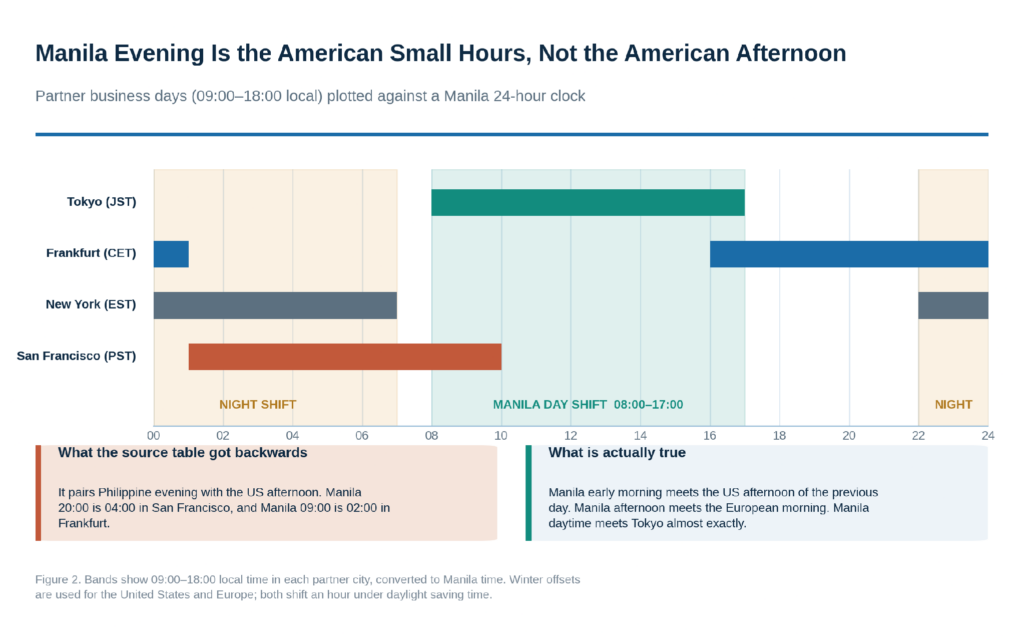
Figure 1. Partner business days plotted against a Manila clock.
Manila evening does not meet the American afternoon. Manila 20:00 is 04:00 in San Francisco. It is Manila early morning that meets the American afternoon of the previous day: Manila 06:00 is 14:00 in San Francisco. The same inversion applies to Europe. Manila 09:00 is 02:00 in Frankfurt, so a European overlap has to be found in the Manila afternoon, where Manila 16:00 is 09:00 CET.
Why the Japan Alignment Is Structurally Different
Neither the Philippines nor Japan observes daylight saving time. The one-hour gap between Manila and Tokyo is therefore constant across the entire year, which is a genuine and underrated operational advantage. Every other major market in this comparison moves. A fixed Manila roster silently gains or loses an hour of American overlap each March and November, on transition dates that have no local marker in the Philippines and that fall roughly two weeks apart from the European ones. Teams discover this as an unexplained scheduling drift rather than as a known event, which is why the transition dates belong in the operating calendar rather than in a footnote.
Which Manila Shift Should a Robotics Company Ask For?
A day shift of roughly 08:00 to 17:00 delivers about nine hours of overlap with Tokyo and almost none with the United States. A night shift of 22:00 to 07:00 delivers six to seven hours with the US West Coast and none with Tokyo. The choice is determined by the counterpart desk, not the country.
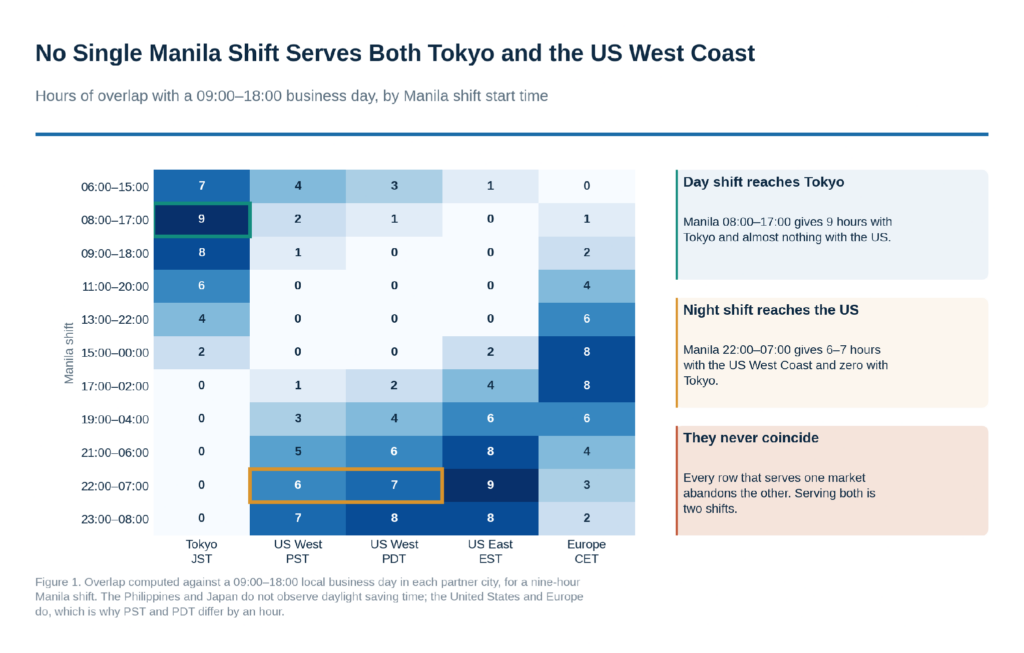
Figure 2. Overlap hours by Manila shift start time.
Reading the matrix by row makes the trade explicit: every roster that serves one market abandons the other. There is no middle position that does tolerably at both, because the two target markets are themselves nearly antipodal. Tokyo and San Francisco share only one to two hours of business day at the extreme edges of each, and Tokyo and New York share none at all. A Manila team cannot bridge a gap that does not close.
This also corrects a common understatement. The 22:00 to 07:00 shift most often recommended for US-facing work is usually described as providing a three to four hour synchronous window. Measured against a 09:00 to 18:00 American business day it provides six hours under Pacific Standard Time and seven under Pacific Daylight Time. Buyers are being undersold the option they are already being offered, and rosters built to a three-hour assumption leave several hours of available overlap unscheduled.
What Follows for a Two-Market Client
A robotics company with hardware leads in Tokyo and product managers in Silicon Valley needs two Manila shifts, not one squad on a staggered schedule. The honest version of the Philippine advantage is not that a single team bridges both, but that one organisation, one management structure and one codebase can run both windows on consecutive shifts, with the hand-off occurring inside a single vendor rather than across two. That is a real and defensible claim, and it is stronger than the one usually made for it.
It also changes the staffing arithmetic. A forty-person engagement split evenly is two twenty-person teams, each sized for its own window, and only one of them carries a night differential. Blending a single rate across both over-prices the day team and under-prices the night team.
What Is the Real Difference Between the English and Japanese Language Claims?
English proficiency is a population-level property of the Philippine workforce. Japanese proficiency is not. The country holds roughly 44,500 Japanese-language learners at all levels, down 13.7% on the previous survey, against an IT-BPM workforce near 1.9 million. Only one of the two scales.
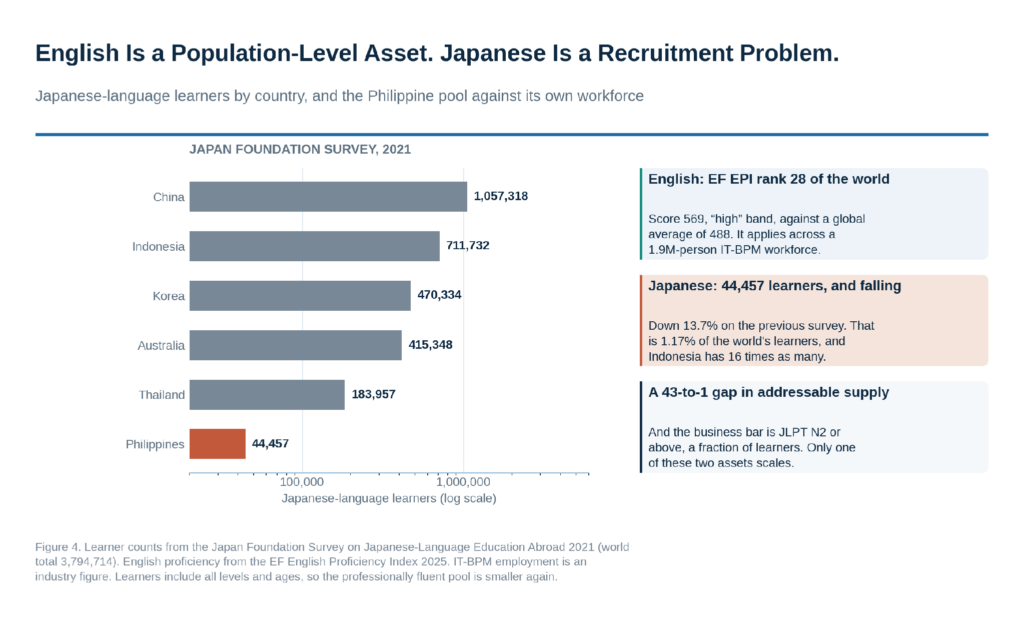
Figure 3. Two language claims of very different strength.
On the EF English Proficiency Index the Philippines scores 569 and ranks 28th globally, placing it in the high proficiency band against a global average of 488. That capability is distributed across the sector rather than concentrated in specialist teams, which is why English-facing engagements scale to hundreds of seats without a recruitment constraint.
Japanese is a different proposition entirely. The Japan Foundation’s survey of Japanese-language education abroad records 44,457 learners in the Philippines, ninth in the world, representing 1.17% of global learners and a 13.7% decline on the previous survey. Indonesia has roughly sixteen times as many learners, Korea around eleven times, Thailand four times. The figure also counts learners at every level and age, so the pool of people at the JLPT N2 standard normally expected for business and technical work is a fraction of it, and the subset who are also qualified engineers is smaller again.
None of this means a Japan desk is unachievable. Specialised providers do maintain bilingual teams trained in Japanese corporate communication, honorific register and technical terminology, and those teams are genuinely capable. It means the requirement should be sized against national supply before it is written into a statement of work, and that the claim of high English and Japanese fluency in a single breath conceals a difference of more than an order of magnitude. A buyer who assumes Japanese-capable engineers can be recruited on the same timeline as English-capable ones will miss the ramp.
The Practical Consequence for Each Market
The two target markets have opposite binding constraints. For US-facing robotics work, language is abundant and the constraint is the night shift: its cost, its retention profile and its effect on the quality of work done at four in the morning. For Japan-facing work, the time zone is nearly free and the constraint is language supply. An engagement scoped as though one set of advantages served both will be mis-staffed in one direction or the other.
Can a Philippine Team Deliver Both 24/7 Coverage and Real-Time Collaboration?
Not from the same roster. Overlap is time two teams are awake together; coverage is time anyone is awake at all. Every hour of one subtracts an hour from the other. Two nine-hour shifts span at most eighteen hours of the day. Continuous coverage requires a third shift.
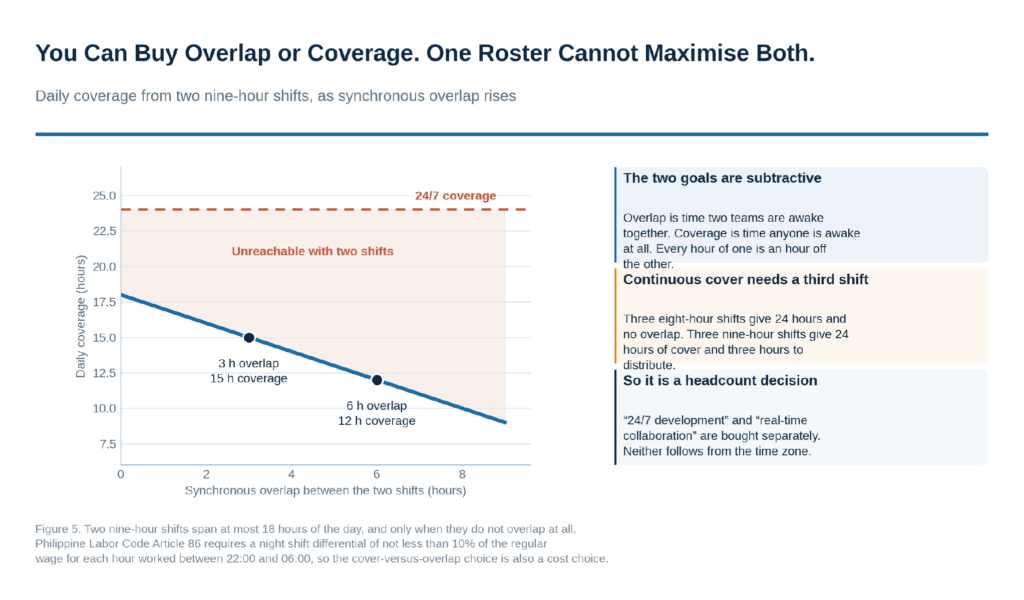
Figure 4. Coverage falls as overlap rises.
The arithmetic is unforgiving and worth stating plainly, because both properties are routinely promised together. Two nine-hour shifts arranged back to back with no overlap cover eighteen hours, or 75% of the day. Give them three hours of overlap for hand-offs and daily ceremonies and coverage falls to fifteen hours. Give them six and it falls to twelve. Round-the-clock execution needs three shifts: three eight-hour shifts give exactly twenty-four hours with no overlap at all, and three nine-hour shifts give twenty-four hours of cover with three hours to distribute among the seams.
The conclusion is that continuous development and synchronous collaboration are separate purchases with separate headcount. Neither is a property of the time zone. What the Philippines supplies is a labour market in which night-shift operations are established, professionally staffed and legally structured, so that the second and third shifts are practical to run at all. That is a meaningful advantage; it is simply a different one from the claim usually made.
What the Night Shift Costs
Article 86 of the Philippine Labor Code requires a night shift differential of not less than 10% of the regular wage for each hour worked between 22:00 and 06:00. For a 22:00 to 07:00 roster, eight of the nine hours qualify. This is a statutory floor rather than a wellness initiative, and premiums above it are what competitive providers offer to hold retention. A quotation that does not show the differential separately has either absorbed it into the headline rate or omitted it, and the buyer should establish which.
What Operational Risks and Tradeoffs Must Enterprises Navigate?
The main risks are designing a roster from the wrong offset, promising overlap and coverage from one shift, sizing a Japanese-language requirement against claims rather than supply, and blending a single rate across day and night teams. Each is a specification failure rather than a provider failure.
Asynchronous Discipline Is What Makes the Overlap Worth Having
Even a well-designed six-hour window is a minority of the working day, so most progress transfers asynchronously. That requires written hand-off protocols, decision logs rather than decisions reached verbally in the overlap, and a version-control discipline that makes the state of work legible without a conversation. Teams that invest only in the synchronous window tend to find that it fills with status reporting, which is the least valuable use of the scarcest resource in the arrangement.
Night Work, Retention and Quality
Night rosters carry real human cost and a retention profile that differs from day operations. Established providers address this with premium compensation above the statutory floor, healthcare and wellness provision, structured rotation and modern facilities. Buyers should ask for attrition measured separately for night and day teams rather than a blended figure, since a blended number can conceal high churn in exactly the group doing the client-facing work.
Cultural Fluency Cuts Both Ways
Familiarity with American corporate norms is a genuine asset and is rooted in the education system and long commercial exposure. Its practical value is that engineers participate in design discussions and challenge ambiguous requirements rather than executing instructions literally. That behaviour is partly cultural and substantially a function of how the client runs the engagement: teams treated as a support function will behave as one regardless of capability. Japanese business communication carries different expectations again around escalation, consensus and directness, which is a distinct competency from language fluency and should be assessed separately.
Data Protection Across Two Legal Regimes
Philippine providers operate under the Data Privacy Act of 2012 and commonly hold ISO 27001 certification and SOC 2 attestation. Buyers should note that the relevant obligations sit with them as well. Transfers of personal data from Japan engage the Act on the Protection of Personal Information, and transfers from the European Union require an Article 46 mechanism such as standard contractual clauses, because the Philippines does not hold a European Commission adequacy decision. Where robotics data includes identifiable pedestrians, faces or number plates, these obligations are engaged even though the work is engineering rather than customer service.
What Does a Cross-Border Engineering Pod Cost and How Long Does It Take to Stand Up?
Fully loaded technical engineering and cross-functional support ranges from $10 to $16 per hour, roughly $1,730 to $2,770 per seat per month at 173 hours. Provisioning, toolchain setup and cultural alignment typically span six to eight weeks before the first full sprint inside the new arrangement.
Two adjustments make that band usable. First, the night differential applies only to the night-facing team, so a two-shift engagement has two effective rates rather than one. Second, bilingual Japanese-capable engineers price above the band because the national supply is thin, and a quotation that offers them at the standard rate is worth probing. On the timeline, a six to eight week ramp means the first full iteration inside the new roster lands around the two-month mark, which should be reflected in the first-quarter business case rather than credited from day one.
Why Do Global Enterprises Partner with Cynergy BPO for Technical Outsourcing?
Because shift design, language supply and provider capability are a single connected decision, and most of the failure modes are settled before a contract is signed. Cynergy BPO establishes which counterpart desk sets the roster, whether the requirement is overlap or coverage, and whether a Japan desk is realistically staffable, then matches against more than 100 vetted Philippine providers.
Who Is Cynergy BPO?
Cynergy BPO is a specialised, vendor-neutral advisory and consultancy that partners with more than 100 carefully vetted BPO and back-office service providers across the Philippines. Its focus is the structured evaluation and selection of outsourcing partners for organisations whose requirements are technical rather than purely transactional, including robotics engineering, perception data operations and distributed software delivery.
Time-zone advantage is meaningless without cultural fluency and operational synchronisation. When enterprises partner with Cynergy BPO, we match them with Philippine technical providers engineered specifically for real-time collaboration with US and Japanese markets.
John Maczynski, CEO, Cynergy BPO
How Does Cynergy BPO Differ from Traditional Outsourcing Brokers?
A broker’s shortlist reflects which providers it can place work with. An advisory shortlist should reflect which providers can meet a specified requirement, and should be willing to report that the requirement is mis-specified before matching against it. In this category that distinction is load-bearing: an engagement scoped for a single squad serving both Tokyo and California is asking for something no roster can deliver, and the useful advisory response is to say so rather than to find a provider willing to agree.
How Does Cynergy BPO’s Network of 100+ Vetted Philippine BPO Providers Benefit Organizations?
Providers differ in ways a capability matrix does not show. Some run genuine multi-shift engineering rosters with staffed hand-offs; some run a day shift and describe it flexibly. Some hold a working Japan desk with bilingual technical staff; most do not. A network of that size lets the shift design and the language requirement be treated as hard constraints rather than as things to compromise on, and supports comparison on the dimensions that determine delivery: real overlap hours, night-team attrition measured separately, and hand-off discipline.
How Does Cynergy BPO’s Advisory-Led Vendor Matching Process Work?
The sequence is deliberate. The first three steps establish what the roster has to achieve; only the fourth turns it into a price.
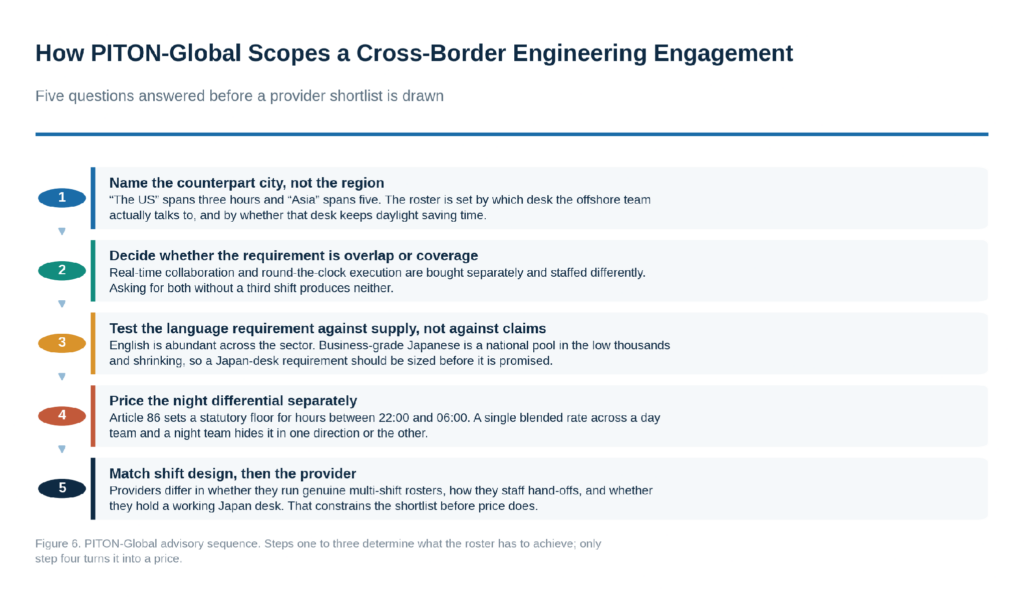
Figure 6. The advisory sequence, from requirement to shortlist.
Why Do Organizations Use Cynergy BPO?
Because the expensive mistakes in cross-border engineering are made during specification. Naming the counterpart city rather than the region, separating overlap from coverage, sizing the language requirement against national supply, and pricing the night differential explicitly are all decisions that shape the statement of work and are cheap to get right beforehand. Objective market intelligence and structured matchmaking then reduce transition risk against a requirement that is worth meeting.
What Does a Corrected Scheduling Reference Look Like?
Japan sits one hour ahead of Manila with no seasonal change. The US West Coast is sixteen or fifteen hours behind depending on daylight saving, the US East Coast thirteen or twelve, and Europe seven or six. Only the Japan window is stable across the year.
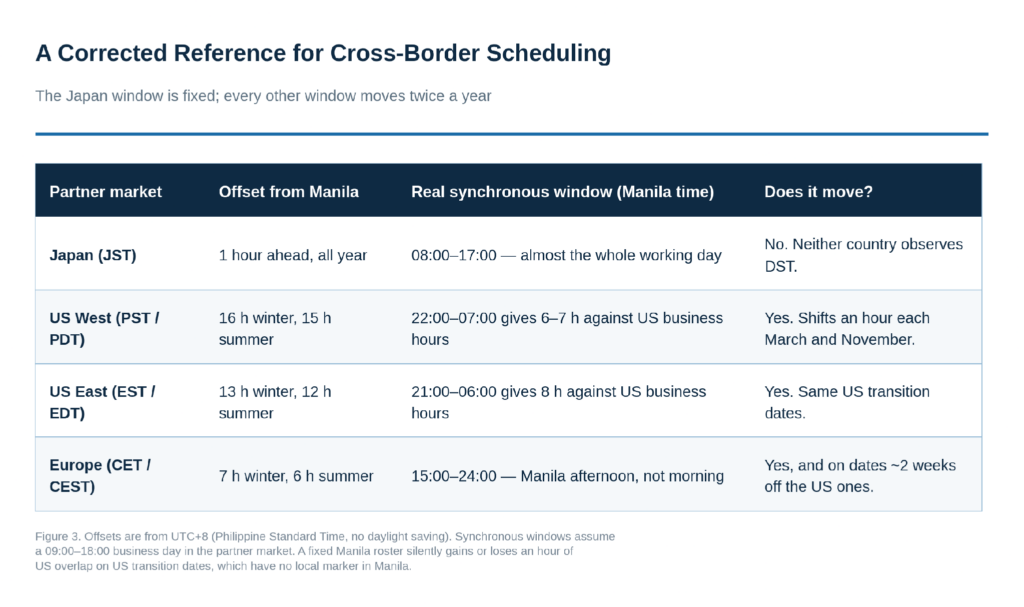
Figure 6. Corrected offsets and synchronous windows.
Frequently Asked Questions
How do Philippine engineering teams accommodate Japanese language and business etiquette requirements?
Specialised providers maintain Japan desks staffed with bilingual engineers trained in Japanese corporate communication, honorific register and technical terminology. Because the national pool of Japanese-capable technical staff is small and has been shrinking, the requirement should be sized against supply and confirmed with named staff before it is committed to in a contract.
What shift models are most effective for US-based robotics companies?
A 22:00 to 07:00 Manila roster gives about six hours of overlap with a US West Coast business day under Pacific Standard Time and seven under Pacific Daylight Time. A 21:00 to 06:00 roster suits the US East Coast, giving around eight hours. Both are substantially more overlap than the three to four hours often quoted.
Can one team serve both Japanese and US counterparts?
Not on one shift. Tokyo and San Francisco share only one to two hours of business day, and Tokyo and New York share none. Serving both requires a day roster for Japan and a night roster for the United States. The advantage of a Philippine provider is that both can sit inside one organisation with the hand-off managed internally.
How do night-shift schedules affect retention and work quality?
Night rosters carry a statutory differential of at least 10% for hours between 22:00 and 06:00 under Article 86 of the Labor Code, and established providers add premium compensation, healthcare, wellness programmes and rotation policies above that floor. Buyers should ask for attrition reported separately for night and day teams, since a blended figure can hide churn in the client-facing group.
What communication tools do Philippine technical teams use?
Standard enterprise collaboration suites including Slack, Microsoft Teams, Jira, Confluence, GitHub and secure video conferencing. Tooling is rarely the constraint. The discipline that matters is asynchronous: written hand-offs, decision logs and version control that make the state of work legible outside the overlap window.
Are there legal or data privacy protections governing cross-border data transfers?
Yes. Philippine providers operate under the Data Privacy Act of 2012 and commonly hold ISO 27001 certification and SOC 2 attestation, alongside tailored non-disclosure agreements. Buyers carry obligations too: transfers from Japan engage the Act on the Protection of Personal Information, and transfers from the European Union require standard contractual clauses or another Article 46 mechanism.
How quickly can a cross-border engineering pod be deployed?
Six to eight weeks for recruitment, toolchain setup and pilot testing, so the first full sprint inside the new roster lands around the two-month mark. A Japan-facing pod requiring bilingual engineers should be expected to take longer, because the recruitment pool is materially smaller.
What should we settle before approaching providers?
Which counterpart desk the offshore team will actually talk to, and whether the requirement is synchronous overlap or continuous coverage. Those two answers determine the roster, the headcount and the cost base, and they should be settled before price is discussed.
Share This
Unlock cost-efficient growth with expert BPO guidance!
Partner with Cynergy BPO to connect with top outsourcing providers.
Streamline operations, cut costs, and scale your business with confidence.
Book a Free Call
Ralf Ellspermann - CSO
Author
Ralf Ellspermann is the Chief Strategy Officer (CSO) of Cynergy BPO and a globally recognized authority in business process and contact center outsourcing. With more than 25 years of experience advising enterprises and SMEs, he provides strategic guidance on vendor selection, CX optimization, and scalable outsourcing strategies across global markets. His expertise spans fintech, ecommerce and retail, healthcare, insurance, travel and hospitality, and technology (AI & SaaS) outsourcing.
A frequent speaker at leading industry conferences, Ralf is also a published contributor to The Times of India and CustomerThink, where he shares insights on outsourcing strategy, customer experience, and digital transformation.