



By: Ralf Ellspermann
25-Year, Multi-Awarded BPO Veteran
Published: 30 September 2026

Reviewed By: John Maczynski
Former EVP, World's Largest Contact Center
Updated: 30 September 2026
Philippine robotics teams manage dataset version control with content-addressed tools such as DVC, Git-LFS and Pachyderm, which make any prior dataset state retrievable and any training run reproducible. Fully loaded engineering support runs $10 to $16 per hour. Version control guarantees reproducibility, not speed: iteration time is governed by training, review and batch size.
Key Takeaways
- Version control buys recoverability, not velocity. A content-addressed repository lets a team return to any prior dataset state exactly. It does not shorten the label, train or review stages that dominate an iteration, and treating it as a speed programme sets the wrong success measure.
- Branch count does not cause storage bloat. Eight label branches over a 4.81 TB corpus add roughly 7% in illustrative modelling, because only the annotation files differ. Duplicated bytes come from pipeline steps that re-export the payload, and no commit convention prevents that.
- Most ontology changes cannot be migrated by script. Renames and merges are mechanical. Class splits, tightened boundary rules, new required attributes and changed occlusion thresholds all require human relabelling, because the information a script would need was never captured.
- A quality figure without a schema version is not a measurement. A corpus at 98.5% accuracy under one schema can score in the mid-sixties against a successor that reclassifies a third of instances, with no annotation having changed.
- Fully loaded technical engineering and data management support ranges from $10 to $16 per hour. That band brackets data engineering and pipeline operations. Schema architecture and lead review sit above it, and a contract that assumes one rate for both will be short-staffed at the top.
- Advisory-led matching pairs the toolchain decision with the provider decision. Whether a team needs pipeline lineage or retrievable dataset state determines which providers can serve it, and that constraint should bind the shortlist before price does.
What Does Dataset Version Control Actually Guarantee?
It guarantees that any past dataset state can be retrieved exactly and any past training run reconstructed. It does not make iteration faster. Speed comes from batch size and compute scheduling; version control supplies the ability to undo, compare and audit, which is a different and more durable property.
The distinction matters because it determines what a programme is measured on. Under ad-hoc folder management, the probability that a specific six-month-old snapshot is still byte-identical decays with every cleanup, migration and departing engineer. Modelling a 97% monthly survival rate puts reproducibility at roughly 83% after six months and 48% after two years. Content-addressed storage removes that decay entirely: a manifest names bytes by their hash, so either the blob is retained and identical, or it is absent and the system says so. There is no silent third state in which a path still resolves but the contents have quietly changed.
For robotics specifically, this is a safety property before it is an engineering convenience. When a perception model behaves unexpectedly in the field, the investigation depends on reconstructing the exact training corpus, including the label revisions in force at the time. A team that cannot do this cannot distinguish a data problem from a model problem, and will re-run experiments that were already answered.
Philippine engineering squads working on autonomous mobile robots and industrial manipulators typically operate this layer on behalf of a client whose core developers sit elsewhere. Every change to bounding boxes, calibration matrices and segmentation masks is hashed and logged, so that an engineering lead in another time zone can reproduce a training run without negotiating for someone’s local directory.
Does Branching Cause Storage Bloat in Multi-Terabyte Datasets?
No. Under content-addressed storage a version is a manifest of pointers, not a copy. Eight label branches over a 4.81 TB corpus add roughly 7% in illustrative modelling. Bloat comes from pipeline steps that re-encode or re-write the sensor payload, which produces new hashes for unchanged content.
This is one of the most common misdiagnoses in offshore data engineering, and it leads teams to impose the wrong remedy. The received wisdom holds that poorly synchronised branch workflows between onshore developers and offshore annotation pods cause data duplication, and that the answer is stricter commit conventions and centralised documentation. Those are worth having, but they do not touch the mechanism.
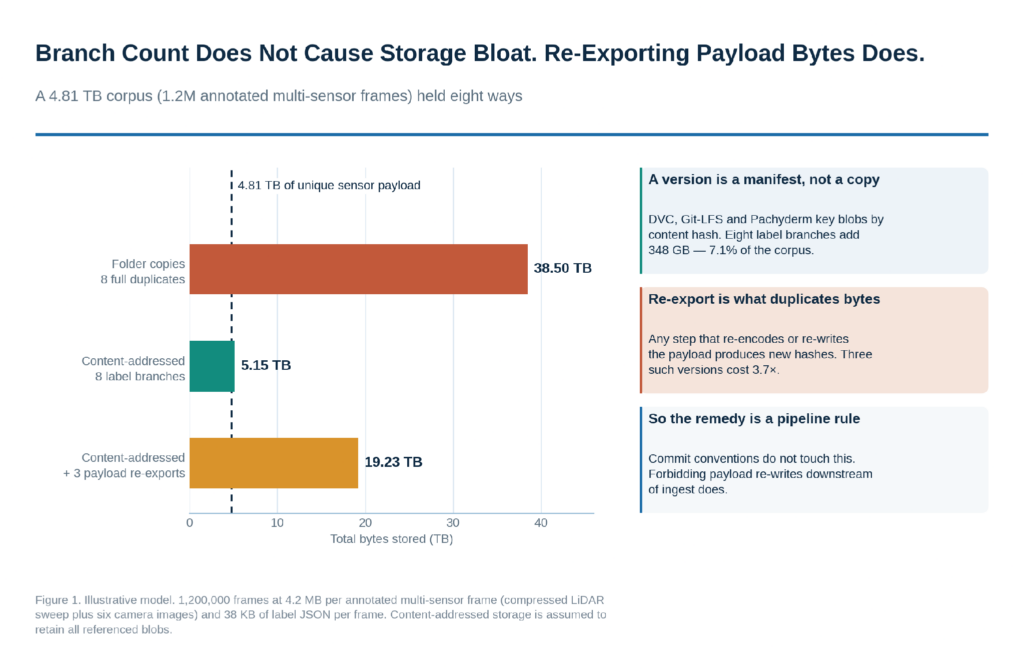
Figure 1. Where duplicated bytes actually come from.
Consider 1.2 million annotated multi-sensor frames at 4.2 MB each, roughly 4.81 TB of payload, with about 38 KB of label JSON per frame. Held as eight full folder copies, that is 38.5 TB. Held content-addressed with eight label branches, it is 5.15 TB, because the sensor payload is shared and only the annotations differ. But if three of those eight versions were produced by a step that re-encoded or re-compressed the payload, the figure rises to 19.23 TB, roughly 3.7 times the disciplined case.
The operational rule that follows is specific: forbid payload re-writes downstream of ingest. Normalisation, re-compression and format conversion belong in the ingest stage, executed once, before the content hash that every later version will reference. A pipeline that respects this can branch as freely as the team likes.
Which Ontology Schema Changes Can a Migration Script Actually Handle?
Renames, merges and additions of new classes are deterministic and scriptable. Class splits, tightened boundary rules, new required attributes and changed occlusion thresholds all require human relabelling, because the distinguishing information was never recorded. Roughly four of seven common change types fall into the second group.
The language of backward compatibility is borrowed from software APIs, where an old caller keeps working because the contract was additive. Label data does not offer that guarantee. When a schema tightens the definition of an object boundary, existing geometry was drawn to the old rule and is now wrong by construction. No migration script can recover what the annotator was never asked to record.
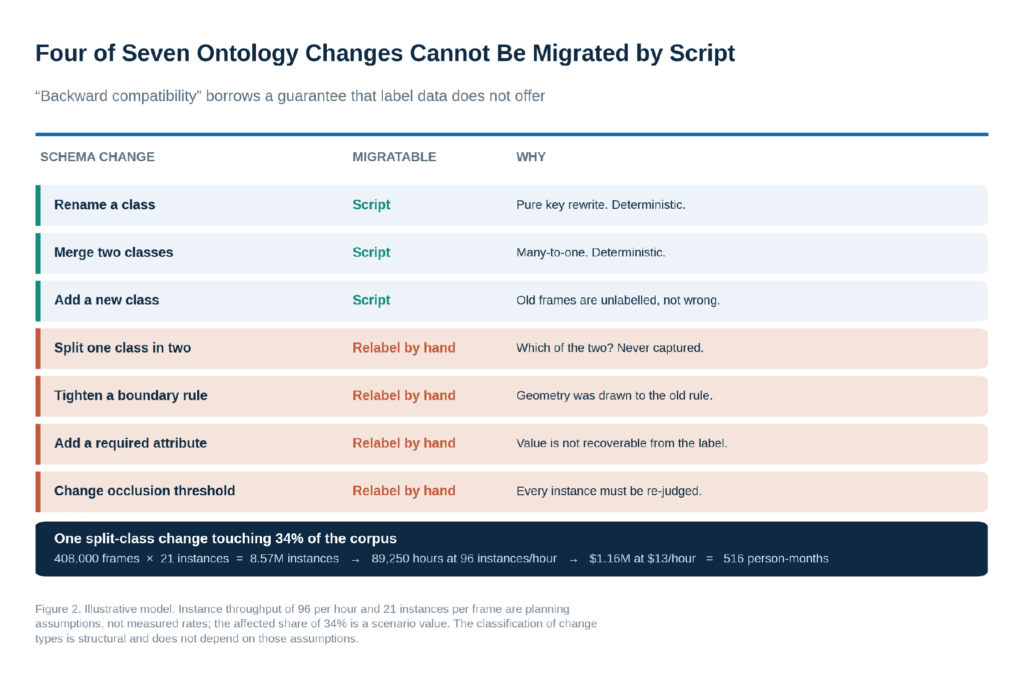
Figure 2. Seven schema changes, sorted by whether a script can satisfy them.
The cost of getting this wrong compounds quietly. A single class split touching 34% of the corpus above implies 408,000 frames at roughly 21 instances each, or 8.57 million instances. At 96 instances per hour that is about 89,250 hours, close to $1.16M at $13 per hour, or 516 person-months. These are planning figures rather than measured rates, but they establish the order of magnitude: a schema decision taken in an afternoon can commit a year of annotation capacity.
What Practical Governance Follows?
Two changes pay for themselves. First, classify every proposed schema change as scriptable or relabel-bearing before it is approved, and attach the relabelling estimate to the proposal. Second, batch relabel-bearing changes into scheduled schema releases rather than admitting them continuously, so the corpus is re-cut once per release instead of drifting between several partially applied definitions. A centralised ontology governance handbook, established during onboarding, is where both rules live.
Can Version Control Cut a Two-Week Iteration to Three Days?
Not on its own. Merge and transfer latency, the stages version control reaches, account for roughly 2.5 days of a 14-day cycle. Removing them reaches about 12 days. A three-day cycle requires compressing training, automating sign-off and shrinking the increment to roughly a sixth of its former size.
Turnaround claims of this shape appear throughout the outsourcing literature, and they are usually true per cycle and misleading per unit of work. The arithmetic is worth doing explicitly.
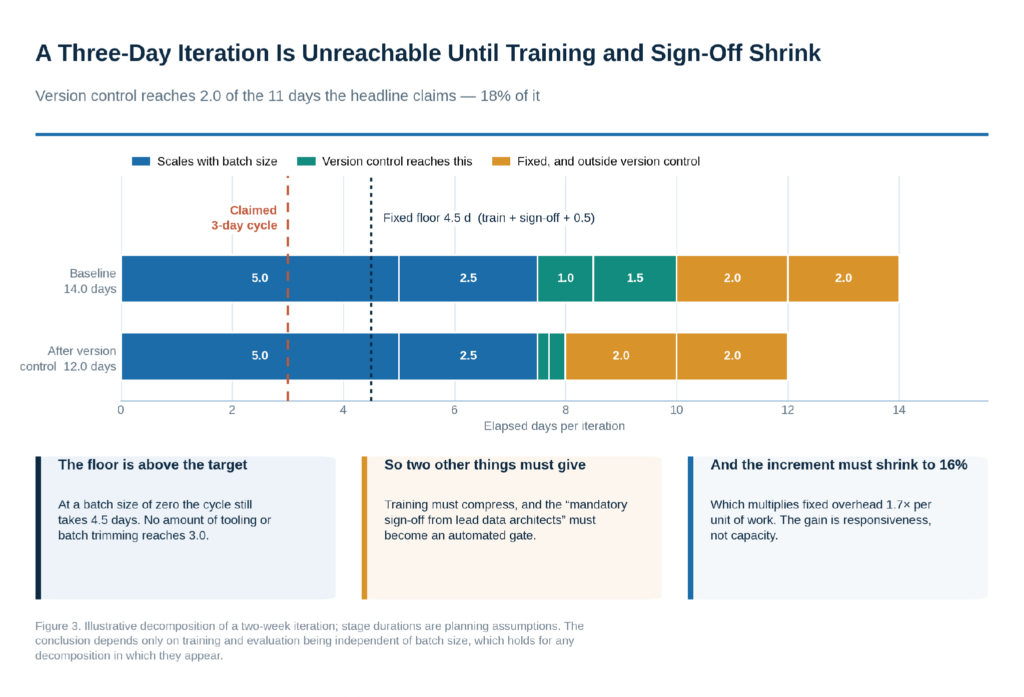
Figure 3. A fixed floor the tooling cannot cross.
Decompose a two-week iteration into labelling, quality assurance and rework, merge and schema checking, data transfer and preparation, training, and evaluation with sign-off. Labelling and QA scale with batch size. Training and evaluation do not: they take what they take regardless of how much new data arrived. Version control reaches the merge and transfer stages, which might fall from 2.5 days to half a day under a well-run content-addressed pipeline. That leaves a fixed floor of about 4.5 days, which is above the three-day target at any batch size, including zero.
Reaching three days therefore requires two further decisions that have nothing to do with version control. Training must compress, through warm starts, fewer epochs or better GPU scheduling. And evaluation must move from human review to an automated gate, which sits in direct tension with the common assurance that schema updates carry mandatory sign-off from lead data architects. A buyer cannot have both the three-day cycle and the human gate as described.
Even granting both, the increment must shrink to roughly 16% of its former size, which means running about six times as many cycles to move the same annual volume and paying the fixed overhead six times as often. Total fixed work per unit of throughput rises by around 1.7 times. The gain is real, but it is responsiveness, not capacity. A programme that budgets for a three-day cycle while forecasting unchanged annual throughput has double-counted.
Which Versioning Tool Should a Robotics Team Choose?
They solve different problems. DVC versions files beside Git as a repository convention. Pachyderm versions data and the pipeline that produced it, and requires a Kubernetes cluster to operate. Git-LFS versions individual large files and imposes per-file ceilings of 2 to 5 GB depending on plan.
Draft procurement documents routinely list these three as a menu of equivalents, which mis-states the decision. The question is not which tool is best but which problem the organisation has.
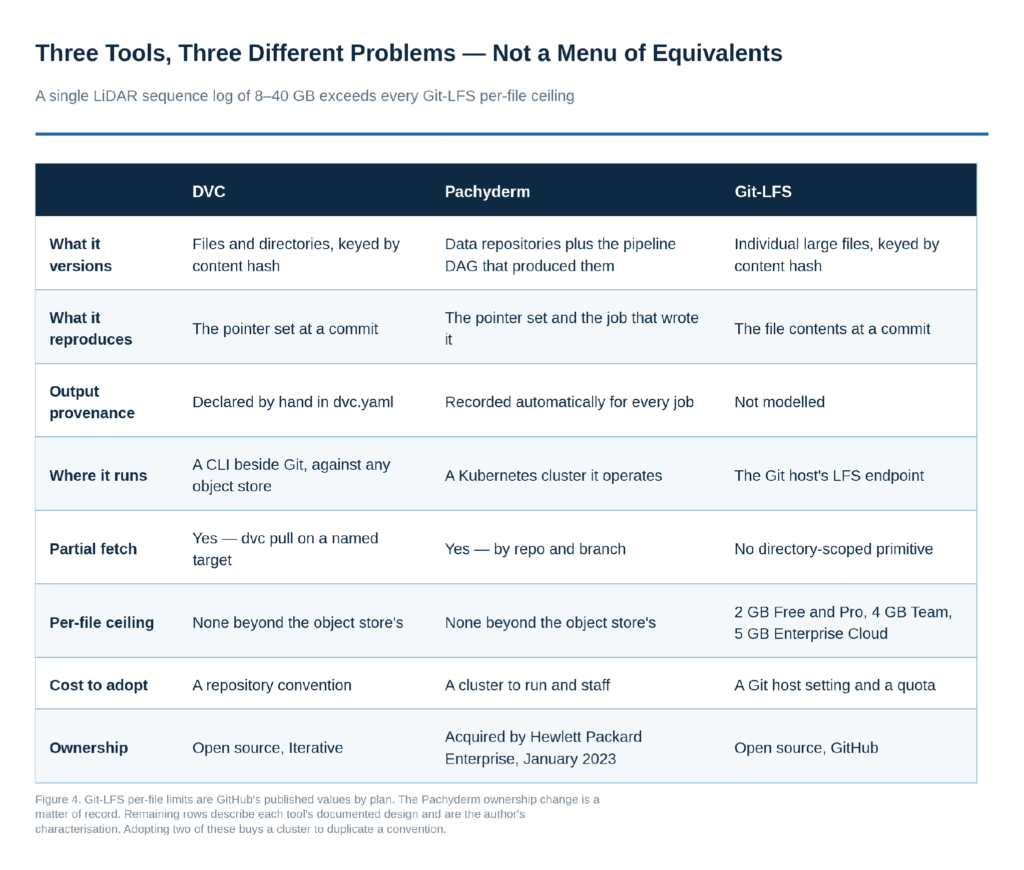
Figure 4. Three tools, three different problems.
If the requirement is a retrievable dataset state, DVC supplies it as a repository convention against any object store, at essentially no infrastructure cost. If the requirement is a re-runnable training job with automatic provenance for every output, Pachyderm records the job as well as the data, at the cost of a Kubernetes cluster to run and staff. Adopting both, as several drafts of this decision propose, means paying for a cluster to duplicate a convention.
Git-LFS deserves particular care in a robotics context. Its per-file ceiling is 2 GB on GitHub Free and Pro, 4 GB on Team and 5 GB on Enterprise Cloud. A single LiDAR sequence log commonly runs from 8 to 40 GB and exceeds all three. Git-LFS also lacks a directory-scoped partial fetch comparable to pulling a named DVC target, so a contributor who needs one sequence has no clean way to avoid the rest. It is a reasonable tool for model weights and test fixtures, and a poor fit for raw sensor archives.
One procurement fact is worth recording because it changes the support and licensing posture rather than the technology: Pachyderm was acquired by Hewlett Packard Enterprise in January 2023. Teams evaluating it should confirm the current distribution, support and licence terms directly rather than assuming the independent open-source posture that most written comparisons still describe.
What Makes a Quality Figure Meaningful Across Schema Versions?
It must name the schema version it was measured against. A corpus at 98.5% accuracy under one schema can measure in the mid-sixties against a successor that reclassifies a third of instances, with no annotation having changed. Improvement percentages need the same treatment: a denominator, and a unit.
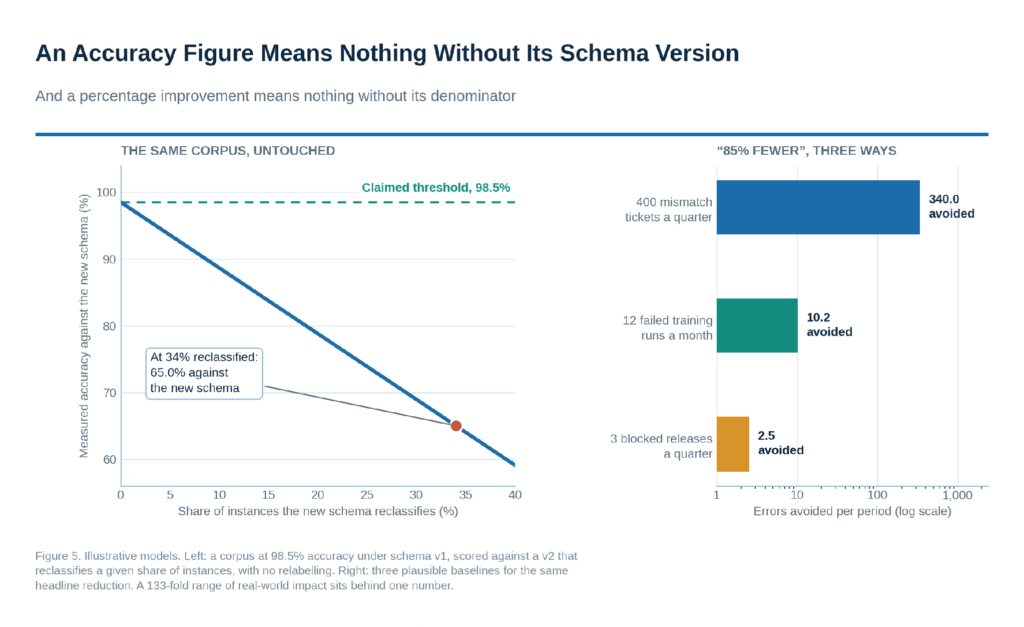
Figure 5. Two numbers that cannot be interpreted as written.
Take a corpus certified at 98.5% under schema v1. If v2 reclassifies 34% of instances, the same untouched corpus scores about 65.0% against v2, and the error rate rises more than twentyfold. Nothing was done badly. The measurement simply refers to a definition that no longer applies. A quality clause that specifies a threshold without binding it to a schema version is therefore unenforceable in either direction: the provider cannot prove compliance and the buyer cannot prove breach.
Improvement claims carry the same defect in a different form. A reported 85% reduction in synchronisation errors is compatible with avoiding 340 support tickets a quarter, about ten failed training runs a month, or two and a half blocked releases a quarter. Those outcomes differ by more than two orders of magnitude in what they are worth. Whichever unit the contract names is the one the provider will optimise, so the unit should be chosen before the baseline is taken, not after.
What Operational Risks and Tradeoffs Must Enterprises Navigate?
The main risks are misattributing storage growth to branching, assuming schema changes are scriptable, buying headcount to solve a latency problem, and accepting quality and improvement figures that name no schema version or denominator. Each is a specification failure rather than a provider failure.
Buying Seats to Solve a Pipeline Problem
The most expensive of these is the fourth. Where internal engineers are losing a substantial share of capacity to data mismatch work, the instinct is to add an offshore squad. But merge and transfer latency is a tooling problem of roughly two engineers’ effort, while annotation volume is a seat problem. A large pod added to fix latency adds another party to synchronise with, and can leave the original cost in place alongside the new one. The two problems should be scoped and funded separately even when one provider serves both.
Time Zones, Continuity and Access
Distributed version control also has to survive real operating conditions. Established Philippine centres maintain business continuity plans with redundant power generation, carrier-diverse fibre and multi-site dispersion, which matters during the regional typhoon season. Data protection is handled through data loss prevention tooling, isolated secure rooms, biometric access control and zero-trust network architecture. Buyers should note that the Philippines does not hold an adequacy decision from the European Commission, so transfers of personal data from the EU require standard contractual clauses or another Article 46 transfer mechanism. Where sensor data contains identifiable pedestrians or number plates, that obligation is engaged.
What Does This Work Cost and How Should It Be Staffed?
Fully loaded technical engineering and data management support ranges from $10 to $16 per hour, equivalent to roughly $1,800 to $2,800 per month at 173 hours. That band covers data engineering and pipeline operations. Schema architecture and lead review sit above it and should be priced separately.
A dedicated full-time equivalent model that bundles engineering labour, management oversight and infrastructure maintenance is the common commercial structure, and it works well when the scope is steady. Two cautions apply. First, a single blended rate applied across the whole squad will under-price the schema architecture and lead review roles, which are the ones a governance handbook depends on. Second, onboarding and toolchain integration typically spans six to eight weeks, covering repository synchronisation, ontology alignment and pilot testing, so the first full cycle inside the new pipeline lands around the two-month mark. A business case that credits the improved cycle time from day one will be wrong about the first quarter.
Why Do Global Enterprises Partner with Cynergy BPO for Technical Outsourcing?
Because the versioning decision constrains the provider shortlist before price does. Cynergy BPO scopes what must be reproducible, sizes the schema changes already in flight, fixes the measurement units, and separates the pipeline problem from the headcount problem, then matches the resulting requirement against more than 100 vetted Philippine providers.
Who Is Cynergy BPO?
Cynergy BPO is a specialised, vendor-neutral advisory and consultancy that partners with more than 100 carefully vetted BPO and back-office service providers across the Philippines. Its focus is the structured evaluation and selection of outsourcing partners for organisations whose requirements are technical rather than purely transactional, including robotics data engineering, annotation operations and machine learning support functions.
Dataset version control is the backbone of reliable autonomous systems. When enterprises partner with Cynergy BPO, we bypass traditional sales brokers to match them with Philippine technical providers possessing advanced DVC and cloud data pipeline capabilities.
John Maczynski, CEO, Cynergy BPO
How Does Cynergy BPO Differ from Traditional Outsourcing Brokers?
A broker’s shortlist reflects which providers it can place work with. An advisory shortlist should reflect which providers can meet a specified technical requirement. Cynergy BPO applies operational expertise to an organisation’s actual data schemas, security posture and scalability needs, and is willing to report that a requirement is mis-specified before matching against it. In this domain that distinction is load-bearing: an engagement scoped as a headcount problem when it is a pipeline problem will disappoint regardless of which provider wins it.
How Does Cynergy BPO’s Network of 100+ Vetted Philippine BPO Providers Benefit Organizations?
Providers differ in ways that are invisible from a capability matrix. Some operate their own Kubernetes platform; some work entirely inside the client’s object store; some bring a proprietary annotation stack with its own versioning model. A network of that size means the toolchain requirement can be treated as a hard constraint rather than something to compromise on, and it supports genuine comparison on the dimensions that determine delivery: throughput on the client’s actual data, schema governance maturity, and continuity arrangements.
How Does Cynergy BPO’s Advisory-Led Vendor Matching Process Work?
The sequence is deliberate. The first three steps determine what the engagement is for; only the fourth decides how many people it takes.
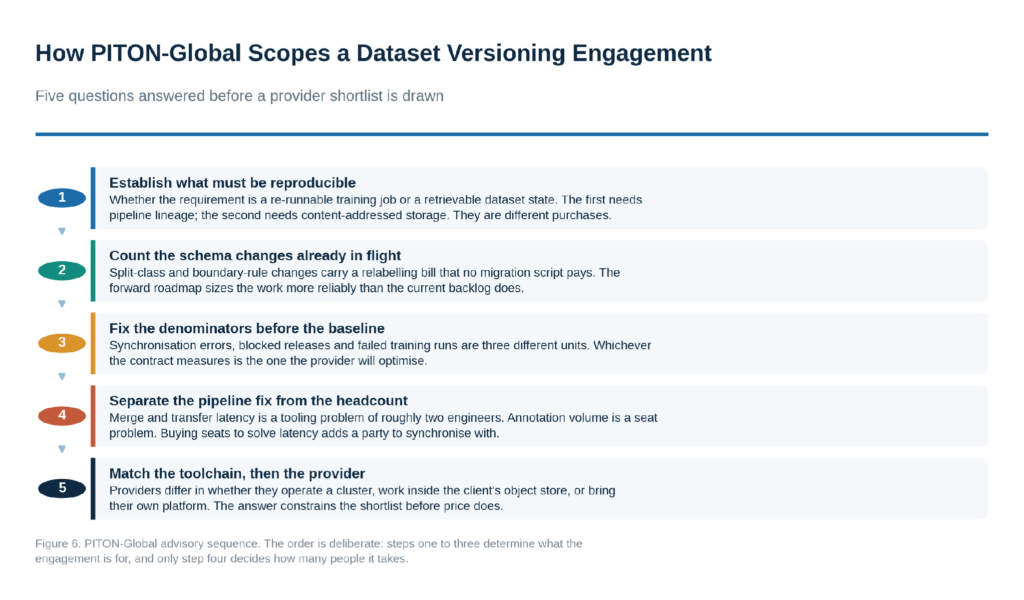
Figure 6. The advisory sequence, from requirement to shortlist.
Why Do Organizations Use Cynergy BPO?
Because the failure modes in this category are specification failures, and they are cheapest to fix before a contract is signed. Establishing what must be reproducible, sizing the relabelling bill already implied by the roadmap, fixing the units that quality and improvement will be measured in, and separating tooling work from annotation volume are all decisions that shape the statement of work. Objective market intelligence and structured matchmaking then reduce transition risk against a requirement that is worth meeting.
Frequently Asked Questions
What version control tools do Philippine robotics data teams commonly use?
DVC, Pachyderm, Git-LFS and cloud object storage repositories are all in regular use. They are not interchangeable: DVC is a repository convention, Pachyderm is a pipeline platform requiring a Kubernetes cluster, and Git-LFS carries per-file ceilings of 2 to 5 GB that raw sensor logs frequently exceed.
How do offshore teams handle breaking changes in annotation ontology schemas?
Renames, merges and new class additions are handled by migration script. Class splits, tightened boundary rules, new required attributes and changed occlusion thresholds require human relabelling and should be batched into scheduled schema releases with the relabelling cost estimated in advance and signed off by a lead data architect.
What is the typical onboarding timeline for a dataset version control squad?
Six to eight weeks, covering repository synchronisation, ontology alignment and pilot testing. The first full iteration inside the new pipeline therefore lands around the two-month mark, which should be reflected in the first-quarter business case.
How do Philippine providers secure proprietary datasets against unauthorised access?
Through data loss prevention frameworks, isolated secure rooms, biometric access control and zero-trust network architecture. Buyers transferring EU personal data should note that the Philippines does not hold a European Commission adequacy decision, so an Article 46 transfer mechanism such as standard contractual clauses is required.
What pricing models cover dataset version control and engineering support?
Dedicated full-time equivalent monthly pricing that bundles engineering labour, management oversight and infrastructure maintenance is standard, at roughly $1,800 to $2,800 per seat per month. Schema architecture and lead review should be priced above the blended band rather than inside it.
How do providers ensure uninterrupted synchronisation during regional weather events?
Established centres maintain business continuity plans with redundant power generation, carrier-diverse fibre-optic connectivity and multi-site geographic dispersion. Buyers should ask for the tested failover time and the fuel autonomy of the generator plant rather than the presence of the equipment.
What should we ask a provider first?
Which dataset version control tools and pipeline architectures are currently in place, and whether the requirement is a re-runnable training job or a retrievable dataset state. That single answer determines which providers can serve the engagement, and it should be settled before price is discussed.
Share This
Unlock cost-efficient growth with expert BPO guidance!
Partner with Cynergy BPO to connect with top outsourcing providers.
Streamline operations, cut costs, and scale your business with confidence.
Book a Free Call
Ralf Ellspermann - CSO
Author
Ralf Ellspermann is the Chief Strategy Officer (CSO) of Cynergy BPO and a globally recognized authority in business process and contact center outsourcing. With more than 25 years of experience advising enterprises and SMEs, he provides strategic guidance on vendor selection, CX optimization, and scalable outsourcing strategies across global markets. His expertise spans fintech, ecommerce and retail, healthcare, insurance, travel and hospitality, and technology (AI & SaaS) outsourcing.
A frequent speaker at leading industry conferences, Ralf is also a published contributor to The Times of India and CustomerThink, where he shares insights on outsourcing strategy, customer experience, and digital transformation.