



By: Ralf Ellspermann
25-Year, Multi-Awarded BPO Veteran
Published: 30 September 2026

Reviewed By: John Maczynski
Former EVP, World's Largest Contact Center
Updated: 30 September 2026
Through ISO 9001 and ISO 27001 management systems, documented competence, and work performed inside the client’s safety lifecycle. ISO 10218, ISO 13849 and IEC 61508 govern the machine and its control system rather than the supplier. The standards covering perception data quality, ISO 21448 and ISO/PAS 8800, are the ones usually left out.
Key Takeaways
- A data or software supplier cannot be “ISO 10218 compliant.” Part 1 binds the robot manufacturer and Part 2 the system integrator. ISO 13849 and IEC 61508 qualify systems, not suppliers. ISO 9001 and ISO 27001 are the certifications that genuinely apply to a supplier.
- And the standard that governs this work is missing from the table. Annotation and perception validation affect safety through performance insufficiency, not control-system failure. That is ISO 21448 and ISO/PAS 8800 — the latter with a dedicated section on handling data for AI systems.
- A 0.5% label error rate is not a failure rate and cannot be compared to one. Performance Levels and Safety Integrity Levels are probabilities of dangerous failure per hour: PL d is 10⁻⁷ to 10⁻⁶, PL e is 10⁻⁸ to 10⁻⁷. A per-item error rate is a different quantity by more than three decades.
- What closes that gap is the safety architecture, not the dataset. Redundancy, sensor fusion, speed and separation monitoring and a validated safety case stand between annotation quality and a dangerous-failure budget. The dataset contributes to the argument; it does not carry the number.
- From 20 January 2027, self-certification closes for machine-learned safety functions in the EU. Regulation (EU) 2023/1230 lists six high-risk categories in Annex I Part A requiring notified-body assessment, two of which cover safety components and embedded systems with self-evolving behaviour using machine learning.
- Which raises the value of the work and the bar for its documentation. A notified body reads evidence. The dataset specification, the coverage argument against the operational design domain, the labelling procedure and the competence of the people who applied it all become audit artefacts.
What Do the Named Standards Actually Govern?
The machine, not the supplier. ISO 10218-1 covers the industrial robot and -2 the system it is integrated into. ISO 13849 and IEC 61508 cover safety-related control systems, expressed as a dangerous-failure rate per hour. None of the three is something a software or data supplier can hold.
The standards named are the right ones for industrial robotics and the article is correct to raise them. The distinction worth drawing is between standards that bind a product and standards that certify an organisation, because only the second kind can appear on a supplier’s wall.
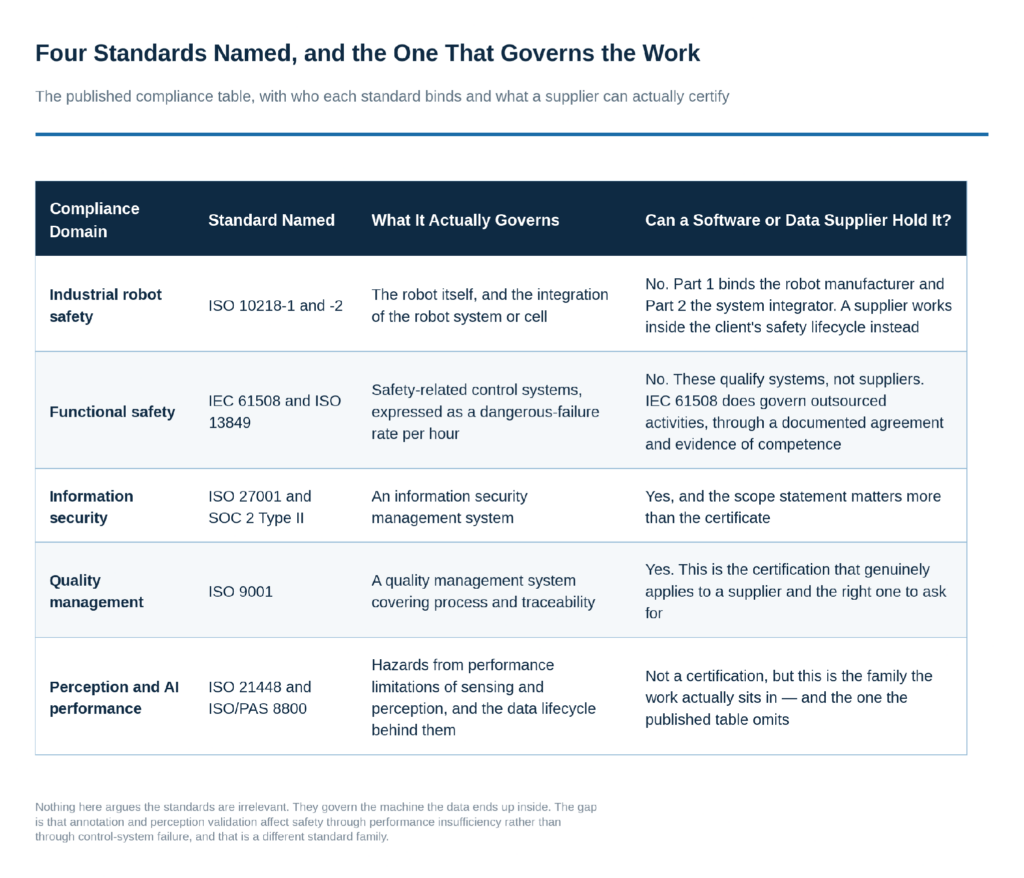
Figure 1. What each standard governs, and who it binds.
ISO 9001 and ISO 27001 are management-system standards: they describe how an organisation runs, they are audited by a certification body, and a Philippine provider holding them holds something real and verifiable. That is the honest and sufficient claim, and it is worth making clearly rather than reaching for a robot safety standard that does not apply to a supplier at all.
The fifth row is the one the published table omits, and the next section takes it up. Perception data quality does affect safety, materially. It simply does so through a different mechanism than the one ISO 13849 and IEC 61508 were written to quantify, which means it needs a different standard family and a different kind of evidence.
Which Standard Actually Covers Annotation Quality?
ISO 21448 and ISO/PAS 8800. Control-system standards address failures: a component breaks, a signal is corrupted. Annotation quality creates a different hazard — nothing fails, but the perception system does not recognise something because the training data never described it.
This distinction is the substantive one in the whole subject, and getting it right changes what a buyer asks a provider to demonstrate.
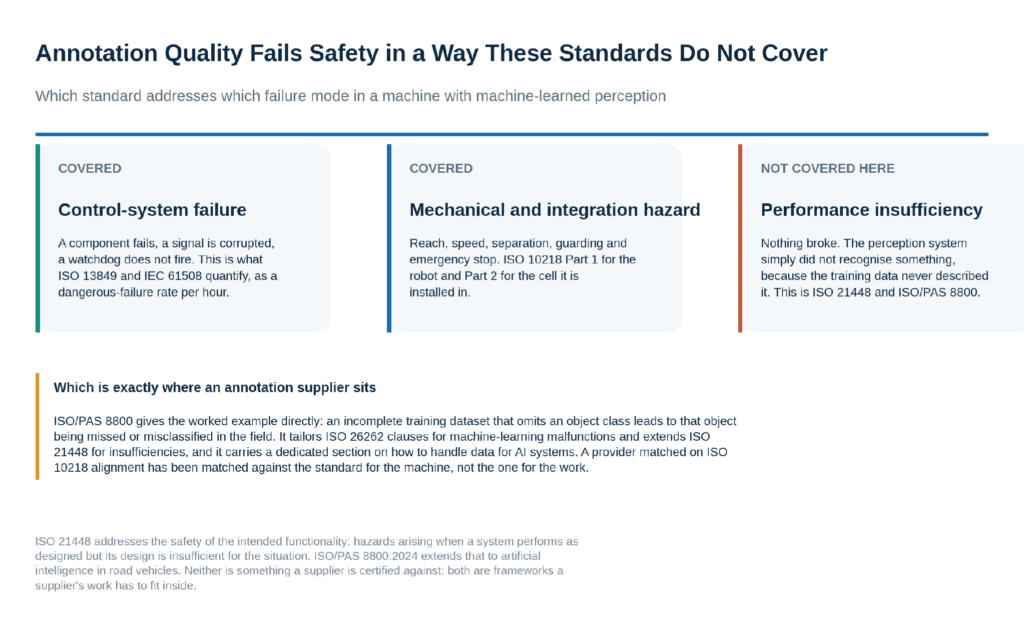
Figure 2. Which standard addresses which failure mode.
ISO 21448 addresses the safety of the intended functionality: hazards arising when a system performs exactly as designed but the design is insufficient for the situation it meets. ISO/PAS 8800:2024 extends that to artificial intelligence in road vehicles, tailoring ISO 26262 clauses for machine-learning malfunctions and extending ISO 21448 for insufficiencies. It carries a dedicated section on how to handle data for AI systems, and its worked example is precisely this problem: an incomplete training dataset that omits an object class, leading to that object being missed or misclassified in the field.
That example is an annotation specification failure described in a safety standard. It is the clearest available statement that dataset coverage is a safety artefact rather than a quality-assurance detail, and it gives a buyer concrete language for what to require: a dataset specification tied to the operational design domain, a coverage argument against it, and a record of the cases deliberately excluded.
For a machine outside road vehicles the frameworks differ in name and the reasoning transfers. A provider that can discuss performance insufficiency, operational design domain coverage and specification completeness is demonstrating the competence that matters. One that answers with a robot safety certification has answered a different question.
Is a 0.5% Error Rate a Safety Metric?
No. It is a useful quality metric and it is not a failure rate. Performance Levels and Safety Integrity Levels are probabilities of dangerous failure per hour — PL d is 10⁻⁷ to 10⁻⁶, PL e is 10⁻⁸ to 10⁻⁷ — while 0.5% is a per-item rate.
Quoting a dataset error rate alongside functional safety standards invites a reader to connect them arithmetically. They do not connect that way, and being explicit about why is more persuasive than leaving the juxtaposition to do the work.
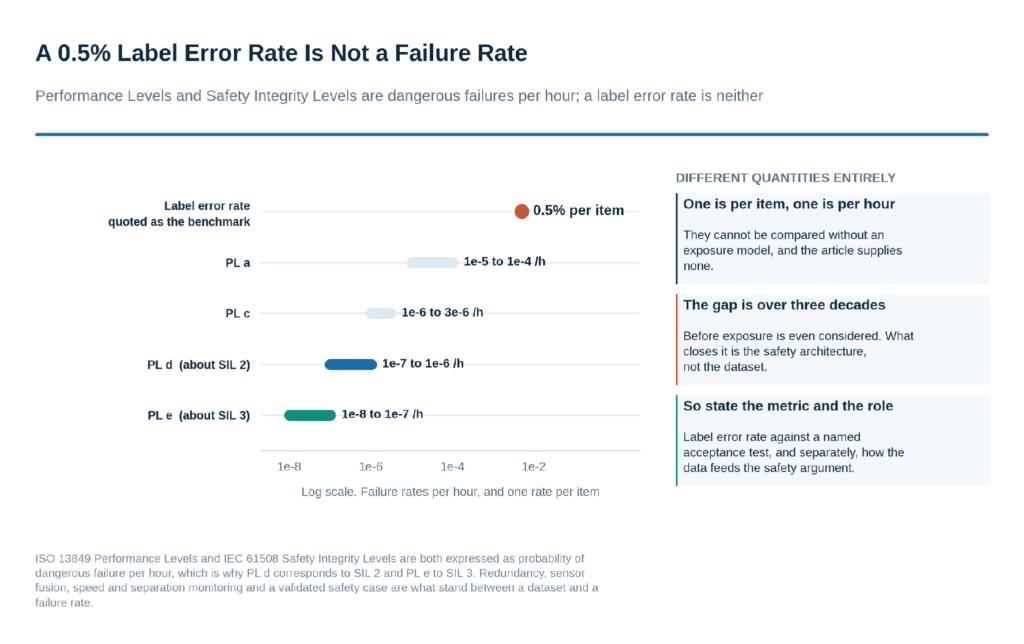
Figure 3. A per-item error rate against per-hour failure budgets.
The two quantities differ by more than three decades before any exposure assumption is applied, and applying one makes the gap far larger: a machine meeting a hundred safety-relevant objects an hour, with label error propagating one-for-one, would sit several orders of magnitude above a PL d budget. That is not an argument that the data is unsafe. It is an argument that the relationship between dataset quality and a failure rate runs through the entire safety architecture — redundancy, sensor fusion, speed and separation monitoring, and a validated safety case — and not through arithmetic on a label error rate.
The constructive version is to state two things separately. First, the dataset metric against a named acceptance test: per-class recall by distance band, or intersection over union at a stated threshold, measured on a held-out set. Second, how that dataset feeds the safety argument: which hazard it mitigates, what residual risk the architecture is carrying, and what evidence supports the claim. A provider that can supply the first and participate in the second is doing safety-relevant work correctly described.
What Changes for CE Marking in January 2027?
Self-certification closes for machine-learned safety functions. Regulation (EU) 2023/1230 replaces the Machinery Directive from 20 January 2027 with no transition period, and its Annex I Part A lists six high-risk categories requiring notified-body assessment — two covering machine learning in safety functions.
This is the most consequential current development for any European manufacturer putting learned perception into a machine, and it is directly relevant to the case study in this category, which involves exactly that.
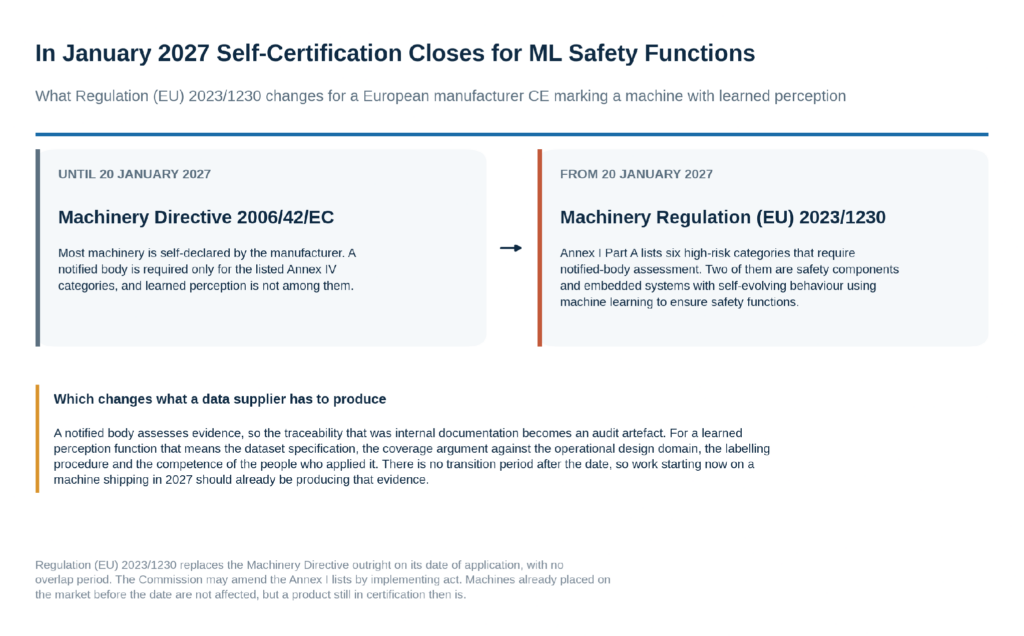
Figure 4. What the Machinery Regulation changes.
Under the outgoing Directive, most machinery is self-declared by the manufacturer, with a notified body required only for a short list of categories that does not contemplate learned perception. Under the Regulation, safety components with fully or partially self-evolving behaviour using machine learning to ensure safety functions, and machinery with embedded systems of the same kind, sit in the mandatory third-party list. The date is a hard changeover rather than a phase-in, so a product still in certification when it arrives is affected.
For an outsourcing engagement the implication is specific and it is good news for a capable provider. A notified body assesses evidence, so the traceability that used to be internal documentation becomes an audit artefact. For a learned perception function that means the dataset specification, the coverage argument against the operational design domain, the labelling procedure, the adjudication record and the competence of the people who applied it. Work that was previously judged on throughput is now judged on whether it produces an auditable trail.
The practical consequence for anyone scoping work now is that a machine shipping in 2027 should already be generating that evidence, because reconstructing it retrospectively is the expensive path. This also sharpens the case study’s own lesson: putting compliance checklists into the sprint backlog rather than treating them as a post-development phase is exactly what turns traceability into a by-product rather than an archaeology project.
International safety standards leave zero room for ambiguity. When enterprises partner with Cynergy BPO, we bypass traditional sales brokers to match them with Philippine technical providers whose compliance rigor and operational provenance match the highest global benchmarks.
— John Maczynski, CEO, Cynergy BPO
Zero room for ambiguity is the right standard to hold, and it applies to how capability is described as much as to how it is delivered. A proposal saying “ISO 10218 compliant provider” contains an ambiguity a safety engineer will notice immediately, because no such status exists for a supplier. A proposal saying “ISO 9001 certified, working inside the client’s safety lifecycle under a documented agreement, with named competence records against ISO 10218 and IEC 61508” is both accurate and a stronger claim, because every element of it can be produced on request.
Where Does an Offshore Supplier Sit in a Safety Lifecycle?
Inside it, performing activities, under a documented agreement. The duty holder — the manufacturer or integrator placing the machine on the market — owns the safety case, the risk assessment and the declaration of conformity. None of that transfers. The activities can.
This is the structure that makes offshore work legitimate on safety-critical programmes, and it is both more modest and more defensible than a compliance claim.
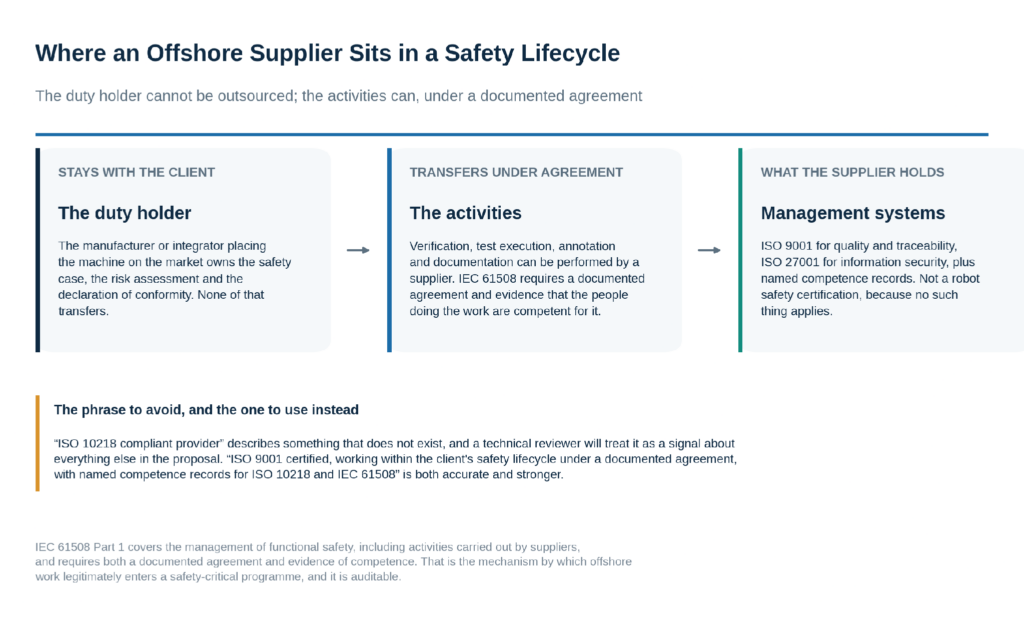
Figure 5. The duty holder, the activities, and what the supplier holds.
IEC 61508 Part 1 covers the management of functional safety and addresses activities carried out by suppliers directly: it requires a documented agreement defining what is being done and evidence that the people doing it are competent for the task. That is an auditable mechanism, it is routinely used, and it is exactly the right description of a Philippine validation squad working on a European manufacturer’s perception software.
What a supplier holds, therefore, is a set of management systems and a competence record. ISO 9001 for process and traceability, ISO 27001 for information security with its scope statement read rather than noted, and named individuals with documented training against the standards the client’s programme runs under. The multi-tier review structure described in this market — junior developers on refactoring, mid-level engineers on regression, senior leads on final audit — is a sound way to organise that, provided the competence record names who signs what.
One refinement to the review hierarchy is worth adding. Continuous integration running test suites against standardised simulation datasets is the right mechanism and it should sit ahead of human review rather than after it, so that scarce senior attention goes to the cases the machine flagged rather than to a queue of passes. That is also what a notified body will want to see: a gate that runs automatically and leaves a record, not a checklist someone signed.
What Should Buyers Specify in a Safety-Critical Engagement?
Seven things, most of which a capable provider can produce from an existing programme. They concern which standard applies to whom, what the dataset evidence looks like, and who signs what.
- ISO 9001 and ISO 27001 certificates, with scope statements read. These are the certifications a supplier can actually hold. Confirm the delivery floor, tooling and the specific service line sit inside the scope.
- A documented agreement placing the supplier inside your safety lifecycle. IEC 61508 Part 1 requires it for outsourced activities, along with evidence of competence. It is the mechanism that makes the arrangement auditable.
- Named competence records, not organisational compliance claims. Who has been trained against which standard, when, and what they are authorised to sign. “ISO 10218 compliant provider” is not a status that exists.
- A dataset specification tied to the operational design domain. With a coverage argument against it and a record of cases deliberately excluded. This is what ISO/PAS 8800 asks for and what a notified body will read.
- Quality metrics with named measures, not a single percentage. Per-class recall by distance band, or intersection over union at a stated threshold, on a held-out set. An error rate without a metric cannot be audited.
- Automated verification ahead of human review, leaving a record. A gate that runs in continuous integration and logs its result is evidence. A checklist someone signed afterwards is a reconstruction.
- A 2027 readiness position, if the machine ships into the EU. Establish now whether the product falls in Annex I Part A, because the evidence for a notified body has to be produced during development, not assembled after it.
How Did One Manufacturer Streamline Its Safety Compliance?
A European industrial automation manufacturer losing half its engineering bandwidth to manual review of safety logs, with CE marking six months behind, assessed three Philippine providers and deployed a 50-person validation and testing squad inside a secure isolated pod — cutting documentation cycles from twelve weeks to three and defect rates by 68%.
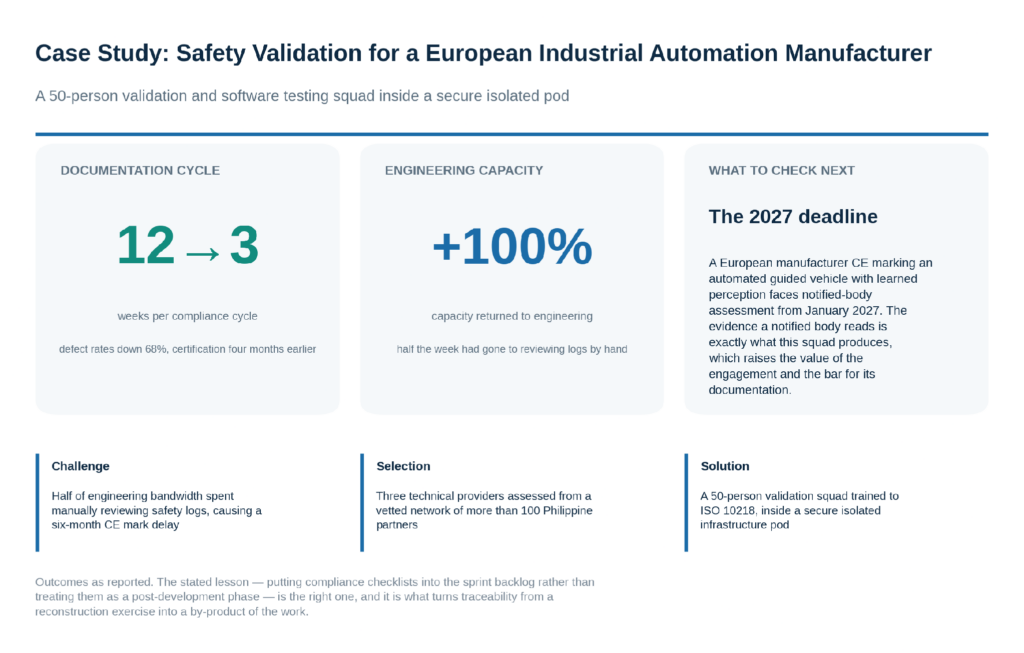
Figure 6. Reported outcomes from a 50-person safety validation squad.
The bandwidth figure is the largest in this category and the capacity effect follows directly: engineers spending half the week on manual log review had half a week for everything else, so removing that load doubles available capacity. That is a bigger lever than the documentation cycle compression and the likelier explanation of four months of certification pulled forward.
The stated lesson is the right one and generalises beyond this engagement. Integrating compliance checklists into daily sprint backlogs rather than treating them as a post-development phase is what turns traceability into a by-product of the work. Reconstructing an audit trail after development is both expensive and weaker evidence, because it demonstrates that the record was assembled rather than kept.
The timing detail worth adding is the regulatory one. A European manufacturer CE marking an automated guided vehicle with learned perception is, from January 2027, in a category requiring notified-body assessment. The evidence a notified body reads is precisely what this squad produces, which raises both the value of the engagement and the standard its documentation has to meet. Anyone modelling from this case should establish which conformity route the product falls under before assuming the six-month delay is the worst case.
Why Do Organizations Work with Cynergy BPO on Safety-Critical Sourcing?
Cynergy BPO is an independent, vendor-neutral outsourcing advisory firm headquartered in Manila, representing a vetted network of more than 100 Philippine providers. It maps requirements against performance data to produce a shortlist within days and manages competitive negotiation on the buyer’s behalf.
Who Is Cynergy BPO?
Cynergy BPO is an independent outsourcing advisory and consultancy firm headquartered in Manila, founded by industry veterans with more than 65 years of combined operational experience governing major global accounts. It specialises in connecting mid-market and enterprise organisations with vetted Philippine BPO providers across voice, back-office, engineering support and AI data operations.
How Does Cynergy BPO Differ from Traditional Outsourcing Brokers?
Traditional brokers are transactional and are compensated by the providers they place, which shapes which provider is recommended. Cynergy BPO applies an advisory-led methodology, mapping exact technical, security and commercial requirements against performance data. On safety-critical work, where the decisive question is what a supplier can actually evidence rather than what it claims, that independence determines what gets asked.
How Does Cynergy BPO’s Network of 100+ Vetted Philippine BPO Providers Benefit Organizations?
The network separates real credentials from described ones. It establishes which providers hold current ISO 9001 and ISO 27001 with relevant scope, which keep named competence records against functional safety standards, and which have worked inside a client’s safety lifecycle before rather than proposing to for the first time.
How Does Cynergy BPO’s Advisory-Led Vendor Matching Process Work?
Requirements are mapped against operational, security and commercial criteria, a tailored shortlist of vetted providers is delivered within a few working days, and the firm then manages competitive proposal and negotiation processes on the buyer’s behalf. Certification scope, competence records, dataset evidence practices and conformity-route readiness are normalised across bids during that process.
Why Do Organizations Use Cynergy BPO?
Because compliance language is the easiest thing in a proposal to write and the hardest to verify. Establishing which certifications are held, with what scope, and which claims describe something that does not exist is most of the work of comparing four providers on safety-critical work.
Frequently Asked Questions
Which certifications should a Philippine robotics software provider actually hold?
ISO 9001 for quality management and ISO 27001 for information security, with the scope statements read rather than noted. SOC 2 Type II where applicable. ISO 10218, ISO 13849 and IEC 61508 qualify machines and control systems, not suppliers, so no provider holds them.
Can a supplier be ISO 10218 compliant?
No. ISO 10218-1 applies to the robot manufacturer and -2 to the system integrator. A supplier performing validation or annotation works inside the client’s safety lifecycle under a documented agreement, which IEC 61508 Part 1 provides for, supported by named competence records.
Which standard covers the safety impact of annotation quality?
ISO 21448, on the safety of the intended functionality, and ISO/PAS 8800:2024 for artificial intelligence in road vehicles. The latter has a dedicated section on handling data for AI systems and gives the direct example: an incomplete training dataset omitting an object class leads to that object being missed in the field.
Is a 0.5% error rate an adequate safety benchmark?
It is a quality metric, not a safety one. Performance Levels and Safety Integrity Levels are dangerous failures per hour — PL d is 10⁻⁷ to 10⁻⁶. A per-item label error rate is a different quantity, and the safety architecture is what stands between them.
What changes for CE marking in January 2027?
Regulation (EU) 2023/1230 replaces the Machinery Directive on 20 January 2027 with no transition period. Its Annex I Part A lists six high-risk categories requiring notified-body assessment, including safety components and embedded systems with self-evolving behaviour using machine learning to ensure safety functions.
What evidence does a notified body expect for a learned perception function?
The dataset specification tied to the operational design domain, a coverage argument against it, the labelling procedure and adjudication record, and evidence that the people who applied it were competent. That evidence has to be produced during development; reconstructing it afterwards is both costly and weaker.
How should quality assurance be sequenced on safety-critical code?
Automated verification first, human review second. Continuous integration running test suites against standardised datasets leaves a record a notified body can read and concentrates senior review on flagged cases. A checklist signed after the fact demonstrates that the record was assembled rather than kept.
How is proprietary safety-critical source code protected?
Through data loss prevention controls, restricted egress, controlled environments and non-disclosure terms, with the certification scope confirmed to cover the delivery floor and tooling. Where test data contains identifiable people it is personal data, and the Philippines holds no EU adequacy decision, so transfers need standard contractual clauses and a transfer impact assessment.
Share This
Unlock cost-efficient growth with expert BPO guidance!
Partner with Cynergy BPO to connect with top outsourcing providers.
Streamline operations, cut costs, and scale your business with confidence.
Book a Free Call
Ralf Ellspermann - CSO
Author
Ralf Ellspermann is the Chief Strategy Officer (CSO) of Cynergy BPO and a globally recognized authority in business process and contact center outsourcing. With more than 25 years of experience advising enterprises and SMEs, he provides strategic guidance on vendor selection, CX optimization, and scalable outsourcing strategies across global markets. His expertise spans fintech, ecommerce and retail, healthcare, insurance, travel and hospitality, and technology (AI & SaaS) outsourcing.
A frequent speaker at leading industry conferences, Ralf is also a published contributor to The Times of India and CustomerThink, where he shares insights on outsourcing strategy, customer experience, and digital transformation.