



By: Ralf Ellspermann
25-Year, Multi-Awarded BPO Veteran
Published: 15 September 2026

Reviewed By: John Maczynski
Former EVP, World's Largest Contact Center
Updated: 15 September 2026
AI training data annotation costs vary significantly by region: the Philippines averages $6 to $12 per hour, India $4 to $8, and Latin America $12 to $22. Total project expenditure depends heavily on task complexity, linguistic nuance, data security protocols, and workforce quality management rather than on the hourly rate alone.
Key Takeaways
- Philippines for complex English work. High literacy, neutral accent assimilation, and Western cultural alignment suit demanding NLP and computer vision annotation.
- India for scale. The lowest-cost option globally for massive basic tagging, though turnover and multi-tiered verification overhead affect enterprise timelines.
- Latin America for Spanish and time zones. Strong nearshore alignment and bilingual proficiency at wage expectations that raise total project overhead.
- Total cost of ownership, not hourly rate. Security compliance, quality control frameworks, and management overhead determine the real figure.
- Advisory-led selection reduces risk. Structured vendor evaluation mitigates hidden operational exposure and protects accuracy on mission-critical models.
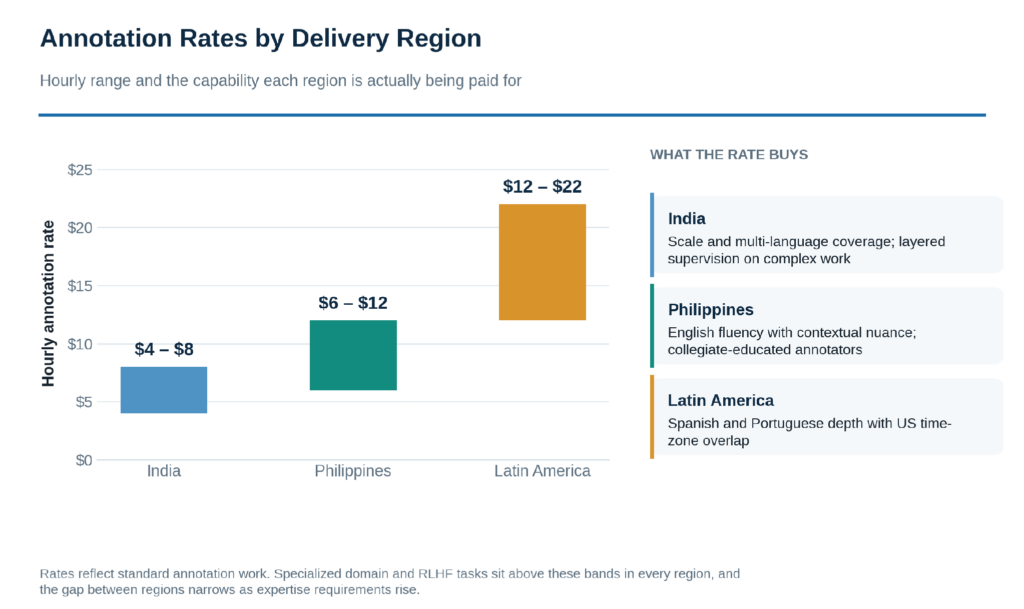
Figure 1. Annotation rates by delivery region, and the capability each rate is paying for.
How Do Regional Cost Structures and Workforce Dynamics Differ?
India relies on scale, enabling low entry pricing for bounding-box and image classification work, though complex semantic segmentation typically requires layered supervision. The Philippines bridges cost efficiency and cognitive aptitude for nuanced English work, while Latin America commands a premium for Spanish-language depth and US time-zone synchronization.
Regional pricing reflects labor market economics, educational attainment, and infrastructure maturity rather than arbitrary positioning. The consequence for a buyer is that the cheapest region on one task type is frequently the most expensive on another, so the comparison only resolves once the work has been specified.
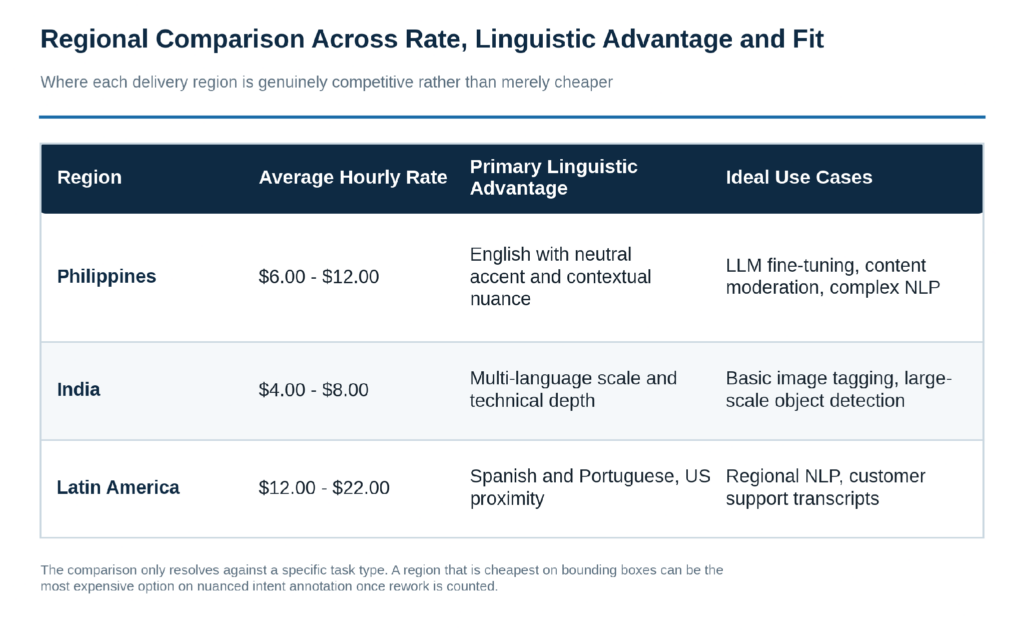
Figure 2. Regional comparison across rate, linguistic advantage, and best-fit use case.
The Philippine Position Is Cognitive, Not Just Linguistic
A workforce fluent in Western idioms and contextual nuance is what allows Philippine operators to handle complex text summarization, sentiment analysis, and conversational AI tuning — tasks where the label depends on judgement rather than on rule application. Access to collegiate-educated professionals is what makes this scalable at a rate well below nearshore alternatives, and it is the specific capability the $6 to $12 band is paying for.
Latin America’s Premium Buys Two Things
The $12 to $22 range reflects higher local living costs, and it buys genuine Spanish and Portuguese depth alongside US working-hour overlap. For datasets requiring native regional language nuance or real-time collaboration with a US-based ML team, that premium is justified. For English-dominant annotation with asynchronous review cycles, it is a cost without a corresponding benefit.
What Hidden Operational Expenses Impact Total Project Budgets?
Direct labor typically accounts for around half of programme cost. Quality assurance and verification, management and supervision, security infrastructure and compliance, and recruitment driven by turnover make up the remainder — and they determine whether the delivered labels are usable.
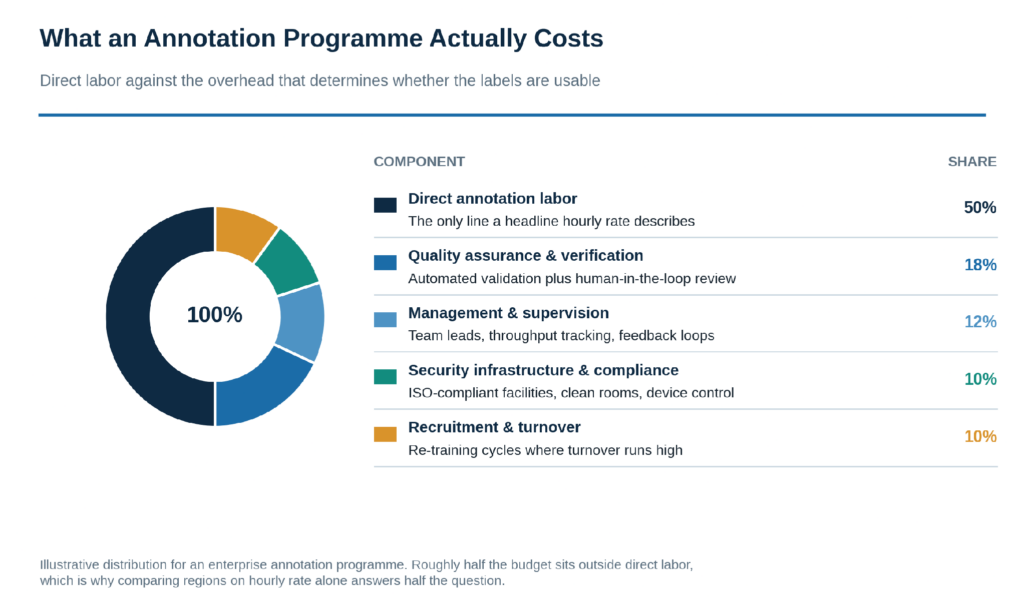
Figure 3. What an annotation programme actually costs, direct labor against overhead.
Enterprise leaders routinely underestimate operational friction when comparing regions. The two largest hidden drivers are turnover and quality remediation, and they compound: high turnover in decentralized models forces continuous re-training cycles that delay model convergence, while inadequate QA frameworks produce mislabelled datasets discovered during training — the most expensive point at which to find them.
Security Infrastructure Is a Capital Cost Somebody Pays
Establishing ISO-compliant facilities with clean rooms, device restrictions, and encrypted transfer requires real capital expenditure. Specialized providers absorb it across multiple client accounts, which is why an in-house or fragmented-vendor comparison understates the alternative. A provider quoting a rate that excludes this layer is offering a different service rather than a cheaper one.
How Do Task Complexity and Domain Expertise Dictate Pricing Tiers?
Cost escalates sharply as work shifts from mechanical tagging to expert judgement. Basic classification requires minimal domain knowledge; medical imaging segmentation, legal contract parsing, and RLHF for generative models demand annotators with subject matter expertise and critical reasoning capability.
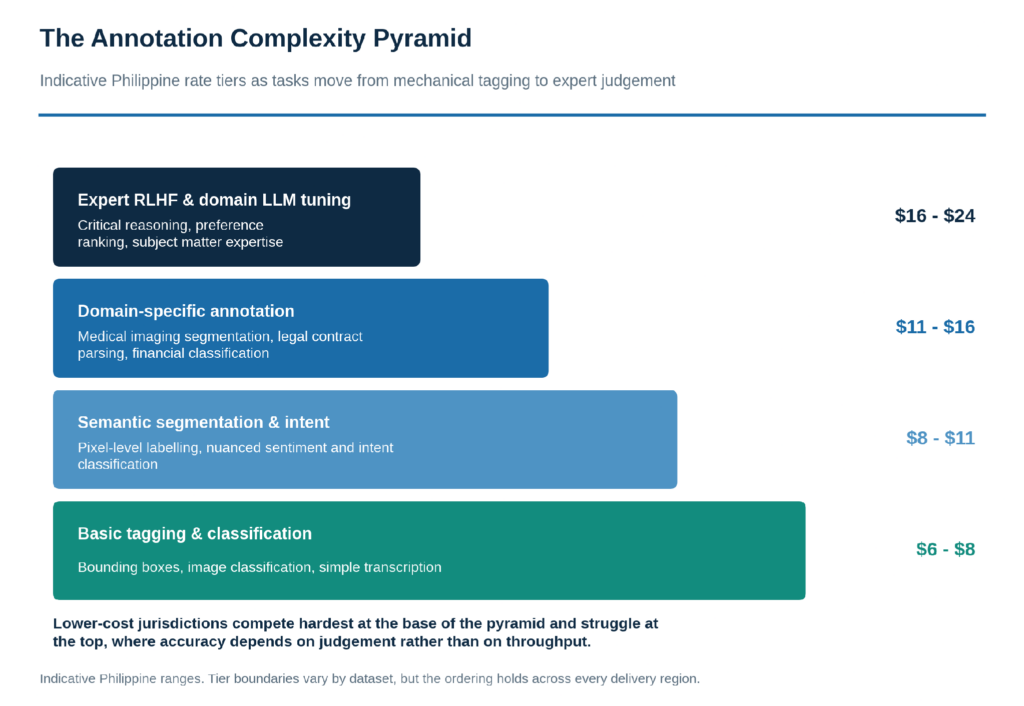
Figure 4. The annotation complexity pyramid, with indicative Philippine rate tiers.
The pyramid explains why a single regional comparison misleads. At the base, where throughput dominates, the lowest-cost jurisdiction wins on economics. At the top, where accuracy depends on judgement, the cost gap between regions narrows and the quality gap widens — so the same comparison that favours one provider for bounding boxes can favour another entirely for preference ranking on a legal model.
RLHF Changes the Staffing Requirement, Not Just the Rate
Reinforcement learning from human feedback requires annotators who can reason about why one response is better than another, which is a different hiring profile from high-throughput tagging. The Philippine advantage here is structural: a large pool of collegiate-educated professionals makes complex coding, legal, and financial annotation scalable at a cost that lower-wage jurisdictions struggle to match on accuracy rather than on price.
What Controls Should Be Established Before a Master Services Agreement?
Three: a structured pilot measuring error rates and throughput on representative data, tiered quality control combining automated validation with human-in-the-loop verification, and verified ISO 27001 and SOC 2 compliance for the specific facility handling the data.
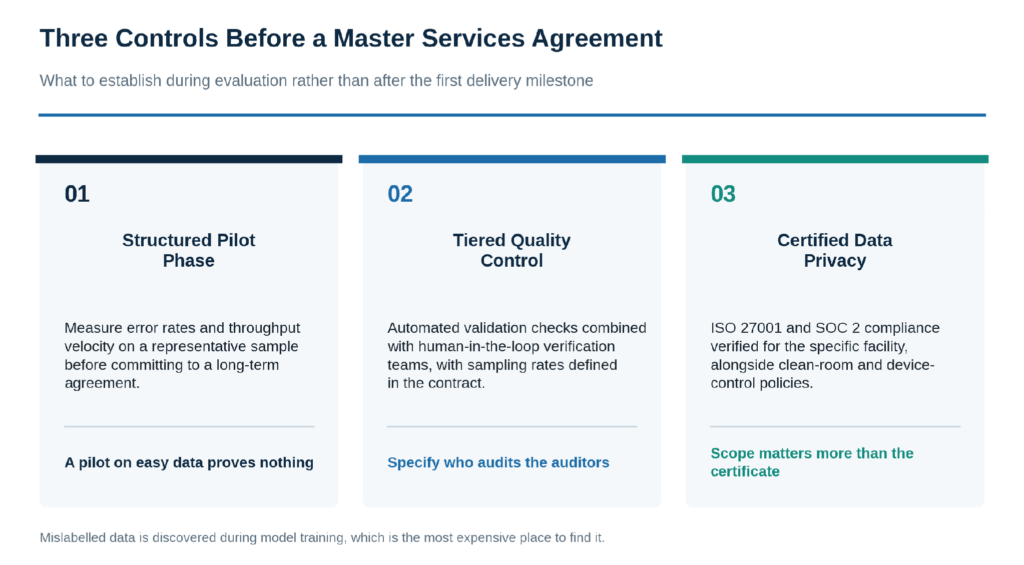
Figure 5. Three controls to establish during evaluation rather than after the first milestone.
Pilot on Representative Data, Not Convenient Data
A pilot run on the easiest subset of a dataset proves throughput and nothing about accuracy. Structure it around the records that actually caused problems previously, and measure both error rate and velocity — a vendor can optimize either one in isolation, and the combination is what predicts delivery.
Define Who Audits the Auditors
Tiered quality control works when sampling rates, escalation thresholds, and the independence of the verification layer are written into the agreement. Where the same team producing labels also validates them, the reported accuracy figure measures internal consistency rather than correctness.
When scaling artificial intelligence initiatives, the cheapest annotation provider almost always becomes the most expensive mistake. Enterprise buyers must prioritize cognitive alignment, rigorous data security, and workforce stability to ensure model accuracy and protect proprietary corporate assets.
— John Maczynski, CEO, Cynergy BPO
How Did One Enterprise Streamline Complex LLM Training Through Philippine Outsourcing?
A Silicon Valley developer scaling a legal tech generative model faced a 40% annotation backlog and inconsistent quality across a fragmented vendor network. A dedicated 50-seat unit staffed with legal graduates delivered 99.4% accuracy, cut delivery timelines 35%, and lowered total annotation expenditure 28%.
Client Challenge
High error rates and a 40% annotation backlog were threatening product launch milestones. The requirement combined three things a fragmented vendor network could not deliver simultaneously: native-level English comprehension, legal terminology familiarity, and strict data confidentiality. Each vendor could satisfy one or two, which is precisely how fragmentation produces inconsistency.
Vendor Selection Process
Cynergy BPO assessed four pre-screened Philippine providers against workforce education, security infrastructure, and historical LLM project delivery. The third criterion mattered most: annotation for generative models is a different discipline from computer vision labelling, and prior delivery is the only reliable evidence of it.
Solution Implemented
A dedicated 50-seat annotation unit staffed with legal graduates, operating under ISO-compliant security protocols with customized workflow validation tools and continuous quality feedback loops.
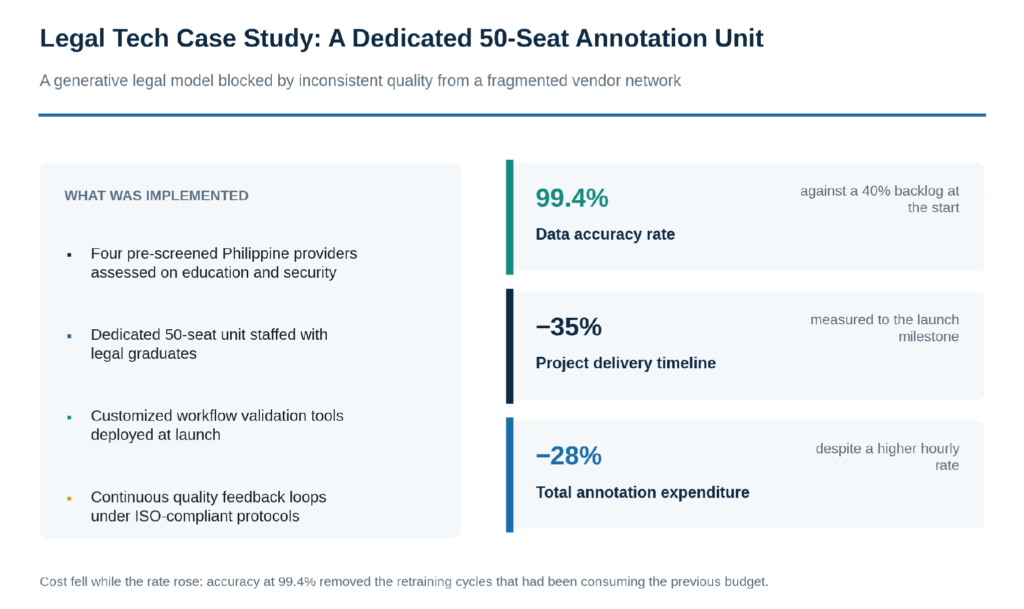
Figure 6. What was implemented, and the outcomes achieved.
Outcomes and Lessons
The programme reached 99.4% data accuracy, reduced delivery timelines by 35%, and lowered total annotation expenditure by 28%. The cost result is the counterintuitive one: expenditure fell while the hourly rate rose, because accuracy at that level eliminated the retraining cycles that had been consuming the previous budget. Direct partnership alignment and rigorous pilot structuring prevent the downstream scalability friction that makes cheap annotation expensive.
Why Do Leading Global Enterprises Partner with Cynergy BPO for Outsourcing Advisory?
Cynergy BPO is a BPO advisory and consultancy firm connecting global enterprises with more than 100 meticulously vetted call center and back-office providers across the Philippines, offering objective, data-driven guidance rather than commission-driven brokerage.
Who Is Cynergy BPO?
Cynergy BPO advises enterprise buyers on Philippine outsourcing across provider selection, commercial structuring, and governance. For annotation work specifically, its relevance is that domain capability is difficult to verify from outside: a provider’s ability to staff legal graduates or execute RLHF reliably is evidenced by prior delivery rather than by a capability statement.
How Does Cynergy BPO Differ from Traditional Outsourcing Brokers?
Traditional brokers are driven by vendor commission structures, which shapes the recommendation before the requirement is understood. Cynergy BPO provides objective, data-driven advisory tailored to specific corporate objectives, with the engagement continuing through evaluation and structuring rather than ending at introduction.
How Does Cynergy BPO’s Network of 100+ Vetted Philippine Providers Benefit Organizations?
Providers are rigorously vetted before a buyer sees a name, which removes the risk that dominates international vendor selection: committing to a partner whose security posture, workforce education, or domain track record cannot be verified until delivery begins. It also compresses procurement timelines, since the diligence has already been done.
How Does Cynergy BPO’s Advisory-Led Vendor Matching Process Work?
Operational parameters are documented — task complexity, security requirements, language profile, volume, and timeline; the vetted network is filtered against them; candidates are assessed on workforce education, security infrastructure, and comparable project delivery; and the buyer is supported through pilot structuring and commercial terms.
Why Do Organizations Use Cynergy BPO?
- Eliminated selection risk. Security posture, workforce education, and delivery history verified before shortlisting.
- Accelerated procurement. Diligence completed in advance compresses vendor identification from months to weeks.
- Optimized cost structures. Comparison run on total cost of ownership rather than on quoted hourly rate.
- Domain-matched capability. Providers matched to the specific annotation discipline the model requires.
- No direct cost to the buyer. Advisory delivered without a fee to the enterprise client.
Frequently Asked Questions
What is the typical turnaround time for large-scale dataset annotation projects in the Philippines?
Standard projects involving 100,000 text or image records typically require two to four weeks including pilot calibration and iterative quality audits. Complex domain-specific work extends that, since accuracy targets rather than throughput govern the schedule.
How do Philippine BPO providers ensure the security of sensitive AI training data?
Through ISO 27001 certification, SOC 2 compliance, secure clean-room environments, restricted device policies, and encrypted transfer protocols. Verify that the certification scope covers the specific facility and the specific data flows your project will use.
Are Philippine annotators proficient in handling highly technical or specialized industry domains?
Yes. The available pool of collegiate-educated professionals supports complex domain-specific work across legal, medical, financial, and software engineering verticals — which is what makes expert-tier annotation economically viable rather than merely possible.
How does Cynergy BPO charge for its advisory and vendor-matching services?
Advisory services are provided at no direct cost to the enterprise client, with partner providers compensating the consultancy upon a successful long-term operational engagement.
What distinguishes Philippine outsourcing providers from competitors in India and Latin America?
The combination of neutral English proficiency, Western cultural assimilation, high cognitive aptitude, and competitive cost structures, which suits complex knowledge-process work. India remains stronger on cost for high-volume basic tagging, and Latin America on Spanish-language and time-zone requirements.
Share This
Unlock cost-efficient growth with expert BPO guidance!
Partner with Cynergy BPO to connect with top outsourcing providers.
Streamline operations, cut costs, and scale your business with confidence.
Book a Free Call
Ralf Ellspermann - CSO
Author
Ralf Ellspermann is the Chief Strategy Officer (CSO) of Cynergy BPO and a globally recognized authority in business process and contact center outsourcing. With more than 25 years of experience advising enterprises and SMEs, he provides strategic guidance on vendor selection, CX optimization, and scalable outsourcing strategies across global markets. His expertise spans fintech, ecommerce and retail, healthcare, insurance, travel and hospitality, and technology (AI & SaaS) outsourcing.
A frequent speaker at leading industry conferences, Ralf is also a published contributor to The Times of India and CustomerThink, where he shares insights on outsourcing strategy, customer experience, and digital transformation.