



By: Ralf Ellspermann
25-Year, Multi-Awarded BPO Veteran
Published: 28 September 2026

Reviewed By: John Maczynski
Former EVP, World's Largest Contact Center
Updated: 28 September 2026
As a hybrid: fixed capacity for predictability, with a performance payoff that rises continuously with measured quality rather than jumping at a threshold. A threshold bonus is maximised by landing exactly on the gate, so it buys the gate and nothing above it.
Key Takeaways
- A threshold bonus buys precisely the threshold. Above the gate, quality costs the provider and earns nothing, so the rational target is the gate itself. A continuous payoff keeps a marginal reason to do better at every level.
- A cliff payoff on a noisy measure is a dispute with a payment schedule. A tenth of a point moves the whole tranche, while the measurement carries sampling error wider than that.
- Never trigger payment on an acceptance rate. Acceptance equals one minus true error times inspection rate, so it measures the buyer’s own diligence. At 5% inspection even a 10% error rate clears a 99.2% gate.
- And inspection intensity drifts downward over a contract. As trust builds and quality staff are reassigned, acceptance rises for reasons unrelated to the work, making the bonus progressively easier to earn.
- Name the statistic, not just the level. Raw percentage agreement and a kappa coefficient are different quantities. A gate written as agreement above 95% is ambiguous between a weak measure and an extraordinary one.
- Set an entry gate and a steady-state target as separate numbers. A pilot that must clear its eventual level before starting cannot accommodate the normal shape of calibration.
Which Commercial Models Are Used, and What Does Each Reward?
Dedicated capacity with performance bonuses, milestone-based fixed price, and unit-based micro-pricing. The risk allocation of each is well understood. What is rarely examined is the behaviour each structure rewards, which is decided by the shape of the payoff rather than by its size.
Alignment work diverges from standard time-and-materials outsourcing because preference tuning, reinforcement learning from human feedback and red-teaming all demand judgement that cannot be specified in advance. The commercial response has been the tiered blended model: a predictable baseline for infrastructure and staffing, with bonus tranches released on quality metrics.
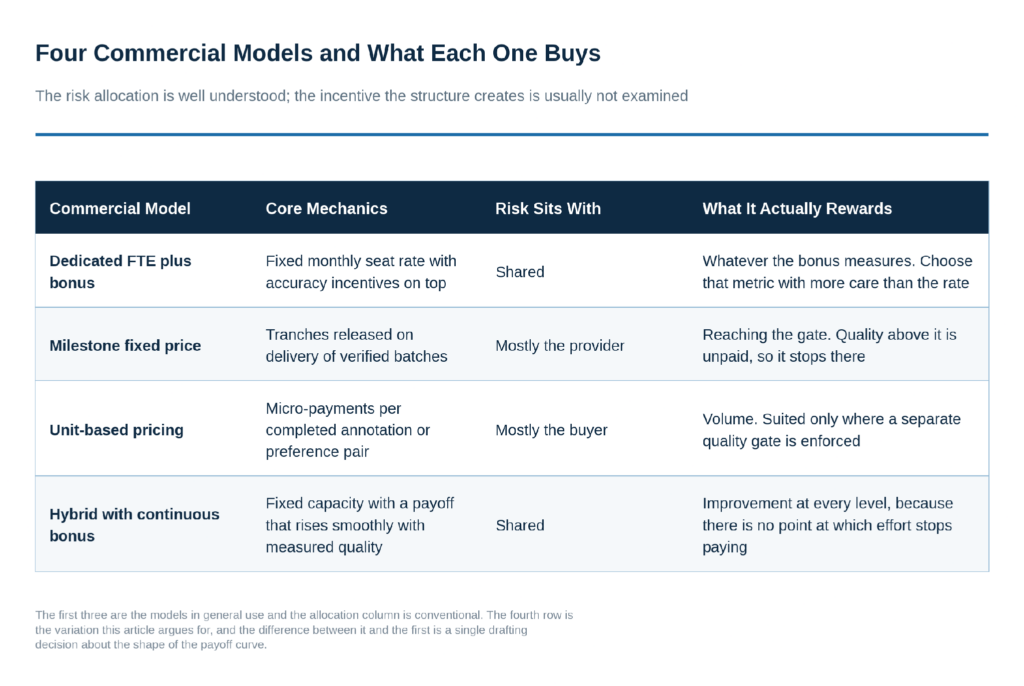
Figure 1. Four commercial models and what each one buys.
The first three rows describe current practice accurately. Milestone fixed price weights delivery risk toward the provider, which suits bounded work with rigid volume specifications. Unit-based pricing weights it toward the buyer, who pays for whatever volume turns out to be needed, and it is only safe where a separate quality gate is enforced. Dedicated capacity with a bonus shares the risk, which is why it dominates long-running alignment engagements.
The fourth row is a variation on the first that costs nothing to adopt and changes what the contract produces. The difference is one drafting decision: whether the bonus steps at a threshold or rises with the metric.
Why Does a Threshold Bonus Underperform a Continuous One?
Because above the threshold, additional quality costs the provider and earns nothing. Modelled against a convex cost of quality, a provider facing a 95% threshold maximises profit by delivering exactly 95%. The same provider facing a payoff that rises from 90% to 99% keeps improving to 99%.
This is the most consequential and least examined feature of the bonus structures in common use, and it follows from arithmetic rather than from any assumption about provider good faith.
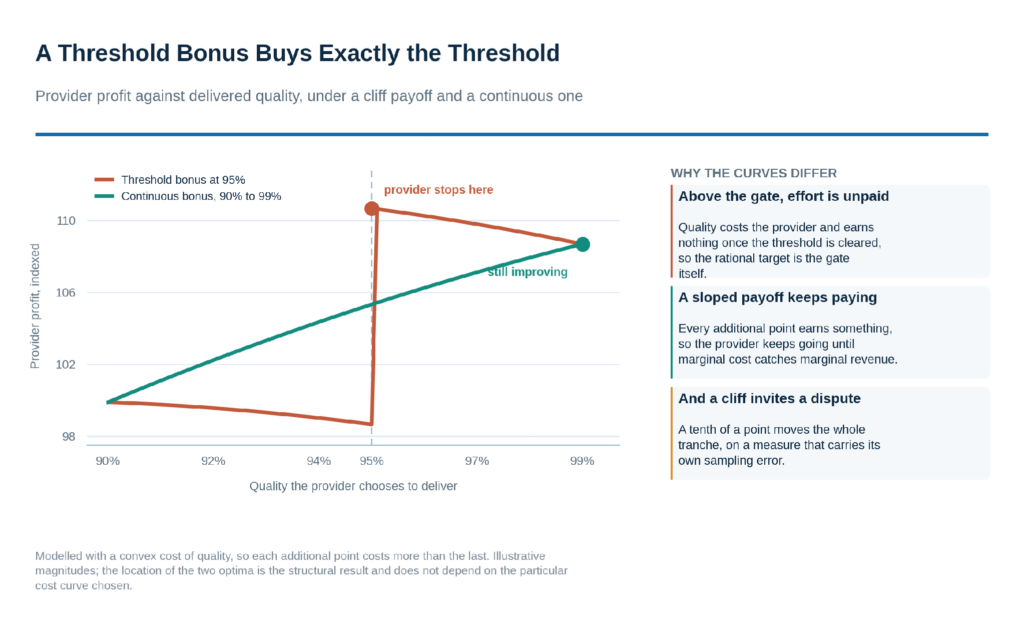
Figure 2. Provider profit under a cliff payoff and a continuous one.
The cost of quality is convex: moving from 94% to 95% is dearer than moving from 93% to 94%, because the remaining errors are the harder ones. Under a threshold bonus, revenue is flat everywhere except at the gate, so profit peaks at the gate and declines above it — every point of quality beyond 95% is pure cost. A well-run provider will therefore calibrate its operation to land just inside the threshold, which is exactly what the contract asked for and considerably less than the buyer wanted.
Under a continuous payoff, each additional point earns something, so the provider improves until marginal cost meets marginal revenue. In the modelled case that is at 99%. The buyer pays the same bonus pool in both structures; the difference in delivered quality is four percentage points, obtained by changing the shape of the curve rather than its magnitude.
The cliff also manufactures disputes
At the gate, a tenth of a percentage point decides an entire tranche. The measurement supporting that decision carries sampling error of its own: on a 1,000-item audit the confidence interval around an observed 95% spans roughly 93.5% to 96.2%, straddling the gate in both directions. A discontinuous payoff applied to a noisy estimate is a dispute waiting for a quarter-end, and it is avoided entirely by sloping the payoff so that small measurement differences produce small payment differences.
What Metric Should Trigger a Payment?
Accuracy against a key the buyer draws and adjudicates, with the sample size fixed in the contract. Not an acceptance rate, which equals one minus true error multiplied by inspection rate and therefore reports how much the buyer checked rather than how well the provider worked.
The case study in this market triggers quarterly bonuses on a 99.2% dataset acceptance rate. That figure cannot carry the weight being placed on it.
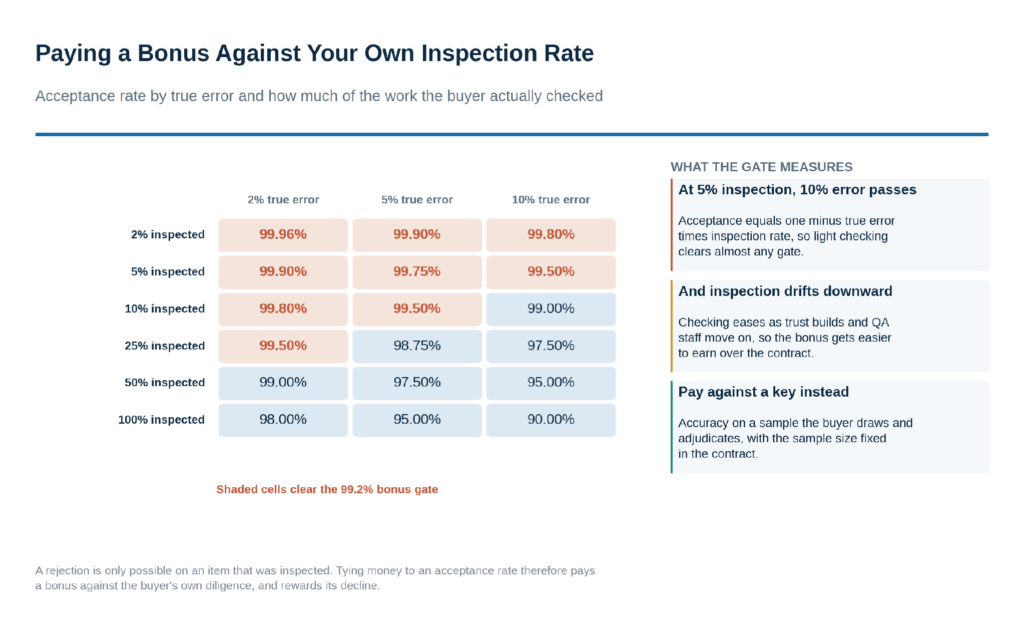
Figure 3. What an acceptance-rate gate actually measures.
A rejection is only possible on an item that was inspected. At a 5% inspection rate, a true error rate of 10% still produces a 99.5% acceptance figure and clears the gate comfortably. Every realistic combination in the upper half of Figure 3 pays the bonus, including several that describe work a buyer would refuse outright if it could see it.
The drift is worse than the level. Inspection intensity falls over the life of an engagement — trust accumulates, quality assurance staff are reassigned to newer programmes, and sampling rates quietly relax. Acceptance therefore rises for reasons that have nothing to do with the work, which means a bonus tied to it becomes progressively easier to earn the longer the contract runs. The buyer is paying an increasing premium for its own declining diligence.
The replacement costs nothing. Accuracy measured on a sample the buyer draws, adjudicates against its own key, and sizes in the contract measures the provider. Fix the sample size as well as the threshold, because an unfixed sample size lets the same metric drift in the same direction.
How Should Milestone Gates Be Designed?
Around guideline comprehension and baseline consistency early, error reduction on the gold set in the middle, and convergence verified by the buyer’s own scientists at the end — with an entry gate and a steady-state target stated as separate numbers at every stage.
Shifting gates from output volume to semantic convergence is the right instinct and the draft framing in this market gets it broadly correct. Two refinements make the gates enforceable.
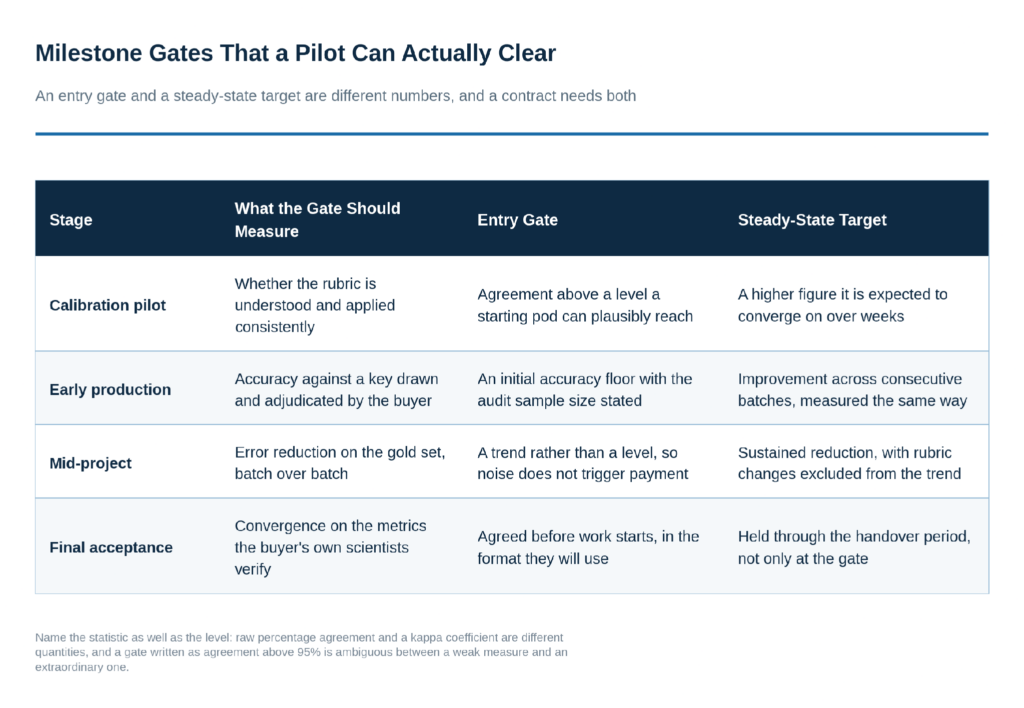
Figure 4. Gates a pilot can actually clear.
The first is units. A pilot gate expressed as inter-annotator agreement exceeding 95% is ambiguous between raw percentage agreement, which is a weak measure on any task where one answer dominates, and a kappa coefficient, where 0.95 would be exceptional and contracts in this market otherwise specify 0.75 to 0.80. Name the statistic, the number of raters it assumes, and how the overlap sample is drawn.
The second is the distinction between a gate and a target. Calibration has a characteristic shape: a pod opens well below its eventual level and converges over several weeks as edge cases are resolved. A gate set at the eventual level cannot be cleared at the start, which either stalls the engagement or, more commonly, is quietly waived — and a waived gate teaches both parties that the gates are decorative. Set an entry threshold the pilot can plausibly reach and a steady-state target it is expected to converge on, and write both.
Mid-project gates should measure a trend rather than a level, for the same reason the cliff is a problem: a single batch measurement carries enough noise to trigger or withhold a payment on chance alone. And rubric changes should be excluded from the trend explicitly, since a quality dip after a guideline update is an onboarding cost rather than a performance failure.
What Costs Sit Above the Hourly Rate?
Multi-tier supervision and quality assurance, secure desktop and tooling infrastructure, technical recruitment for specialist roles, and programme management. Direct annotator time is roughly half of the total, and the components above it are where scope expansion lands.
Headline labour arbitrage in this market is commonly quoted at 40% to 50% against Western alternatives, with fully loaded rates for specialised alignment talent in the range of $10 to $18 an hour. Those figures are only meaningful alongside the cost structure they sit inside.
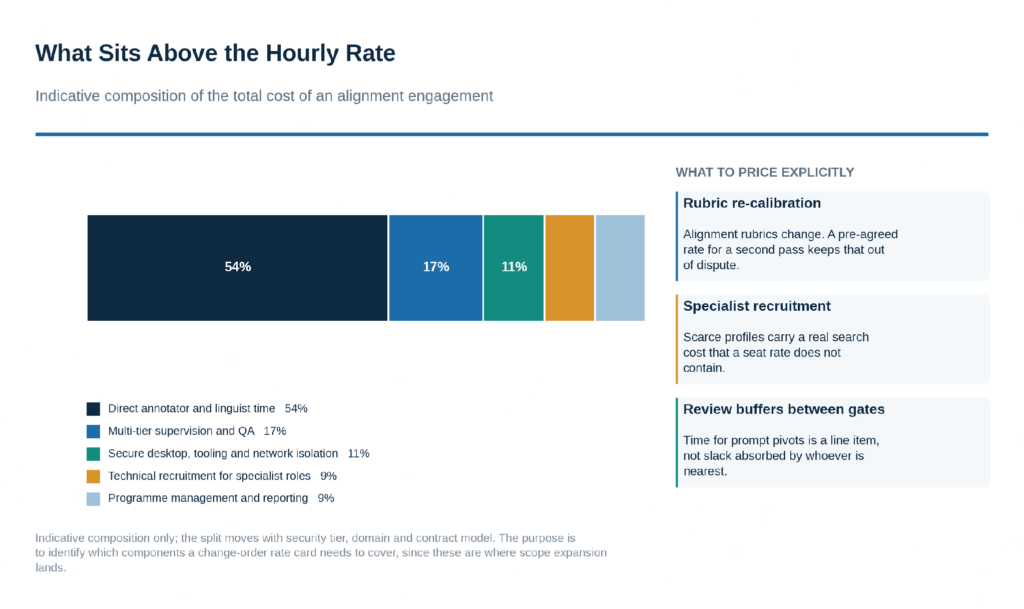
Figure 5. Indicative composition of an alignment engagement’s cost.
The practical use of this breakdown is change-order design. Alignment rubrics evolve as red-teaming surfaces new failure modes, and the resulting work lands on the supervision, recruitment and management lines rather than on the base annotator rate. A change-order rate card that covers only the hourly rate leaves the expensive components unpriced, which is precisely where uncontrolled budget inflation comes from.
Three items deserve pre-agreed rates in the master agreement: a second annotation pass following a rubric re-calibration, specialist recruitment where a new domain profile is required mid-engagement, and the review buffer between milestones that accommodates prompt engineering pivots. The last is frequently treated as slack rather than a line item, which means it is absorbed by whoever is nearest — usually the provider, who then recovers it somewhere less visible.
What Belongs in the Agreement?
A continuous performance payoff, a payment trigger the provider controls, gates that distinguish entry from steady state, and a change-order rate card covering the cost components above the hourly rate.
- Slope the bonus rather than stepping it. The same pool, distributed continuously, buys measurably more quality and removes the cliff that generates disputes.
- Trigger on accuracy against a buyer-adjudicated key. With the sample size fixed in the contract, so neither the threshold nor the measurement can drift.
- State the statistic, the rater count and the sampling protocol. Agreement rises when sampled items are easy, so a threshold without a sampling rule is only half specified.
- Write an entry gate and a steady-state target separately. One the pilot can clear, one it is expected to reach. A gate that has to be waived costs more than it saves.
- Measure mid-project gates on a trend, not a level. And exclude the batches immediately following a rubric change from the trend.
- Pre-agree rates for second passes and re-calibration. These are the predictable consequences of alignment work, not exceptions, and pricing them early removes the main source of scope disputes.
What Do Industry Leaders Say About Commercial Design?
That predictable financial outcomes require frameworks rewarding qualitative precision and data integrity rather than raw unverified output volume — which is correct, and which places the entire weight of the structure on the quality metric chosen.
Once the commercial model rewards quality rather than volume, the metric becomes the contract.
Predictable financial outcomes in artificial intelligence alignment require commercial frameworks that reward qualitative precision and data integrity rather than raw, unverified output volume.
— John Maczynski, CEO, Cynergy BPO
The word doing the most work there is unverified. A volume-based contract at least measures something the buyer can count. A quality-based contract measures something the buyer has to define, sample and adjudicate, and it fails in a quieter way when the definition is loose — the metric is satisfied, the money is paid, and the dataset is not what anyone intended. That is why the shape of the payoff and the identity of the measurer deserve more drafting attention than the rate.
How Did One Enterprise Structure a Hybrid Alignment Contract?
A conversational AI developer contracting a 100-seat Philippine cohort for red-teaming and preference ranking adopted a hybrid model: fixed baseline capacity with quarterly bonuses tied to accuracy convergence. The programme landed within 3% of budget and accelerated deployment by six weeks.
The structural choice was right. Sixteen providers were assessed specifically for experience with performance-incentivised milestone contracting, which is a more useful screen than rate or headcount, and the resulting hybrid avoided the fixed-price trap the draft correctly identifies — where a provider protects margin by compromising quality once scope moves.
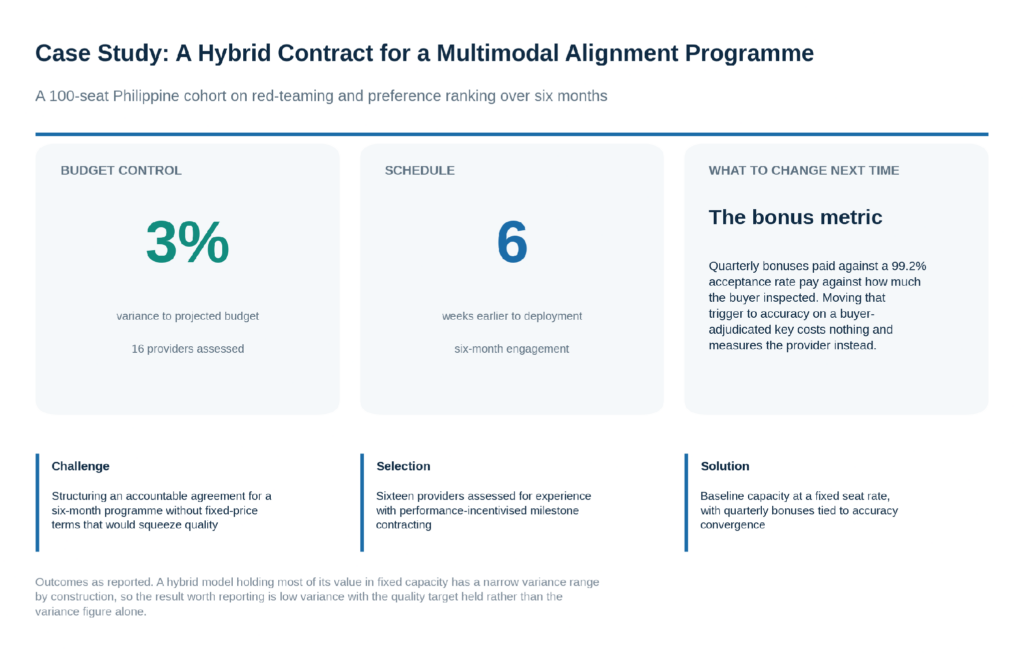
Figure 6. Reported outcomes from a hybrid commercial structure.
Two observations refine the result. The 3% budget variance is substantially a property of the structure: a model holding most of its value in fixed capacity has a narrow variance range by construction, bounded below by forfeiting the whole bonus pool. The genuine achievement is low variance with the quality target held, which is a stronger claim and the one worth reporting.
The second is the bonus trigger. Quarterly payments made against a 99.2% acceptance rate pay against how much the client inspected, as Figure 3 sets out. Moving that trigger to accuracy on a buyer-adjudicated key, with the sample size fixed, costs nothing to draft and measures the provider rather than the buyer. Combined with sloping the payoff rather than stepping it, those two changes would have bought more quality from the same bonus pool.
Why Do Organizations Work with Cynergy BPO on Commercial Structuring?
Cynergy BPO is an independent, vendor-neutral outsourcing advisory firm headquartered in Manila, representing a vetted network of more than 100 Philippine providers. It maps requirements against performance data to produce a shortlist within days and manages competitive negotiation on the buyer’s behalf.
Who Is Cynergy BPO?
Cynergy BPO is an independent outsourcing advisory and consultancy firm headquartered in Manila, founded by industry veterans with more than 65 years of combined operational experience governing major global accounts. It specialises in connecting mid-market and enterprise organisations with vetted Philippine BPO providers across voice, back-office and AI data operations.
How Does Cynergy BPO Differ from Traditional Outsourcing Brokers?
Traditional brokers are transactional and are compensated by the providers they place, which shapes which provider is recommended and how the agreement is drafted. Cynergy BPO applies an advisory-led methodology, mapping exact technical and commercial requirements against performance data. On commercial structuring in particular, an adviser paid by the placement has no reason to argue for a payoff curve the provider would rather not face.
How Does Cynergy BPO’s Network of 100+ Vetted Philippine BPO Providers Benefit Organizations?
The network establishes what quality levels are actually achievable on comparable work before a threshold is written into a contract. A gate set without that reference is either unreachable, in which case it gets waived, or trivially clearable, in which case the bonus pool is spent for nothing.
How Does Cynergy BPO’s Advisory-Led Vendor Matching Process Work?
Requirements are mapped against operational and commercial criteria, a tailored shortlist of vetted providers is delivered within a few working days, and the firm then manages competitive proposal and negotiation processes on the buyer’s behalf. Payoff structure, measurement protocol and change-order rates are settled as part of that process rather than after selection.
Why Do Organizations Use Cynergy BPO?
Because commercial structures in this category are copied between engagements without anyone examining what they reward, and the cost of a poorly shaped incentive is invisible until the dataset is finished. Establishing what a given structure will actually buy is cheaper before signature than after.
Frequently Asked Questions
What do alignment annotators cost in the Philippines?
Fully loaded rates for specialised alignment and annotation talent commonly run $10 to $18 an hour depending on technical complexity, against headline savings of 40% to 50% on Western alternatives. Establish which tier a quote refers to, since specialist domain profiles sit considerably higher than general annotation.
Why are pure fixed-price models discouraged?
Because alignment rubrics change as red-teaming surfaces new failure modes, and a provider holding fixed-price risk against a moving specification protects its margin by compromising quality. Hybrid structures keep the capacity predictable while leaving room for the iteration the work actually requires.
Should performance bonuses use thresholds?
No. A threshold bonus is maximised by landing exactly on the gate, because quality above it costs the provider and earns nothing. A payoff that rises continuously across a band distributes the same pool and keeps a marginal incentive at every level.
What metric should release a milestone payment?
Accuracy against a key the buyer draws and adjudicates, with the sample size fixed in the contract. Avoid acceptance rates, which equal one minus true error times inspection rate and therefore measure the buyer’s own checking intensity rather than the provider’s work.
How should scope creep be controlled?
Through pre-negotiated change-order rates covering second annotation passes, rubric re-calibration and specialist recruitment, plus explicit complexity tiers in the statement of work and review gates before a new guideline version is deployed.
What should the pilot gate be set at?
At a level a starting pod can plausibly clear, with the steady-state target stated separately. Calibration converges over weeks, so a gate set at the eventual level either stalls the engagement or is waived, and a waived gate devalues every other gate in the agreement.
How long does it take to negotiate this kind of structure?
Three to five weeks with advisory support, covering commercial modelling, vendor shortlisting and contract execution. The modelling is the part worth the time, since the payoff curve and the measurement protocol are harder to change after signature than before it.
Should throughput be a payment metric at all?
Only as a condition on the quality gate rather than in parallel with it. Throughput running alongside a separate quality clause puts the two in competition; throughput conditional on the quality gate passing removes any volume a provider can deliver that offsets falling short on accuracy.
Share This
Unlock cost-efficient growth with expert BPO guidance!
Partner with Cynergy BPO to connect with top outsourcing providers.
Streamline operations, cut costs, and scale your business with confidence.
Book a Free Call
Ralf Ellspermann - CSO
Author
Ralf Ellspermann is the Chief Strategy Officer (CSO) of Cynergy BPO and a globally recognized authority in business process and contact center outsourcing. With more than 25 years of experience advising enterprises and SMEs, he provides strategic guidance on vendor selection, CX optimization, and scalable outsourcing strategies across global markets. His expertise spans fintech, ecommerce and retail, healthcare, insurance, travel and hospitality, and technology (AI & SaaS) outsourcing.
A frequent speaker at leading industry conferences, Ralf is also a published contributor to The Times of India and CustomerThink, where he shares insights on outsourcing strategy, customer experience, and digital transformation.