



By: Ralf Ellspermann
25-Year, Multi-Awarded BPO Veteran
Published: 30 September 2026

Reviewed By: John Maczynski
Former EVP, World's Largest Contact Center
Updated: 30 September 2026
Between $8 and $15 an hour fully loaded, tiered by complexity. But the rate is the smaller variable: because harder work is both dearer per hour and far slower per frame, a rate card spanning 1.9 times conceals a delivered cost per frame spanning roughly 15 times.
Key Takeaways
- Complexity hits the invoice twice, and the rate card shows it once. Tier 3 carries a rate 56% above Tier 1 and runs perhaps a tenth of the throughput. The two multiply: the same 100,000 frames cost around $36,000 at Tier 1 and $560,000 at Tier 3, from the same provider on the same card.
- So ask for frames per annotator-hour, not just the hourly rate. Throughput is the number that decides the invoice, it varies enormously with point density and object count, and it appears in no published rate card in this market.
- Under hourly or FTE pricing, the buyer carries all of the throughput risk. A 30% shortfall against plan raises cost per frame 42.9%. On 100,000 frames that is a $15,000 swing at Tier 1 and a $240,000 swing at Tier 3 — the tier where throughput is least predictable.
- A precision threshold is satisfied by labelling less. Precision counts correct labels over labels made, so objects never labelled are not in the denominator. An annotator skipping 30% of objects reaches 99.2% precision while a third of the scene goes unlabelled.
- Which means a precision floor needs a recall floor beside it. The objects a cautious annotator skips are the distant, occluded, sparse-return ones — precisely the hard cases the dataset exists to capture.
- Toolchain matching is a commercial bet as well as a technical one. After Meta took 49% of Scale AI for $14.3 billion in June 2025, Google, OpenAI and xAI cut or dropped their contracts and 2026 guidance fell to around $1 billion from a $2 billion run rate. Match on what survives a change of platform.
What Do the Published Rate Tiers Actually Buy?
Three grades of labour: $8 to $10 for sparse cuboids, $10.50 to $12.50 for multi-frame actor tracking, and $13 to $15 for point-level semantic segmentation. The tiering is sensible. What it does not price is how many frames an hour of each grade produces.
The tier structure in general use is a genuine improvement on a single blended rate, because it recognises that placing a rigid box on a stationary object and classifying every point in a dense multi-return sweep are different jobs requiring different people. The omission is on the other side of the equation.
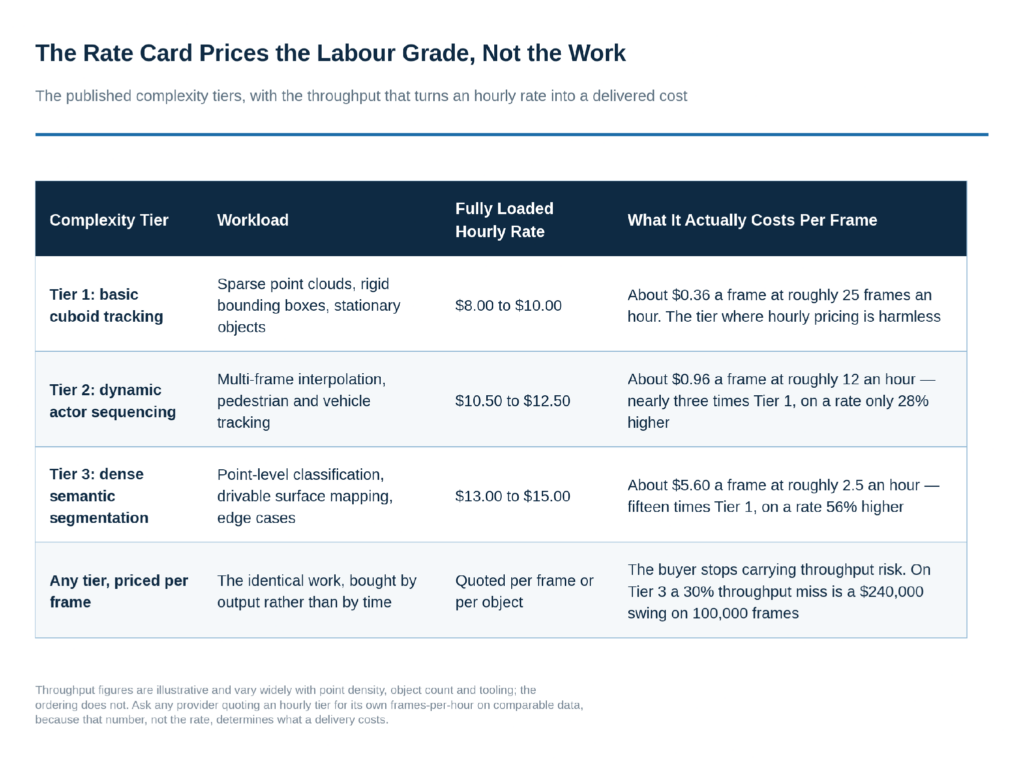
Figure 1. The published complexity tiers, with throughput added.
An hourly rate is only half a price. The other half is throughput, and on LiDAR work throughput varies by an order of magnitude across exactly the same tiers the rate card names. Cuboid placement on a sparse cloud can run at tens of frames an hour; point-level segmentation of a dense sweep may run at two or three. A rate card that tiers the first variable and stays silent on the second is describing labour cost rather than delivery cost.
The fourth row is the recommendation rather than an observation. Priced per frame or per verified object, the same work becomes comparable across providers, comparable across tiers, and no longer exposes the buyer to an estimate the provider made. The article’s own FAQ lists unit pricing as an available model; it is worth treating as the default for the harder tiers rather than as an alternative.
Why Does a 1.9x Rate Spread Hide a 15.6x Cost Spread?
Because complexity raises the rate and lowers the throughput at the same time, and the two effects multiply. At tier midpoints and illustrative throughput of 25, 12 and 2.5 frames an hour, cost per frame runs about $0.36, $0.96 and $5.60.
This is the central arithmetic of buying annotation by the hour, and it is worth working through because the conclusion is larger than it first appears.
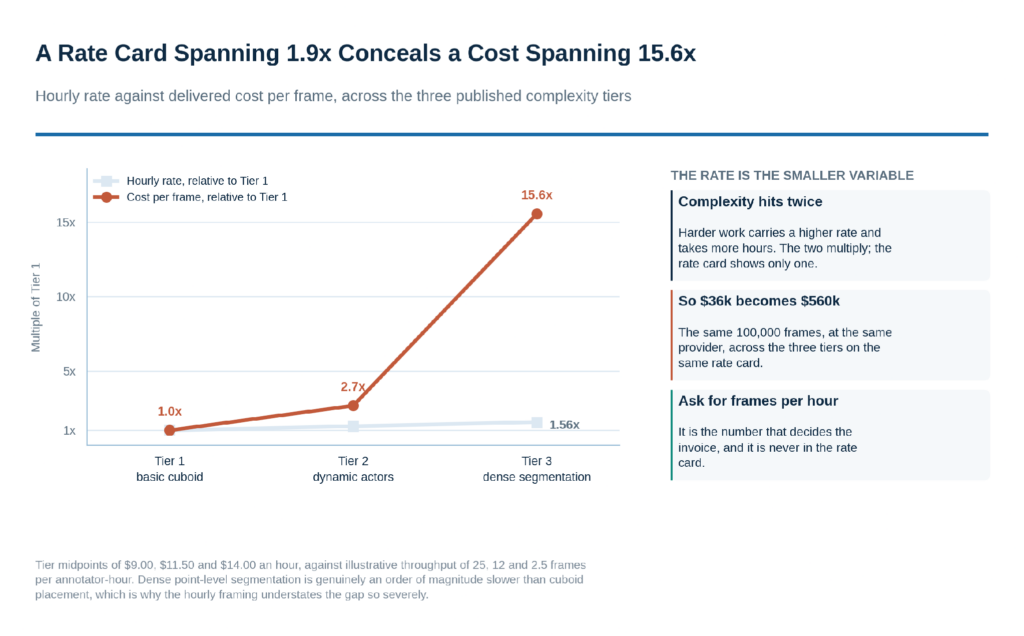
Figure 2. Hourly rate against delivered cost per frame.
Moving from Tier 1 to Tier 3 raises the hourly rate by 56%, which looks like a manageable premium. It also cuts throughput by roughly 90%, because labelling every point in a dense return is not a harder version of drawing a box — it is a different task with a different unit of work. Multiply the two and the delivered cost per frame rises about fifteenfold. A buyer who models a mixed dataset on the rate card alone will underestimate the segmentation portion by an order of magnitude.
The practical consequence is in the dataset mix rather than in the negotiation. If 10% of a 100,000-frame corpus needs dense segmentation and 90% needs cuboids, the segmentation tenth costs around $56,000 against roughly $32,000 for the other ninety percent — it is the majority of the budget on a minority of the frames. Deciding how much of the corpus genuinely requires point-level labelling is therefore a larger cost lever than anything available at the negotiating table, and it is a question for the perception team rather than for procurement.
One question settles most of this before a contract is drafted: ask each provider for its own frames-per-hour on a representative sample of your data, at each tier, measured rather than estimated. Providers that have done this work can answer in a day. The answer also gives a buyer the denominator needed to compare two hourly quotes that would otherwise be incomparable.
Who Bears the Throughput Risk?
The buyer, under hourly or full-time-equivalent pricing. A 30% throughput shortfall against plan raises cost per frame by 42.9% and the provider’s revenue is unaffected. Under per-frame unit pricing the buyer’s cost is unchanged and the provider absorbs the miss.
Throughput on LiDAR work is genuinely hard to forecast before the data is seen, which is exactly why the question of who carries the variance matters.
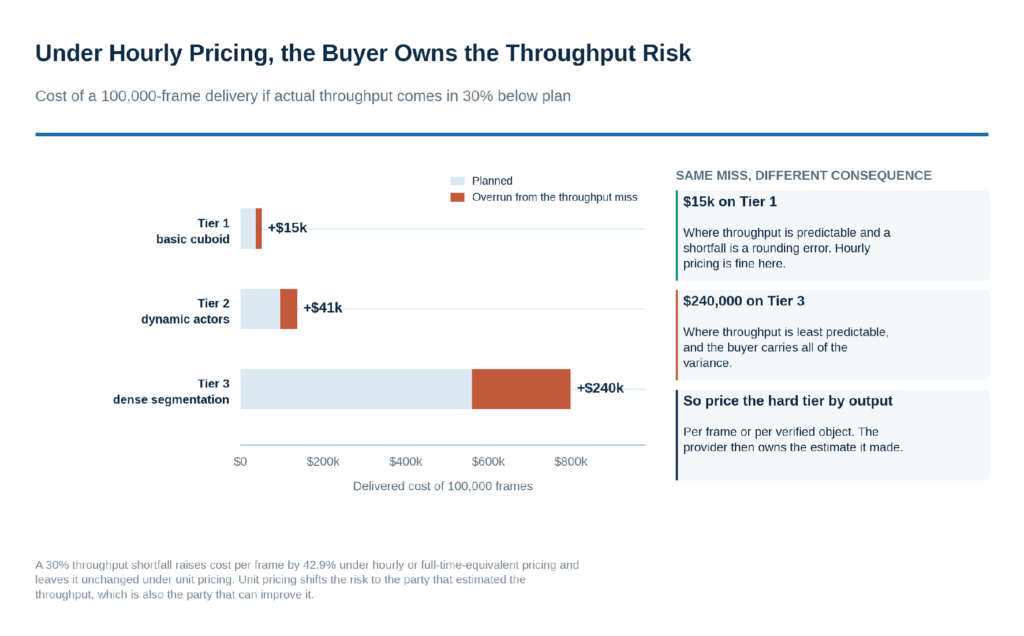
Figure 3. What a 30% throughput miss costs, by tier.
The asymmetry is the point. On Tier 1, a 30% miss on 100,000 frames costs about $15,000 — an annoyance. On Tier 3 the same proportional miss costs $240,000, because the base is so much larger. The tiers where throughput is least predictable are the tiers where hourly pricing exposes the buyer most, which is the opposite of how risk should be allocated.
Unit pricing corrects this by moving the estimate onto the party that made it, and that party is also the one who can improve it through better tooling, better pre-labelling and better operator training. The objection providers raise — that they cannot quote per frame without seeing the data — is reasonable and answerable: run the two-week parallel pilot the case studies in this category already recommend, measure throughput on real frames, and convert to unit pricing at the end of it. The pilot is happening anyway; the only change is what it is used to establish.
Where hourly pricing is retained, two terms make it survivable. A stated throughput assumption written into the agreement, so that a shortfall is visible rather than silently billed. And a shared-variance band, where deviations beyond an agreed range are split rather than falling entirely on one side.
Is a 98.5% Precision Threshold a Meaningful Quality Spec?
Not on its own, and it creates the wrong incentive. Precision counts correct labels against labels made, so objects never labelled at all are excluded from the denominator. An annotator who skips 30% of objects can reach 99.2% precision while nearly a third of the scene goes unlabelled.
Precision is a real metric with a precise meaning, which is what makes specifying it alone hazardous. Unlike a vague accuracy figure, it will be measured correctly and reported honestly, and it will still fail to detect the failure that matters.
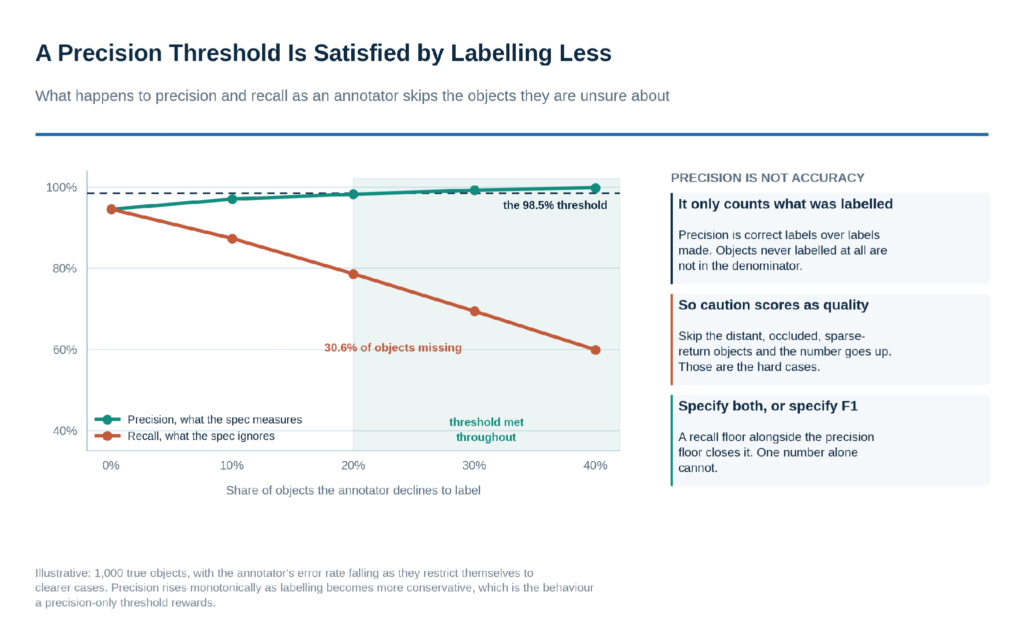
Figure 4. Precision and recall as an annotator becomes more conservative.
As an annotator restricts themselves to clearer cases, their error rate on what they do label falls, so precision rises monotonically toward 100%. Recall falls just as steadily. Every operating point from about 20% omission onward clears a 98.5% threshold, and the further along that curve the dataset sits, the better it scores. A quality system built on precision alone rewards caution and penalises completeness.
On LiDAR data specifically, the objects a cautious annotator skips are not randomly distributed. They are the distant returns with few points, the partially occluded pedestrians, the unusual vehicle shapes — the long tail that dense sensing exists to capture and that perception models most need examples of. Omission bias therefore removes disproportionately the training signal the dataset was commissioned for.
The fix is one line in the specification: a recall floor alongside the precision floor, or an F1 threshold that cannot be satisfied by either alone. Reported per class, and for autonomous driving work banded by distance, since a pedestrian at 60 metres is both harder to annotate and the one that determines stopping distance. This costs a provider nothing to report and changes what the quality system is capable of seeing.
When enterprises treat technical data annotation as a commodity rather than an engineering partnership, they burn capital on rework. The key is matching the right technical squad and toolchain expertise from day one.
— John Maczynski, CEO, Cynergy BPO
The rework point is the right one and the case study quantifies it: engineers were losing 35% of each sprint to fixing labels. The half of the prescription worth examining is toolchain expertise, because it is the most perishable thing on a match list. A squad’s fluency in a specific labelling platform is valuable and it depreciates whenever the platform, its pricing or its ownership changes. The durable assets are the ontology and the accumulated record of how ambiguous cases were adjudicated, and those transfer between tools.
How Should Toolchain Matching Be Approached?
As a commercial decision as much as a technical one. Platform positions move: Meta took 49% of Scale AI for $14.3 billion in June 2025, after which Google, OpenAI and xAI cut or dropped their contracts, and 2026 revenue guidance fell to around $1 billion against a $2 billion run rate.
Naming specific platforms in a matching framework is useful and carries an assumption worth making explicit: that the platform landscape is stable enough for platform-specific expertise to be a durable selection criterion. Recent history in this market argues otherwise.
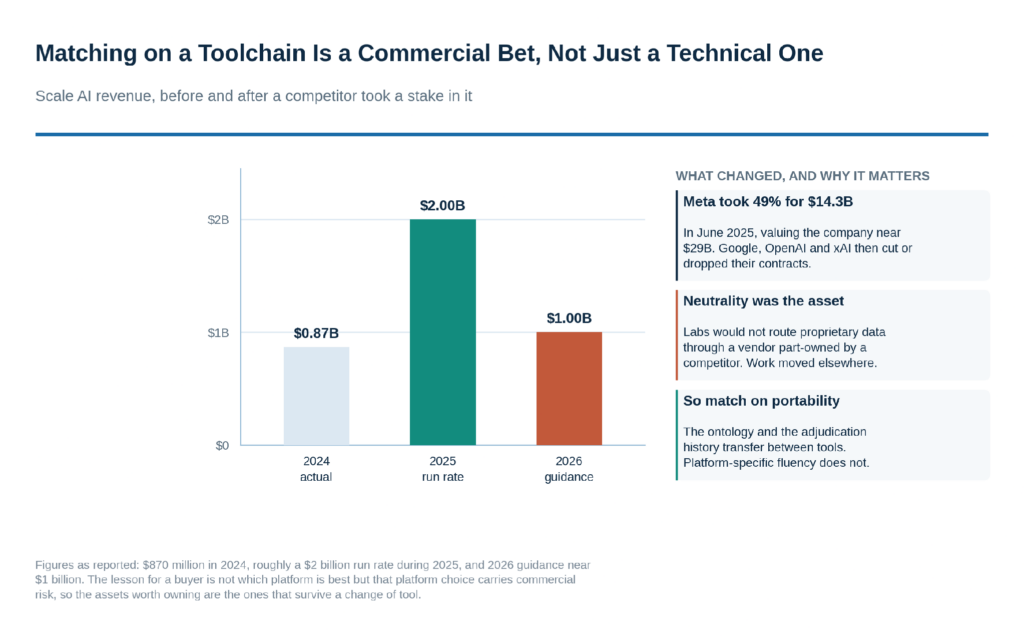
Figure 5. What happened to one platform’s revenue after an ownership change.
The mechanism is worth understanding because it will recur. Scale AI’s most valuable property was neutrality among competing laboratories, and an equity stake taken by one of those laboratories converted that asset into a liability almost immediately — customers were unwilling to route proprietary data through a vendor part-owned by a direct competitor, and the work moved to rivals. None of this is a judgement on the platform’s engineering, which remains capable. It is an illustration that a buyer’s platform exposure includes questions of ownership and neutrality that no technical evaluation captures.
The implication for provider matching is to weight portable capability over platform-specific fluency. A squad that has worked three toolchains and can document its ontology is a safer match than one deeply specialised in a single platform, however good that platform is today. And the assets a buyer should insist on owning — the ontology dictionary, the adjudication log, the gold set — are precisely those that survive a change of tool or provider.
Running a second source is the natural extension for any programme large enough to justify it. Two providers working from one ontology against a shared gold set gives a buyer a continuous quality comparison, a migration path that has already been tested, and negotiating position that a single-provider arrangement never produces.
What Should Buyers Specify in a Point-Cloud Annotation Contract?
Seven things, all cheap for a capable provider to supply and all decisive once volume starts. They concern the unit of pricing, the measurement of quality, and which assets remain the buyer’s.
- Measured frames per annotator-hour, per tier, on a sample of your own data. It is the denominator that turns an hourly rate into a price, and no published rate card contains it.
- Unit pricing for the dense tiers, converted from the pilot. Per frame or per verified object. It moves the throughput estimate onto the party that made it and can improve it.
- A recall floor alongside the precision floor, reported per class. Precision alone is satisfied by labelling less, and the objects skipped are the long tail the dataset exists to capture.
- Quality banded by distance for autonomous driving data. Objects at range are harder to annotate and more consequential. An aggregate over all distances cannot show whether they were handled.
- The ontology dictionary as a buyer-owned deliverable. It is what makes labels consistent across shifts, and it is the asset that survives a change of provider or platform.
- A gold set held by the buyer, not by the provider. A quality benchmark scored by the party being measured tells you less than one held independently, and it is what makes a second source possible.
- A stated throughput assumption where hourly pricing is retained. It makes a shortfall visible rather than silently billed, and it is the basis for any shared-variance clause.
How Did One Autonomous Vehicle Developer Cut Annotation Costs?
An autonomous vehicle software developer running 65% over budget, with engineers losing 35% of each sprint to fixing labels, assessed three specialised Philippine providers and deployed a 50-person squad on a 24/7 rotation inside its own toolchain — cutting annotation spend 62% and compressing model training turnaround from fourteen days to forty-eight hours.
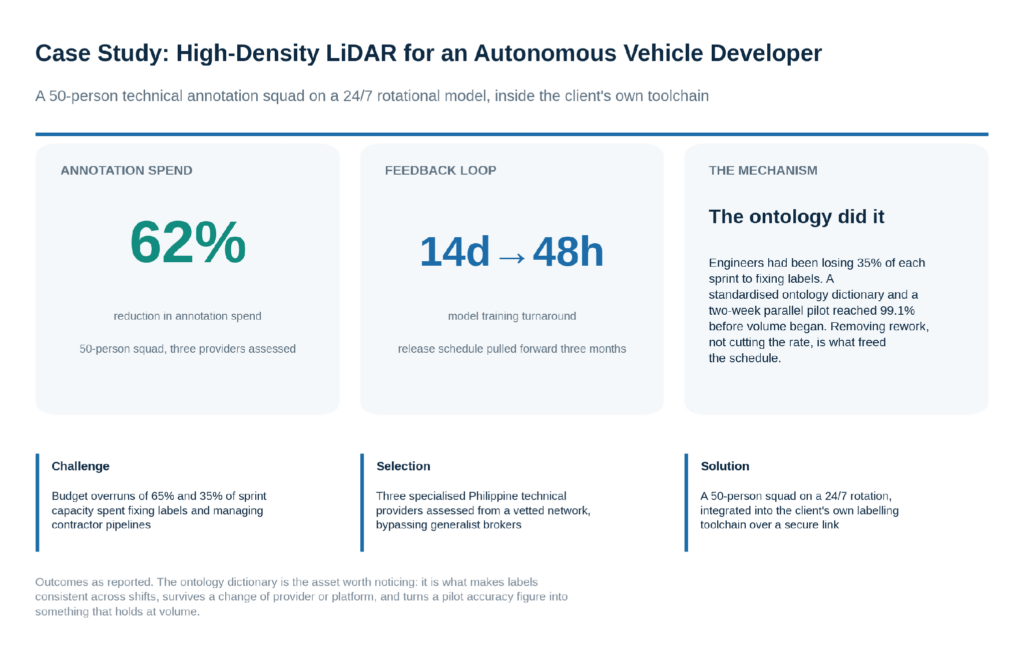
Figure 6. Reported outcomes from a 50-person LiDAR annotation squad.
The mechanism is in the lessons learned rather than in the headline. A standardised ontology dictionary and a two-week parallel pilot established 99.1% accuracy before volume handoff — which means the 35% of sprint capacity previously lost to fixing labels largely stopped being lost. Removing rework, rather than reducing the hourly rate, is what freed the schedule, and it is the part that generalises: a buyer moving to a cheaper provider without fixing label quality relocates the rework rather than eliminating it.
The ontology dictionary deserves particular attention as the transferable lesson. It is what keeps labels consistent across a 24/7 rotation where no two shifts share a supervisor, it is what makes a pilot accuracy figure hold at volume, and it is the one artefact from this engagement that would survive a change of provider, platform or sensor generation. Building it in the pilot rather than discovering the need for it in month three is the difference the case study is actually reporting.
Two figures are worth restating before they are modelled from. The 62% reduction is against a domestic vendor baseline rather than against in-house cost, which is a different comparison from the 55% to 75% range quoted for in-house operations elsewhere in this category. And a fourteen-day to forty-eight-hour turnaround is only worth what the validation cadence supports: if quality sampling still runs weekly, the faster loop delivers unvalidated data sooner rather than validated data faster.
Why Do Organizations Work with Cynergy BPO on Annotation Sourcing?
Cynergy BPO is an independent, vendor-neutral outsourcing advisory firm headquartered in Manila, representing a vetted network of more than 100 Philippine providers. It maps requirements against performance data to produce a shortlist within days and manages competitive negotiation on the buyer’s behalf.
Who Is Cynergy BPO?
Cynergy BPO is an independent outsourcing advisory and consultancy firm headquartered in Manila, founded by industry veterans with more than 65 years of combined operational experience governing major global accounts. It specialises in connecting mid-market and enterprise organisations with vetted Philippine BPO providers across voice, back-office, engineering support and AI data operations.
How Does Cynergy BPO Differ from Traditional Outsourcing Brokers?
Traditional brokers are transactional and are compensated by the providers they place, which shapes which provider is recommended. Cynergy BPO applies an advisory-led methodology, mapping exact technical, security and commercial requirements against performance data. On point-cloud work, where the decisive comparison is cost per frame rather than cost per hour, that independence determines which number gets compared.
How Does Cynergy BPO’s Network of 100+ Vetted Philippine BPO Providers Benefit Organizations?
The network makes throughput comparable. A single buyer sees one hourly quote; a firm holding delivery data across more than 100 providers can establish what frames-per-hour is achievable at each tier, which is what converts incomparable hourly rates into a decision.
How Does Cynergy BPO’s Advisory-Led Vendor Matching Process Work?
Requirements are mapped against operational, security and commercial criteria, a tailored shortlist of vetted providers is delivered within a few working days, and the firm then manages competitive proposal and negotiation processes on the buyer’s behalf. Unit pricing, throughput assumptions, recall floors and ontology ownership are normalised across bids during that process.
Why Do Organizations Use Cynergy BPO?
Because two hourly quotes for point-cloud annotation are not comparable without the throughput behind them, and a buyer running a single procurement has no way to establish what throughput is achievable. Making four proposals comparable is most of the work.
Frequently Asked Questions
What does LiDAR annotation cost in the Philippines?
Published bands run $8 to $10 an hour for sparse cuboid work, $10.50 to $12.50 for multi-frame actor tracking and $13 to $15 for dense semantic segmentation. Convert each to cost per frame before comparing, since throughput differs by roughly an order of magnitude across the same three tiers.
Should point-cloud annotation be priced hourly or per unit?
Per unit for the dense tiers. Hourly and full-time-equivalent pricing leaves the buyer carrying the throughput estimate, and a 30% shortfall raises cost per frame by 42.9% — around $240,000 on 100,000 frames of segmentation work. Convert to unit pricing at the end of the pilot, once throughput has been measured.
Is a 98.5% precision threshold sufficient for autonomous driving data?
No. Precision measures correct labels against labels made, so skipping uncertain objects raises it. Specify a recall floor alongside it, or an F1 threshold, reported per class and banded by distance. Otherwise the metric rewards omission of exactly the long-tail objects the dataset was commissioned to capture.
How long does it take to deploy a LiDAR annotation team?
Commonly quoted at six to eight weeks from contract, including three to four weeks of toolchain and domain onboarding. That leaves two to four weeks for sourcing, which assumes a provider with an existing technical bench rather than one recruiting for the engagement.
What is the minimum viable team size?
Five to ten full-time equivalents is the usual threshold, driven by the need for dedicated training and effective supervision rather than by volume. Below that the supervision ratio becomes uneconomic and consistency across shifts is hard to hold.
Which annotation platforms do Philippine providers work with?
Commercial and open-source toolchains including Supervisely, CVAT, Labelbox and various proprietary platforms. Weight portable capability over platform-specific fluency when matching: platform positions shift, and the ontology and adjudication history are the assets that survive a change of tool.
How should data security be handled for proprietary point-cloud datasets?
ISO 27001 and SOC 2 Type II are certifications a provider holds, and the scope statement matters more than the certificate. Data protection statutes are laws rather than certifications. Where scenes contain identifiable faces or plates they are personal data, and the Philippines holds no EU adequacy decision, so European footage needs standard contractual clauses and a transfer impact assessment.
How is quality controlled across a 24/7 rotation?
Through a standardised ontology dictionary, a buyer-held gold set, and multi-tier review. The ontology is what keeps labels consistent when no two shifts share a supervisor, and it is the artefact that turns a pilot accuracy figure into one that holds at volume.
Share This
Unlock cost-efficient growth with expert BPO guidance!
Partner with Cynergy BPO to connect with top outsourcing providers.
Streamline operations, cut costs, and scale your business with confidence.
Book a Free Call
Ralf Ellspermann - CSO
Author
Ralf Ellspermann is the Chief Strategy Officer (CSO) of Cynergy BPO and a globally recognized authority in business process and contact center outsourcing. With more than 25 years of experience advising enterprises and SMEs, he provides strategic guidance on vendor selection, CX optimization, and scalable outsourcing strategies across global markets. His expertise spans fintech, ecommerce and retail, healthcare, insurance, travel and hospitality, and technology (AI & SaaS) outsourcing.
A frequent speaker at leading industry conferences, Ralf is also a published contributor to The Times of India and CustomerThink, where he shares insights on outsourcing strategy, customer experience, and digital transformation.