



By: Ralf Ellspermann
25-Year, Multi-Awarded BPO Veteran
Published: 28 September 2026

Reviewed By: John Maczynski
Former EVP, World's Largest Contact Center
Updated: 28 September 2026
Less than the shift schedule suggests, and the more useful question is what continuous operation actually buys. Tripling capacity should cut elapsed time by two thirds; the 35% reduction this market reports implies that roughly half the timeline is not annotation at all.
Key Takeaways
- Three shifts should compress a timeline by 67%, not 35%. The gap is the finding: a 35% reduction implies about 47% of the calendar is review, guideline iteration and sign-off, which no additional shift touches.
- Beyond three shifts the curve is nearly flat. A fourth shift buys four more points. The serial fraction, not capacity, has become the binding constraint.
- The Manila graveyard shift runs 10:00 to 18:00 US Eastern. It carries the highest circadian load and the shortest escalation path. The day shift is the reverse, and the two risks partly cancel.
- Per-shift accuracy differences at this level cannot be measured. Separating 99.95% from 99.85% needs roughly 16,000 audited items per shift. The published figures are targets presented as findings.
- Sub-8% attrition is not available to a night-shift operation. Published Philippine bands put non-voice lines at 15% to 25% and voice at 45% to 50%, with night work as the stated cause of the latter.
- Zero guideline drift is a claim about detection. Drift across shifts is testable by seeding the same edge cases into each shift’s queue and comparing the decisions.
What Does Running Three Shifts Actually Buy?
Less than the capacity arithmetic implies. Three shifts triple daily throughput, which should reduce elapsed time to a third. The 35% to 40% reduction reported across this market means roughly half the project calendar is consumed by work that runs in sequence regardless of how many people are annotating.
This is the most useful number in the article for a buyer, and it is hidden inside a figure the market quotes as a benefit.
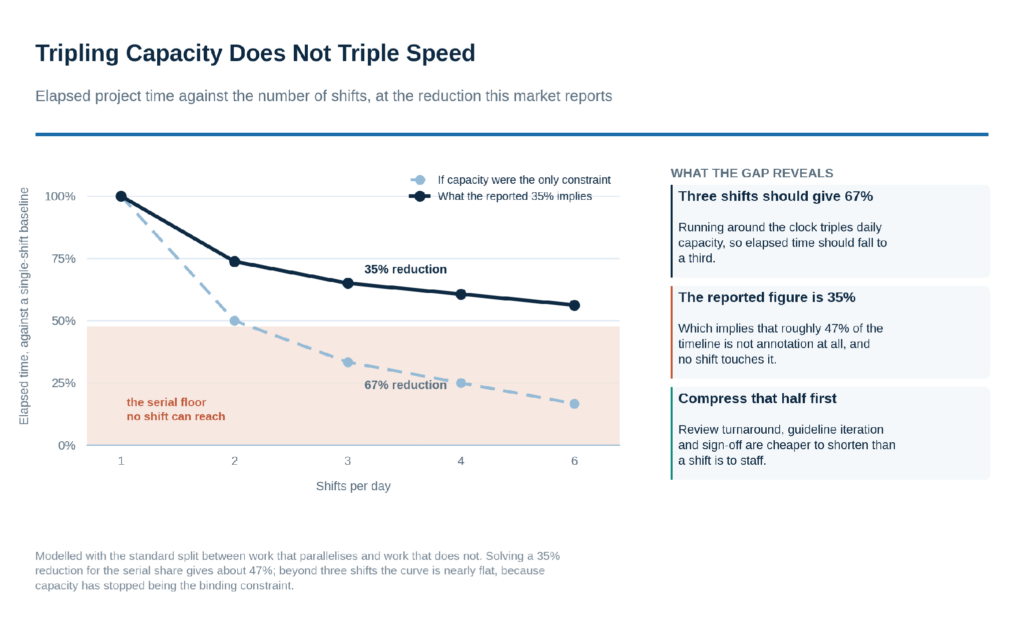
Figure 1. Elapsed time against shifts per day.
Solve the reported reduction for its components and the split falls out. If tripling capacity cuts the timeline by 35%, then about 47% of that timeline never depended on annotation capacity in the first place. That portion is client-side review of delivered batches, guideline iteration as edge cases surface, sign-off between phases, and the turnaround on questions escalated from the floor. A third shift does not shorten any of it.
The practical consequence is a sequencing decision. Compressing the serial half is usually cheaper than staffing a third shift and it raises the ceiling on what shifts can then deliver: with a shorter review loop, the same three shifts produce a larger reduction. Attack review turnaround service levels, batch sizes small enough to review continuously rather than in blocks, and a guideline change process that does not stop the floor — then add capacity.
Figure 1 also shows why a fourth shift is rarely worth costing. Moving from three shifts to four buys about four percentage points, and from four to six about another four. Once capacity has stopped being the constraint, adding more of it is close to free of effect.
Do Night Shifts Degrade Annotation Accuracy?
Circadian load is real and the mitigations described — rotation every two to four weeks, scheduled breaks, ergonomic lighting — are the right ones. But the specific per-shift accuracy figures published in this market cannot have been measured, because the differences are finer than any realistic audit can resolve.
Cognitive performance does dip through the circadian trough, and complex semantic labelling is exactly the kind of task where that shows up. The question is whether the effect is being quantified or asserted.
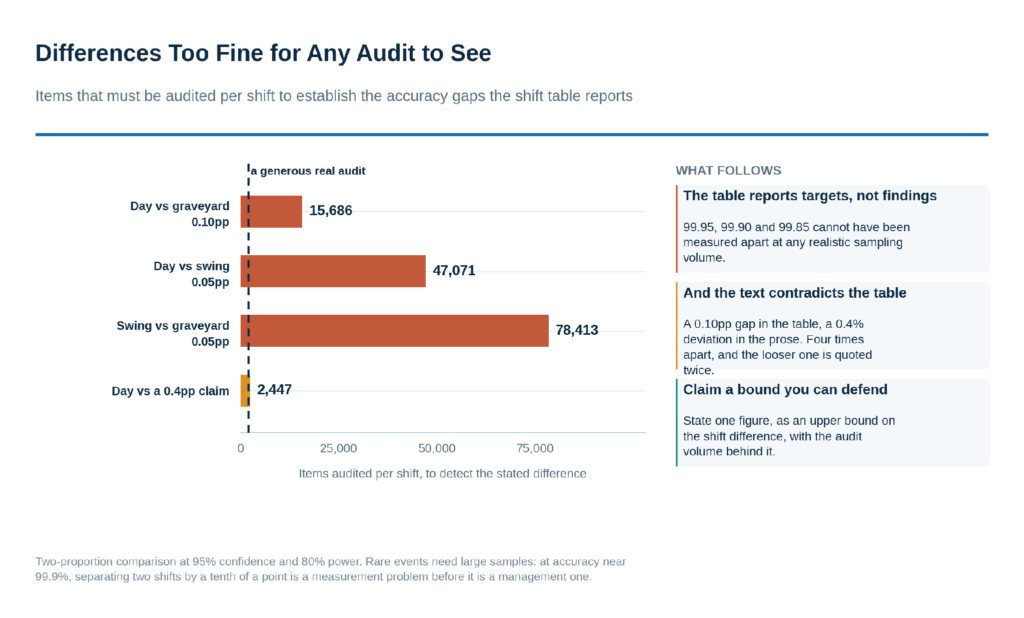
Figure 2. Audit volume required to establish the stated differences.
The shift table in general circulation sets day at 99.95%, swing at 99.90% and graveyard at 99.85%. Separating the first and last of those — a tenth of a percentage point at an accuracy near 99.9% — requires on the order of 16,000 audited items per shift at conventional confidence and power. Separating swing from graveyard requires nearly 80,000. No sampling regime in this market operates at those volumes, so the three figures are targets rather than measurements.
The prose makes a different claim again. It states that night-shift accuracy deviates by less than 0.4% from the daytime baseline, which is four times the gap the table implies, and quotes that looser figure twice. One of the two is the claim; both cannot be.
The honest version is stronger than either. State a single figure as an upper bound on the shift difference, with the audit volume that supports it, and report accuracy in aggregate across shifts rather than per shift. An aggregate figure is measurable, defensible, and is what the case study in this market actually reports.
Which Shift Carries the Most Risk?
Not the one the schedule suggests. Manila is twelve hours ahead of US Eastern time, so the graveyard shift running 22:00 to 06:00 local maps to 10:00 to 18:00 on the client’s clock — the full United States business day. It carries the highest circadian load and the shortest escalation path.
Shift risk is usually assessed on fatigue alone, which captures half of it.
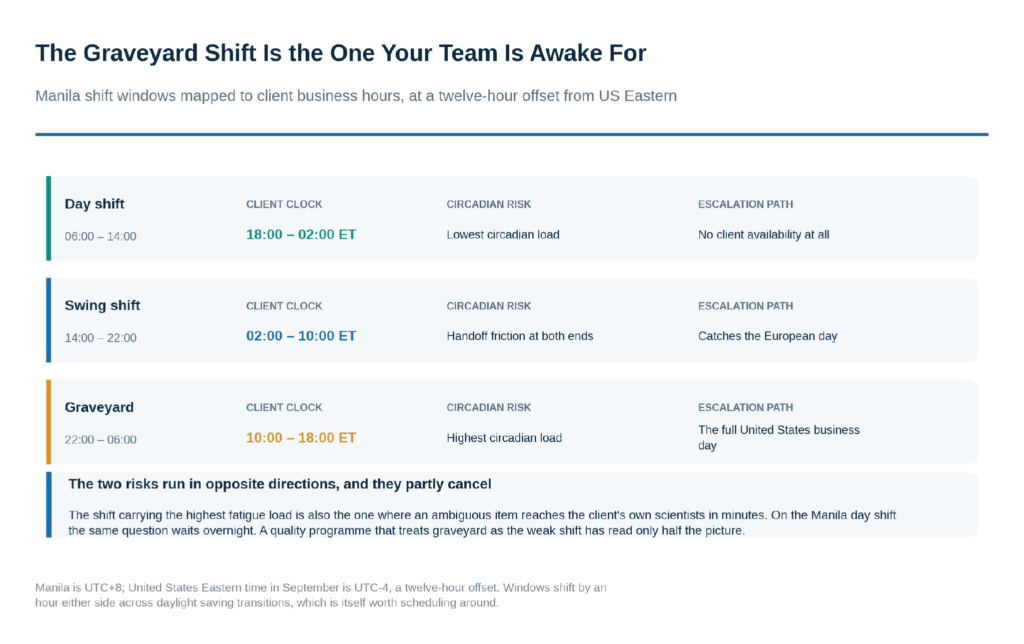
Figure 3. Manila shift windows mapped to client business hours.
An annotator on the Manila day shift, at peak alertness, hits an ambiguous item at 09:00 local. That is 21:00 the previous evening in New York. The question waits until the client’s morning, by which point the annotator has gone home and the item has been either parked or decided without guidance. The same question on the graveyard shift reaches the client’s own scientists inside their working day and is answered in minutes.
The two effects run in opposite directions and partly offset, which is a more accurate picture than either taken alone. It also changes what the mitigations should be. The graveyard shift needs fatigue management, which the standard playbook provides. The day shift needs a decision-rights framework — explicit authority for the on-floor lead to rule on ambiguous items without escalation, and a documented route for those rulings to reach the client afterwards for confirmation.
One scheduling detail follows from the same arithmetic. The offset moves by an hour at each daylight saving transition in the client’s country while Manila does not observe one, so shift-to-business-hours overlap shifts twice a year. Programmes that depend on a particular overlap window are worth reviewing at those transitions.
What Attrition Can a 24/7 Operation Claim?
Roughly 15% to 25% annually, which is the published band for non-voice Philippine delivery lines and where AI annotation belongs. Not below 8%. Published benchmarks put voice lines at 45% to 50% attrition, and night shift work is the stated cause.
Workforce stability is the strongest argument for a dedicated pod over a crowdsourced platform, and it is worth making with numbers that survive scrutiny.
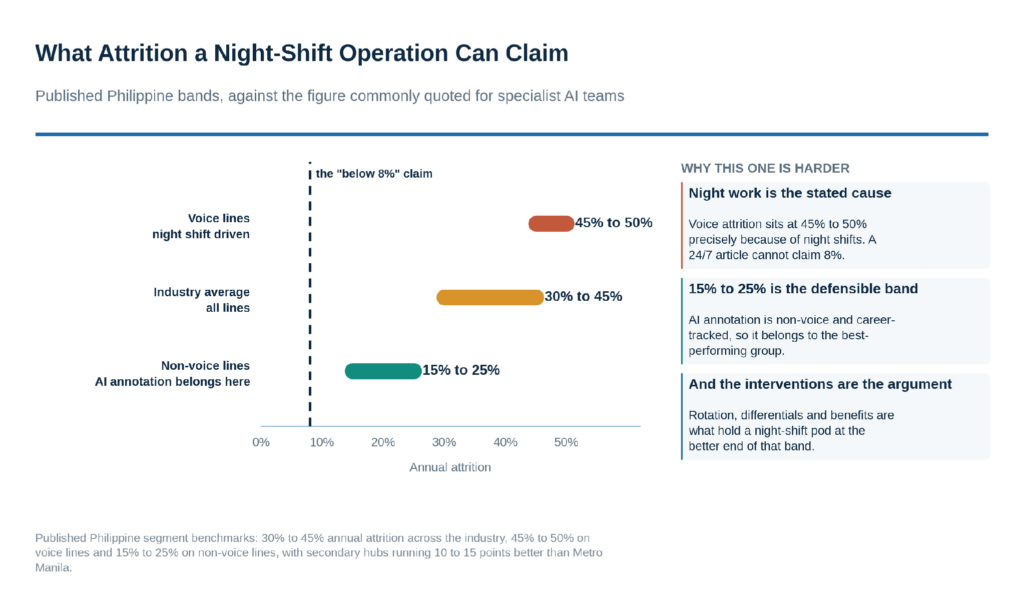
Figure 4. Published attrition bands against the figure commonly quoted.
The difficulty with a sub-8% claim in this particular article is that it contradicts both the published data and the mechanism behind it. Philippine voice operations run 45% to 50% annual attrition precisely because of night shift work; that is the explanation given in the industry’s own benchmarking. An article about a 24/7 night-shift operation cannot then claim attrition five times better than the best-performing non-voice band without addressing why.
The defensible position is more interesting anyway. AI annotation is non-voice, daytime-equivalent in its task structure, and career-tracked, which places it in the 15% to 25% group rather than with voice. The interventions the draft describes — night differentials of 10% to 20% above base, rotation every two to four weeks, healthcare benefits — are exactly what hold a night-shift pod at the better end of that band rather than the worse. That is the argument, and it is a real one.
It matters commercially because retention is the mechanism behind the quality claim. A pod that has worked a client’s taxonomy for eight months interprets edge cases consistently because the same people keep meeting them. Replace a quarter of that pod a year and the institutional knowledge holds; replace 45% and it does not.
How Should Shift Handoffs Be Governed?
Through overlapping windows, dedicated quality leads per shift at a defined supervisor ratio, and dual-key routing of ambiguous items to a senior linguist on the incoming shift. The overlap is the right mechanism; what crosses it needs specifying item by item.
A thirty-minute overlap between rotations is standard practice and prevents the obvious failure of a shift simply ending mid-batch. Four things actually cross that boundary, and each degrades differently.
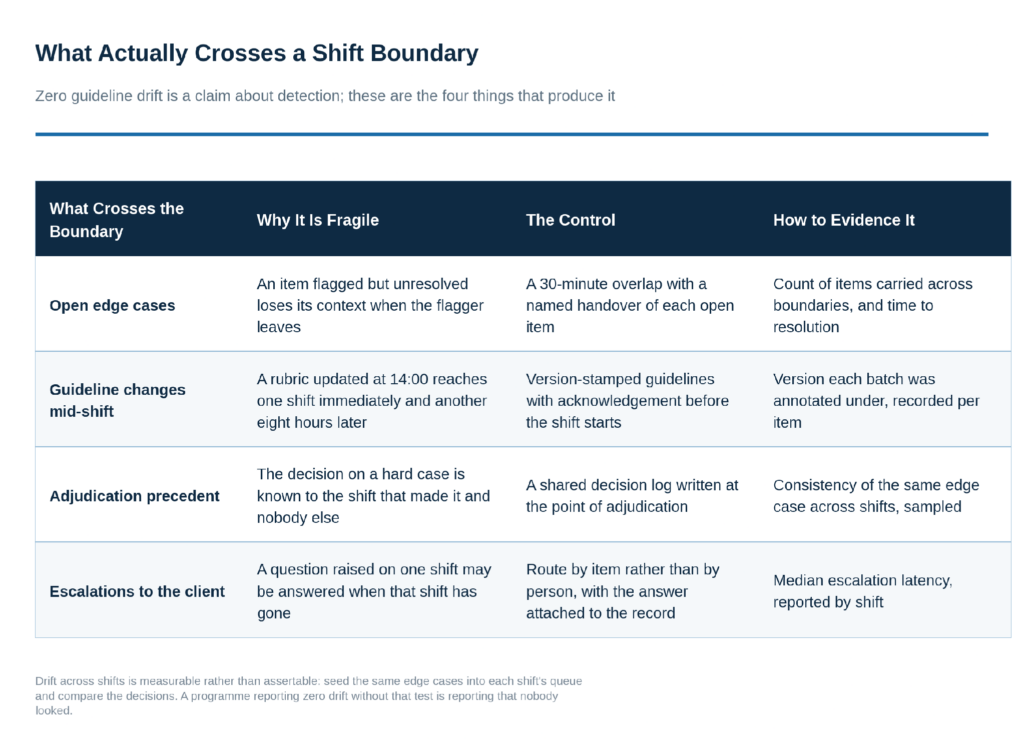
Figure 5. What crosses a shift boundary, and how to evidence it.
Open edge cases are the visible one and the overlap handles them. Guideline changes are less visible: a rubric updated at 14:00 reaches the incoming shift immediately and the shift after that eight hours later, so two batches annotated the same day may have been annotated under different rules. Version-stamping each batch with the guideline revision it was worked under costs nothing and makes that traceable rather than mysterious.
Adjudication precedent is the one that quietly produces drift. A decision made on a hard case is known to the shift that made it; unless it is written at the point of adjudication, the next shift meets the same case and decides afresh. That is the mechanism by which three shifts diverge without anybody doing anything wrong.
And drift is testable rather than assertable. Seed the same edge cases into each shift’s queue and compare the decisions. A programme reporting zero guideline drift across shift transitions without running that comparison is reporting that nobody looked — which may well be true and is not the same claim.
What Do Industry Leaders Say About Continuous Operations?
That the assumption of a speed-for-quality trade in 24/7 operation is wrong when the shifts are managed as a core discipline rather than an afterthought, backed by rotation protocols and continuous feedback loops.
The framing is right, and the arithmetic adds a second half to it.
The misconception in global tech circles is that 24/7 operations inevitably sacrifice quality for speed. In the Philippine outsourcing ecosystem, the inverse is true when managed correctly. By treating night shifts not as an afterthought but as a core operational discipline backed by rotation protocols and continuous feedback loops, tier-one providers deliver faster training cycles without compromising a single decimal point of data accuracy.
— John Maczynski, CEO, Cynergy BPO
The quality half of that holds. The speed half is where buyers should look harder, because continuous operation delivers roughly half the acceleration the capacity arithmetic promises, and the missing half is sitting on the buyer’s own side of the engagement. A provider running three disciplined shifts against a client that reviews batches weekly is being asked to solve a problem that is not theirs to solve.
How Should a Buyer Structure a Continuous Engagement?
By measuring the serial fraction before adding shifts, reporting accuracy in aggregate rather than per shift, giving the day shift explicit decision rights, and testing for drift rather than asserting its absence.
- Measure your own review latency first. If half the calendar is client-side turnaround, a third shift addresses the smaller half of the problem at the larger cost.
- Size batches so review runs continuously. Large batches reviewed in blocks convert a parallel pipeline back into a serial one, which is what the 47% is made of.
- Report aggregate accuracy, with the audit volume. Per-shift figures at 99.9% cannot be separated at realistic sampling, and publishing three of them invites a question with no defensible answer.
- Give the day shift decision rights, not just supervision. It is the shift with no client availability, so its lead needs authority to rule and a route for the ruling to be confirmed later.
- Version-stamp guidelines against batches. A rubric change reaches three shifts at three different times. Recording which revision each batch was worked under makes that auditable.
- Seed shared edge cases across shifts. The only way to convert a claim of no drift into a measurement, and it costs a handful of items per shift per week.
How Did One Enterprise Run a Three-Shift Annotation Pod?
A Silicon Valley AI firm needed continuous annotation of 200,000 text interactions weekly for a multilingual conversational model. Twelve providers were assessed on shift governance and workforce stability; the selected Manila partner ran a 150-person three-shift pod, cutting project time 35% at 99.92% aggregate accuracy over six months.
The selection criteria were well chosen. Assessing on shift-management maturity, workforce stability and quality infrastructure rather than on rate is the right screen for continuous operation, and reporting accuracy in aggregate across shifts — rather than splitting it three ways — is the statistically defensible choice.
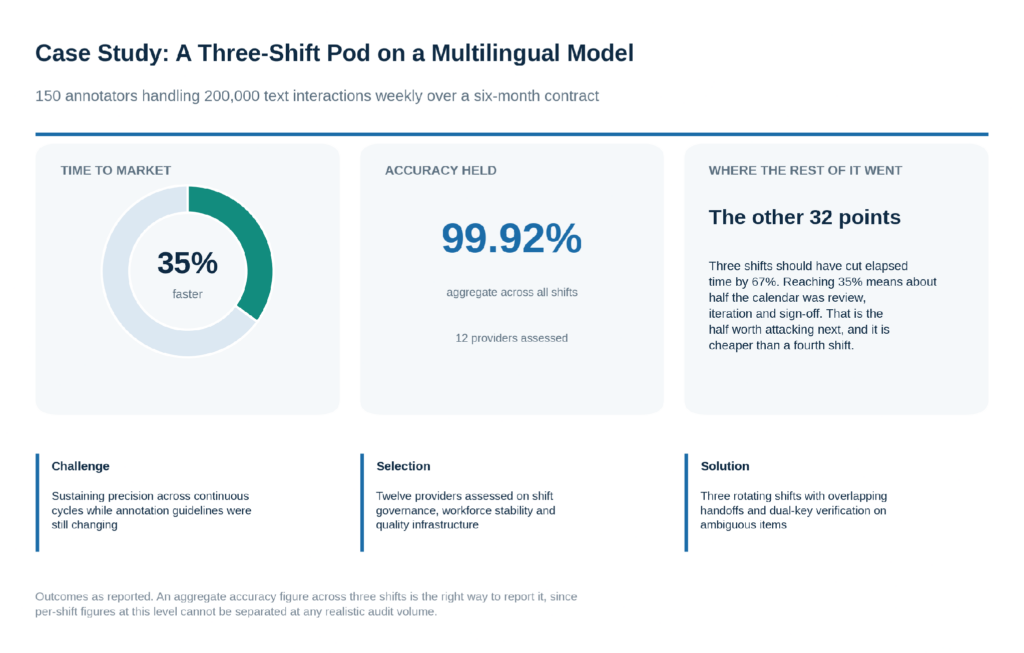
Figure 6. Reported outcomes from a three-shift pod.
The 35% figure is the one worth interrogating, and not because it is disappointing. Three shifts should have delivered around 67%. Reaching 35% means the engagement spent roughly half its calendar on something other than annotation throughput, and the client controls most of that half. Identifying which part — review latency, guideline iteration, sign-off cycles — is the highest-value analysis available to whoever runs this programme next, and it is cheaper to fix than a fourth shift.
Two smaller observations. At 150 people and 200,000 interactions weekly the pace works out to roughly 108 seconds per item, which is brisk for material described as complex multi-turn interaction; it is worth stating what the mix actually was. And zero guideline drift across shift transitions, in an engagement where guidelines were explicitly still evolving, is the claim most worth substantiating with a seeded-case comparison rather than an absence of complaints.
Why Do Organizations Work with Cynergy BPO on Continuous Delivery?
Cynergy BPO is an independent, vendor-neutral outsourcing advisory firm headquartered in Manila, representing a vetted network of more than 100 Philippine providers. It maps requirements against performance data to produce a shortlist within days and manages competitive negotiation on the buyer’s behalf.
Who Is Cynergy BPO?
Cynergy BPO is an independent outsourcing advisory and consultancy firm headquartered in Manila, founded by industry veterans with more than 65 years of combined operational experience governing major global accounts. It specialises in connecting mid-market and enterprise organisations with vetted Philippine BPO providers across voice, back-office and AI data operations.
How Does Cynergy BPO Differ from Traditional Outsourcing Brokers?
Traditional brokers are transactional and are compensated by the providers they place, which shapes which provider is recommended. Cynergy BPO applies an advisory-led methodology, mapping exact operational and commercial requirements against performance data. On continuous delivery in particular, an adviser with no placement incentive can say when a third shift is not the constraint.
How Does Cynergy BPO’s Network of 100+ Vetted Philippine BPO Providers Benefit Organizations?
The network establishes which providers genuinely run mature shift governance — version-stamped guidelines, documented adjudication precedent, decision rights on the shift with no client overlap — rather than a rotation schedule and an overlap window. That distinction is invisible in a proposal.
How Does Cynergy BPO’s Advisory-Led Vendor Matching Process Work?
Requirements are mapped against operational and commercial criteria, a tailored shortlist of vetted providers is delivered within a few working days, and the firm then manages competitive proposal and negotiation processes on the buyer’s behalf. Shift structure, handoff obligations and reporting definitions are settled as part of that process rather than after selection.
Why Do Organizations Use Cynergy BPO?
Because continuous operation is frequently bought as a speed solution to a problem that is not a capacity problem. Establishing where a programme’s calendar actually goes, before committing to a shift structure, is the cheapest analysis in the engagement.
Frequently Asked Questions
How much faster is a 24/7 annotation pipeline?
Reported reductions run 35% to 40%, against the 67% that tripling capacity would produce on its own. The gap indicates how much of the timeline is client-side review, guideline iteration and sign-off, which additional shifts do not shorten.
Does night-shift work reduce annotation accuracy?
Circadian load is real, and rotation, scheduled breaks and lighting are the correct mitigations. The specific per-shift differences published in this market are below what any realistic audit can resolve, so report accuracy in aggregate with the audit volume stated.
Which shift has the shortest escalation path?
The graveyard shift, for a United States client. Manila is twelve hours ahead of US Eastern, so 22:00 to 06:00 local maps to the full American business day. The Manila day shift has no client availability at all, which is why it needs explicit decision rights.
What attrition should a 24/7 pod be expected to run?
Roughly 15% to 25% annually, the published band for non-voice Philippine lines. Voice operations run 45% to 50% largely because of night work, so a claim materially below the non-voice band in a night-shift context needs explaining rather than asserting.
How is guideline drift across shifts prevented?
By version-stamping guidelines against batches, writing adjudication decisions at the point they are made rather than at handover, and routing escalations by item rather than by person. And by testing: seed the same edge cases into each shift’s queue and compare the decisions.
What supervisor ratio is appropriate?
One quality lead per twelve annotators per shift is the ratio in common use, with 10% to 20% of each batch sampled. The ratio matters less than whether the lead on the shift with no client overlap holds authority to decide rather than only to escalate.
Is a fourth shift ever worth adding?
Rarely. Once three shifts are running, the remaining constraint is the serial portion of the timeline, and a fourth shift buys a few percentage points. The same investment spent on review turnaround typically buys more.
Why choose a dedicated pod over a crowdsourced platform for continuous work?
For workforce stability and the institutional knowledge it produces. A pod that has worked a taxonomy for months interprets edge cases consistently because the same people keep meeting them, which is the mechanism behind the quality difference rather than a claim about individual skill.
Share This
Unlock cost-efficient growth with expert BPO guidance!
Partner with Cynergy BPO to connect with top outsourcing providers.
Streamline operations, cut costs, and scale your business with confidence.
Book a Free Call
Ralf Ellspermann - CSO
Author
Ralf Ellspermann is the Chief Strategy Officer (CSO) of Cynergy BPO and a globally recognized authority in business process and contact center outsourcing. With more than 25 years of experience advising enterprises and SMEs, he provides strategic guidance on vendor selection, CX optimization, and scalable outsourcing strategies across global markets. His expertise spans fintech, ecommerce and retail, healthcare, insurance, travel and hospitality, and technology (AI & SaaS) outsourcing.
A frequent speaker at leading industry conferences, Ralf is also a published contributor to The Times of India and CustomerThink, where he shares insights on outsourcing strategy, customer experience, and digital transformation.